Health
Are stenotic nares common in Saint Bernards?
No, this classic brachycephalic trait is uncommon in this breed's broader, longer muzzle structure.

Quick answer
Are stenotic nares common in Saint Bernards?
No, this classic brachycephalic trait is uncommon in this breed's broader, longer muzzle structure.
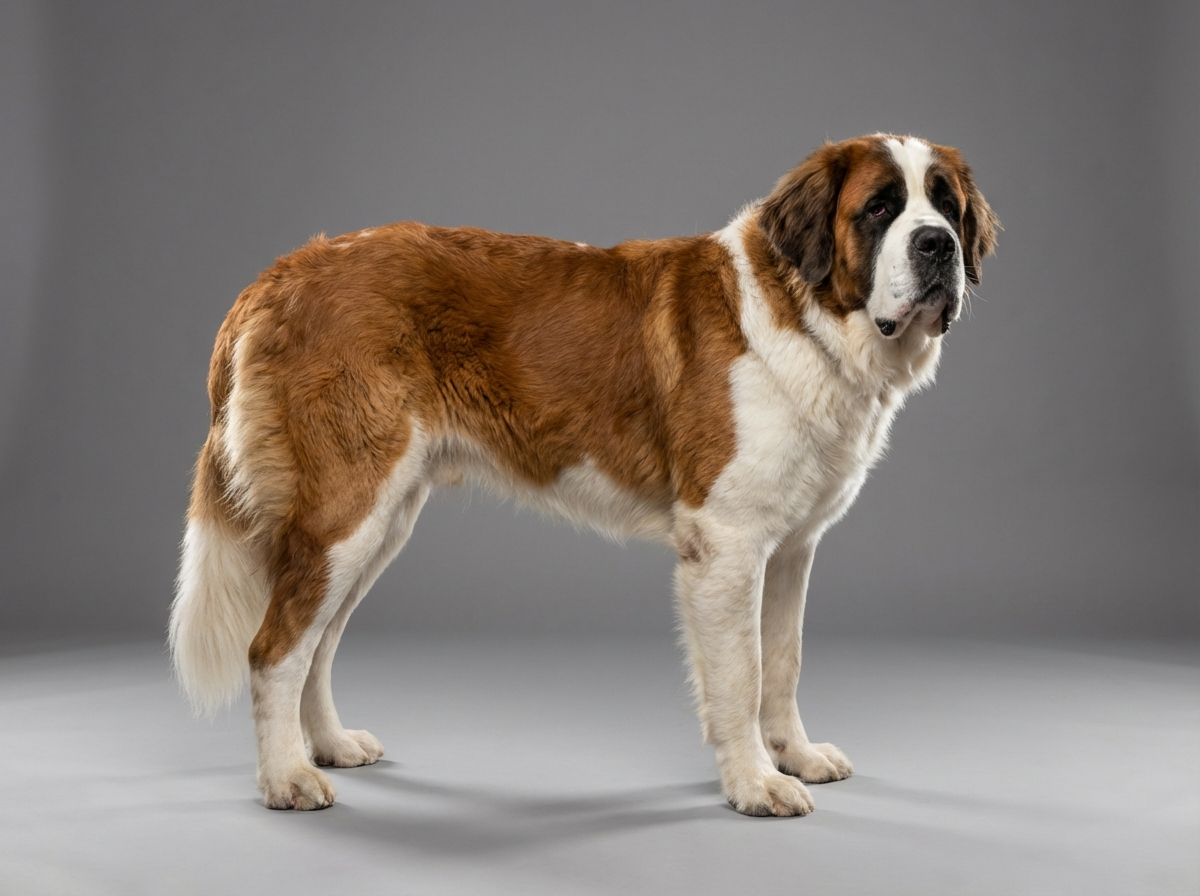
The Saint Bernard has a broad, wrinkled muzzle rather than a truly shortened one, which makes significant stenotic nares an uncommon finding in this breed, even though heavy facial skin can sometimes make the nostrils look narrower than they functionally are.
This mostly comes up for owners who've noticed some nostril wrinkling or noisy breathing and are trying to figure out whether it reflects this specific brachycephalic trait or one of the breed's more relevant respiratory considerations instead.
This guide is not medical advice. If your dog shows pain, sudden behavior change, or worsening symptoms, consult a licensed veterinarian.
Some links may be affiliate links. We may earn a commission at no extra cost to you. We only suggest products we believe are helpful for dog owners.
Check this first
True stenotic nares, when clinically significant, can contribute to breathing effort, but severe airway emergencies in this breed are far more often related to heat, exertion, or cardiac strain than to nostril size specifically. Labored breathing at rest, blue or gray gums, or collapse are always emergencies regardless of the specific underlying cause and need immediate veterinary care.
Mild nostril narrowing without associated breathing difficulty is not urgent and can be evaluated at a routine visit. Since this trait is uncommon and typically mild in Saint Bernards even when present, it rarely functions as the primary driver of a breathing emergency in this breed the way it can in a severely affected Bulldog.
The more useful practical approach for a Saint Bernard owner concerned about breathing is to focus on the breed's actual documented respiratory risk factors, heat, body mass, and facial and throat soft tissue, rather than assuming this specific brachycephalic trait is the primary concern.
If any of these apply, call your vet or an emergency clinic now. The rest of this page is for the cases that are not an emergency.
Stenotic nares, abnormally narrow nostril openings that restrict airflow, is a well-documented and often clinically significant trait in classic brachycephalic breeds with very short muzzles. The Saint Bernard's broader, longer facial structure makes this an uncommon finding in the breed, and noisy or labored breathing in a Saint Bernard is more often explained by heavy facial and throat tissue combined with large body mass than by true nostril narrowing.
Clinically significant stenotic nares is uncommon in Saint Bernards compared to true brachycephalic breeds, making it a less likely explanation for breathing concerns in this breed than several other, more relevant respiratory risk factors.
Stenotic nares develops from the same facial shortening that defines classic brachycephalic breeds, compressing the nostril opening as part of an overall compact skull and muzzle structure. The Saint Bernard doesn't share this shortened muzzle structure, which is why the condition isn't well documented as a defining or common trait in this breed.
Because clinically significant stenotic nares isn't well established as a common finding in this breed, specific environmental drivers for its development in Saint Bernards aren't well documented; environmental factors more relevant to this breed's actual respiratory challenges include heat, humidity, and body weight.
Talk to your vet about any noisy or labored breathing so an accurate cause can be identified through exam, rather than assuming this specific uncommon trait applies. Labored breathing at rest, blue or gray gums, or collapse are always emergencies requiring immediate care.
Because this trait doesn't apply the same way it does in true brachycephalic breeds, a few assumptions lead owners astray.
See all Saint Bernard health problems, which breeds are prone to small nostrils stenotic nares, or the full Saint Bernard breed guide for temperament, exercise needs and ownership costs.
Since this condition is uncommon in the breed, most owners investigating breathing concerns will reach a different, more relevant diagnosis relatively quickly through a standard vet exam rather than needing extended workup for this specific trait.
Success means getting an accurate diagnosis for whatever is actually driving a Saint Bernard's breathing sound or effort, most likely one of the breed's more established respiratory risk factors, rather than assuming this uncommon brachycephalic trait applies without confirmation.
If you think your Saint has small nostrils (stenotic nares), the plan is three steps: write down what you have seen and when it started, book a veterinary appointment rather than waiting for the next flare, and take video of the behaviour or symptom before you go — the thing you are worried about rarely happens in the consulting room. Screening in the parents covers hip dysplasia, elbow dysplasia, dilated cardiomyopathy.
What the vet visit should produce is a diagnosis and a written plan, not just reassurance: what is being ruled out, what the monitoring interval is, and which signs mean you come back sooner. Ask what the treatment costs across a year rather than per visit, because that is the number that decides whether you are managing this condition or reacting to it.
Between appointments, keep a short log — dates, what you saw, what changed. It is the single most useful thing an owner brings to a follow-up, and for small nostrils (stenotic nares) it is often what separates a clear pattern from a guess.
Ivy noticed her Saint Bernard, Everest, breathing somewhat noisily during exercise and wondered, based on general reading about dog breathing issues, whether narrow nostrils might be the cause. Her vet's exam found Everest's nostril openings were completely normal in size. The noisy breathing traced instead to typical airflow resistance from his heavy throat tissue and large body mass, a normal if imperfect trait for the breed, which eased noticeably once Ivy adjusted his exercise routine to cooler times of day with more frequent rest breaks.
Key takeaway: Checking directly rather than assuming ruled out a condition that doesn't really apply to this breed, and pointed Ivy toward the actual, more relevant explanation and a practical fix.
It's a condition where the nostril openings are abnormally narrow, restricting airflow into the nose, most classically seen and clinically significant in short-muzzled brachycephalic breeds.
No, it's an uncommon finding in this breed, since the Saint Bernard has a broader, longer muzzle than classic brachycephalic breeds, even though heavy facial skin can sometimes create a visual impression of narrower nostrils.
A vet can usually assess nostril opening size and airflow through a physical exam, sometimes combined with observing breathing effort and sound during activity or mild exertion.
Surgical widening is a standard treatment for clinically significant cases in breeds where this is a common, functionally limiting trait, but it's rarely indicated in Saint Bernards given how uncommon and typically mild any nostril narrowing is in this breed.
Heavy jowls and throat tissue, combined with the breed's large body mass, more commonly explain noisy or labored-sounding breathing in Saint Bernards than true nostril narrowing.
Yes, any change in breathing sound or effort is worth documenting, even if this specific brachycephalic trait turns out not to be the cause, since a vet exam can identify the actual, more likely explanation.
Yes, heat and humidity reduce panting efficiency broadly across this breed's known respiratory challenges, independent of whether nostril narrowing is present at all.
No, this classic brachycephalic trait is uncommon in this breed's broader, longer muzzle structure.
Heavy jowls, throat tissue, and large body mass are more likely explanations than narrowed nostrils.
Rarely, since significant nostril narrowing needing surgical correction is uncommon in this breed.
Yes, any breathing change is worth documenting even if this specific condition isn't the likely cause.
Yes, heat and humidity reduce panting efficiency across this breed's broader respiratory challenges.
A one-page prep sheet for this condition: the signs, the questions to ask, what to get priced. Unlocks here.
You get: Vet visit prep sheet
No spam. One-click unsubscribe. See our privacy policy.
Preview page 1 before you decide.