Behavior
What are quick tips for managing Jack Russell Terrier small nostrils?
Keep exercise sessions short and monitor breathing closely. Avoid hot weather and provide plenty of fresh water. Regular check-ups with your vet are crucial.

Quick answer
What are quick tips for managing Jack Russell Terrier small nostrils?
Keep exercise sessions short and monitor breathing closely. Avoid hot weather and provide plenty of fresh water. Regular check-ups with your vet are crucial.
Jack Russell Terriers can suffer from small nostrils, known as stenotic nares, which can cause breathing difficulties. (Jack Russell Terrier small nostrils (stenotic nares))
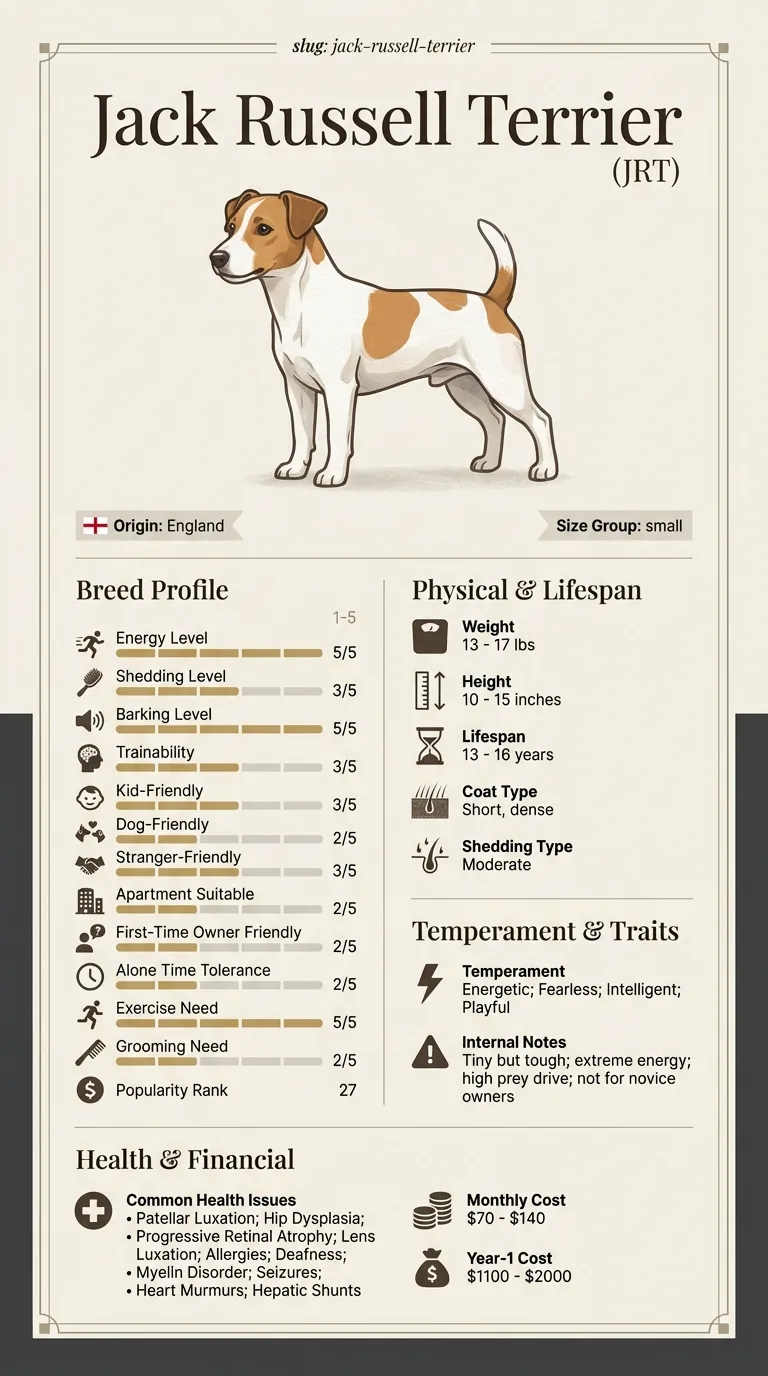
Typically, owners of Jack Russell Terriers may face this problem, especially those who are new to dog ownership or those unaware of the breed's specific health needs.
This guide is not medical advice. If your dog shows pain, sudden behavior change, or worsening symptoms, consult a licensed veterinarian.
Some links may be affiliate links. We may earn a commission at no extra cost to you. We only suggest products we believe are helpful for dog owners.
We research and check what we publish, but we do not warrant that any figure, date, price, or statement is accurate, complete, or current, and we accept no liability for any loss, cost, injury, or other harm arising from the use of this site. Use it as one reference among several. You remain responsible for your own decisions and for your dog's care - confirm anything that matters with a licensed veterinarian or another qualified professional before you act on it. Full disclaimer.
Check this first
Knowing when your Jack Russell Terrier's small nostrils (stenotic nares) are an emergency is crucial. If you notice severe breathing difficulties, such as gasping for air, blue-tinged gums, or excessive panting, these are red flags. Additionally, if your dog is lethargic, refuses to eat, or shows signs of distress, it's time to call your vet immediately.
On the other hand, mild cases can usually be monitored at home. If your Jack Russell is breathing with some difficulty but is still playful, eating, and drinking normally, you can keep an eye on them. Look for patterns in their breathing and note any changes. Keeping a log can help you gauge whether their condition is improving or worsening.
In summary, watch for the following signs to determine if it's an emergency or if you can wait: - Emergency Signs: Severe breathing issues, blue gums, lethargy, loss of appetite. - Monitor Signs: Mild difficulty in breathing, normal energy levels, regular eating and drinking.
If any of these apply, call your vet or an emergency clinic now. The rest of this page is for the cases that are not an emergency.
Jack Russell Terriers with small nostrils, or stenotic nares, often face breathing difficulties. This condition can make everyday activities like playing, walking, or even resting uncomfortable. Owners may notice their JRT panting excessively, snoring loudly, or struggling to catch their breath, especially during exercise or in hot weather.
Stenotic nares are relatively common in Jack Russell Terriers, especially given their compact facial structure. While not every JRT will experience severe problems, many will show some signs of mild respiratory issues at some point in their lives.
Jack Russell Terriers tend to have small nostrils due to their genetic makeup, which can lead to breathing issues. These small nostrils can cause obstructed airflow, especially during physical activity. The breed's high energy level often exacerbates these problems, making it vital to monitor their breathing.
Environmental factors can also contribute to breathing difficulties. Poor air quality, allergens, and extreme temperatures can worsen the situation. Stressful situations, such as loud noises or unfamiliar environments, may lead to anxiety, which can further affect their breathing.
If your dog frequently struggles to breathe, coughs, or exhibits other concerning symptoms, it’s essential to consult a vet. They can assess the severity of the stenotic nares and recommend treatments, which may include surgery in severe cases.
Avoiding these common mistakes can help your Jack Russell Terrier with small nostrils (stenotic nares) breathe easier and live a more comfortable life.
Start here: Jack Russell Terrier Most Common Genetic Disorders
See all Jack Russell Terrier health problems, which breeds are prone to small nostrils stenotic nares, or the full Jack Russell Terrier breed guide for temperament, exercise needs and ownership costs.
You should see improvements within 4 to 8 weeks after starting treatment and follow-up.
Success means your Jack Russell Terrier can breathe comfortably, is less anxious, and displays normal activity levels without excessive panting or distress.
Sarah, a busy nurse from Atlanta, adopted Max, a Jack Russell Terrier. She noticed that he often struggled to breathe, especially during playtime. After researching, she learned about Max's small nostrils (stenotic nares) and decided to consult a vet. They recommended a combination of gentle training to encourage calmness, along with a few minor lifestyle adjustments. Sarah also started a consistent exercise routine tailored to Max's needs, focusing on low-impact activities. After a few weeks, Max's breathing improved significantly, allowing him to enjoy walks without panting excessively. Sarah was thrilled to see her energetic pup back to his playful self.
Key takeaway: With the right guidance and patience, you can help your Jack Russell Terrier with small nostrils breathe better and live a happier life.
Small nostrils in Jack Russell Terriers can be a genetic trait that leads to breathing difficulties. This condition, known as stenotic nares, can be more noticeable during exercise or when the dog is excited. It's important to monitor your dog's breathing and consult a vet if you notice any signs of distress. This answer relates to Jack Russell Terrier small nostrils (stenotic nares).
To help a Jack Russell Terrier with stenotic nares, consider controlling their environment by avoiding extreme temperatures and high activity levels. Training them to take frequent breaks during exercise can also help. Regular vet check-ups are essential to manage their condition effectively.
Signs that your Jack Russell Terrier may be struggling due to small nostrils include excessive panting, coughing, or difficulty breathing during exercise. You might also notice them becoming easily fatigued. If you observe these symptoms, it's best to consult a veterinarian.
Yes, stenotic nares can often be treated through surgery to widen the nostrils. This procedure can significantly improve your dog's breathing ability. Discuss the options with your veterinarian to determine the best course of action.
Training your Jack Russell Terrier with stenotic nares involves teaching them to take breaks during play and not overexert themselves. Using positive reinforcement methods can also help in managing their energy levels. Consistent training can lead to better handling of their condition.
If your Jack Russell Terrier is struggling to breathe, wheezing, or snoring loudly, these could be signs of issues related to small nostrils. Also, watch for excessive panting or lethargy during exercise, as these can indicate breathing difficulties.
Yes, as Jack Russell Terriers age, the tissues around their nostrils can become less elastic, potentially worsening breathing issues. Regular vet check-ups can help monitor any changes and address them promptly.
If your dog is experiencing severe breathing difficulties, it’s crucial to remain calm and seek immediate veterinary help. Keep your dog as calm as possible and avoid any strenuous activity until you can reach a vet.
Yes, positive reinforcement training can help. Using treats to reward calm behavior can reduce anxiety triggers, especially in situations that may cause stress or panic, such as loud noises or unfamiliar environments.
Surgery can be an option if breathing problems are severe. It's best to consult your vet to evaluate the potential benefits and risks associated with the procedure, as well as any alternative treatments.
Keep exercise sessions short and monitor breathing closely. Avoid hot weather and provide plenty of fresh water. Regular check-ups with your vet are crucial.
Look out for signs of difficulty breathing, excessive panting, or tiredness during play. These could indicate that their small nostrils are causing issues.
Yes, costs can vary widely, but surgery typically ranges from a few hundred to over a thousand dollars. Consult your vet for an accurate estimate.
Focus on positive reinforcement and teach them to take breaks during play. Gradually train them to recognize their limits.
A one-page prep sheet for this condition: the signs, the questions to ask, what to get priced. Unlocks here.
You get: Vet visit prep sheet
No spam. One-click unsubscribe. See our privacy policy.
Preview page 1 before you decide.