Behavior
What are Miniature Schnauzer small nostrils (stenotic nares) quick tips?
Monitor your dog's weight and avoid overheating. Regular vet visits can help track any breathing issues. Training should focus on reducing anxiety and stress.

Quick answer
What are Miniature Schnauzer small nostrils (stenotic nares) quick tips?
Monitor your dog's weight and avoid overheating. Regular vet visits can help track any breathing issues. Training should focus on reducing anxiety and stress.
Miniature Schnauzers can face a common issue with small nostrils, known as stenotic nares, which can lead to breathing difficulties. (Miniature Schnauzer small nostrils (stenotic nares))
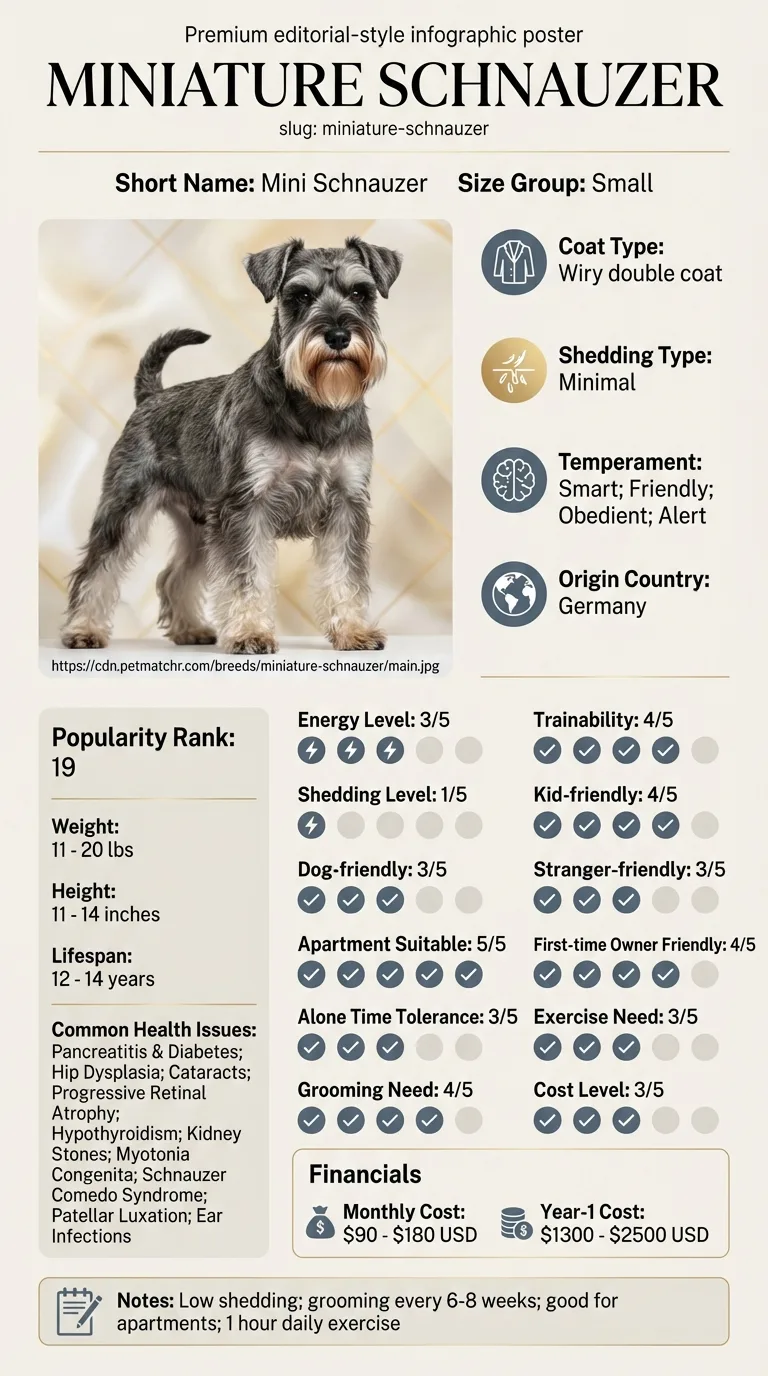
Owners of Miniature Schnauzers, especially those who are first-time dog parents or live in warm climates, may find themselves dealing with this breathing issue. It's crucial for them to recognize the signs and seek solutions to help their furry friends breathe easier.
This guide is not medical advice. If your dog shows pain, sudden behavior change, or worsening symptoms, consult a licensed veterinarian.
Some links may be affiliate links. We may earn a commission at no extra cost to you. We only suggest products we believe are helpful for dog owners.
We research and check what we publish, but we do not warrant that any figure, date, price, or statement is accurate, complete, or current, and we accept no liability for any loss, cost, injury, or other harm arising from the use of this site. Use it as one reference among several. You remain responsible for your own decisions and for your dog's care - confirm anything that matters with a licensed veterinarian or another qualified professional before you act on it. Full disclaimer.
Check this first
Understanding when your Miniature Schnauzer's small nostrils (stenotic nares) become an emergency is crucial for their health. While some symptoms can be mild and manageable, others require immediate veterinary attention. Knowing the difference can save your dog's life.
If any of these apply, call your vet or an emergency clinic now. The rest of this page is for the cases that are not an emergency.
Miniature Schnauzers can often face a common issue known as small nostrils or stenotic nares. This condition leads to breathing difficulties, making everyday activities like walking or playing more challenging. Owners may notice their Mini Schnauzer struggling to breathe, especially during exercise or excitement.
Stenotic nares are fairly common in Miniature Schnauzers, impacting many of them, particularly those with a more compact facial structure. If you notice your Mini Schnauzer having trouble breathing, it's essential to consult a veterinarian for evaluation and guidance.
Miniature Schnauzers often have small nostrils, or stenotic nares, due to their genetic makeup. This breed, like many others with shorter snouts, can inherit this trait. It leads to breathing difficulties, especially during exercise or hot weather.
Environmental factors can also play a role in exacerbating breathing issues. For example, high temperatures, humidity, or allergens can make it harder for a Miniature Schnauzer to breathe comfortably. Stressful situations, such as loud noises or crowded places, may worsen their breathing difficulties.
If your dog's breathing problems worsen, or if you notice any coughing or wheezing, it’s important to talk to a vet. They can assess the severity of your Mini Schnauzer's condition and recommend appropriate treatments or interventions.
Avoiding these common mistakes can help improve your Miniature Schnauzer's breathing issues.
Start here: Miniature Schnauzer Most Common Genetic Disorders: Screening
See all Miniature Schnauzer health problems, which breeds are prone to small nostrils stenotic nares, or the full Miniature Schnauzer breed guide for temperament, exercise needs and ownership costs.
Within 2 to 4 months, you should start to see improvements in your Miniature Schnauzer's breathing and overall comfort.
Success means your Miniature Schnauzer can breathe easier during exercise and play, showing increased energy and less fatigue.
If your Miniature Schnauzer shows any of the following signs, don't wait—call your vet immediately: - Severe difficulty breathing or gasping for air. - Blue-tinged gums or tongue, indicating a lack of oxygen. - Persistent coughing or wheezing that doesn’t subside. - Signs of extreme distress, such as pacing or inability to settle. - Fainting or lethargy that seems unusual for your dog.

In some cases, the symptoms may be mild and manageable. Here are signs that can be monitored at home: - Occasional snoring or noisy breathing. - Mild coughing after exercise or excitement. - Minor nasal discharge without other symptoms. - Slight lethargy that resolves with rest. - Normal appetite and behavior otherwise.

Emma, a first-time dog owner, noticed her Miniature Schnauzer, Max, often struggled to breathe during walks. She learned about small nostrils (stenotic nares) and sought help from her vet. With a combination of gentle training exercises and a focus on weight management, Emma helped Max breathe easier over several months.
Key takeaway: Being proactive with your dog's health can lead to significant improvements. Don't hesitate to consult a vet and stay committed to the process.
Miniature Schnauzers often have small nostrils due to their genetic makeup. This can lead to breathing difficulties, especially in hot or humid weather. If you notice signs of distress, consult a vet.
To manage stenotic nares, focus on weight management and keeping your Schnauzer calm. Avoid strenuous activities in extreme temperatures. Surgical options can also be discussed with your vet.
Symptoms include snoring, difficulty breathing, or excessive panting. You might also notice your dog tiring quickly during walks. Keep an eye out for these signs, especially in stressful situations.
Training can help your Schnauzer cope with their breathing issues. Use positive reinforcement to reward calm behavior and avoid stress triggers. However, training alone won't fix the physical problem.
Consider surgery if your Schnauzer shows severe breathing difficulties or if their quality of life is impacted. A vet can assess the situation and recommend the best course of action.
Ensure your home is cool and avoid exercise during high heat. Use calming techniques like gentle petting or soothing music. Regular vet check-ups are also important to monitor their condition.
If your Miniature Schnauzer is wheezing, snoring, or having difficulty breathing, these may be signs that their small nostrils are problematic. Look for signs of fatigue during exercise or excessive panting, as these can also indicate breathing issues that require attention.
Yes, small nostrils can cause ongoing breathing difficulties, which may lead to more severe issues like respiratory infections or heat intolerance. It's essential to monitor their health closely and consult a vet if you notice any concerning symptoms.
Keep your Miniature Schnauzer cool and hydrated during hot weather. Limit exercise during peak heat times and provide a cool, shaded area for them to rest. Using air conditioning or fans can also help prevent overheating.
Surgery can be an option to correct stenotic nares if the condition significantly affects your dog's quality of life. Consult your veterinarian to discuss whether surgery is needed based on your dog's specific situation and any breathing challenges they face.
You can help manage your Miniature Schnauzer's small nostrils by ensuring they maintain a healthy weight, avoiding strenuous activities in hot weather, and monitoring their breathing closely. Regular vet check-ups can also help catch any developing issues early.
Monitor your dog's weight and avoid overheating. Regular vet visits can help track any breathing issues. Training should focus on reducing anxiety and stress.
Surgery costs can range from $500 to $3,000, depending on the complexity and location. Always consult your vet for an accurate estimate.
Yes, risks include respiratory distress and complications during exercise or heat exposure. Keep an eye on your Schnauzer's behavior in these situations.
A one-page prep sheet for this condition: the signs, the questions to ask, what to get priced. Unlocks here.
You get: Vet visit prep sheet
No spam. One-click unsubscribe. See our privacy policy.
Preview page 1 before you decide.