Behavior
How can I manage my Poodle (Miniature) small nostrils (stenotic nares)?
Limit exercise in hot weather and monitor for signs of distress, like heavy panting.

Quick answer
How can I manage my Poodle (Miniature) small nostrils (stenotic nares)?
Limit exercise in hot weather and monitor for signs of distress, like heavy panting.
Poodle (Miniature) small nostrils (stenotic nares) can cause breathing problems that worry many dog owners. This condition can affect their overall health and comfort.
Owners of Mini Poodles may struggle with this issue, especially those new to dog ownership. It can be particularly concerning for families with active lifestyles or those living in warmer climates.
This guide is not medical advice. If your dog shows pain, sudden behavior change, or worsening symptoms, consult a licensed veterinarian.
Some links may be affiliate links. We may earn a commission at no extra cost to you. We only suggest products we believe are helpful for dog owners.
We research and check what we publish, but we do not warrant that any figure, date, price, or statement is accurate, complete, or current, and we accept no liability for any loss, cost, injury, or other harm arising from the use of this site. Use it as one reference among several. You remain responsible for your own decisions and for your dog's care - confirm anything that matters with a licensed veterinarian or another qualified professional before you act on it. Full disclaimer.
Check this first
If your Poodle (Miniature) is struggling to breathe, it’s time to take action. Signs like excessive panting, bluish gums, or a collapse indicate a serious issue. Call your vet immediately if your dog shows these symptoms, as they may require urgent care.
Mild cases can be monitored at home. If your dog occasionally seems to have difficulty breathing but is still active and responsive, you can keep an eye on them. Look for signs of improvement or worsening over time, and consider scheduling a vet visit if symptoms persist.
Determine the severity of the situation by observing your dog’s behavior. If they can still play and eat normally, it might be safe to wait. However, do not hesitate to reach out to your vet if you feel uncertain or if the situation changes.
If any of these apply, call your vet or an emergency clinic now. The rest of this page is for the cases that are not an emergency.
The Poodle (Miniature) small nostrils, or stenotic nares, can lead to significant breathing issues for your dog. This condition can manifest as noisy or labored breathing, especially during exercise or hot weather. If you notice your Mini Poodle having trouble catching their breath or frequently panting, this might be the cause.
Stenotic nares are fairly common in Mini Poodles due to their brachycephalic facial structure. Many owners report issues related to this condition, particularly in warmer climates or during high-energy activities.
Poodle (Miniature) small nostrils (stenotic nares) are common in this breed due to their unique facial structure. Their short snouts can lead to narrowed nostrils, making breathing more difficult. This trait is inherited and often seen in brachycephalic breeds.
Environmental factors can also contribute to breathing issues. For example, extreme heat or high humidity can exacerbate breathing problems. Stressful situations, like loud noises or crowded places, may further impact their ability to breathe comfortably.
If your Poodle (Miniature) experiences persistent breathing difficulties, coughing, or lethargy, it's essential to talk to your vet. They can offer medical advice and determine if further treatment, such as surgery, is necessary.
Avoiding these common mistakes can help improve your Poodle (Miniature)'s breathing issues.
Start here: Miniature Poodle Most Common Genetic Disorders: Screening
See all Poodle Miniature health problems, which breeds are prone to small nostrils stenotic nares, or the full Poodle Miniature breed guide for temperament, exercise needs and ownership costs.
You can expect to see improvements in your Poodle (Miniature) within a few weeks to a couple of months, depending on the severity of the stenotic nares and the consistency of your care and follow-up.
Success looks like your dog breathing more comfortably, showing increased energy, and enjoying outdoor activities without struggling for air.
Maggie, a new dog owner in Dallas, noticed that her Mini Poodle, Bella, was struggling to breathe, especially during exercise. After researching, she learned that Bella had small nostrils, a condition known as stenotic nares. With guidance from her vet, Maggie started a training routine that included gentle leash exercises and regular vet check-ups. Within a few months, Bella's breathing improved significantly, allowing her to enjoy longer walks and playtime at the park.
Key takeaway: With proper training and care, owners can help their Poodles manage stenotic nares effectively, leading to a happier, healthier life.
Poodles (Miniature) can inherit small nostrils due to their breeding. This condition, known as stenotic nares, leads to breathing difficulties, especially during exercise or heat. It's important to monitor your dog for signs of distress.
To help your Poodle, ensure they have a cool, calm environment. Limit vigorous exercise, especially in hot weather, and consider consulting a veterinarian about potential surgical options to improve airflow.
Watch for excessive panting, coughing, or lethargy in your Poodle (Miniature). If they show difficulty breathing or have a bluish tint to their gums, seek veterinary attention immediately.
While training won't change the physical condition of stenotic nares, it can help your Poodle learn to remain calm during stressful situations. Positive reinforcement can ease anxiety, which may reduce breathing difficulties.
Home remedies can include keeping your Poodle hydrated and ensuring they stay in a cool environment. However, always consult your vet before trying any treatments to avoid complications.
Small nostrils in Poodle (Miniature) dogs are often due to genetic traits. These small nostrils can lead to breathing difficulties, especially in hot or humid weather.
Signs that your Poodle (Miniature) may be struggling to breathe include excessive panting, wheezing, or a change in behavior, like reluctance to exercise. If you notice these symptoms, it's important to consult your vet.
Yes, small nostrils can be more problematic for senior Poodles as they may already have other age-related health issues. Regular check-ups are key for managing their overall health.
Surgery may be recommended if your Poodle (Miniature) experiences severe breathing issues. Your vet can assess the situation and advise whether this is the best course of action.
To help your Poodle (Miniature) cope with heat, ensure they have access to plenty of fresh water and a cool environment. Avoid strenuous activities during peak heat times, and consider using a cooling vest.
Limit exercise in hot weather and monitor for signs of distress, like heavy panting.
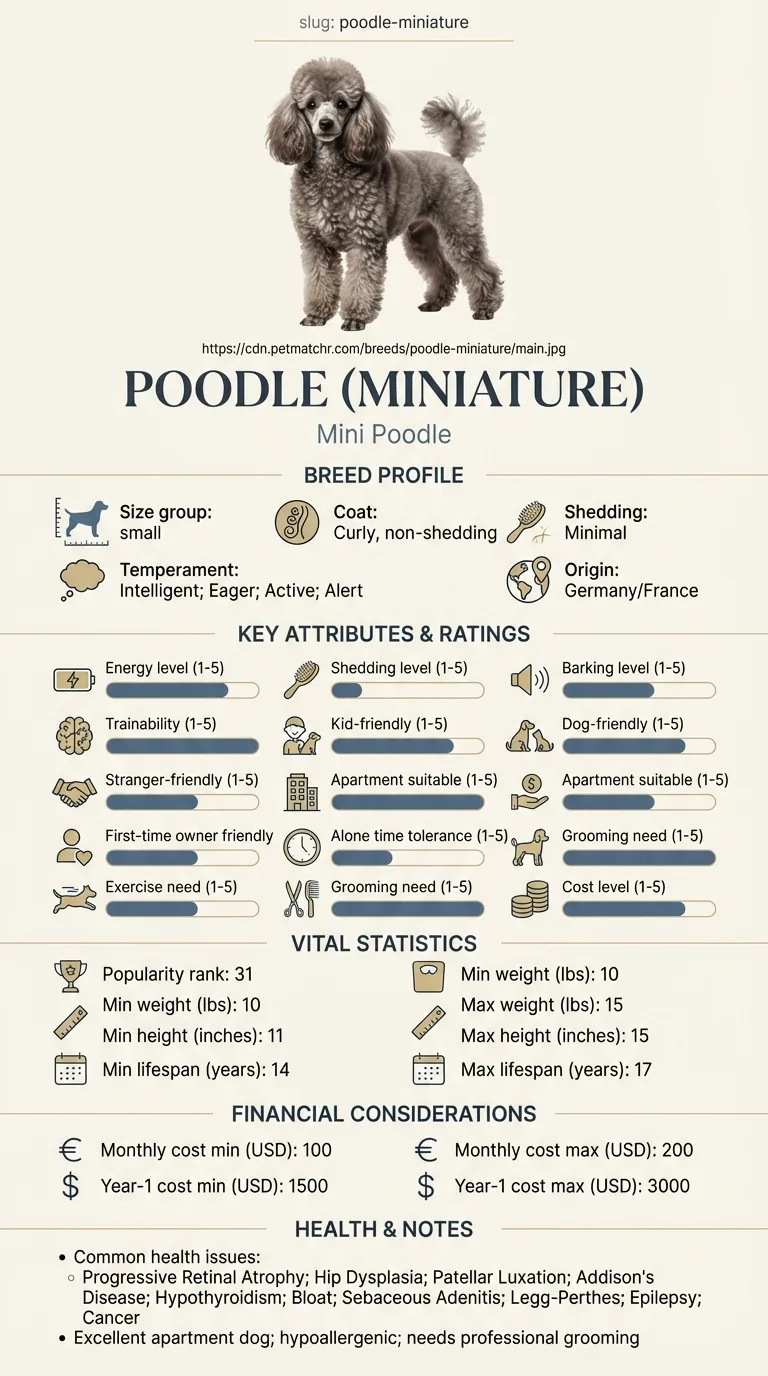
Treatment costs can range from $1,500 to $3,000 in the first year, depending on vet visits and potential surgery.
With proper care, a Poodle (Miniature) can live between 14 to 17 years, even with stenotic nares.
A one-page prep sheet for this condition: the signs, the questions to ask, what to get priced. Unlocks here.
You get: Vet visit prep sheet
No spam. One-click unsubscribe. See our privacy policy.
Preview page 1 before you decide.