Health
What does PRA-rcd3 stand for?
Rod-cone dysplasia type 3, a specific genetically mapped mutation causing one form of progressive retinal atrophy.

Quick answer
What does PRA-rcd3 stand for?
Rod-cone dysplasia type 3, a specific genetically mapped mutation causing one form of progressive retinal atrophy.
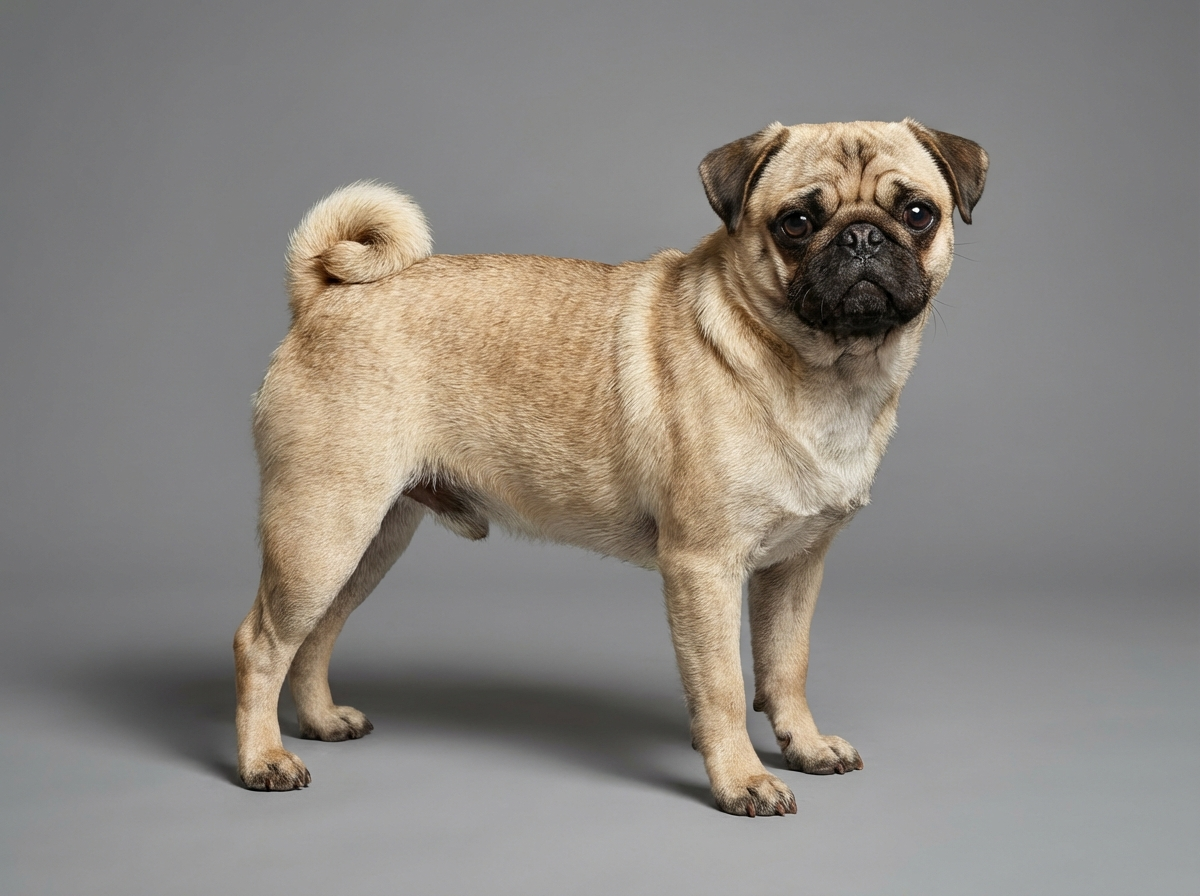
Two dogs can both be diagnosed with "PRA" by eye exam and still have completely different underlying mutations — PRA-rcd3 is the one that's been specifically identified and mapped in Pugs, which is exactly why a DNA test can answer a question an eye exam alone can't.
Breeders and prospective puppy buyers trying to understand what a PRA-rcd3 genetic test result actually means, and how it differs from a general clinical PRA diagnosis made through an eye exam.
This guide is not medical advice. If your dog shows pain, sudden behavior change, or worsening symptoms, consult a licensed veterinarian.
Some links may be affiliate links. We may earn a commission at no extra cost to you. We only suggest products we believe are helpful for dog owners.
We research and check what we publish, but we do not warrant that any figure, date, price, or statement is accurate, complete, or current, and we accept no liability for any loss, cost, injury, or other harm arising from the use of this site. Use it as one reference among several. You remain responsible for your own decisions and for your dog's care - confirm anything that matters with a licensed veterinarian or another qualified professional before you act on it. Full disclaimer.
PRA-rcd3 is a specific, genetically mapped mutation causing one form of progressive retinal atrophy documented in Pugs. Unlike a general clinical PRA diagnosis, this specific mutation can be confirmed through a simple DNA test long before any visible symptoms appear, making it a valuable tool for breeding decisions.
PRA-rcd3 is documented specifically enough in Pugs that a dedicated genetic test exists for it, making it a recognized, testable hereditary condition within the breed, though carrier and affected rates vary across different breeding lines.
PRA-rcd3 is caused by a specific, mapped genetic mutation documented in Pug bloodlines, inherited in a straightforward pattern where two copies of the mutated gene are needed for a dog to actually develop the disease, while one copy produces a carrier that's clinically unaffected.
There's no environmental factor involved in whether a dog inherits this specific mutation — it's determined entirely by which gene copies are passed down from each parent at conception, making genetic testing of breeding stock the primary tool for managing this specific risk.
Discuss genetic testing options with your vet if you're considering breeding, or ask a breeder for documented parent test results before acquiring a puppy. If a dog tests as affected or shows any vision changes, a referral to a veterinary ophthalmologist for a full clinical evaluation is a reasonable next step.
Start here: Pug Most Common Genetic Disorders: What to Screen For
See all PUG health problems, which breeds are prone to progressive retinal atrophy pra rcd3, or the full PUG breed guide for temperament, exercise needs and ownership costs.
Genetic testing results are typically available within a few weeks of submitting a sample, making it a fast, one-time test compared to waiting for clinical symptoms to appear through age-related eye exams.
Success for a breeding program is avoiding the production of affected puppies entirely through informed pairing decisions — not eliminating the mutation from the breed population, which isn't a realistic short-term goal given how it's currently distributed across bloodlines.
"Rcd" stands for rod-cone dysplasia, referring to the specific way this mutation affects the retina's light-sensing cells, and "3" identifies it as one of several distinct genetic variants researchers have mapped across different breeds. Because the exact gene and mutation responsible for PRA-rcd3 have been identified through genetic research, a DNA test — usually a simple cheek swab — can determine with certainty whether a dog carries zero, one, or two copies of the mutated gene, well before any actual vision changes would ever become clinically visible through an eye exam.
This is a meaningfully different tool than a clinical eye exam, which can only detect PRA once retinal changes have progressed enough to be visible, typically after a dog has already reached breeding age or even had puppies. Genetic testing sidesteps that timing problem entirely, identifying carrier status in a puppy or young adult long before any symptom would appear, which is exactly why it's become a standard, valuable tool for breeders trying to avoid producing affected puppies in the first place.
Understanding these three categories is the whole point of genetic testing — it turns an invisible risk into an actionable breeding decision made well before any puppies are ever produced.

Before pairing her Pug, Ivy, with a stud for her first litter, Bethany had both dogs tested for a panel of known genetic conditions, including PRA-rcd3. Ivy came back clear, but the stud she'd originally planned to use tested as a carrier. Rather than risk producing carrier puppies unnecessarily, Bethany found a different, genetically clear stud for the pairing instead. The resulting litter, tested as puppies, all came back clear for the mutation. Bethany now considers this genetic panel a non-negotiable step before any future breeding decision, having seen firsthand how a simple cheek swab test avoided a completely preventable outcome for an entire litter.
Key takeaway: A mapped genetic mutation turns what would otherwise be an invisible risk into a decision breeders can actually plan around, well before any puppy is ever born.
It stands for rod-cone dysplasia type 3, referring to a specific, genetically identified mutation affecting the retina's light-sensing cells. It's one of several distinct genetic variants of progressive retinal atrophy that researchers have mapped across different dog breeds.
A general PRA diagnosis is typically made by a veterinary ophthalmologist observing retinal changes during an eye exam, which can only happen once the disease has progressed enough to be visible. PRA-rcd3 refers to one specific, mapped mutation that can be confirmed with a DNA test long before any visible symptoms appear.
A carrier has one copy of the mutation and won't develop the disease itself but can pass the gene to offspring. An affected dog has two copies and will develop PRA-rcd3 at some point, following the disease's typical progression.
Breeding two carriers together risks producing puppies with two copies of the mutation, meaning some puppies in the litter could be affected. Pairing a carrier with a genetically clear dog avoids producing any affected puppies, though some offspring may still be carriers.
It guarantees your dog won't develop this specific mapped form of PRA, but it doesn't rule out other, less common genetic forms of retinal degeneration that haven't been mapped to a known test, or entirely unrelated causes of vision loss.
It typically involves a simple cheek swab sample sent to a genetic testing laboratory, making it a low-effort, non-invasive test that can be performed at any age, including in young puppies.
It's a reasonable question to ask a breeder, particularly since a clear or documented carrier status on both parents gives meaningful reassurance about a puppy's future risk for this specific mutation, well before any symptoms could otherwise appear.
Rod-cone dysplasia type 3, a specific genetically mapped mutation causing one form of progressive retinal atrophy.
A simple DNA test, usually from a cheek swab, can identify whether a dog is clear, a carrier, or affected.
DNA testing for a specific known mutation like this is generally an affordable add-on, often in the range of a modest one-time lab fee.
No — a carrier has only one copy of the mutation and will not develop PRA-rcd3, though it can still be passed to offspring.
Yes, it's a reasonable and increasingly standard question, since parent test results give meaningful early insight into a puppy's risk for this specific condition.
A one-page prep sheet for this condition: the signs, the questions to ask, what to get priced. Unlocks here.
You get: Vet visit prep sheet
No spam. One-click unsubscribe. See our privacy policy.
Preview page 1 before you decide.
Early access list
The free prep sheet covers the same-day warning signs, a symptom log and the questions to ask. We are considering a fuller kit that adds a cost worksheet for the usual tests and treatments (US price ranges with their sources) and a plain-English guide to ways of covering the bill. It is not built yet; this list tells us whether it is worth building.
One email, no spam, unsubscribe anytime. Information only, not veterinary advice.