Health
Which breed is PRA-rcd3 actually documented in?
PRA-rcd3 is documented specifically in the Cardigan Welsh Corgi, a distinct breed from the Welsh Springer Spaniel that happens to share the word 'Welsh' in its name.

Quick answer
Which breed is PRA-rcd3 actually documented in?
PRA-rcd3 is documented specifically in the Cardigan Welsh Corgi, a distinct breed from the Welsh Springer Spaniel that happens to share the word 'Welsh' in its name.
Two breeds can share a name and nothing else genetically, which is exactly why a DNA panel result needs to be read by mutation, not by a breed name that sounds familiar.
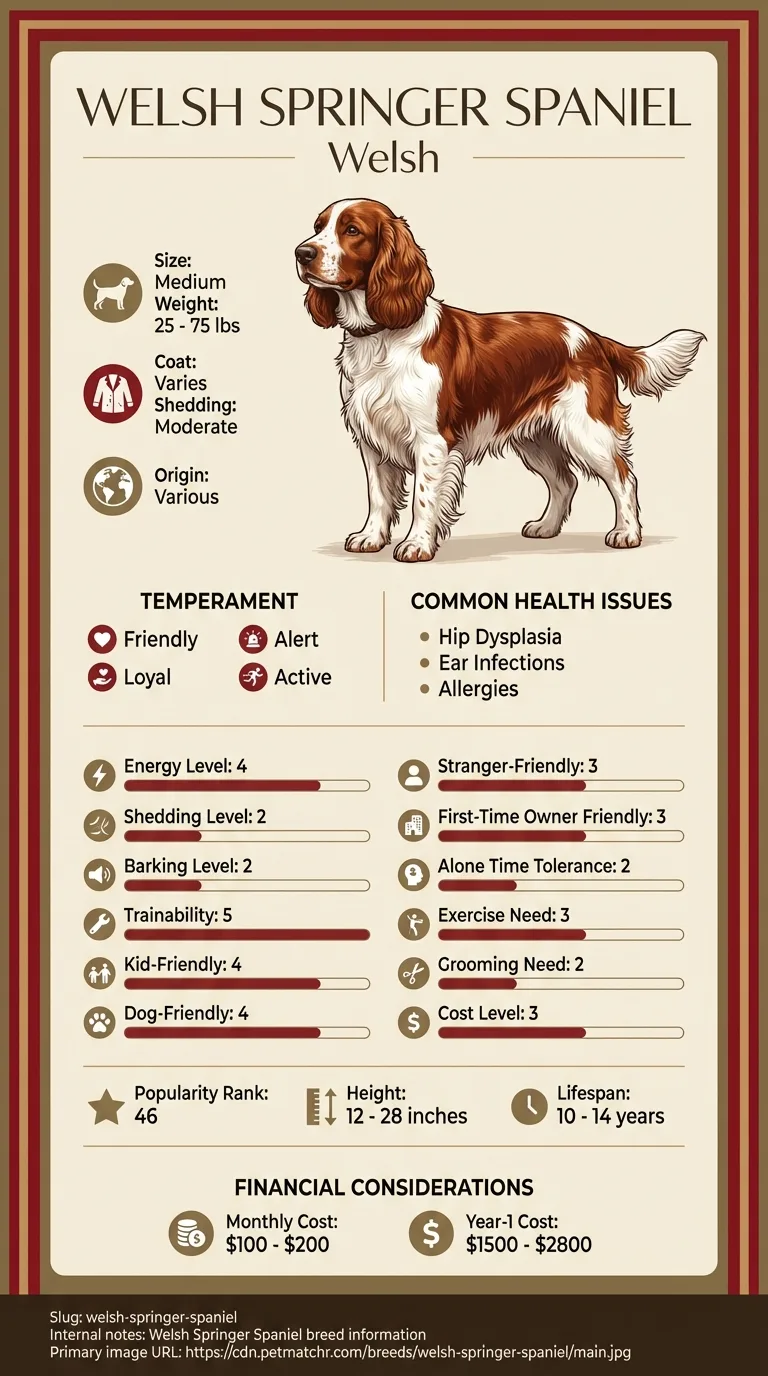
Owners who received a multi-marker PRA panel result and are trying to make sense of which mutations are actually relevant to their Welsh Springer Spaniel, and breeders deciding which genetic tests are worth running, are the audience for this specific clarification.
This guide is not medical advice. If your dog shows pain, sudden behavior change, or worsening symptoms, consult a licensed veterinarian.
Some links may be affiliate links. We may earn a commission at no extra cost to you. We only suggest products we believe are helpful for dog owners.
We research and check what we publish, but we do not warrant that any figure, date, price, or statement is accurate, complete, or current, and we accept no liability for any loss, cost, injury, or other harm arising from the use of this site. Use it as one reference among several. You remain responsible for your own decisions and for your dog's care - confirm anything that matters with a licensed veterinarian or another qualified professional before you act on it. Full disclaimer.
PRA is not one disease but a group of conditions caused by different genetic mutations documented in different breeds, and the rcd3 form specifically has its clearest documented history in the Cardigan Welsh Corgi rather than the Welsh Springer Spaniel. Because multi-marker DNA panels often screen broadly across breeds for efficiency, Welsh Springer Spaniel owners need to read results with real breed-specific context rather than treating every reported marker as equally meaningful.
The rcd3 mutation specifically is not documented as established in Welsh Springer Spaniels; broader PRA risk relevant to this breed is better understood through the general patterns documented across the wider spaniel family it belongs to.
The rcd3 mutation has its clearest documented genetic history in the Cardigan Welsh Corgi, a distinct breed, and is not established as a genetic risk specific to the Welsh Springer Spaniel; any confusion here likely stems from shared use of the word 'Welsh' in both breed names rather than any actual shared genetic lineage.
How a genetic panel's multi-breed marker list is interpreted, rather than any environmental factor, determines whether an owner draws an accurate or misleading conclusion about their Welsh Springer Spaniel's actual PRA risk.
Talk to your vet if you receive a genetic panel result you're unsure how to interpret, especially if it includes markers you don't recognize as relevant to your breed, so they can help clarify which findings actually matter. This topic itself is not a medical emergency, but any actual vision changes your dog shows should be evaluated by a veterinary ophthalmologist promptly.
See all Welsh Springer Spaniel health problems, which breeds are prone to progressive retinal atrophy pra rcd3, or the full Welsh Springer Spaniel breed guide for temperament, exercise needs and ownership costs.
Genetic panel results are typically available within a few weeks of testing, and interpreting them accurately, ideally with veterinary input, can happen in a single follow-up conversation once the report is in hand.
Success looks like reading a multi-marker panel result with accurate breed-specific context, understanding which findings are genuinely meaningful for a Welsh Springer Spaniel, and pairing genetic information with a clinical eye exam for the fullest picture.
Genetic testing labs often run multi-marker panels that screen for dozens of known PRA mutations at once, regardless of which breed a sample comes from, simply because it's efficient to test broadly rather than build a separate panel for every single breed. This means a Welsh Springer Spaniel's DNA panel can come back with results for mutations, including rcd3, that have their clearest documented history in an entirely different breed, in this case the Cardigan Welsh Corgi rather than the Welsh Springer Spaniel.
This matters because a result showing a Welsh Springer Spaniel as clear for rcd3 specifically doesn't tell an owner much, since this mutation isn't established as a meaningful risk in this breed's documented genetics in the first place. What actually matters for a Welsh Springer Spaniel is whether the panel includes markers for PRA forms with real documented relevance to the wider spaniel family this breed belongs to, since that's where an actual, plausible genetic risk would come from.
The practical takeaway is not to dismiss genetic testing, but to read results with real specificity: ask your vet or a veterinary genetics resource which specific markers on a given panel are actually established as relevant to Welsh Springer Spaniels, rather than treating every line on a multi-breed panel as equally meaningful. A clear result for an irrelevant mutation provides no real reassurance, and a positive result for one should be interpreted in that same breed-specific context.

A DNA panel is most useful when read with breed-specific context in mind, rather than treated as a single pass or fail verdict across every line it reports.
When breeder Ingrid ran a comprehensive multi-marker PRA panel on her Welsh Springer Spaniel, Piper, before planning a litter, the results came back listing dozens of tested mutations, including a clear result for rcd3. Ingrid initially felt reassured, assuming this meant Piper's PRA risk was thoroughly ruled out. At her next vet visit, she mentioned the results, and her vet pointed out that rcd3 is documented specifically in Cardigan Welsh Corgis, not Welsh Springer Spaniels, so that particular clear result didn't actually tell her much about Piper's real risk. Her vet recommended discussing which markers on the panel actually had documented spaniel-family relevance, and separately scheduling a baseline ophthalmologist eye exam for a clinical check. Ingrid now reviews genetic panels line by line with her vet before drawing any conclusions, rather than assuming every clear result is equally meaningful.
Key takeaway: A shared breed name is not shared genetics, and reading a multi-marker panel accurately means checking which specific mutations actually apply to your dog's breed rather than trusting the reassurance of a long list of clear results.
Rcd3 is a specific genetic mutation causing a form of progressive retinal atrophy, and its clearest documented history is in the Cardigan Welsh Corgi, a distinct breed from the Welsh Springer Spaniel that happens to share the word 'Welsh' in its name.
Genetic testing labs often run efficient multi-marker panels screening for many known mutations regardless of breed, so a Welsh Springer Spaniel's results can include markers, like rcd3, that aren't established as relevant to this breed's actual genetics.
Not particularly. Since rcd3 isn't established as a meaningful risk for this breed in the first place, a clear result for it provides little added reassurance about your dog's actual PRA risk from the mutations genuinely relevant to spaniels.
Ask which specific markers on the panel are documented as relevant to Welsh Springer Spaniels or the wider spaniel family, and discuss results with a vet familiar with canine genetics for accurate interpretation.
Yes. A clinical exam by a veterinary ophthalmologist can detect early retinal changes regardless of which specific genetic mutation, if any, is involved, making it a useful complement to genetic testing.
The main risk in Welsh Springer Spaniels is best understood through the general PRA patterns documented across the wider spaniel family, rather than through any single named mutation confirmed specifically for this breed.
PRA-rcd3 is documented specifically in the Cardigan Welsh Corgi, a distinct breed from the Welsh Springer Spaniel that happens to share the word 'Welsh' in its name.
Multi-marker genetic panels often screen for many known mutations regardless of the breed tested, so a Welsh Springer Spaniel's results can include markers not established as relevant to this breed.
Ask which specific markers are documented as relevant to Welsh Springer Spaniels or the spaniel family, rather than treating every line on the panel equally.
Yes, a clinical exam by a veterinary ophthalmologist can detect early retinal changes regardless of the specific genetic mutation involved.
A multi-marker genetic panel typically costs a modest one-time fee and is worth discussing with your vet for accurate interpretation of which results actually apply to your breed.
A one-page prep sheet for this condition: the signs, the questions to ask, what to get priced. Unlocks here.
You get: Vet visit prep sheet
No spam. One-click unsubscribe. See our privacy policy.
Preview page 1 before you decide.