Health
What is PRA-rcd3?
A specific, genetically mapped subtype of progressive retinal atrophy with an available DNA test.

Quick answer
What is PRA-rcd3?
A specific, genetically mapped subtype of progressive retinal atrophy with an available DNA test.
Because this particular form has a confirmed genetic marker, testing can identify carriers and affected dogs well before any visible symptom ever appears, which changes the conversation from watching for signs to proactive screening.
This is most directly relevant to breeders and prospective puppy buyers making informed decisions using genetic testing, as well as owners of a dog already showing PRA-like symptoms who want a confirmed, specific answer rather than a general diagnosis.
This guide is not medical advice. If your dog shows pain, sudden behavior change, or worsening symptoms, consult a licensed veterinarian.
Some links may be affiliate links. We may earn a commission at no extra cost to you. We only suggest products we believe are helpful for dog owners.
We research and check what we publish, but we do not warrant that any figure, date, price, or statement is accurate, complete, or current, and we accept no liability for any loss, cost, injury, or other harm arising from the use of this site. Use it as one reference among several. You remain responsible for your own decisions and for your dog's care - confirm anything that matters with a licensed veterinarian or another qualified professional before you act on it. Full disclaimer.
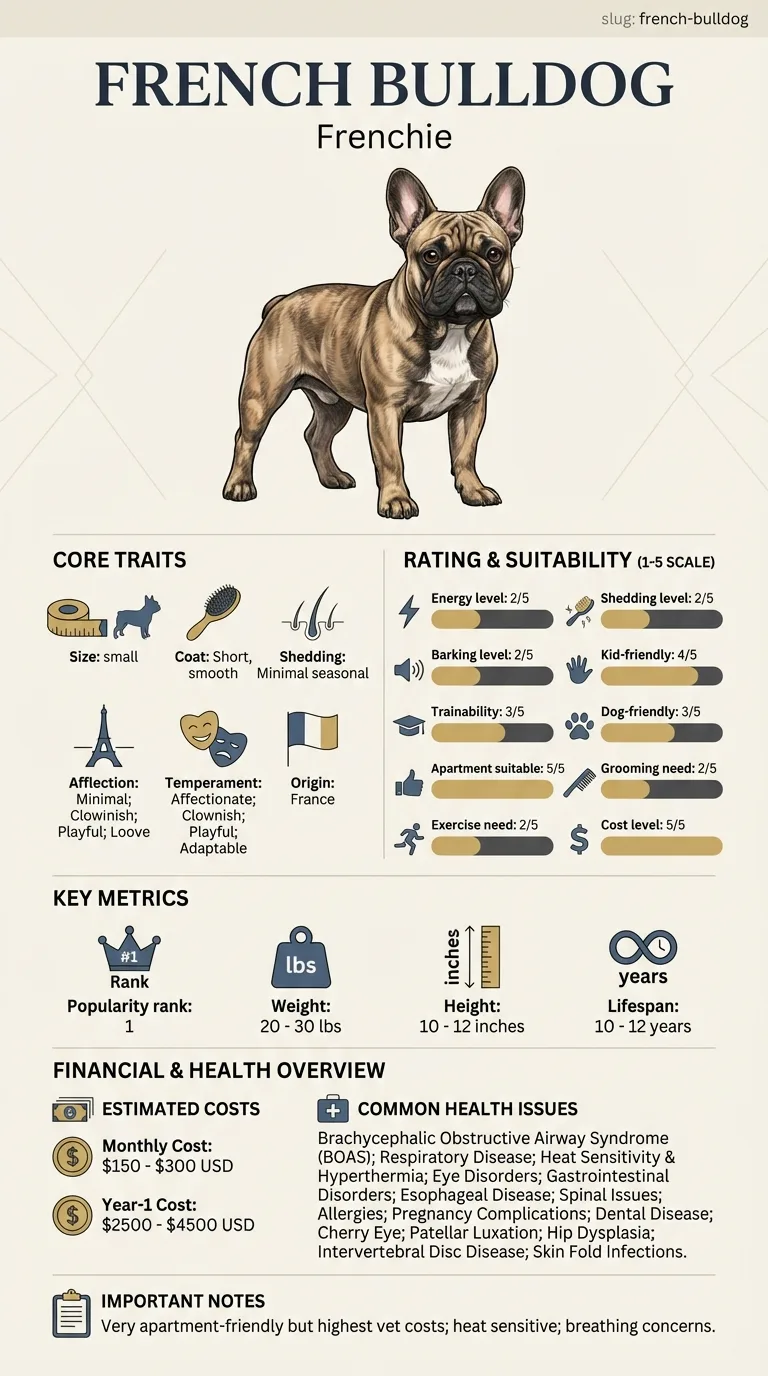
PRA-rcd3 is a specific, genetically identified subtype of progressive retinal atrophy documented in French Bulldogs, with a known causative mutation and a commercially available DNA test. This level of genetic specificity allows testing for status well before any clinical symptom appears, distinguishing it from the broader, less precisely mapped category of general progressive retinal atrophy.
PRA-rcd3 is one of several specific PRA subtypes identified across dog breeds, with documented relevance in French Bulldogs supporting the availability and use of dedicated genetic testing in the breed's health screening practices.
PRA-rcd3 results from a specific, mapped genetic mutation documented within French Bulldog lines, distinct from the breed's brachycephalic-related conditions since this one is a purely inherited retinal disease unrelated to skull or orbital shape.
There's no environmental trigger or accelerant for this genetically determined condition; its presence and progression are governed entirely by the underlying mutation and inheritance pattern rather than anything in the dog's diet, activity, or surroundings.
Discuss genetic testing options with your vet if you're making breeding decisions or want proactive information about your dog's retinal health, and bring in any dog showing night-vision difficulty for a full eye exam regardless of genetic test status.
Because this is a genetic test rather than a symptom-based diagnosis, a few common misunderstandings can lead to false reassurance or confusion.
See all French Bulldog health problems, which breeds are prone to progressive retinal atrophy pra rcd3, or the full French Bulldog breed guide for temperament, exercise needs and ownership costs.
Genetic testing itself typically returns results within a few weeks of sample submission. If a dog is confirmed to carry the disease-causing genotype, clinical vision changes generally follow the same general progression timeline as other forms of PRA, developing over one to a few years.
Success means using the available genetic clarity to plan proactively — for breeders, avoiding at-risk pairings, and for owners, preparing early for a known future course rather than being caught off guard by a symptom-based diagnosis.
The PRA-rcd3 DNA test identifies whether a dog carries zero, one, or two copies of the specific mutation associated with this retinal disease subtype. Depending on the inheritance pattern for this variant, a dog with two copies is expected to develop the disease over time, while a dog with one copy may be a carrier without necessarily developing clinical disease itself, though it can still pass the copy to offspring.
This level of genetic clarity is valuable precisely because it allows testing well before any visible symptom would appear, giving owners and breeders a much longer lead time to plan than waiting for a clinical diagnosis based on observed vision changes.
For breeding purposes, this test allows informed pairing decisions — avoiding two carrier or affected dogs being bred together — which is one of the more concrete, actionable tools available for reducing a specific inherited disease's prevalence in future litters, distinct from many of the breed's other, less precisely mapped genetic health risks.

A hobby breeder considering a specific stud for her female French Bulldog decided to test both dogs for PRA-rcd3 given its documented relevance in the breed. The results showed her female was a carrier, and the prospective stud was also a carrier, a combination that would have risked producing affected puppies. Rather than proceeding with that specific pairing, she chose a different stud confirmed clear of the mutation, avoiding the risk entirely. The resulting litter was tested as well, with results shared with the relevant breed registry.
Key takeaway: Having a specific, testable genetic marker meant this breeder could make a fully informed pairing decision months in advance, rather than discovering a preventable problem only after puppies were already born.
A specific genetically identified subtype of progressive retinal atrophy with a known causative mutation and a commercially available DNA test, distinct from general PRA which covers multiple different genetic forms.
General PRA is a category covering several distinct genetic forms of retinal degeneration; PRA-rcd3 is one specific, mapped genetic variant within that category with its own dedicated test.
Yes, a commercial DNA test is available for this specific variant, typically through a cheek swab or blood sample sent to a genetic testing lab.
Depending on the specific inheritance pattern, a carrier (one copy of the mutation) may not develop clinical disease itself but can still pass the mutation to offspring, making this information relevant for breeding decisions.
For a dog with two copies of the mutation under a recessive inheritance pattern, the disease is expected to develop over time following its own genetically determined course, though the exact timeline can vary.
Yes, testing before breeding allows informed pairing decisions that avoid producing affected puppies, making it one of the more concrete tools available for managing this specific inherited risk.
No, like other forms of PRA, there's currently no treatment that halts or reverses the retinal degeneration; management focuses on supporting the dog through progressive vision changes.
A specific, genetically mapped subtype of progressive retinal atrophy with an available DNA test.
General PRA covers multiple genetic forms; PRA-rcd3 is one specific, testable variant.
Yes, DNA testing can identify status well before any visible sign develops.
No, there's currently no treatment that halts or reverses this retinal degeneration.
Yes, it allows informed pairing decisions to avoid producing affected puppies.
A one-page prep sheet for this condition: the signs, the questions to ask, what to get priced. Unlocks here.
You get: Vet visit prep sheet
No spam. One-click unsubscribe. See our privacy policy.
See a sample page before you decide.
Early access list
The free prep sheet covers the same-day warning signs, a symptom log and the questions to ask. We are considering a fuller kit that adds a cost worksheet for the usual tests and treatments (US price ranges with their sources) and a plain-English guide to ways of covering the bill. It is not built yet; this list tells us whether it is worth building.
One email, no spam, unsubscribe anytime. Information only, not veterinary advice.