Health
What does a carrier result mean?
The dog has one copy of the mutation, will never develop that disease itself, and passes the mutation to about half its offspring. Its eyes stay normal for life.

Quick answer
What does a carrier result mean?
The dog has one copy of the mutation, will never develop that disease itself, and passes the mutation to about half its offspring. Its eyes stay normal for life.
A DNA test answers one question about one mutation. A clear result on the wrong mutation is not a clear result at all.
Buyers holding a breeder's test certificate and trying to work out what it actually guarantees, and owners who ordered a general canine DNA panel and got a result they cannot interpret.
This guide is not medical advice. If your dog shows pain, sudden behavior change, or worsening symptoms, consult a licensed veterinarian.
Some links may be affiliate links. We may earn a commission at no extra cost to you. We only suggest products we believe are helpful for dog owners.
We research and check what we publish, but we do not warrant that any figure, date, price, or statement is accurate, complete, or current, and we accept no liability for any loss, cost, injury, or other harm arising from the use of this site. Use it as one reference among several. You remain responsible for your own decisions and for your dog's care - confirm anything that matters with a licensed veterinarian or another qualified professional before you act on it. Full disclaimer.
Genetic testing for progressive retinal atrophy returns one of three results for each mutation examined: clear, carrier or affected. Most of these mutations are recessive, so two copies are needed for disease and a carrier remains entirely normal throughout life. The critical detail owners miss is that a test screens for one named variant, not for the disease, and variants characterised in other breeds carry no information about a German Shorthaired Pointer.
Progressive retinal atrophy appears on the German Shorthaired Pointer's documented health list, so relevant inherited variants exist within the breed. Carrier frequency varies substantially between lines and countries, which is precisely why individual breeder results matter more than any breed-level figure. In well-screened lines, affected puppies are largely preventable, because a single clear parent is enough to avoid producing them.
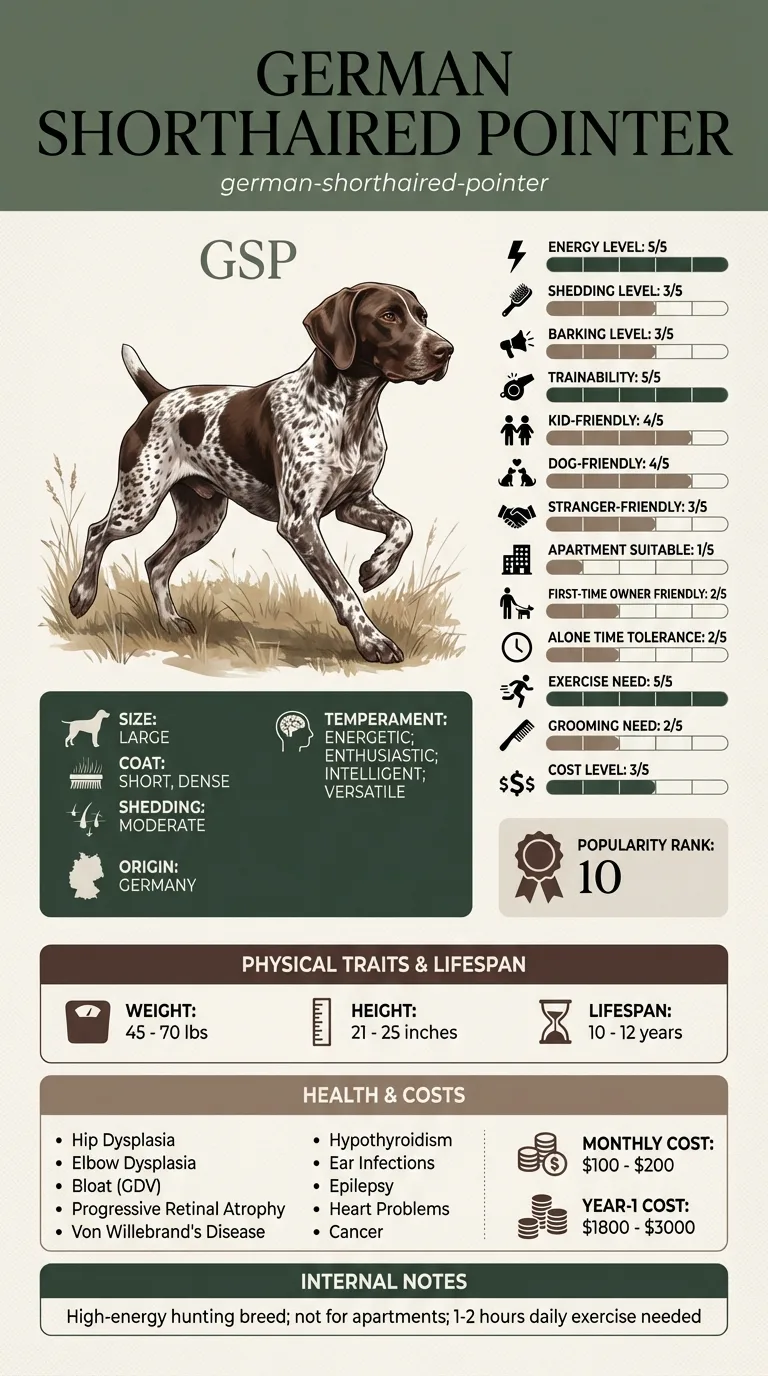
Retinal atrophy is named directly on the German Shorthaired Pointer's documented health list, establishing it as an inherited concern for the breed and making testing a reasonable expectation of any breeder. The breed's popularity, ranking around tenth, means a large registered population and an active breed community, which supports meaningful screening and record-keeping if breeders participate. That same popularity produces a great many casual litters where no testing occurs at all, and the gap between those two groups is where most preventable cases arise.
Nothing environmental alters a genotype, but the information environment does most of the damage here. Broad commercial panels marketed direct to owners list dozens of variants across many breeds, generating certificates that look impressively comprehensive while saying little about the dog in question. Breeder advertising frequently states DNA tested without naming variants. Buyers rarely feel able to question paperwork at the point of purchase. All of these are solvable by asking two specific questions and waiting for written answers.
Genetic test results are not urgent and no emergency arises from a certificate. Book a routine appointment to have results interpreted if you are unsure what a panel is telling you, and ask specifically whether the listed variants are relevant to this breed. Seek prompt veterinary attention, regardless of any test result, for an eye that is red, painful, squinting, cloudy across the front surface or suddenly enlarged, since acutely painful eye conditions can destroy sight within hours and have nothing to do with inherited degeneration. Arrange an ophthalmology referral for any dog showing gradual difficulty in dim light.
See all German Shorthaired Pointer health problems, which breeds are prone to progressive retinal atrophy pra rcd3, or the full German Shorthaired Pointer breed guide for temperament, exercise needs and ownership costs.
A DNA result typically returns within a few weeks of submitting a swab or blood sample, and the status never changes thereafter. Evaluating breeders properly takes weeks, and reputable litters are often booked months ahead. For a dog with an affected result, useful vision may remain for years, and that interval is the training window rather than a waiting period.
For a buyer, success is a folder of dated certificates naming specific variants, a clear understanding of what they exclude and what they do not, and an honest conversation with a breeder who welcomed the questions. For an owner of an affected dog, success is having used the time before vision loss to build the cues and household habits that will carry the dog through afterwards. Certainty is not available, and a certificate that promises it should raise suspicion.
Most retinal atrophy mutations are recessive, meaning a dog needs two copies to be affected. That produces three categories.
The single most common misunderstanding in canine genetic testing is treating a test as though it screens for a disease. It does not. It screens for a specific mutation.
So a certificate reading clear for a named variant means exactly this: that dog does not carry that particular mutation. It does not mean the dog cannot develop retinal degeneration by some other genetic route, and it does not mean the dog's eyes are healthy.
This is why the breed the mutation was identified in matters. Testing a German Shorthaired Pointer for a variant characterised in a different breed produces a technically accurate result that carries essentially no information about that dog's actual risk. Broad commercial panels routinely include dozens of such variants, which is how owners end up with pages of clear results that mean far less than they appear to.
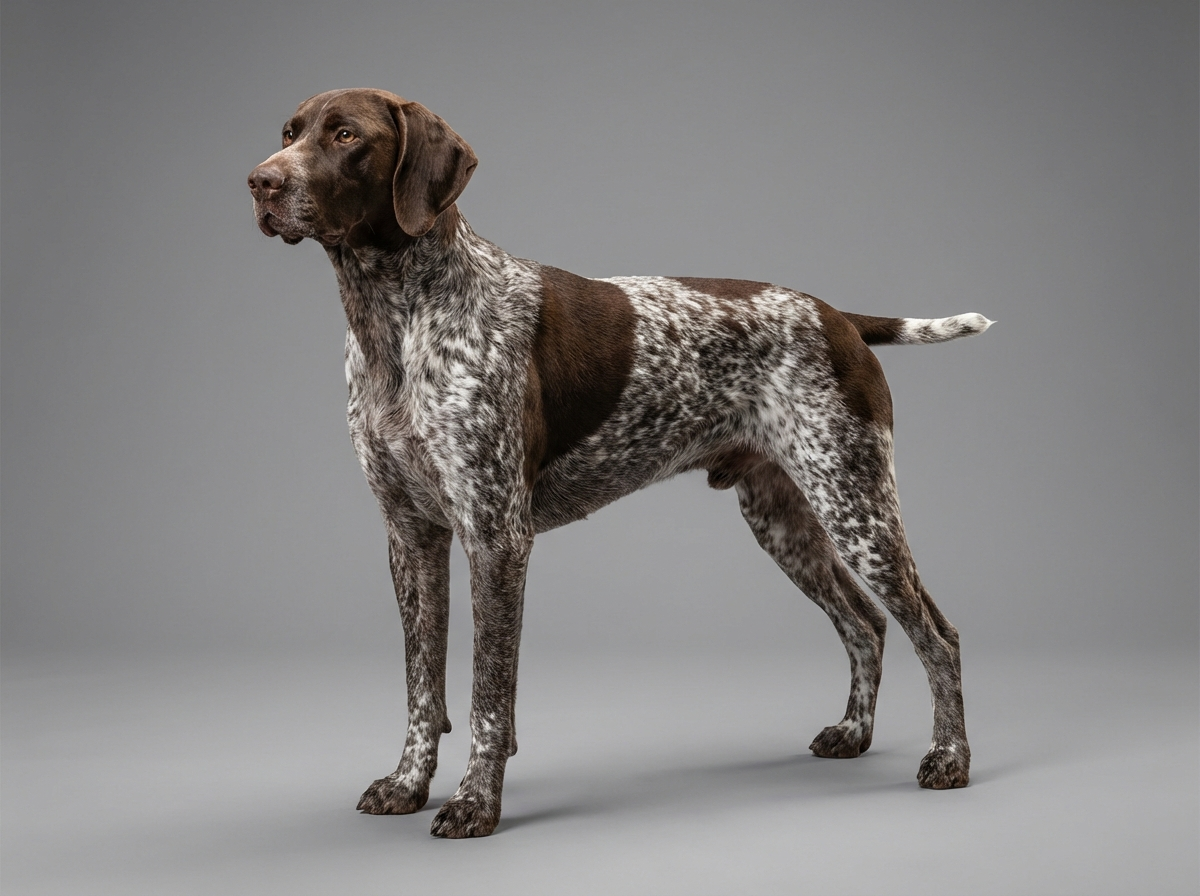
Progressive retinal atrophy is documented on the German Shorthaired Pointer's health list. The correct questions to ask a breeder are which variants they test for, whether those variants are relevant to this breed, and whether the breeding animals have also had a physical eye examination by an ophthalmologist, which detects disease regardless of its genetic cause.

Damir was shown a breeder's DNA panel for a GSP litter: fourteen variants, all clear, printed and laminated. It looked like the most thorough health testing he had ever seen. A friend who bred a different breed asked him one question. Which of those fourteen variants had actually been described in German Shorthaired Pointers. Damir went back and checked. Several had been characterised in entirely unrelated breeds and were included simply because they came bundled in the panel. The breeder had not misrepresented anything; the certificate was accurate. It just answered questions nobody had needed to ask. He went on to ask for the parents' ophthalmologist examination certificates instead, which the breeder also had. He bought the puppy. But he now describes the laminated panel as decoration rather than evidence.
Key takeaway: Count the relevant variants, not the total. A long list of clear results is impressive-looking and can contain very little information about the breed in front of you.
No. It was identified in Cardigan Welsh Corgis. A test result for it on a German Shorthaired Pointer is technically valid and practically uninformative, which is a good illustration of why the variant name on a certificate matters as much as the result beside it.
Yes, provided you know. A carrier will never develop that form of the disease and its eyes will be normal throughout life. The only implication is for breeding, which is not relevant to most pet or working homes. What matters is that the breeder discloses the status rather than you discovering it later.
Because removing every carrier from a breeding population at once shrinks the gene pool sharply and risks concentrating other problems. Responsible practice is to breed carriers only to clear-tested partners, which produces no affected puppies, while retaining valuable genetic diversity. Eliminating carriers entirely is not the more responsible approach it first appears.
No. It means your dog will not develop that specific form of the disease. Other genetic causes, cataracts, glaucoma, retinal detachment and traumatic injury are all separate routes to vision loss. A DNA panel is one useful piece of information rather than a guarantee about the eyes.
If the dog will never be bred, the practical value is limited, since no treatment follows from an affected result and the management is the same either way. Where testing does help is in anticipating: knowing an affected result exists lets you teach directional cues early and plan the household adaptations before they are needed.
The named variants tested with the result for each, the laboratory and date, and separately a recent ophthalmologist examination certificate for both parents. Physical examination and DNA testing answer different questions, and a breeding programme that does both is meaningfully better than one doing only one.
The dog has one copy of the mutation, will never develop that disease itself, and passes the mutation to about half its offspring. Its eyes stay normal for life.
No. That variant was identified in Cardigan Welsh Corgis. Ask a breeder which variants they test and whether those are relevant to this breed.
On average one quarter of the puppies are affected, one half are carriers and one quarter are clear. This pairing causes most preventable cases.
No. It only excludes that specific mutation. Cataracts, glaucoma, other genetic variants and injury remain entirely possible.
Value is limited without a breeding plan, since management does not change. It can help you prepare training and household adaptations early if a result is affected.
A one-page prep sheet for this condition: the signs, the questions to ask, what to get priced. Unlocks here.
You get: Vet visit prep sheet
No spam. One-click unsubscribe. See our privacy policy.
Preview page 1 before you decide.