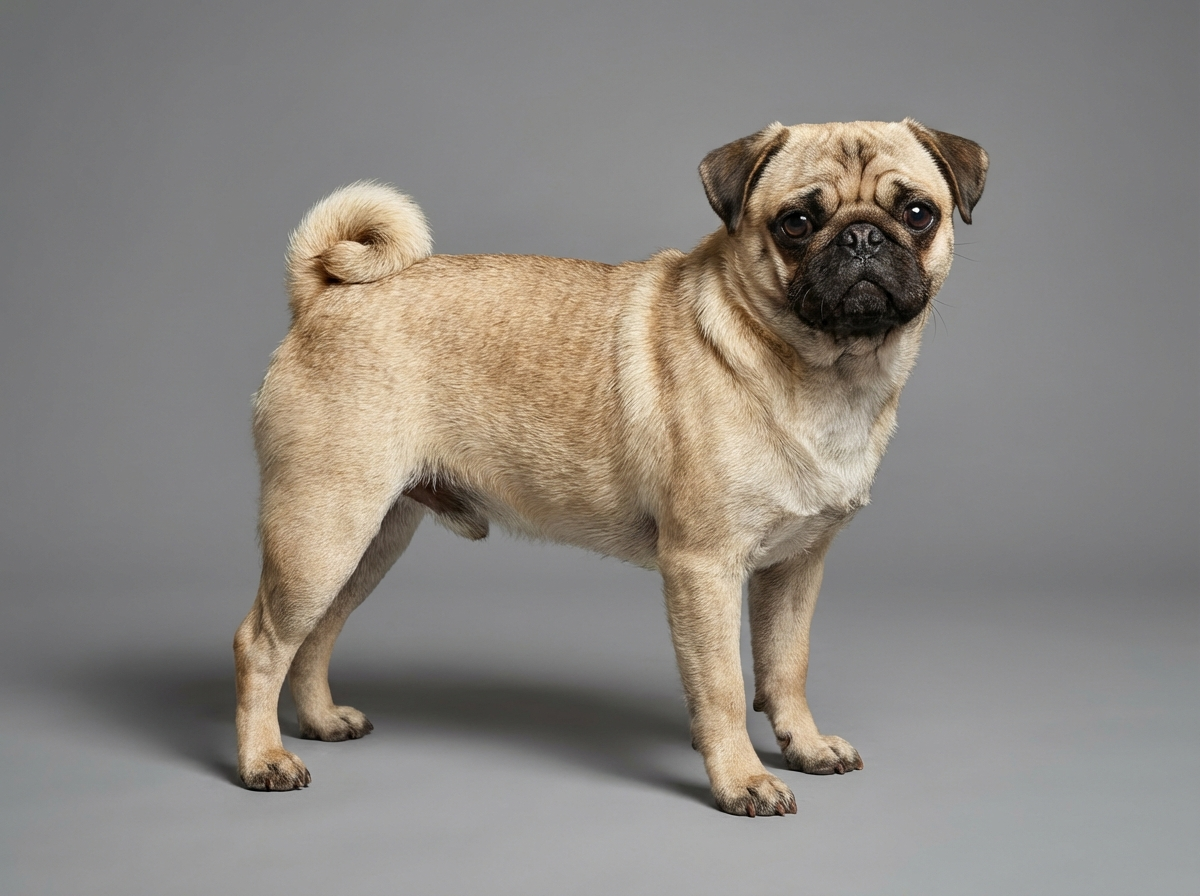
Health
Is OCD usually associated with large or small breeds?
Large, rapidly growing breeds are far more classically associated with OCD, though it can occur, less commonly, in small breeds too.

Quick answer
Is OCD usually associated with large or small breeds?
Large, rapidly growing breeds are far more classically associated with OCD, though it can occur, less commonly, in small breeds too.
A young dog favoring one leg without any injury to explain it is exactly the presentation that puts OCD on the list of possibilities — even in a breed more commonly associated with other joint issues.
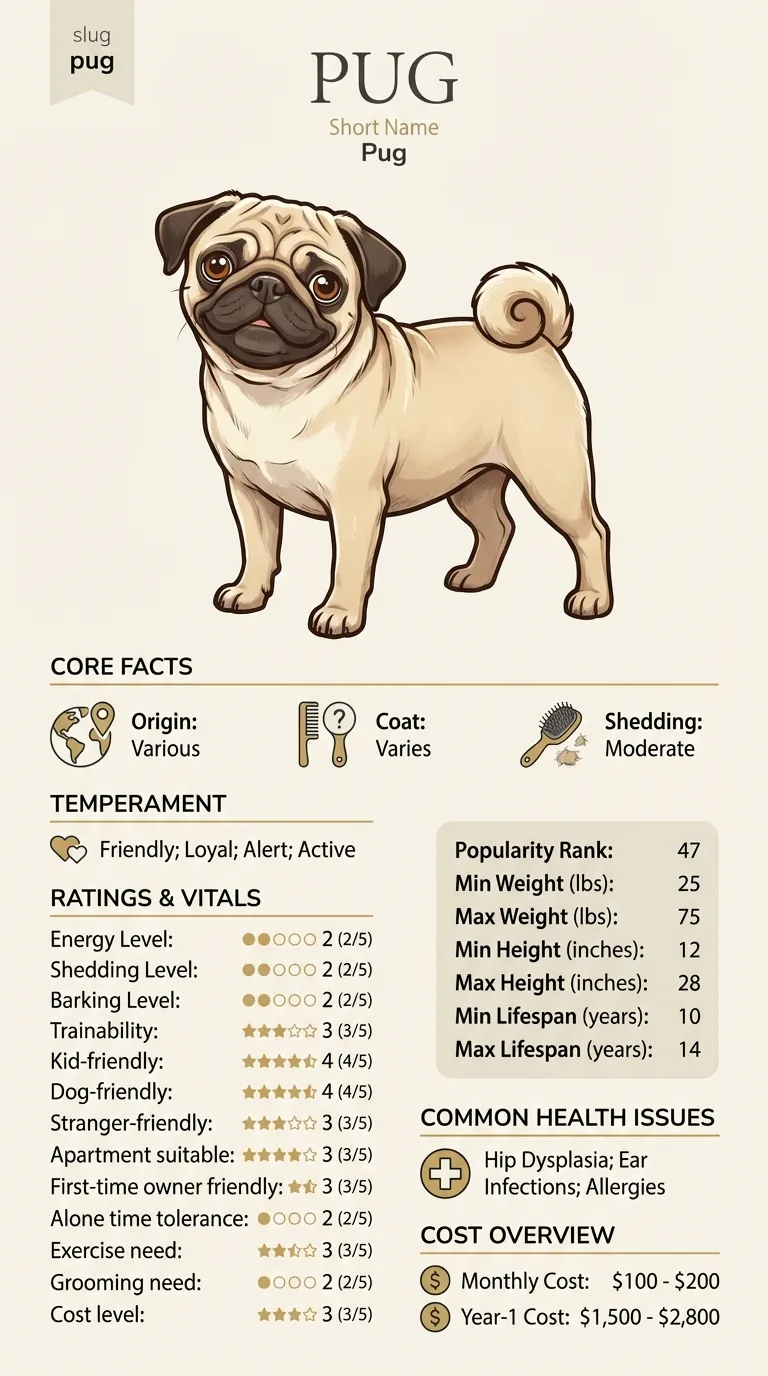
Owners of growing Pug puppies who've noticed intermittent limping or joint pain and are trying to understand a diagnosis usually associated with much larger dogs.
This guide is not medical advice. If your dog shows pain, sudden behavior change, or worsening symptoms, consult a licensed veterinarian.
Some links may be affiliate links. We may earn a commission at no extra cost to you. We only suggest products we believe are helpful for dog owners.
We research and check what we publish, but we do not warrant that any figure, date, price, or statement is accurate, complete, or current, and we accept no liability for any loss, cost, injury, or other harm arising from the use of this site. Use it as one reference among several. You remain responsible for your own decisions and for your dog's care - confirm anything that matters with a licensed veterinarian or another qualified professional before you act on it. Full disclaimer.
Osteochondritis dissecans occurs when a patch of joint cartilage fails to properly convert to bone during growth, sometimes cracking or fully separating into a painful loose fragment. It's most classically documented in large, rapidly growing breeds but remains a possible, if uncommon, diagnosis in Pug puppies with unexplained joint pain.
OCD is uncommon in small breeds compared with large, rapidly growing breeds where it's far more classically documented, but it remains a recognized possibility worth considering in a Pug puppy with unexplained joint symptoms.
OCD is fundamentally tied to how joint cartilage converts to bone during a puppy's growth phase, a process influenced by genetics and growth rate. Pugs aren't classically associated with this condition the way large, fast-growing breeds are, which is part of why it's a less common but still possible finding in this breed.
High-impact exercise or repetitive joint stress during a puppy's active growth window can place additional strain on cartilage that's already developing abnormally, though the underlying cartilage development issue itself originates independently of activity level.
Bring your puppy in for evaluation if you notice recurring limping with no clear injury, especially if it follows a pattern of worsening after exercise and easing with rest. Persistent lameness beyond a few days, or any sudden severe pain, warrants prompt veterinary attention.
Start here: Pug Most Common Genetic Disorders: What to Screen For
See all PUG health problems, which breeds are prone to osteochondritis dissecans ocd, or the full PUG breed guide for temperament, exercise needs and ownership costs.
Diagnosis typically takes one to a few weeks of evaluation, sometimes including advanced imaging. Conservative management for mild cases may show improvement within several weeks of rest; surgical recovery generally involves a few weeks of restricted activity followed by a gradual return to normal use.
Success is a joint that functions comfortably through normal daily activity, whether achieved through rest and time or surgical removal of a problematic fragment — not necessarily a joint surface that's returned to a perfectly typical structure.
During normal joint development, a layer of cartilage at the end of the bone gradually converts to solid bone as the puppy grows. In OCD, that conversion process falters in a specific area, leaving a patch of cartilage that's thicker and weaker than it should be. Under normal weight-bearing stress, that weakened patch can crack, and in more advanced cases, a fragment can separate entirely and float loose within the joint — a genuinely painful development called a joint mouse, since the free fragment can move around and cause additional irritation wherever it lands.
This condition is most classically documented in the shoulder joints of large, rapidly growing breeds, where the mechanical forces during growth are considerable. It's a less common finding in small breeds like Pugs, but it isn't impossible, and any young dog with joint pain and no clear injury deserves a workup that considers it alongside more breed-typical explanations, rather than ruling it out purely based on size.
Treatment decisions depend heavily on whether the cartilage has fully separated into a loose fragment or is still an intact, if abnormal, surface irregularity.

If you think your Pug has osteochondritis dissecans (ocd), the plan is three steps: write down what you have seen and when it started, book a veterinary appointment rather than waiting for the next flare, and take video of the behaviour or symptom before you go — the thing you are worried about rarely happens in the consulting room. Screening in the parents covers brachycephalic airway syndrome (boas), pug dog encephalitis, corneal ulcers.
What the vet visit should produce is a diagnosis and a written plan, not just reassurance: what is being ruled out, what the monitoring interval is, and which signs mean you come back sooner. Ask what the treatment costs across a year rather than per visit, because that is the number that decides whether you are managing this condition or reacting to it.
Between appointments, keep a short log — dates, what you saw, what changed. It is the single most useful thing an owner brings to a follow-up, and for osteochondritis dissecans (ocd) it is often what separates a clear pattern from a guess.
At seven months old, Layla's Pug puppy, Gizmo, started limping on one front leg intermittently — worse after their evening walk, seemingly fine some mornings. Layla assumed it was a minor strain from an overly enthusiastic play session and gave it a couple weeks. When the pattern persisted, her vet took X-rays of the shoulder, expecting to rule out more common small-breed explanations first. Instead, the imaging showed an irregular joint surface consistent with OCD — an unexpected finding given Gizmo's size. Given the pattern and imaging, Gizmo's vet recommended conservative management first — strict rest for several weeks — rather than jumping straight to surgery. That approach worked: by the end of the rest period, Gizmo's limping had fully resolved, and it hasn't returned since.
Key takeaway: Even a condition classically associated with large breeds deserves consideration in a small dog with unexplained joint pain — ruling things out by size alone can miss what's actually happening.
No — it's documented far more often in large, rapidly growing breeds, where growth-related joint stress is considerably higher. It's an uncommon but real possibility in Pugs, and worth including in a workup for unexplained joint pain in a growing puppy.
Intermittent limping, worse after exercise and better with rest, along with visible discomfort when the affected joint is manipulated, are common signs. Symptoms often don't have any clear preceding injury to explain them.
X-rays are usually the first step and can often reveal characteristic irregularities in the joint surface. More advanced imaging like a CT scan or direct arthroscopic examination may be used if X-rays don't provide a clear answer.
Not always — some mild cases, particularly where the cartilage abnormality hasn't fully separated into a loose fragment, may be managed conservatively with rest and anti-inflammatory treatment. A fully detached fragment typically needs surgical removal.
It's the term for a free-floating fragment of cartilage or bone that has separated from the joint surface and moves around within the joint, generally causing ongoing irritation and pain until it's surgically addressed.
There's no guaranteed prevention, since the underlying cartilage development issue occurs during a specific growth window, but avoiding excessive high-impact exercise during rapid growth phases is a general precaution some vets recommend for any breed.
Depending on severity and how promptly it's addressed, some dogs go on to develop earlier arthritis in the affected joint, which is part of why timely diagnosis and appropriate treatment matter even in a less classically affected breed like the Pug.
Large, rapidly growing breeds are far more classically associated with OCD, though it can occur, less commonly, in small breeds too.
Intermittent limping in a young, growing dog, often worse after exercise, with no clear injury to explain it.
Arthroscopic or open surgical removal of an affected cartilage fragment often runs into the low thousands of dollars depending on the joint involved and facility.
Generally not on its own — a free-floating fragment typically continues causing irritation until it's surgically removed.
It's a reasonable general precaution for any breed, since rapid growth periods are when cartilage development issues like OCD are most likely to occur.
A one-page prep sheet for this condition: the signs, the questions to ask, what to get priced. Unlocks here.
You get: Vet visit prep sheet
No spam. One-click unsubscribe. See our privacy policy.
Preview page 1 before you decide.