Health
What are quick tips for managing Miniature Schnauzer kidney disease?
Provide a kidney-friendly diet, keep fresh water available, and schedule regular vet visits for monitoring.

Quick answer
What are quick tips for managing Miniature Schnauzer kidney disease?
Provide a kidney-friendly diet, keep fresh water available, and schedule regular vet visits for monitoring.
Miniature Schnauzer kidney disease is a serious concern for many owners. Knowing the signs and how to manage it can greatly improve your dog's quality of life.
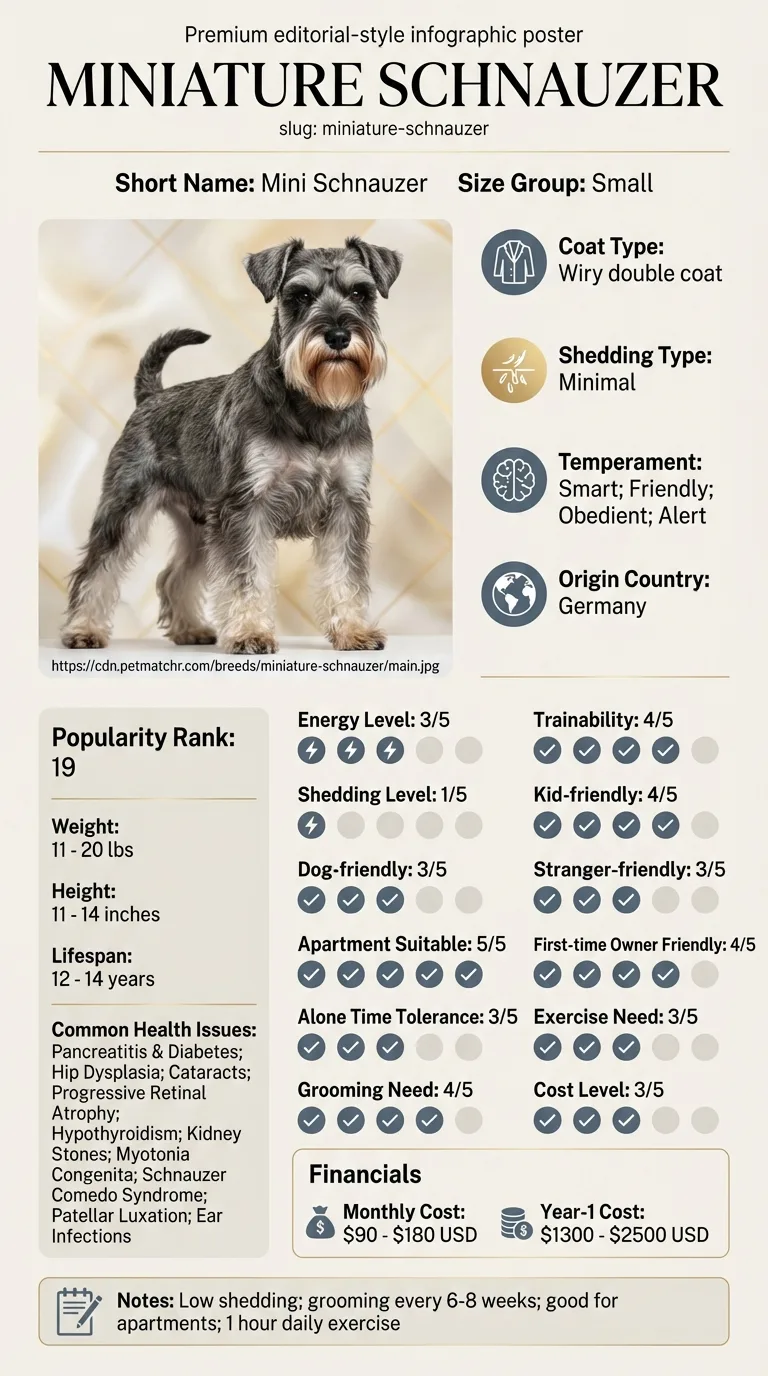
Typical owners facing this issue include families with Mini Schnauzers and first-time dog owners who may not recognize the early symptoms. Understanding kidney health is vital for those who want to provide the best care for their furry companions.
This guide is not medical advice. If your dog shows pain, sudden behavior change, or worsening symptoms, consult a licensed veterinarian.
Some links may be affiliate links. We may earn a commission at no extra cost to you. We only suggest products we believe are helpful for dog owners.
We research and check what we publish, but we do not warrant that any figure, date, price, or statement is accurate, complete, or current, and we accept no liability for any loss, cost, injury, or other harm arising from the use of this site. Use it as one reference among several. You remain responsible for your own decisions and for your dog's care - confirm anything that matters with a licensed veterinarian or another qualified professional before you act on it. Full disclaimer.
Check this first
Understanding when Miniature Schnauzer kidney disease becomes an emergency is crucial for your dog's health. Red flags indicate that you should contact your vet immediately. These include severe vomiting, lethargy, difficulty breathing, or noticeable changes in urination. If your dog shows signs of extreme weakness or has a swollen abdomen, don't hesitate—call your vet now.
On the other hand, there are mild cases of kidney disease that can be monitored at home. If your Miniature Schnauzer occasionally drinks more water than usual or has slight fluctuations in appetite, these may not require immediate veterinary attention. However, it’s wise to create a watchful plan and track any changes closely.
Keep a notebook to record your dog's behavior and symptoms. If you notice any worsening conditions or additional symptoms develop, reach out to your vet for advice. Remember, early detection and intervention can make a significant difference in managing kidney disease effectively.
If any of these apply, call your vet or an emergency clinic now. The rest of this page is for the cases that are not an emergency.
Miniature Schnauzer kidney disease can be a serious concern for owners. This condition often manifests as increased thirst, frequent urination, and weight loss. Many Miniature Schnauzers experience kidney issues as they age, making it crucial for owners to be vigilant.
Kidney disease is relatively common in Miniature Schnauzers, particularly those over the age of 7. Regular veterinary check-ups are essential to catch early signs and manage the condition effectively.
Miniature Schnauzers are genetically predisposed to certain health issues, including kidney disease. Their small size can make them more vulnerable to kidney problems. Additionally, their diet and hydration levels can greatly impact kidney function over time.
Environmental factors like diet quality, exposure to toxins, and hydration can also contribute to kidney disease. A stressful environment or lack of exercise may worsen their overall health. Regular vet check-ups can help catch early signs of kidney issues.
If you notice symptoms like increased thirst, frequent urination, or lethargy, contact your vet immediately. Early detection of kidney disease can lead to better management and treatment options.
Addressing Miniature Schnauzer kidney disease requires careful attention. However, many owners inadvertently make mistakes that can worsen the situation. Here are some common pitfalls and safer alternatives to consider.
Start here: Miniature Schnauzer Most Common Genetic Disorders: Screening
See all Miniature Schnauzer health problems, which breeds are prone to kidney disease, or the full Miniature Schnauzer breed guide for temperament, exercise needs and ownership costs.
Managing Miniature Schnauzer kidney disease typically requires ongoing monitoring and adjustments over several months. Regular vet visits will help track progression and adapt treatment plans.
Successful management includes stabilizing kidney function, maintaining a good quality of life, and keeping your Mini Schnauzer active and happy. Owners should look for appetite stability, consistent energy levels, and regular bathroom habits.
When Sarah, a devoted dog mom, noticed her Miniature Schnauzer Benny drinking more water than usual, she felt a knot in her stomach. After a vet visit confirmed early signs of kidney disease, Sarah felt overwhelmed, unsure of how to help her beloved companion. Instead of panicking, she researched dietary changes and treatment options. With her vet's guidance, she switched Benny to a special kidney-friendly diet and incorporated regular check-ups. Over the next few months, Benny's energy returned, and Sarah felt relieved to see him enjoying life again.
Key takeaway: Being proactive and informed can make a significant difference in managing Miniature Schnauzer kidney disease. Regular vet consultations and dietary adjustments are crucial for keeping your furry friend healthy.
Kidney disease in Miniature Schnauzers can be due to genetics, poor diet, or age. Regular vet check-ups can help catch early signs, like increased thirst or urination.
To manage Miniature Schnauzer kidney disease, provide a balanced diet with lower protein and phosphorus. Regular veterinary check-ups and bloodwork are essential to monitor kidney function.
Common symptoms include excessive thirst, frequent urination, weight loss, and lethargy. If you notice any of these signs, consult your vet immediately.
Yes, Miniature Schnauzers can live with kidney disease if managed properly. With a suitable diet and regular vet visits, many dogs can maintain a good quality of life.
Treatments can include dietary changes, medications to manage symptoms, and potentially fluid therapy. Your vet will tailor the treatment plan based on your dog's specific needs.
Early signs of kidney disease in Miniature Schnauzers can include increased thirst and urination, weight loss, and a decrease in appetite. If you notice these symptoms, consult your vet for a proper evaluation.
Yes, Miniature Schnauzers are at risk for kidney disease as they age. Regular vet check-ups can help catch any issues early, especially in dogs over the age of 7.
Supporting your Miniature Schnauzer with kidney disease involves providing a special diet, ensuring they stay hydrated, and following your vet's recommendations for medications or supplements. Regular check-ups are essential to monitor their health.
Treatment options for kidney disease in Miniature Schnauzers may include dietary changes, medications to manage symptoms, and in some cases, fluid therapy. Your vet will suggest the best plan based on the severity of the condition.
If you notice any symptoms like lethargy, vomiting, or changes in drinking and urination habits, it's crucial to take your Miniature Schnauzer to the vet promptly. Early intervention can make a significant difference in managing kidney disease.
Provide a kidney-friendly diet, keep fresh water available, and schedule regular vet visits for monitoring.
Aim for bi-annual check-ups to catch any changes in kidney function early.
Watch for signs of increased thirst, changes in appetite, or lethargy, and report these to your vet.
Yes, Miniature Schnauzers are prone to kidney issues, especially as they age.
A one-page prep sheet for this condition: the signs, the questions to ask, what to get priced. Unlocks here.
You get: Vet visit prep sheet
No spam. One-click unsubscribe. See our privacy policy.
See a sample page before you decide.
Early access list
The free prep sheet covers the same-day warning signs, a symptom log and the questions to ask. We are considering a fuller kit that adds a cost worksheet for the usual tests and treatments (US price ranges with their sources) and a plain-English guide to ways of covering the bill. It is not built yet; this list tells us whether it is worth building.
One email, no spam, unsubscribe anytime. Information only, not veterinary advice.