Health
How is it usually first found?
Elevated liver enzymes on routine bloodwork, often before any symptoms appear.

Quick answer
How is it usually first found?
Elevated liver enzymes on routine bloodwork, often before any symptoms appear.
A quietly failing liver often shows almost no symptoms until routine bloodwork catches it first.
This is most relevant for owners whose vet has flagged elevated liver enzyme values on routine bloodwork, since that's typically how this condition first comes to light, well before any obvious symptoms would prompt a vet visit on their own.
This guide is not medical advice. If your dog shows pain, sudden behavior change, or worsening symptoms, consult a licensed veterinarian.
Some links may be affiliate links. We may earn a commission at no extra cost to you. We only suggest products we believe are helpful for dog owners.
We research and check what we publish, but we do not warrant that any figure, date, price, or statement is accurate, complete, or current, and we accept no liability for any loss, cost, injury, or other harm arising from the use of this site. Use it as one reference among several. You remain responsible for your own decisions and for your dog's care - confirm anything that matters with a licensed veterinarian or another qualified professional before you act on it. Full disclaimer.
Chronic active hepatitis is ongoing, persistent liver inflammation that can progressively damage liver tissue over time. It isn't documented as a Pug-specific condition, but it can occur in any breed and is typically first discovered through elevated liver enzyme values on routine bloodwork, often before any visible symptoms appear.
This is an uncommon diagnosis in dogs generally and isn't documented as elevated in Pugs specifically. It's worth understanding because routine bloodwork can surface it in any breed, not because this breed carries a known predisposition.
There is no established breed-specific driver connecting Pugs to this condition. Any occurrence here reflects an individual dog's liver health rather than a documented breed pattern, similar to how this condition is understood across most breeds without a known genetic link.
Certain medications and underlying infections have been identified as contributing factors in some documented cases across dog breeds broadly, though in many individual cases no specific external cause is ever pinpointed.
Bring your dog in if you notice lethargy, reduced appetite, increased thirst or urination, or any yellowing of the eyes, gums, or skin, which signals more significant liver dysfunction and needs urgent evaluation. Follow up promptly on any abnormal liver values found on routine bloodwork rather than waiting until the next scheduled visit.
Start here: Pug Most Common Genetic Disorders: What to Screen For
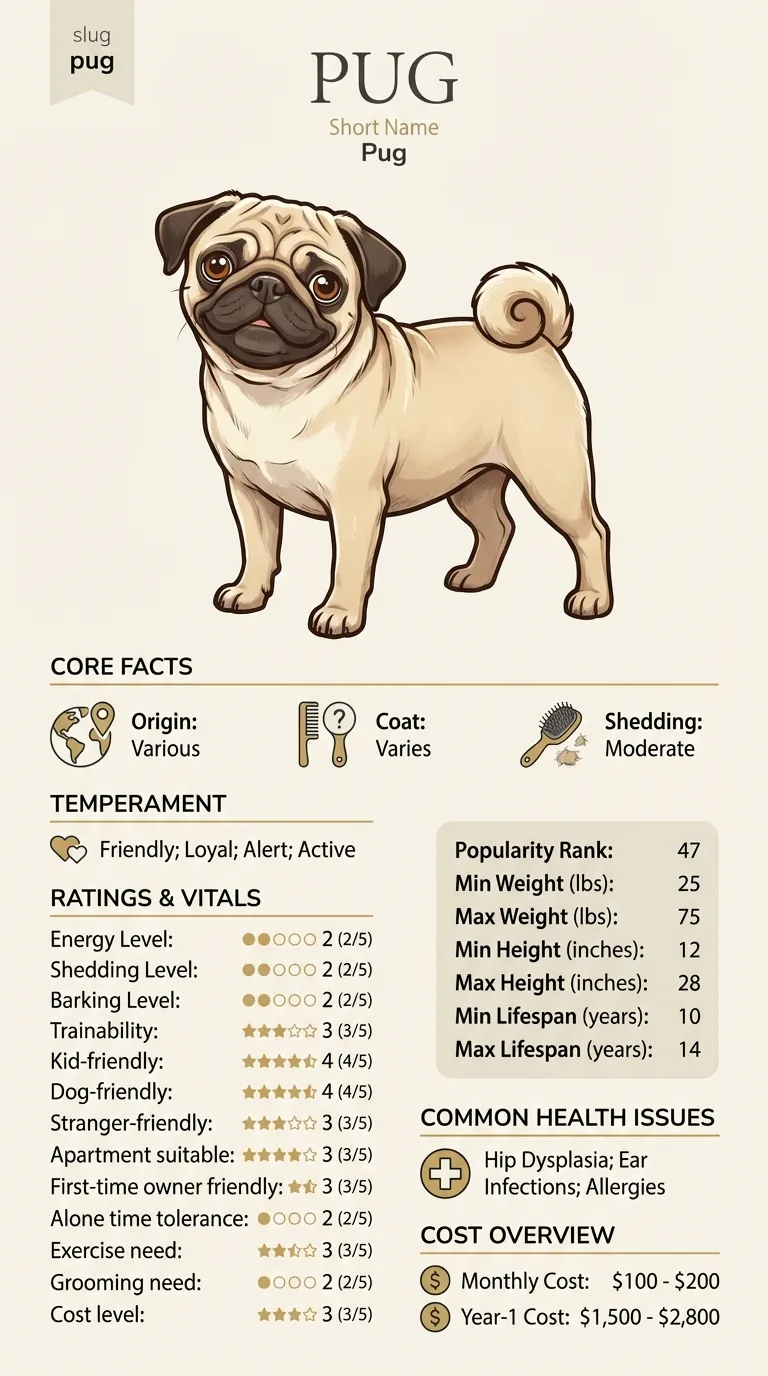
See all PUG health problems, which breeds are prone to chronic active hepatitis, or the full PUG breed guide for temperament, exercise needs and ownership costs.
Diagnosis, once abnormal bloodwork prompts further investigation, typically takes a few weeks including biopsy results. Ongoing management is a lifelong process with monitoring typically every three to six months once stable.
Success means stable, well-controlled liver values and a good quality of life through ongoing management, since this condition is generally managed rather than cured, with the goal of slowing further liver damage.
The liver has significant reserve capacity, meaning it can continue functioning reasonably well even with meaningful ongoing damage, which is exactly why symptoms tend to appear late, often after significant inflammation has already occurred. Elevated liver enzyme values on a routine annual bloodwork panel are frequently the first sign, well before a dog shows any outward symptoms. This is one of the strongest arguments for regular senior wellness bloodwork rather than waiting for visible signs, since by the time symptoms like lethargy, reduced appetite, or yellowing of the eyes and gums appear, the underlying inflammation has often been present for a while.
Elevated liver enzymes alone don't confirm chronic active hepatitis specifically, since many things can raise these values temporarily. A confirmed diagnosis typically requires a liver biopsy, examined by a pathologist for the specific pattern of ongoing inflammation and damage that distinguishes this condition from other causes of elevated liver values. Once diagnosed, ongoing management usually involves repeat bloodwork on a regular schedule to track liver values over time, alongside any treatment a vet prescribes to manage inflammation and support liver function.

At Max's routine annual senior wellness exam, his eight-year-old bloodwork showed liver enzyme values notably higher than the year before, despite Max showing no symptoms at all, still eating and playing normally. His vet recommended further testing, which led to a liver biopsy confirming chronic active hepatitis. Max started a vet-monitored management plan involving medication and a liver-supportive diet, with bloodwork rechecked every three months. Two years later, his values have stayed stable, and his owner credits the routine annual bloodwork, something she almost skipped that year, with catching it early enough to manage well.
Key takeaway: Because this condition often produces no visible symptoms until it's already progressed, routine bloodwork, not watching for symptoms, is what actually catches it early enough to manage effectively.
No, it isn't documented as a defining condition for this breed specifically. It's a general canine liver condition that can occur in any breed, included here because it does happen and deserves understanding, not because Pugs are especially prone to it.
Most often through elevated liver enzyme values found on routine annual bloodwork, well before any visible symptoms appear, since the liver's reserve capacity means it can continue functioning even with ongoing inflammation.
Lethargy, reduced appetite, vomiting, increased thirst and urination, and in more advanced cases, yellowing of the eyes, gums, or skin, called jaundice, which signals significant liver dysfunction and needs urgent attention.
A liver biopsy is typically needed to confirm the diagnosis specifically, since elevated enzyme values alone can result from several different causes and don't pinpoint this particular pattern of ongoing inflammation.
Yes, it's managed with medication a vet prescribes to control inflammation and support liver function, along with dietary adjustments in some cases, with the goal of slowing progression and managing symptoms long-term.
Typically every few months initially, then adjusted based on how stable values remain, as part of an ongoing monitoring plan your vet will tailor to your dog's specific case.
Vets often recommend a liver-supportive commercial diet formulated with adjusted protein, fat, and copper levels, tailored to the individual dog's specific bloodwork and disease stage rather than a one-size-fits-all approach.
Yes, mildly elevated values that a vet might otherwise dismiss as a fluke are sometimes the earliest signal, which is why rechecking bloodwork within a few weeks of any unexplained elevation, rather than waiting a full year, can catch it sooner.
Elevated liver enzymes on routine bloodwork, often before any symptoms appear.
Lethargy, reduced appetite, increased thirst, and in advanced cases yellowing of the eyes or gums.
A liver biopsy is needed to confirm this specific diagnosis rather than relying on bloodwork alone.
Yes, with vet-prescribed medication and diet adjustments alongside regular monitoring bloodwork.
Costs typically run in the range of $500 to $2,500 a year depending on medication and monitoring frequency needed.
A one-page prep sheet for this condition: the signs, the questions to ask, what to get priced. Unlocks here.
You get: Vet visit prep sheet
No spam. One-click unsubscribe. See our privacy policy.
Preview page 1 before you decide.