Health
What should I feed my Schnauzer (Standard) with chronic active hepatitis?
A high-quality, low-fat diet is often recommended to support liver health. Consult your vet for specific dietary recommendations.

Quick answer
What should I feed my Schnauzer (Standard) with chronic active hepatitis?
A high-quality, low-fat diet is often recommended to support liver health. Consult your vet for specific dietary recommendations.
Schnauzer (Standard) chronic active hepatitis is a serious liver disease that can significantly affect your dog's health and quality of life.
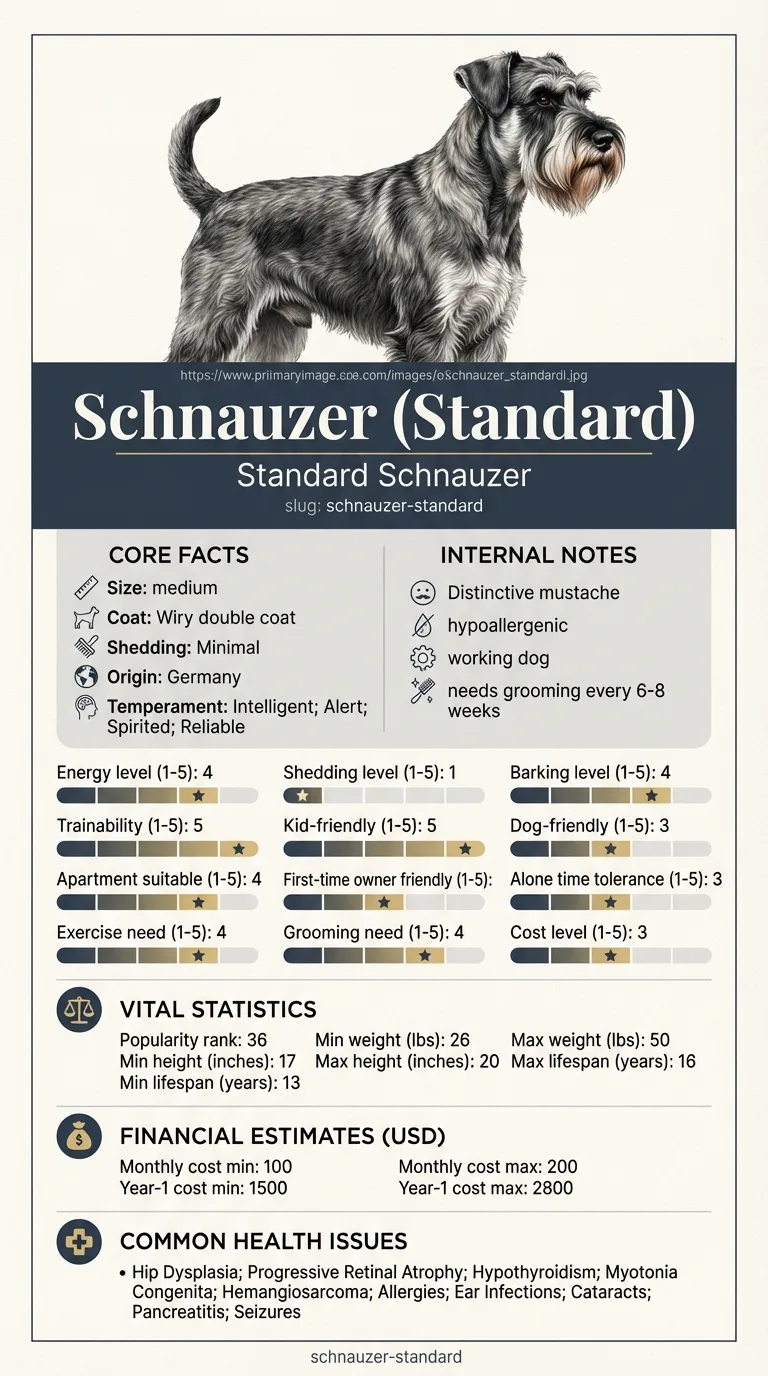
Owners of Schnauzer (Standards) may find themselves dealing with this issue, especially those who may not be aware of the breed's specific health challenges. First-time pet owners or those with limited experience in canine health management might feel particularly overwhelmed.
This guide is not medical advice. If your dog shows pain, sudden behavior change, or worsening symptoms, consult a licensed veterinarian.
Some links may be affiliate links. We may earn a commission at no extra cost to you. We only suggest products we believe are helpful for dog owners.
We research and check what we publish, but we do not warrant that any figure, date, price, or statement is accurate, complete, or current, and we accept no liability for any loss, cost, injury, or other harm arising from the use of this site. Use it as one reference among several. You remain responsible for your own decisions and for your dog's care - confirm anything that matters with a licensed veterinarian or another qualified professional before you act on it. Full disclaimer.
Check this first
Recognizing when Schnauzer (Standard) chronic active hepatitis becomes an emergency is crucial. If your dog shows severe symptoms, such as vomiting blood, sudden lethargy, or confusion, call your vet immediately. These signs indicate that the liver is severely compromised, and urgent care is needed.
On the other hand, mild symptoms like occasional vomiting or a lack of appetite can often be monitored at home. Keep track of your dog's behavior and eating habits, and consult your vet if symptoms persist or worsen. Create a plan to observe any changes and ensure your Schnauzer remains hydrated and comfortable.
Remember, early detection is key. Regular check-ups can help catch issues before they escalate. If your Schnauzer exhibits any concerning changes, it's always better to err on the side of caution and reach out to your vet.
If any of these apply, call your vet or an emergency clinic now. The rest of this page is for the cases that are not an emergency.
Schnauzer (Standard) chronic active hepatitis is a serious liver disease that affects their overall health. Owners may notice symptoms like lethargy, vomiting, and jaundice, which can impact daily life. This condition can be triggered by various factors, including genetic predisposition, infections, or toxins.
Chronic active hepatitis is relatively common in Schnauzers, particularly as they age. Regular vet check-ups are essential for early detection and management.
Schnauzer (Standard) chronic active hepatitis can be influenced by genetic factors. Some Schnauzers may inherit a predisposition to liver issues, which can lead to chronic active hepatitis. Additionally, their diet and metabolism may affect liver function.
Environmental factors play a significant role as well. Poor nutrition, exposure to toxins, and other stressors can contribute to liver disease. A lack of regular veterinary check-ups may also delay the diagnosis of underlying health issues.
If you notice symptoms like vomiting, jaundice, or changes in appetite, it's crucial to talk to a vet. Early diagnosis and treatment can make a significant difference in managing chronic active hepatitis.
Avoiding common mistakes can help manage Schnauzer (Standard) chronic active hepatitis more effectively. Here are some behaviors to watch out for.
Start here: Standard Schnauzer Most Common Genetic Disorders: Screening
See all Schnauzer Standard health problems, which breeds are prone to chronic active hepatitis, or the full Schnauzer Standard breed guide for temperament, exercise needs and ownership costs.
Managing Schnauzer (Standard) chronic active hepatitis typically requires a commitment of several months to see noticeable improvements. Regular vet visits and monitoring will be essential during this time.
Success means stabilizing your dog's condition, reducing symptoms, and improving their overall health. This can include better energy levels, improved appetite, and a more normal behavior pattern.
Laura, a busy nurse in Atlanta, adopted Max, her Standard Schnauzer, hoping for a loyal companion. After a few months, she noticed Max was lethargic and had lost weight. A vet visit revealed he had chronic active hepatitis, which left Laura feeling overwhelmed. She quickly learned about dietary changes and medication to help manage Max's condition. After several months of consistent care, Max began to regain his energy and appetite, bringing joy back into their lives.
Key takeaway: With dedication and the right veterinary support, managing chronic health issues in dogs like Max can lead to a happier, healthier life.
Schnauzer (Standard) chronic active hepatitis can be caused by various factors, including genetic predisposition, infections, or autoimmune diseases. It's essential to consult your veterinarian for a proper diagnosis and treatment plan.
Common symptoms include lethargy, loss of appetite, vomiting, and jaundice. If you notice any of these signs, take your Schnauzer to the vet for evaluation.
Treatment typically involves a combination of medication, dietary changes, and regular vet check-ups. Speak to your vet about the best approach for your dog's specific needs.
Yes, reducing stress and providing a balanced diet can help manage your Schnauzer's condition. Regular, gentle exercise is also recommended to maintain overall health.
With proper treatment and management, many Schnauzers can live comfortable lives. However, ongoing veterinary care is crucial to monitor their health and adjust treatment as necessary.
Early signs of chronic active hepatitis in your Schnauzer (Standard) can include lethargy, loss of appetite, and vomiting. You might also notice jaundice, which is a yellowing of the skin or eyes. If you see any of these symptoms, it's essential to consult your veterinarian.
Yes, dietary changes can help manage chronic active hepatitis in your Schnauzer (Standard). A vet-recommended diet that is low in copper and high in antioxidants may support liver health. Always discuss any dietary changes with your veterinarian first.
Supporting an older Schnauzer (Standard) with chronic active hepatitis involves regular vet check-ups and possibly medication. Keeping their environment calm and providing a low-stress routine can also be beneficial. Gentle exercise and mental stimulation are important too.
The decision for euthanasia should be made in consultation with your veterinarian. If your Schnauzer (Standard) is suffering, has persistent pain, or is unable to enjoy life due to chronic active hepatitis, it may be time to consider this option. It's a deeply personal decision that should prioritize your dog's quality of life.
Medications for Schnauzer (Standard) chronic active hepatitis are usually tailored to the individual. Your vet may prescribe anti-inflammatory drugs or medications to manage symptoms. Always follow your vet's guidance for treatment options.
A high-quality, low-fat diet is often recommended to support liver health. Consult your vet for specific dietary recommendations.
Regular check-ups, typically every 3-6 months, are important to monitor your Schnauzer's condition and adjust treatment as needed.
While it may not be fully curable, proper management can help control the disease and improve your Schnauzer's quality of life.
Watch for increased lethargy, persistent vomiting, or changes in behavior. If you notice any of these, contact your vet immediately.
Some supplements, such as milk thistle, may support liver health. Always discuss any supplements with your vet before adding them to your dog's regimen.
A one-page prep sheet for this condition: the signs, the questions to ask, what to get priced. Unlocks here.
You get: Vet visit prep sheet
No spam. One-click unsubscribe. See our privacy policy.
Preview page 1 before you decide.