Health
What's the key difference from allergic skin disease?
Autoimmune skin disease doesn't respond to standard allergy treatment and often causes crusting or ulceration rather than plain itch and redness.

Quick answer
What's the key difference from allergic skin disease?
Autoimmune skin disease doesn't respond to standard allergy treatment and often causes crusting or ulceration rather than plain itch and redness.
When the standard allergy treatments stop working, sometimes the skin was never dealing with an allergy at all.
This is relevant to owners whose Pug has ongoing crusting, sores, or hair loss, especially around the nose, ears, or footpads, that hasn't improved despite allergy treatment. It's a less common path than routine allergic skin disease, so it tends to surface after other explanations have already been tried.
This guide is not medical advice. If your dog shows pain, sudden behavior change, or worsening symptoms, consult a licensed veterinarian.
Some links may be affiliate links. We may earn a commission at no extra cost to you. We only suggest products we believe are helpful for dog owners.
We research and check what we publish, but we do not warrant that any figure, date, price, or statement is accurate, complete, or current, and we accept no liability for any loss, cost, injury, or other harm arising from the use of this site. Use it as one reference among several. You remain responsible for your own decisions and for your dog's care - confirm anything that matters with a licensed veterinarian or another qualified professional before you act on it. Full disclaimer.
Autoimmune skin disease occurs when a dog's immune system mistakenly attacks its own skin cells, producing crusting, ulceration, or hair loss that can resemble allergic dermatitis but doesn't respond to typical allergy treatment. It is uncommon in Pugs relative to ordinary allergic skin issues, but it does occur and is frequently misdiagnosed for months before a correct diagnosis is reached.
This is an uncommon diagnosis in Pugs. It's worth knowing about because persistent, treatment-resistant skin lesions do sometimes turn out to be autoimmune, but it should not be the first assumption for a Pug with typical itching and redness.
There is no strong documented breed-specific predisposition linking Pugs to autoimmune skin disease the way there is for some other breeds. Any case in a Pug is best understood as an individual immune system issue rather than a breed-wide risk.
Sun exposure can worsen certain autoimmune skin conditions, particularly those affecting the nose, which is one practical reason vets sometimes recommend sun protection for dogs undergoing treatment.
Talk to your vet if crusting, ulceration, or hair loss persists or worsens despite a full course of standard allergy treatment, or if lesions appear especially erosive around the nose, ear margins, or footpads. A biopsy referral at that point is a reasonable next step rather than continuing to guess.
See all PUG health problems, which breeds are prone to autoimmune diseases, or the full PUG breed guide for temperament, exercise needs and ownership costs.
Reaching a confirmed diagnosis can take weeks to a few months, since it typically follows an unsuccessful allergy treatment trial. Once diagnosed and treated, many dogs show improvement within four to eight weeks, though ongoing management is usually needed long-term.
Success means the skin lesions heal and stay controlled with ongoing treatment and monitoring, not a one-time cure, since autoimmune conditions typically require sustained management to keep the immune response in check.
Allergic dermatitis is driven by an overreactive immune response to something external, pollen, food, fleas, and it typically responds, at least partially, to antihistamines, diet changes, or allergy medication. Autoimmune skin disease works differently: the immune system generates antibodies against the dog's own skin cell components, causing direct damage regardless of any external trigger. This is why these cases often show crusting or ulceration, especially around the nose, ear margins, or footpads, that looks more erosive than the redness and itch typical of allergies, and why they don't meaningfully improve on a standard allergy treatment plan.
Because the visible symptoms can overlap with allergic or fungal skin disease, a skin biopsy is usually what actually confirms an autoimmune condition, since it lets a pathologist look at the specific pattern of immune cell activity in the skin tissue itself rather than guessing from appearance alone. This typically becomes the recommended next step only after more common causes, allergies, mites, ringworm, have been ruled out or treated without improvement. It's a more involved diagnostic path than most skin issues require, which is part of why these conditions are frequently misdiagnosed as stubborn allergies for months before the correct cause is found.

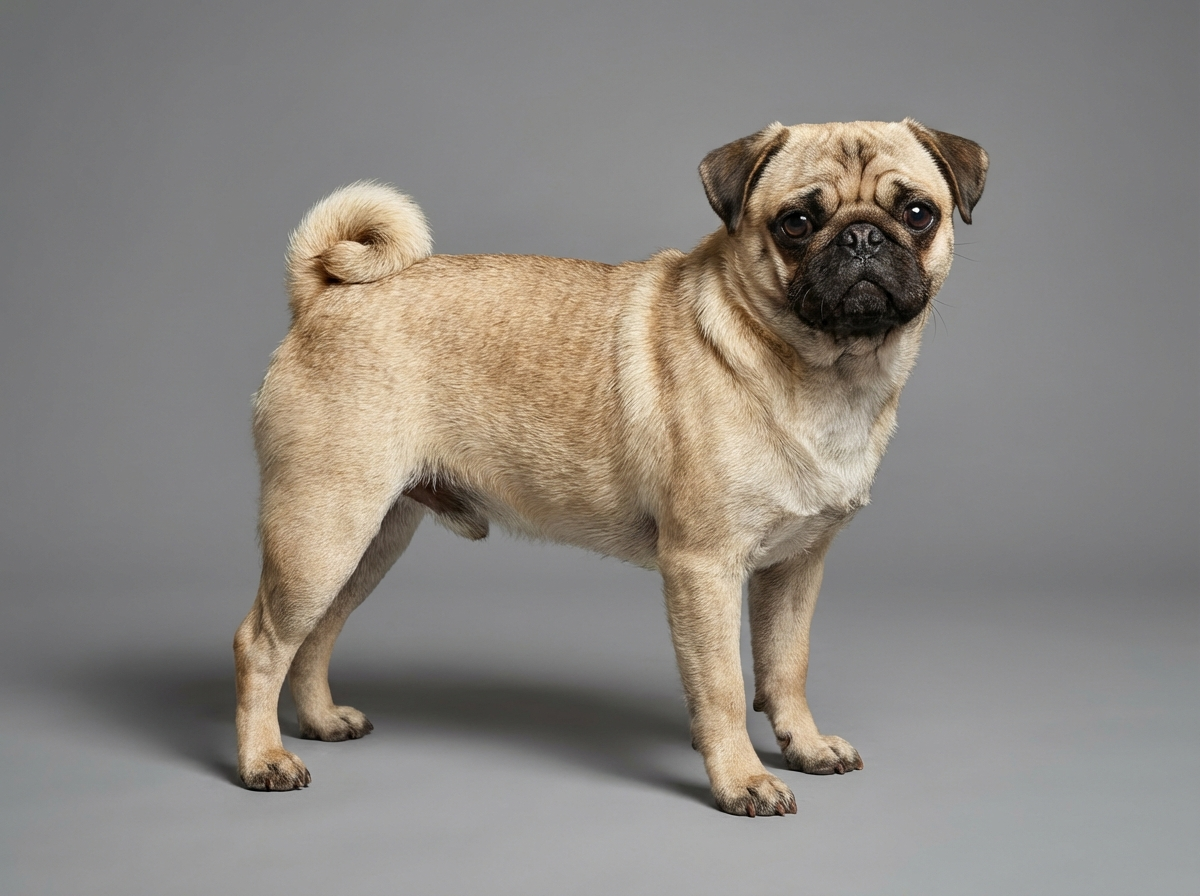
Nola, a nine-year-old Pug, developed crusty sores around her nose that her owner initially treated as an allergic flare-up, following the same routine that had worked for her occasional skin irritation before. Months of hypoallergenic shampoo and diet changes didn't help, and the sores slowly worsened. A referral to a veterinary dermatologist led to a skin biopsy, which confirmed an autoimmune skin condition rather than allergies. With a treatment plan built around her actual diagnosis, Nola's sores healed within about six weeks, and she has stayed on a lower maintenance dose with regular monitoring since.
Key takeaway: When a skin issue doesn't respond to a reasonable allergy treatment trial, it's worth considering that the diagnosis might be wrong rather than assuming the treatment just needs more time.
The clearest signal is a lack of response to standard allergy treatment combined with crusting or ulceration, especially around the nose, ear margins, or footpads, rather than the itching and redness typical of allergies. A definitive answer requires a skin biopsy, though, not just visual comparison.
No, it's uncommon compared to the allergic and fold-related skin issues that are far more typical in this breed. It's included here because it does occur and is frequently mistaken for something else, not because Pugs are especially predisposed to it.
A small sample of affected skin is removed under local or general anesthesia and sent to a specialized pathologist who examines the tissue's cellular pattern. It's a minor procedure but does typically require sedation for a dog to hold still through it.
Yes, though it's managed long-term rather than cured. Treatment typically involves immune-modulating medication prescribed and closely monitored by a vet, often a veterinary dermatologist, to control the immune response causing the skin damage.
Yes, ulcerated or crusted skin can be uncomfortable or painful, particularly on sensitive areas like the nose or footpads, which is one more reason a proper diagnosis and treatment plan matters rather than continuing to treat it as ordinary allergies.
If standard allergy treatment isn't working after a reasonable trial period, a referral to a veterinary dermatologist is a reasonable next step, since they specialize in exactly this kind of diagnostic puzzle.
In most confirmed cases, yes. Autoimmune skin disease is typically a lifelong condition managed with ongoing, closely monitored treatment rather than something that resolves permanently after one course, though many dogs do well long-term once a stable maintenance plan is found.
Autoimmune skin disease doesn't respond to standard allergy treatment and often causes crusting or ulceration rather than plain itch and redness.
A skin biopsy examined by a pathologist is the definitive way to confirm an autoimmune skin condition.
Commonly around the nose, ear margins, and footpads, though it can appear elsewhere too.
Biopsy and dermatology referral costs add up; long-term management with monitoring is an ongoing expense worth budgeting for.
No, autoimmune skin disease is not contagious since it stems from the individual dog's own immune system, not an infectious agent.
A one-page prep sheet for this condition: the signs, the questions to ask, what to get priced. Unlocks here.
You get: Vet visit prep sheet
No spam. One-click unsubscribe. See our privacy policy.
See a sample page before you decide.
Early access list
The free prep sheet covers the same-day warning signs, a symptom log and the questions to ask. We are considering a fuller kit that adds a cost worksheet for the usual tests and treatments (US price ranges with their sources) and a plain-English guide to ways of covering the bill. It is not built yet; this list tells us whether it is worth building.
One email, no spam, unsubscribe anytime. Information only, not veterinary advice.