Behavior
What are quick tips for managing Jack Russell Terrier skin infections?
Keep the dog's coat clean and dry, and regularly check for irritations. Consult your vet for the right grooming products to use.

Quick answer
What are quick tips for managing Jack Russell Terrier skin infections?
Keep the dog's coat clean and dry, and regularly check for irritations. Consult your vet for the right grooming products to use.
Jack Russell Terrier skin infections can be a frustrating issue for dog owners. These infections often stem from allergies, irritants, or even poor grooming habits.
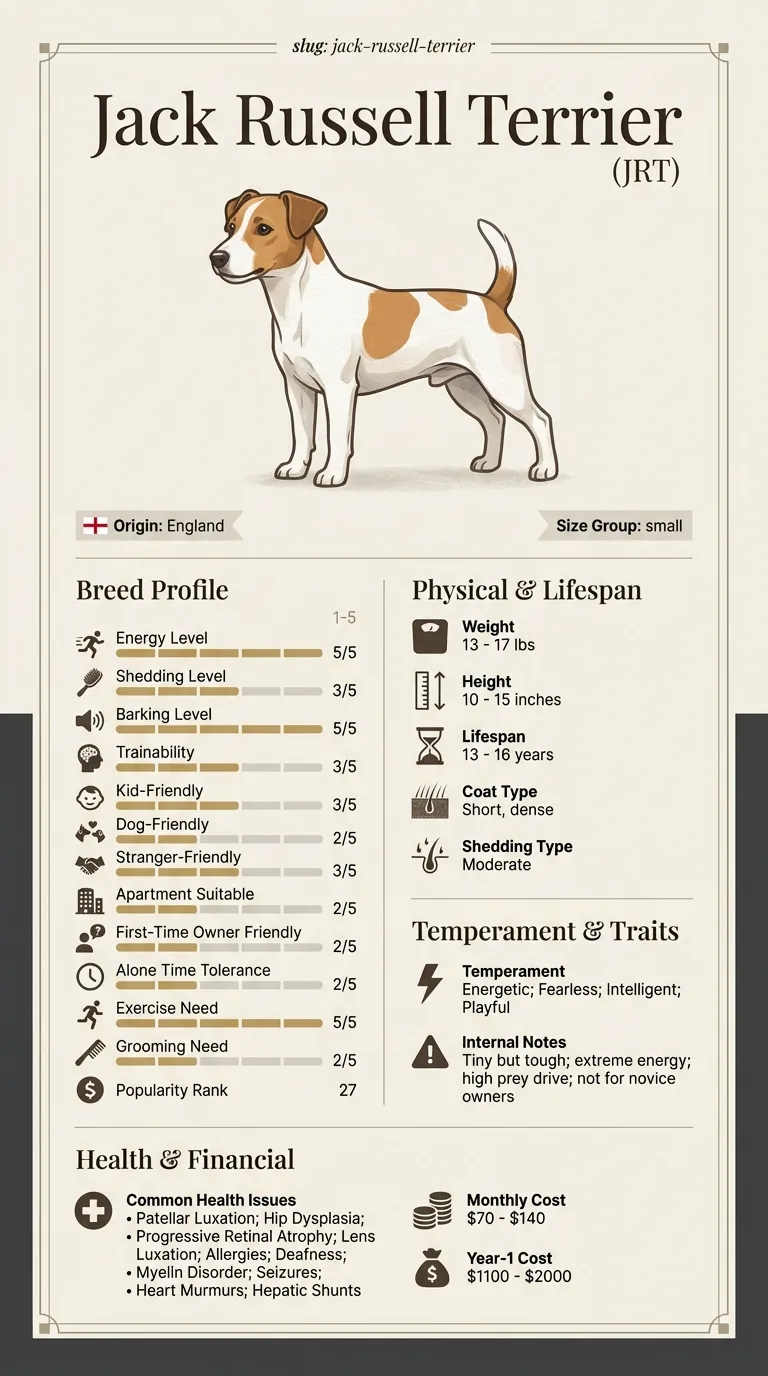
First-time Jack Russell Terrier owners, busy families, and anyone unfamiliar with dog grooming are often the ones who struggle with this problem. Many don't realize their dog is suffering until the infection becomes noticeable.
This guide is not medical advice. If your dog shows pain, sudden behavior change, or worsening symptoms, consult a licensed veterinarian.
Some links may be affiliate links. We may earn a commission at no extra cost to you. We only suggest products we believe are helpful for dog owners.
We research and check what we publish, but we do not warrant that any figure, date, price, or statement is accurate, complete, or current, and we accept no liability for any loss, cost, injury, or other harm arising from the use of this site. Use it as one reference among several. You remain responsible for your own decisions and for your dog's care - confirm anything that matters with a licensed veterinarian or another qualified professional before you act on it. Full disclaimer.
Check this first
Not all skin infections in Jack Russell Terriers require immediate vet attention. However, some signs clearly indicate that it’s time to act fast. If your JRT shows severe symptoms like open wounds, excessive redness, or swelling, these are red flags. Also, if your dog is excessively scratching or biting at the affected area, it can lead to further injury and infection.
Other emergency signs include pus or discharge, foul odor, or if your dog seems to be in pain or distress. If your Jack Russell Terrier starts showing any of these symptoms, it's crucial to contact your vet immediately. Ignoring these signs can lead to serious health issues.
On the other hand, if your dog has minor skin irritation without severe symptoms, you can monitor the situation. Look for slight redness or itching that doesn't worsen. You might consider adjusting their diet, cleaning the area gently, or using over-the-counter topical treatments. Just keep an eye on it. If it doesn’t improve in a few days or starts to look worse, it's time to consult your vet.
If any of these apply, call your vet or an emergency clinic now. The rest of this page is for the cases that are not an emergency.
Jack Russell Terrier skin infections can be a frustrating issue for many owners. These infections often manifest as redness, itching, and hair loss, particularly in areas with skin folds. Daily life can become challenging as your JRT may scratch or bite at their skin, leading to further irritation and discomfort.
Skin infections are relatively common in Jack Russell Terriers due to their active nature and moderate shedding. Many owners experience at least one episode during their dog's lifetime, highlighting the importance of regular skin checks and veterinary care.
Jack Russell Terriers are known for their energetic and fearless nature. This breed can be more prone to skin infections due to their active lifestyle and tendency to get into dirt or debris. Their short, dense coat can also trap moisture and allergens against the skin, contributing to infections.
Environmental factors play a significant role in skin infections. Changes in weather, exposure to allergens like pollen or certain fabrics, and even poor grooming habits can lead to skin issues. If your JRT spends a lot of time outdoors, they may be more susceptible to irritants that can cause infections.
If home remedies do not improve your dog's skin condition within a week, or if you see severe redness, swelling, or discharge, reach out to your vet. They can rule out underlying health issues or prescribe medications that may be necessary for recovery.
Avoiding common pitfalls can help reduce the frequency of Jack Russell Terrier skin infections.
Start here: Jack Russell Terrier Most Common Genetic Disorders
See all Jack Russell Terrier health problems, which breeds are prone to skin infections, or the full Jack Russell Terrier breed guide for temperament, exercise needs and ownership costs.
You can expect to see improvement within 4 to 6 weeks of starting treatment and management for Jack Russell Terrier skin infections.
Success means your dog's skin looks healthier, there are fewer visible irritations, and your JRT is more comfortable and less itchy.
Ava, a busy nurse in Seattle, adopted Max, her energetic Jack Russell Terrier. Shortly after bringing him home, she noticed patches of irritated skin, prompting her to seek help. After a visit to the vet, Ava learned that Max had allergies causing his skin infections. She started a treatment plan that included medicated baths and a special diet. In just a few weeks, Max's skin improved, and he seemed much happier.
Key takeaway: With the right guidance and treatment, managing Jack Russell Terrier skin infections is possible, leading to a happier and healthier pet.
Jack Russell Terriers can develop skin infections due to allergies, parasites, or poor grooming. Their short, dense coat may trap moisture and dirt, leading to infections, especially in facial folds. Regular cleaning and proper grooming can help prevent these issues.
To stop Jack Russell Terrier skin infections, ensure your dog is regularly groomed and check for any signs of irritation. Consult your vet for proper skin care and consider dietary changes if allergies are suspected. Regular vet check-ups can also help catch problems early.
Common signs include excessive itching, redness, swelling, and discharge from the affected areas. You may also notice your Jack Russell Terrier scratching or biting at their skin more often. If you see any of these symptoms, it's important to consult your vet.
Yes, Jack Russell Terriers can be prone to allergies that may lead to skin infections. Common allergens include certain foods, pollen, and flea bites. Identifying and avoiding triggers is key to managing these allergies.
Treatments may include medicated shampoos, topical ointments, or antibiotics prescribed by your vet. In severe cases, your vet may recommend allergy testing or special diets. Always follow your vet's guidance for the best results.
Yes, a poor diet can contribute to skin infections and allergies. Ensure your Jack Russell Terrier is eating high-quality food with proper nutrients. If your dog's skin issues persist, consider discussing a dietary change with your vet.
Regular grooming can help keep your dog's coat clean and healthy, reducing the risk of skin infections. Additionally, keep your dog's living environment clean and dry. Regular vet check-ups are also crucial for early detection and prevention.
Yes, some Jack Russell Terriers may be more prone to skin infections due to genetics or underlying health issues. If your dog has a history of skin problems, it's important to monitor them closely and consult your vet for tailored advice.
If your Jack Russell Terrier shows signs of skin infections that do not improve with at-home care or if they experience severe itching, swelling, or discomfort, it's time to visit the vet. Early intervention can prevent more serious health issues.
Keep the dog's coat clean and dry, and regularly check for irritations. Consult your vet for the right grooming products to use.
Aim to groom your Jack Russell Terrier at least once a week. This helps keep their skin healthy and can prevent infections.
Yes, a balanced diet can help maintain skin health. Consider discussing dietary options with your vet if skin issues persist.
While they can be managed, untreated skin infections can lead to more serious health issues. Always seek veterinary care if you suspect an infection.
A one-page prep sheet for this condition: the signs, the questions to ask, what to get priced. Unlocks here.
You get: Vet visit prep sheet
No spam. One-click unsubscribe. See our privacy policy.
Preview page 1 before you decide.