Health
What does carrier mean on a PRA DNA test?
The dog has one variant copy and one normal copy. It will never develop the disease itself but passes the variant to about half its offspring.

Quick answer
What does carrier mean on a PRA DNA test?
The dog has one variant copy and one normal copy. It will never develop the disease itself but passes the variant to about half its offspring.
Two dogs with perfect vision can produce a blind puppy. That is not bad luck, it is arithmetic, and the arithmetic is knowable in advance.
Buyers holding a breeder's paperwork and unsure what it proves, and owners who have just learned their dog is a carrier and are wondering whether that means it will go blind.
This guide is not medical advice. If your dog shows pain, sudden behavior change, or worsening symptoms, consult a licensed veterinarian.
Some links may be affiliate links. We may earn a commission at no extra cost to you. We only suggest products we believe are helpful for dog owners.
We research and check what we publish, but we do not warrant that any figure, date, price, or statement is accurate, complete, or current, and we accept no liability for any loss, cost, injury, or other harm arising from the use of this site. Use it as one reference among several. You remain responsible for your own decisions and for your dog's care - confirm anything that matters with a licensed veterinarian or another qualified professional before you act on it. Full disclaimer.
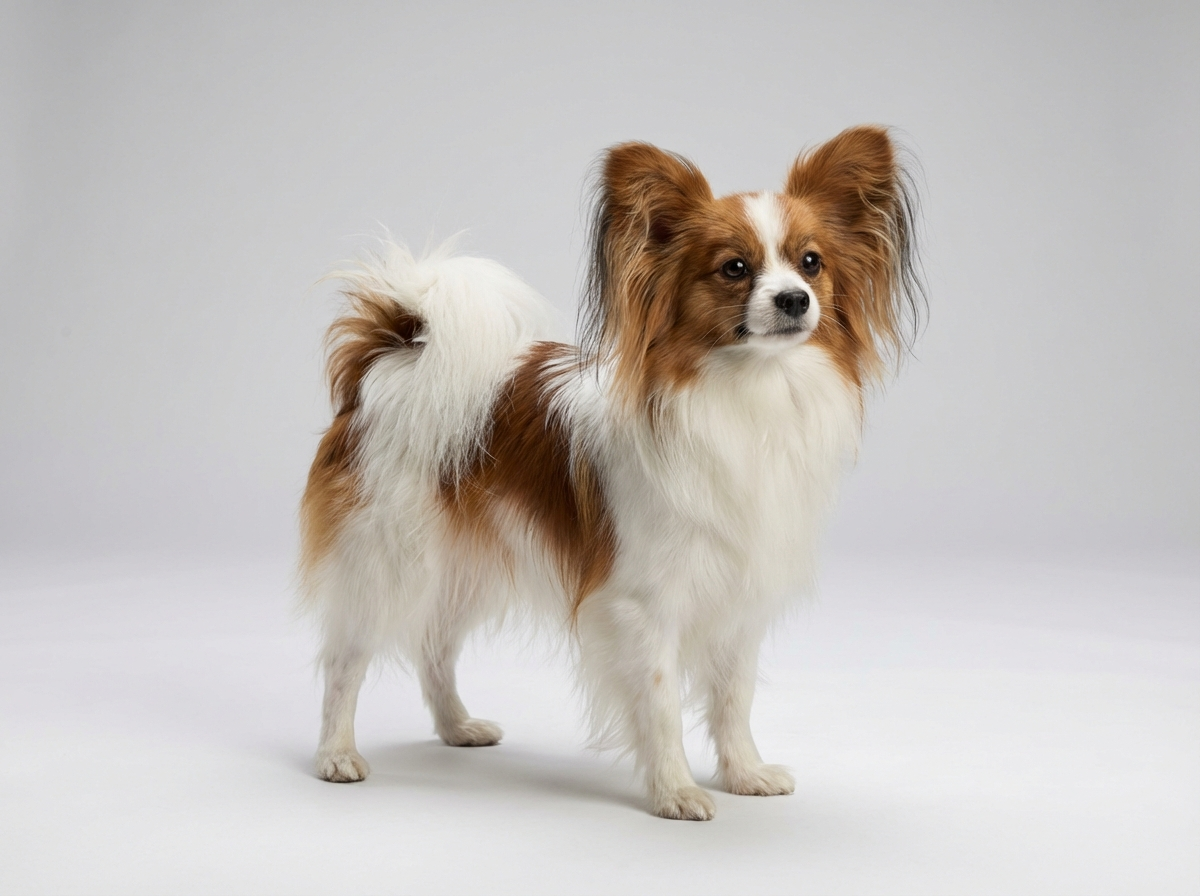
Inherited retinal degeneration in dogs is most often recessive, meaning a dog needs two copies of a variant to be affected and a dog with one copy sees perfectly while quietly passing it on. Several genetically distinct forms exist and each has its own test. For a Papillon buyer the practical task is not memorising genetics but verifying a certificate: which dog, which test, which laboratory, which date, and which of the three possible results.
Carrier frequencies vary by breed and by line and are not fixed numbers. What is consistent is the pattern: a recessive variant persists precisely because carriers look healthy, so its presence in a population is invisible without testing. Progressive retinal atrophy sits on the Papillon's documented health list, which is why the testing culture in this breed centres on eyes.
Closed breed populations concentrate variants. Every registered Papillon descends from a limited founder group, so a variant present in an influential early dog can spread widely through generations of otherwise healthy carriers. Because the disease does not appear until two copies come together, and often not until adulthood even then, there is no natural feedback telling breeders to avoid a line. Testing supplies the feedback that biology withholds.
Genotype is fixed at conception and nothing environmental changes it. Where environment operates is in the information market. Health testing claims are unregulated, certificates are rarely checked, and buyers are often reluctant to ask a friendly breeder for documentation. That social friction, rather than any biological factor, is what allows untested dogs to keep producing puppies with confident verbal assurances attached.
Your vet is the right person to advise on whether testing is worthwhile for your individual dog and to arrange referral for a specialist eye examination. Book an appointment if your Papillon shows hesitancy in dim light, bumps into things, or misjudges jumps. Seek same day care instead if an eye becomes painful, red, cloudy or watery, or if vision is lost abruptly over hours, because sudden painful vision loss indicates a very different problem and can threaten the eye within a day.
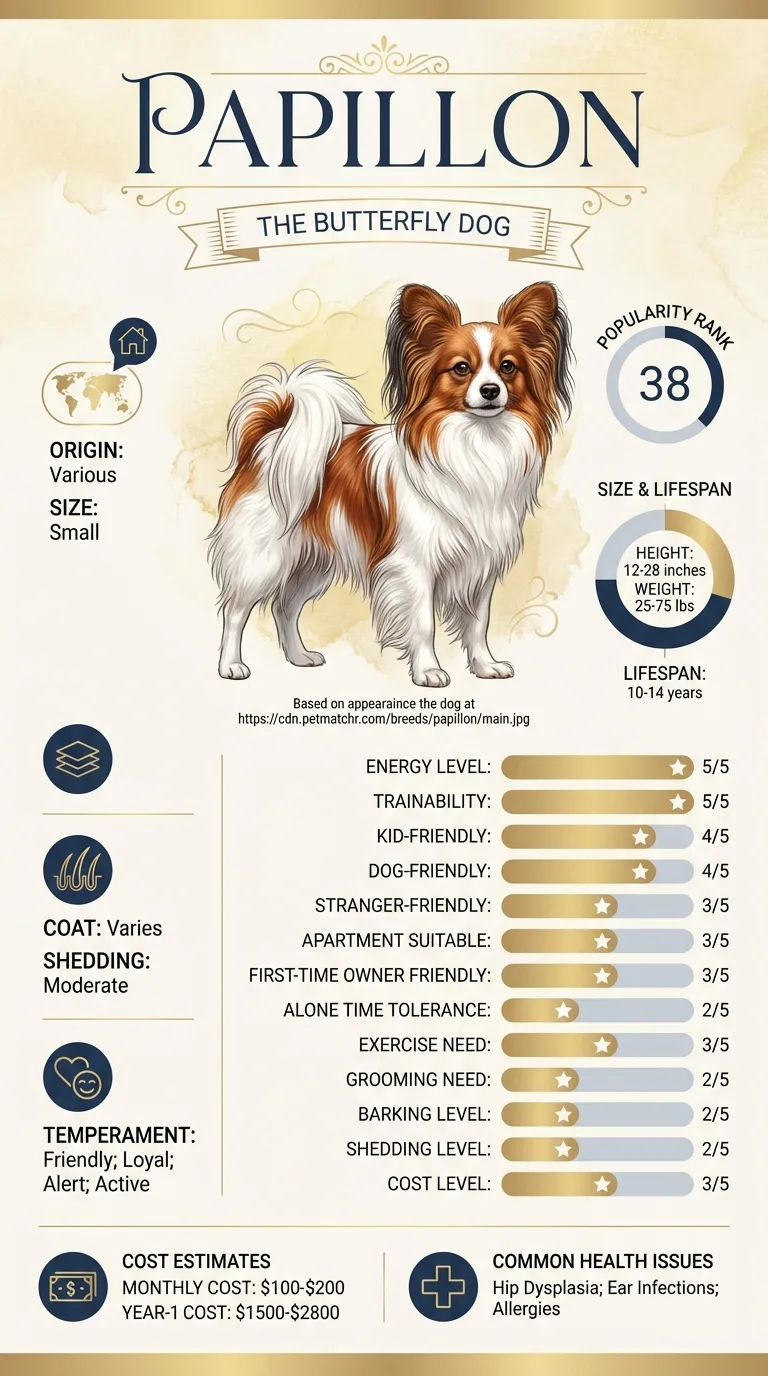
See all Papillon health problems, which breeds are prone to progressive retinal atrophy pra rcd3, or the full Papillon breed guide for temperament, exercise needs and ownership costs.
A DNA result usually returns within one to three weeks of a cheek swab or blood sample. A specialist eye examination gives an answer the same day. Neither changes the dog's fate. What they change is which pairings are made, and that effect is measured across generations rather than within one dog's life.
Success for a buyer is a folder containing verified certificates for both named parents plus a current eye examination, and a breeder who could explain a decision they made on the strength of a result. Success for the breed is fewer affected puppies without a collapse in genetic diversity.
For a recessive condition each dog carries two copies of the relevant gene, one from each parent. A dog with two normal copies is clear and neither develops the disease nor passes the variant on. A dog with one normal and one variant copy is a carrier: it will not develop the disease, because the normal copy is enough, but half of its offspring inherit the variant. A dog with two variant copies is affected and will develop the disease.
The consequences for breeding fall out directly. Two clear dogs produce only clear puppies. A carrier bred to a clear dog produces roughly half clear and half carrier puppies and, crucially, no affected ones. Two carriers, both of whom see perfectly well their whole lives, produce on average a quarter clear, half carrier and a quarter affected.
That last pairing is how inherited blindness persists in a breed. Nobody involved has a visibly unwell dog. This is also why the responsible use of testing is not to eliminate every carrier, which would shrink an already limited gene pool and risk concentrating other problems. A valuable carrier bred to a clear dog produces no affected puppies while keeping its other qualities in the population.
What a certificate must therefore tell you is which specific test was run, on which named dog, by which laboratory, on what date, and what the result was in those three categories.

Health testing claims are unregulated and the phrase DNA tested carries no fixed meaning. These five checks turn a document into information.
Joaquin was offered a Papillon puppy and asked for eye and DNA paperwork on both parents. The breeder sent three documents promptly and cheerfully. Reading them at home, Joaquin noticed the DNA certificate for the sire named a dog whose registered name did not match the sire he had been introduced to. He asked about it. The breeder explained, without embarrassment, that the certificate belonged to the sire's father and that the stud himself had not been tested, since his own father was clear. That reasoning is wrong: a clear grandparent guarantees nothing about a dog whose other parent was untested. Joaquin asked for the stud to be swabbed. He came back a carrier, and the dam was untested. Joaquin walked away. The breeder, to her credit, tested the dam, found her a carrier too, and never repeated the pairing.
Key takeaway: Read the name on the certificate. A recessive variant travels invisibly through healthy dogs, so paperwork about a relative is not paperwork about the parent, and a friendly explanation is not a test result.
No. For a recessive condition a single normal copy of the gene is sufficient for normal function, so a carrier has entirely normal vision throughout its life. Its status matters only for breeding, where it determines what pairings are safe. Owners of pet carriers should treat the result as information about the dog's puppies, not about the dog.
Not for the variant that was tested. They could, in principle, produce a puppy affected by a different form of retinal disease that the test did not cover, or by an entirely different eye condition. This is exactly why a specialist eye examination sits alongside DNA testing rather than being replaced by it.
Generally not, and doing so can cause more harm than good. Eliminating every carrier from a numerically limited breed sharply reduces genetic diversity and can concentrate unrelated problems. The established approach is to breed carriers only to tested clear dogs, which produces no affected puppies while preserving the population's breadth.
Ask the breeder and confirm with a laboratory that offers breed specific panels, because the relevant variant is a technical question that a lab can answer definitively and a website cannot. What you should insist on regardless is a current specialist eye examination on both parents, since that examines the retina itself rather than predicting from genetics.
An affected genotype means the dog has two variant copies and is expected to develop the disease, but age of onset varies and the dog may simply not have reached the point of visible signs. Speak to a veterinary ophthalmologist about baseline examination and monitoring, and do not breed from the dog.
For a pet that will never be bred, the practical value is limited, since knowing the status does not change treatment and there is no treatment to change. It can be worth it if you want to prepare for possible sight loss, or if you plan to share information with the breeder. For a breeding dog it is not optional.
The dog has one variant copy and one normal copy. It will never develop the disease itself but passes the variant to about half its offspring.
They should not be. On average a quarter of the puppies from two carriers will be affected, even though both parents see perfectly.
No. The DNA test predicts one specific genetic status. A specialist eye examination looks at the actual retina and detects problems no panel covers.
A single variant test is a modest one off expense compared with the breed's eighty to one hundred fifty dollars a month running costs, and far less than an ophthalmology referral.
A one-page prep sheet for this condition: the signs, the questions to ask, what to get priced. Unlocks here.
You get: Vet visit prep sheet
No spam. One-click unsubscribe. See our privacy policy.
Preview page 1 before you decide.