Living
Papillon or rottweiler mix -- which fits your home better?
The papillon suits small spaces and first-time owners far better. The mix needs room, exercise, and an owner who already has dog-handling experience.

Quick answer
Papillon or rottweiler mix -- which fits your home better?
The papillon suits small spaces and first-time owners far better. The mix needs room, exercise, and an owner who already has dog-handling experience.
Papillon or Rottweiler Mix? On paper they differ most on apartment suitability, and on the scales Rottweiler Mix is the heavier at 80–135 lbs. Here is how the two compare on everything that shapes an ordinary week.
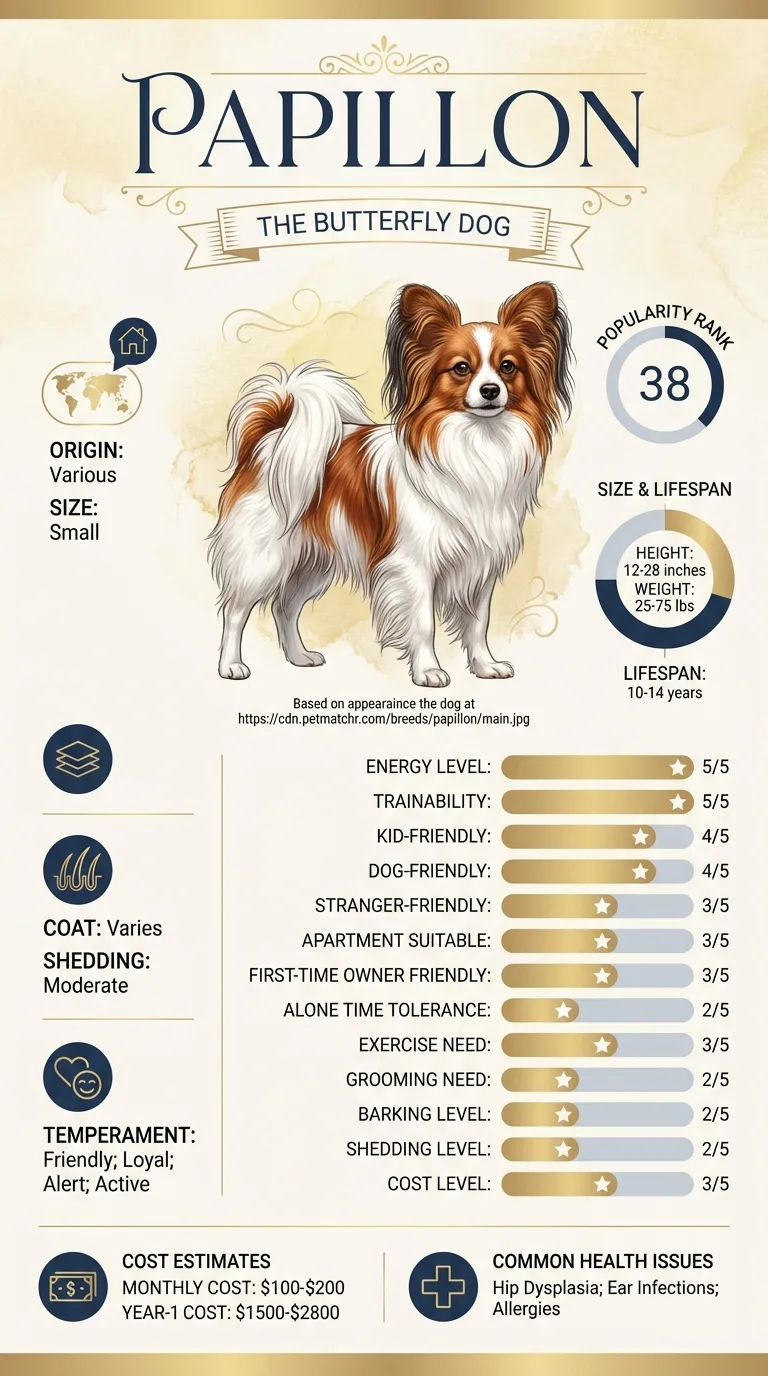
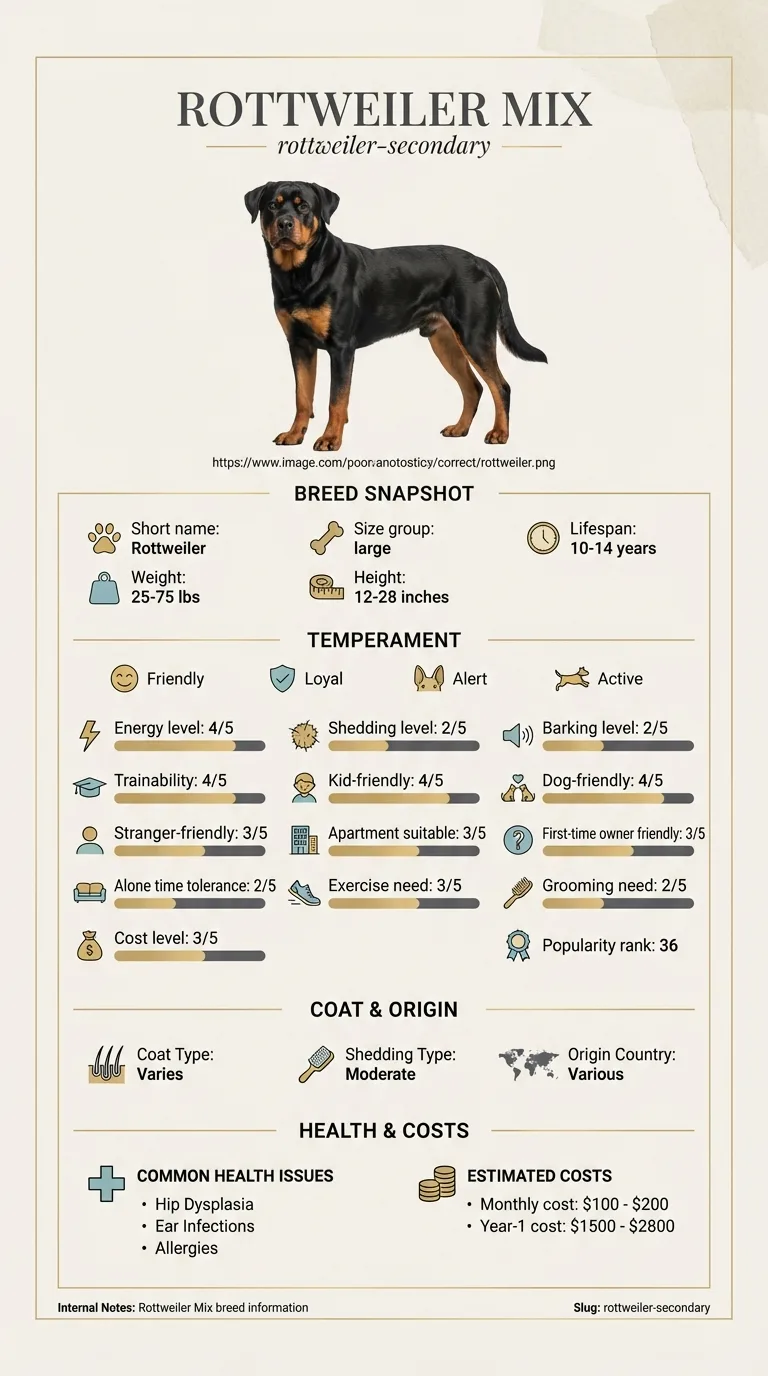
This is for someone already down to Papillon and Rottweiler Mix and deciding between them. For this pair the decision usually turns on apartment suitability and good for first-time owners, so those are covered first and in most detail. Anyone choosing from a flat has a clear answer here: Papillon rates 5/5 against 2/5. Breed history is left out; what follows is what you will actually live with.
Between Papillon and Rottweiler Mix, apartment suitability is what separates them, and Papillon is the lower-effort dog of the two to keep.
Choose Papillon if you are in a flat or a smaller home, this is your first dog and shedding is a problem in your house.
Choose Rottweiler Mix if the dog will be alone during the working day, you want a dog that can keep up with an active routine and you want a dog that is more watchful with visitors.
| Feature | papillon | rottweiler secondary | Winner |
|---|---|---|---|
| Size class | small | large | Equal |
| Weight | 5–10 lbs | 80–135 lbs | Equal |
| Height | 8–11 in | 22–27 in | Equal |
| Lifespan | 14–16 years | 9–10 years | papillon |
| Exercise need | Moderate (3/5) | High (4/5) | papillon |
| Grooming need | Low (2/5) | Low (2/5) | Equal |
| Shedding | Low (2/5) | Moderate (3/5) | papillon |
| Energy level | High (4/5) | Moderate (3/5) | Equal |
| Barking | High (4/5) | Low (2/5) | rottweiler secondary |
| Apartment suitability | Very high (5/5) | Low (2/5) | papillon |
| Good for first-time owners | High (4/5) | Low (2/5) | papillon |
| Tolerates being alone | Low (2/5) | Moderate (3/5) | rottweiler secondary |
| Trainability | Very high (5/5) | High (4/5) | papillon |
| Good with kids | Moderate (3/5) | Moderate (3/5) | Equal |
| Good with other dogs | High (4/5) | Low (2/5) | papillon |
| Friendly to strangers | High (4/5) | Low (2/5) | papillon |
| Cost level | Low (2/5) | High (4/5) | papillon |
| Coat | Long, silky single coat | Short, dense double coat | Equal |
| Origin | Various | Various | Equal |
| Typical monthly cost | $80–$150 | $110–$240 | Equal |
| Typical first-year cost | $1,100–$2,300 | $1,700–$3,200 | Equal |
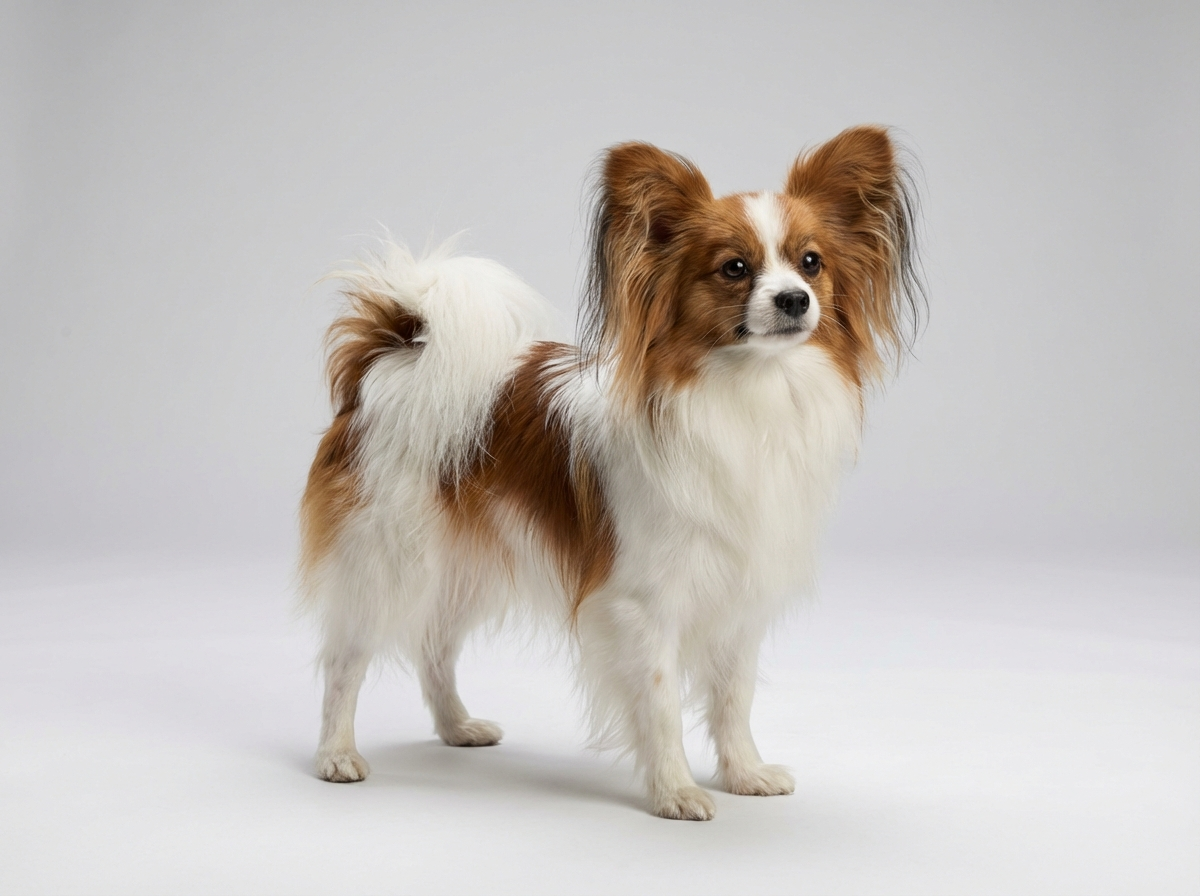
Weight classes are identical to any papillon-versus-rottweiler matchup -- 5 to 10 pounds against 80 to 135 -- but this is a mixed-breed rottweiler, so expect more variation in build than you'd get from a purebred. Height also runs 22 to 27 inches for the mix, the same ballpark as a purebred rottweiler. The papillon remains the dog you could carry in one hand; the mix remains one you plan your furniture around.
The rottweiler mix needs high exercise (4/5) against the papillon's moderate (3/5), but interestingly the two rate closer on raw energy level -- high (4/5) for the papillon, moderate (3/5) for the mix -- a gentler energy profile than you'd expect from a purebred rottweiler. That still means daily structured activity for the mix, not just a lap around the block.
Grooming ties at low (2/5) for both dogs, so neither needs a professional groomer on a regular schedule. Shedding favors the papillon, low (2/5), against the mix's moderate (3/5) -- noticeably less than a purebred rottweiler's high (4/5) rating, one place where mixed heritage seems to soften the coat's shedding output. The mix's short, dense double coat still benefits from a weekly brush during shedding season, while the papillon's long, silky coat is more prone to occasional matting behind the ears than to heavy shedding.
Apartment suitability splits sharply: very high (5/5) for the papillon, low (2/5) for the mix. Barking runs the other direction -- high (4/5) for the papillon, low (2/5) for the mix, a genuinely quiet dog by comparison. Where this differs from a straight papillon-vs-purebred-rottweiler matchup is time alone: this mix tolerates it moderately (3/5), better than the papillon's low (2/5) rating, so solo hours are less of a dealbreaker here.
Trainability rates very high (5/5) for the papillon and high (4/5) for the mix -- both take instruction well. First-time-owner suitability is where the gap opens: high (4/5) for the papillon against low (2/5) for the mix, a reminder that a rottweiler mix still carries a large, powerful adult dog's handling requirements no matter how mixed the pedigree.
Kids rate as a tie here, moderate (3/5) for both -- a different picture than a purebred rottweiler's high (4/5) kid-friendliness rating. Other dogs go to the papillon clearly, high (4/5) versus the mix's low (2/5), so multi-dog households should weigh that carefully. Strangers also favor the papillon, high (4/5) against low (2/5) for the mix, which tends to be more watchful of unfamiliar people.
The papillon still lives far longer, 14 to 16 years against the mix's 9 to 10 -- narrower and slightly longer than a purebred rottweiler's typical 8 to 11, but still a five-to-six-year gap. The mix's listed conditions are hip dysplasia, elbow dysplasia, osteosarcoma, subaortic stenosis, and cruciate ligament tears -- five conditions, a shorter list than a purebred rottweiler's ten, though osteosarcoma and cruciate injuries are still serious concerns for a dog this size.
Cost level rates low (2/5) for the papillon and high (4/5) for the mix. In dollar terms that's $80 to $150 monthly and $1,100 to $2,300 first-year for the papillon, against $110 to $240 monthly and $1,700 to $3,200 first-year for the mix -- somewhat lower than a purebred rottweiler's typical range, but still well above what a toy breed costs to feed and maintain.
Papillon weighs 5–10 lbs and lives 14–16 years; Rottweiler Mix weighs 80–135 lbs and lives 9–10 years. The two diverge most on apartment suitability, good for first-time owners and barking and 3 other rated axes. They are level on grooming need and good with kids, so those cannot decide it. The comparison marks an easier option only where one exists. Facts like weight and country of origin are not scored. Both dogs are rated from the same dataset, which is what makes the numbers comparable with each other even though any individual dog sits somewhere inside its breed's range.

Somewhat, based on the ratings here -- the mix has a gentler energy level (moderate, 3/5, versus a purebred's high, 4/5) and tolerates alone time a bit better. But it still rates low (2/5) for first-time owners, so the size and strength concerns don't go away just because it's mixed.
Dramatically smaller -- 5 to 10 pounds versus 80 to 135 for the mix, with a similar height gap of 8-11 inches against 22-27.
The papillon by a wide margin, 14 to 16 years against the mix's 9 to 10.
Less than you'd expect from a purebred -- moderate (3/5) here versus a purebred rottweiler's high (4/5) -- but still more than the papillon's low (2/5).
Not particularly, per this data -- it rates low (2/5) with other dogs, while the papillon rates high (4/5). Multi-dog households should factor that in.
The mix runs $110 to $240 monthly and $1,700 to $3,200 in year one; the papillon runs $80 to $150 monthly and $1,100 to $2,300. The mix costs less than a purebred rottweiler tends to but still well above the papillon.
Hip and elbow dysplasia, osteosarcoma, subaortic stenosis, and cruciate ligament tears -- five conditions tied mostly to its large frame and joint stress.
The papillon suits small spaces and first-time owners far better. The mix needs room, exercise, and an owner who already has dog-handling experience.
The papillon runs $80-150; the mix runs $110-240 -- cheaper than a purebred rottweiler but still notably more than the papillon.
High (4/5) -- daily structured activity, though its energy level itself rates moderate rather than the very high level some purebred rottweilers show.
The papillon lives 14-16 years; this rottweiler mix typically lives 9-10.
Secure checkout on Stripe. We never see your card.
7-day money-back guarantee. Instant access.
Health information here is general and is not veterinary advice. If your dog shows pain, sudden behaviour change, or worsening symptoms, consult a licensed veterinarian.
Some links on this site are affiliate links. We may earn a commission at no extra cost to you, and we only suggest products we believe are helpful for dog owners.
We research and check what we publish, but we do not warrant that any figure, date, price, or statement is accurate, complete, or current, and we accept no liability for any loss, cost, injury, or other harm arising from the use of this site. Use it as one reference among several. You remain responsible for your own decisions and for your dog's care - confirm anything that matters with a licensed veterinarian or another qualified professional before you act on it. Full disclaimer.
Match your lifestyle to the right dog.
Take quizNot sure which breed is right for you? Take our 2-minute quiz to find out.
Take the quiz