Living
Which is the smaller dog?
The Papillon, at 5-10 pounds versus the Boston's 12-25 pounds.

Quick answer
Which is the smaller dog?
The Papillon, at 5-10 pounds versus the Boston's 12-25 pounds.
Boston Terrier or Papillon? On paper they differ most on barking, and on the scales Boston Terrier is the heavier at 12–25 lbs. Here is how the two compare on everything that shapes an ordinary week.
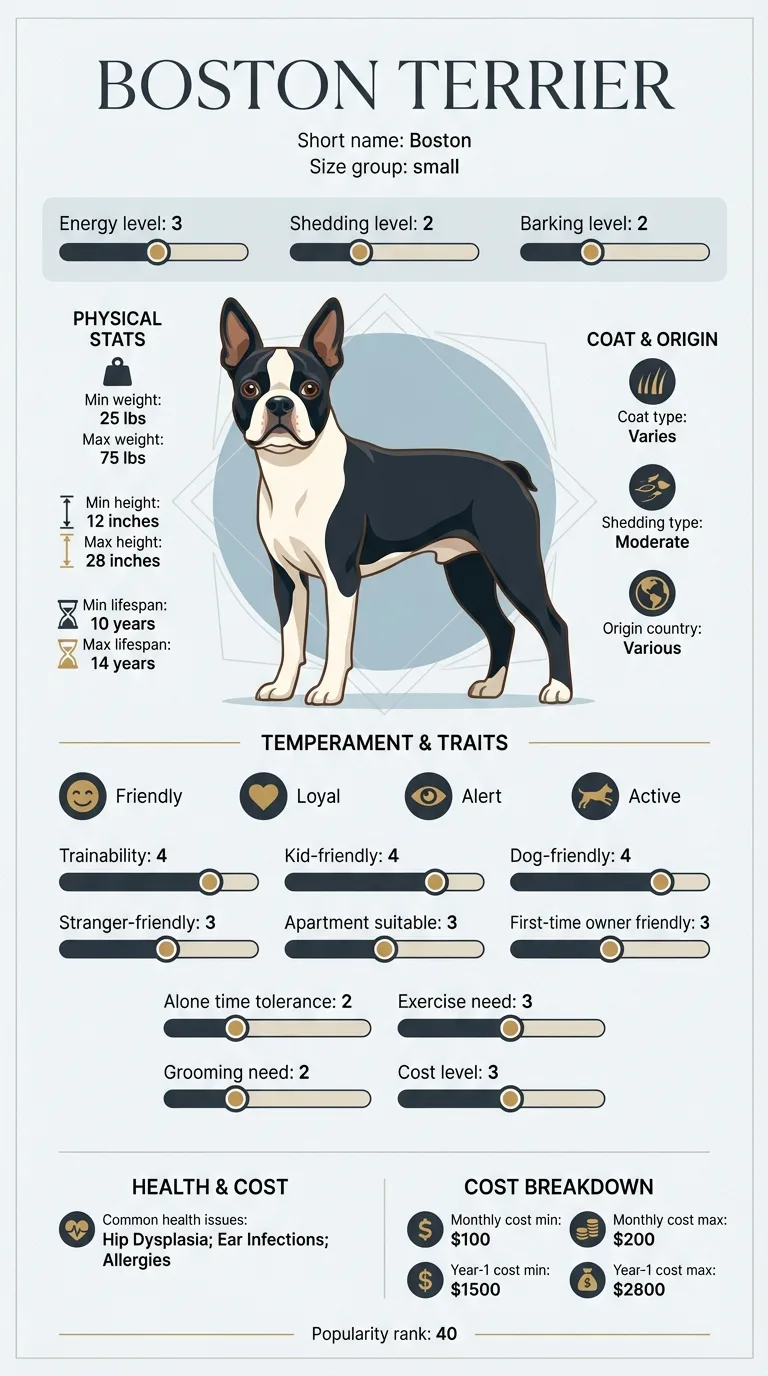
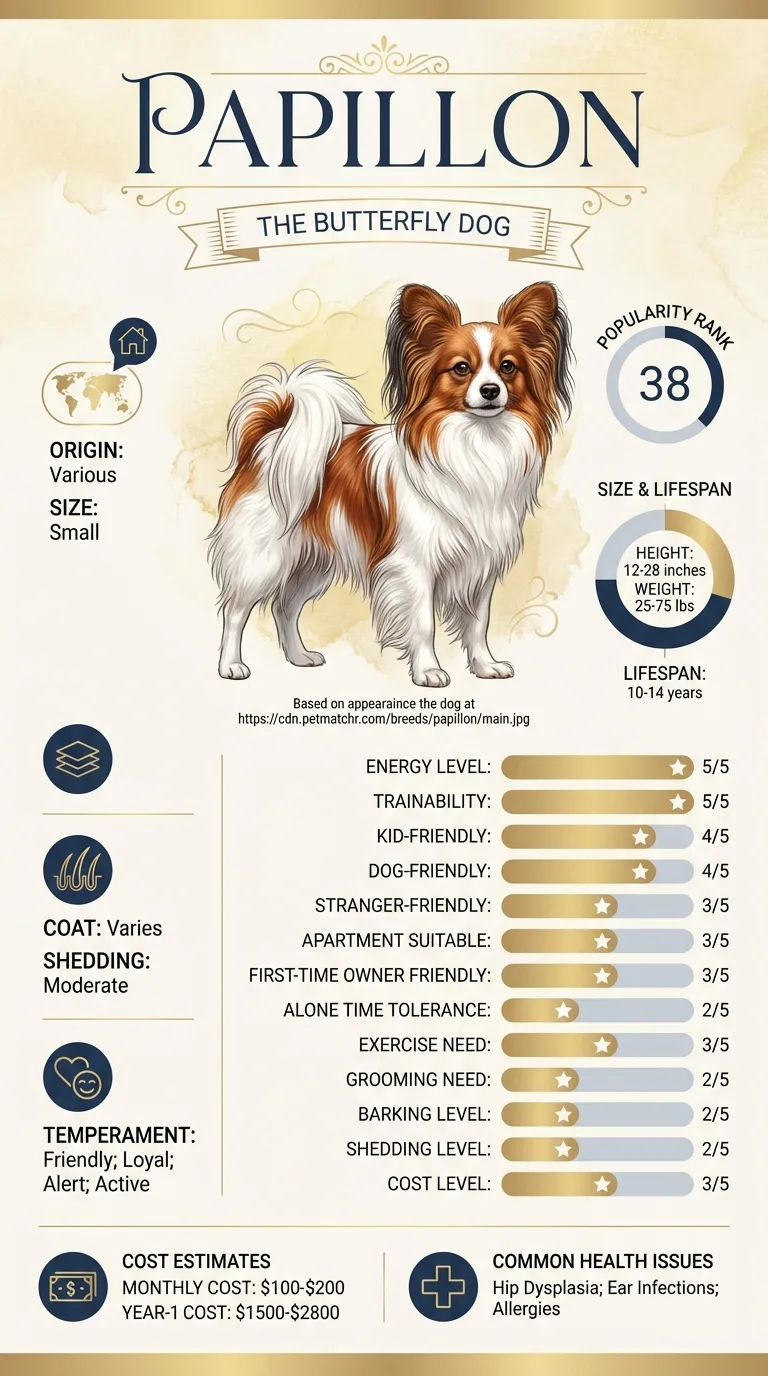
This is for someone already down to Boston Terrier and Papillon and deciding between them. For this pair the decision usually turns on barking and good with kids, so those are covered first and in most detail. Both rate 5/5 for flats, so housing does not settle this one. The focus throughout is on daily consequences rather than breed background.
Between Boston Terrier and Papillon, barking is what separates them, and Boston Terrier is the lower-effort dog of the two to keep.
Choose Boston Terrier if this is your first dog, you do not want a standing grooming appointment and your walking routine is modest.
Choose Papillon if you want a dog that picks up training quickly, a smaller dog suits your car, your home or your back and you want a dog that can keep up with an active routine.
| Feature | boston terrier | papillon | Winner |
|---|---|---|---|
| Size class | small | small | Equal |
| Weight | 12–25 lbs | 5–10 lbs | Equal |
| Height | 15–17 in | 8–11 in | Equal |
| Lifespan | 11–13 years | 14–16 years | papillon |
| Exercise need | Low (2/5) | Moderate (3/5) | boston terrier |
| Grooming need | Very low (1/5) | Low (2/5) | boston terrier |
| Shedding | Low (2/5) | Low (2/5) | Equal |
| Energy level | Moderate (3/5) | High (4/5) | Equal |
| Barking | Low (2/5) | High (4/5) | boston terrier |
| Apartment suitability | Very high (5/5) | Very high (5/5) | Equal |
| Good for first-time owners | Very high (5/5) | High (4/5) | boston terrier |
| Tolerates being alone | Moderate (3/5) | Low (2/5) | boston terrier |
| Trainability | High (4/5) | Very high (5/5) | papillon |
| Good with kids | Very high (5/5) | Moderate (3/5) | boston terrier |
| Good with other dogs | High (4/5) | High (4/5) | Equal |
| Friendly to strangers | High (4/5) | High (4/5) | Equal |
| Cost level | Moderate (3/5) | Low (2/5) | papillon |
| Coat | Short and smooth | Long, silky single coat | Equal |
| Origin | Various | Various | Equal |
| Typical monthly cost | $80–$150 | $80–$150 | Equal |
| Typical first-year cost | $1,100–$2,300 | $1,100–$2,300 | Equal |
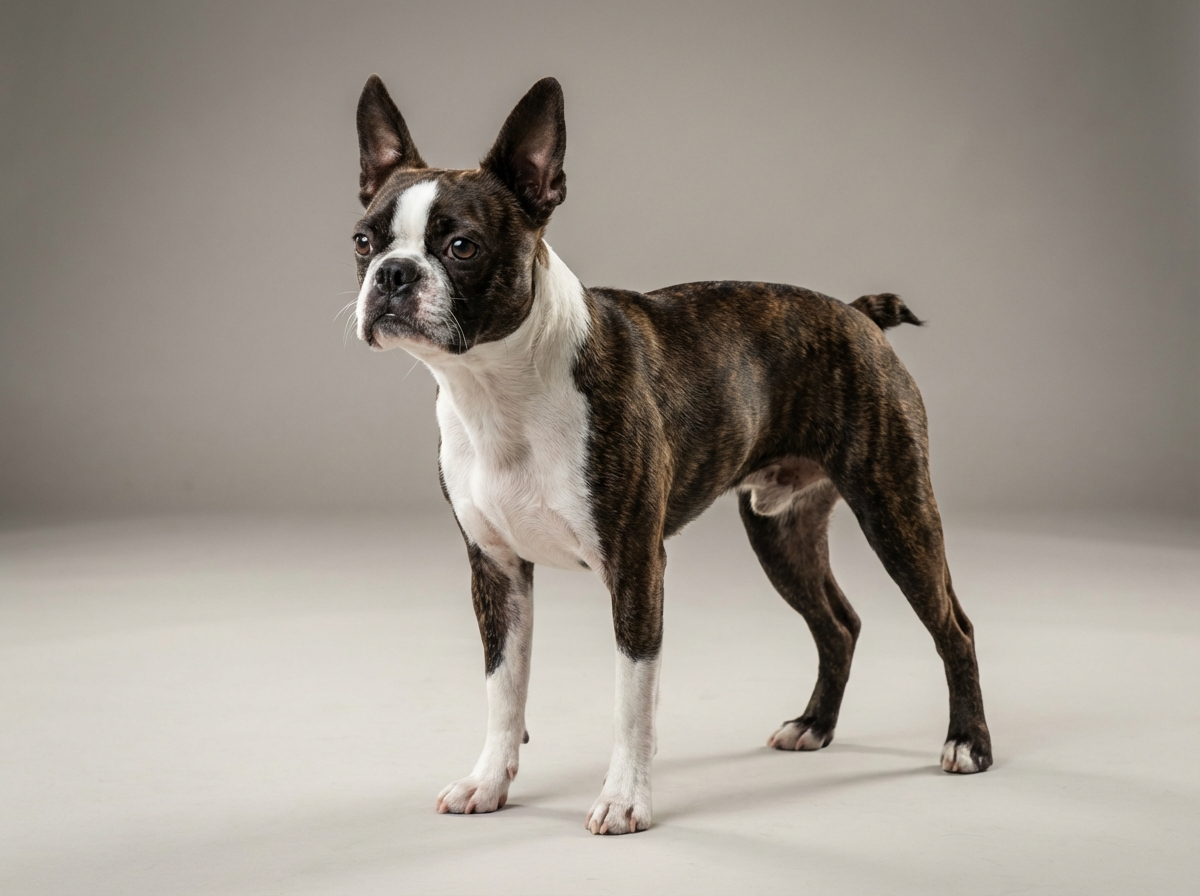
Five to 10 pounds and 8 to 11 inches tall -- the Papillon is a genuine toy breed, smaller across the board than the Boston Terrier's 12-to-25-pound, 15-to-17-inch frame, even though both fall into the "small" size class on this site. The Papillon's name comes from its butterfly-shaped ears, a distinctive silhouette detail that has nothing to do with the Boston's flat-faced, boxy look. A Boston at its lower weight range can still outweigh a Papillon by more than double, a gap worth picturing concretely for households with larger resident dogs or younger kids who might not naturally moderate their handling of a smaller animal.
The Papillon rates Moderate (3/5) for exercise need against the Boston's Low (2/5), and while energy level ties in the table between Moderate and High, the Papillon's Quick-witted, Alert nature tends to show up as a genuinely busier, more active presence day to day than the Boston's calmer baseline. Despite its tiny size, the Papillon isn't a strictly lap-bound breed -- it enjoys short bursts of play and mental engagement, and even competes successfully in agility at the toy-breed level. The Boston asks for less overall, making it the marginally easier fit for an owner whose lifestyle genuinely doesn't accommodate active play sessions most days.
The Boston edges ahead on grooming, Very Low (1/5) against the Papillon's Low (2/5), while shedding ties at Low (2/5) for both. This is one of the smaller gaps in the whole comparison -- despite the Papillon's long, silky single coat, it lacks a dense undercoat, so it doesn't mat as readily as many long-haired breeds and needs only regular brushing rather than professional trims to stay tidy. The Boston's short coat still requires less overall effort, but the difference here is a matter of degree rather than the dramatic split seen with some other long-coated breeds. Either dog is a genuinely manageable choice for an owner who doesn't want grooming to dominate their routine.
Both breeds tie at Very High (5/5) for apartment suitability, but the Boston pulls well ahead on noise, Low (2/5) barking against the Papillon's High (4/5) -- a small, alert breed that tends to vocalize readily at new sounds and unfamiliar visitors. Alone tolerance also favors the Boston, Moderate (3/5) against Low (2/5), consistent with the Papillon's history as an attentive companion breed bred to stay close to its person. For apartment living specifically, the size fit is equal between these two, but the noise and independence gap means a Papillon owner behind shared walls should invest more deliberately in bark training and alone-time conditioning than a Boston owner typically needs to.
The Papillon actually edges out the Boston on trainability, Very High (5/5) against High (4/5) -- it's often cited among the most trainable toy breeds, a claim its Quick-witted, Confident temperament supports. The Boston still rates higher for first-time owners overall, Very High (5/5) against High (4/5), largely because a Papillon's small size demands more careful handling awareness from a novice, particularly around jumping-related injuries common in tiny breeds. A first-time owner focused purely on how quickly a dog learns commands might actually find the Papillon impressive, but one weighing the full package of size-appropriate handling and daily management will likely find the sturdier Boston the more forgiving choice overall.
The gap with kids is real: Very High (5/5) for the Boston against Moderate (3/5) for the Papillon, reflecting the Papillon's small, delicate frame more than any temperament issue -- the breed itself is Friendly and Confident by nature. Both tie at High (4/5) with other dogs and High (4/5) with strangers, so social confidence isn't the differentiator here. For households with older kids who understand gentle handling, a Papillon's outgoing personality shines; for households with toddlers or younger children still learning to be careful with animals, the Boston's sturdier build and higher kid-specific rating make it the safer everyday match without requiring constant supervision.
The Papillon's 14-to-16-year lifespan is the longest of any breed paired against the Boston in this entire batch, well ahead of the Boston's 11-to-13, and its five-item health list -- Patellar Luxation, Progressive Retinal Atrophy, Dental Disease, Open Fontanel, and Collapsing Trachea -- is notably shorter than many toy breeds', though Open Fontanel, a soft spot in the skull that doesn't fully close, is a specific vulnerability worth knowing about in puppies. The Boston's five conditions, led by Brachycephalic Airway Syndrome and eye issues, trace to its flat face instead. Both breeds share Patellar Luxation, a common small-breed knee condition, making joint monitoring a shared priority regardless of which dog a household chooses.
Costs are essentially identical on paper -- both breeds show $80 to $150 monthly and $1,100 to $2,300 in the first year -- though cost level tips slightly to the Papillon at Low (2/5) against the Boston's Moderate (3/5). In practice this is the closest cost match in the entire batch of comparisons; neither breed carries a grooming, feeding, or size-driven premium the other doesn't also face. Any real difference an owner encounters is more likely to come down to individual dog health and local veterinary rates than any structural difference between the breeds. Budget-focused owners can reasonably treat this factor as a wash and let temperament and coat preference decide instead.
Boston Terrier weighs 12–25 lbs and lives 11–13 years; Papillon weighs 5–10 lbs and lives 14–16 years. The two diverge most on barking and good with kids. They are level on apartment suitability, good with other dogs and shedding, so those cannot decide it. The table below marks a winner only where one breed is genuinely easier for a typical owner; size and origin are facts rather than merits and stay level. Ratings come from one source applied to both breeds, so they are meaningful against each other rather than as absolute scores.

The Papillon, at 5 to 10 pounds against the Boston Terrier's 12 to 25 pounds.
Yes, more than Boston Terriers -- High (4/5) against Low (2/5).
The Papillon actually rates slightly higher, Very High (5/5) against the Boston's High (4/5), though the Boston is still considered the easier first dog overall.
The Papillon, typically 14 to 16 years, the longest lifespan of any breed compared against the Boston Terrier in this batch, against the Boston's 11 to 13.
Less reliably than Boston Terriers -- Moderate (3/5) against Very High (5/5) -- mostly due to the Papillon's small, delicate size rather than temperament.
They're essentially tied -- both show the same $80-$150 monthly range and $1,100-$2,300 first-year cost.
Open Fontanel, an incompletely closed soft spot in the skull, along with Collapsing Trachea, both worth discussing with a breeder or vet.
The Papillon, at 5-10 pounds versus the Boston's 12-25 pounds.
The Papillon, High (4/5) versus the Boston's Low (2/5).
The Papillon, 14-16 years versus the Boston's 11-13.
The Boston Terrier, Very High (5/5) versus the Papillon's Moderate (3/5).
Secure checkout on Stripe. We never see your card.
7-day money-back guarantee. Instant access.
Health information here is general and is not veterinary advice. If your dog shows pain, sudden behaviour change, or worsening symptoms, consult a licensed veterinarian.
Some links on this site are affiliate links. We may earn a commission at no extra cost to you, and we only suggest products we believe are helpful for dog owners.
We research and check what we publish, but we do not warrant that any figure, date, price, or statement is accurate, complete, or current, and we accept no liability for any loss, cost, injury, or other harm arising from the use of this site. Use it as one reference among several. You remain responsible for your own decisions and for your dog's care - confirm anything that matters with a licensed veterinarian or another qualified professional before you act on it. Full disclaimer.
Match your lifestyle to the right dog.
Take quizNot sure which breed is right for you? Take our 2-minute quiz to find out.
Take the quiz