Health
Is EIC a Papillon condition?
No. It is a specific inherited disorder of Labradors and a few related retriever and spaniel breeds, identified through a variant in the DNM1 gene, and it has no documented link to this breed.

Quick answer
Is EIC a Papillon condition?
No. It is a specific inherited disorder of Labradors and a few related retriever and spaniel breeds, identified through a variant in the DNM1 gene, and it has no documented link to this breed.
The gene was found in Labradors and it stayed there. A Papillon that collapses after a run has a different list of explanations, and several of them are urgent.
Owners whose Papillon went down after a hard chase in the garden and who searched the phrase that describes exactly what they saw, only to find pages about gundogs.
This guide is not medical advice. If your dog shows pain, sudden behavior change, or worsening symptoms, consult a licensed veterinarian.
Some links may be affiliate links. We may earn a commission at no extra cost to you. We only suggest products we believe are helpful for dog owners.
We research and check what we publish, but we do not warrant that any figure, date, price, or statement is accurate, complete, or current, and we accept no liability for any loss, cost, injury, or other harm arising from the use of this site. Use it as one reference among several. You remain responsible for your own decisions and for your dog's care - confirm anything that matters with a licensed veterinarian or another qualified professional before you act on it. Full disclaimer.
Exercise-induced collapse is an inherited disorder in which affected dogs, normal at rest, lose hind-limb function after several minutes of intense exercise or excitement, then recover fully within half an hour. It is caused by a known genetic variant, has a DNA test, and belongs to retriever and related breeds. In a Papillon the same presentation demands an entirely different investigation.
Meaningful in the retriever breeds where the variant is common enough to justify routine DNA testing before breeding. Absent from the documented picture in Papillons. Collapse after exercise does occur in small dogs, but the diagnoses at the end of it are heat, glucose, airway, heart or joint rather than this specific inherited condition.
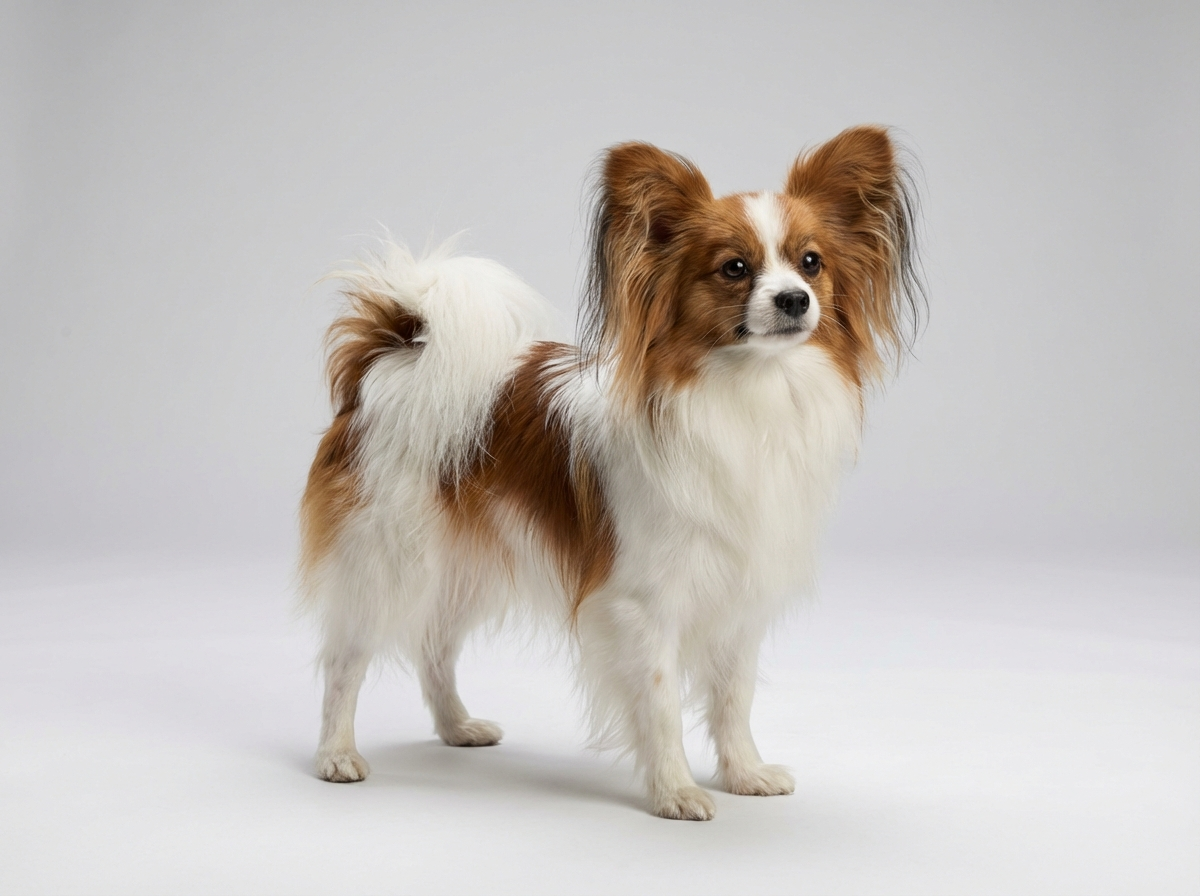
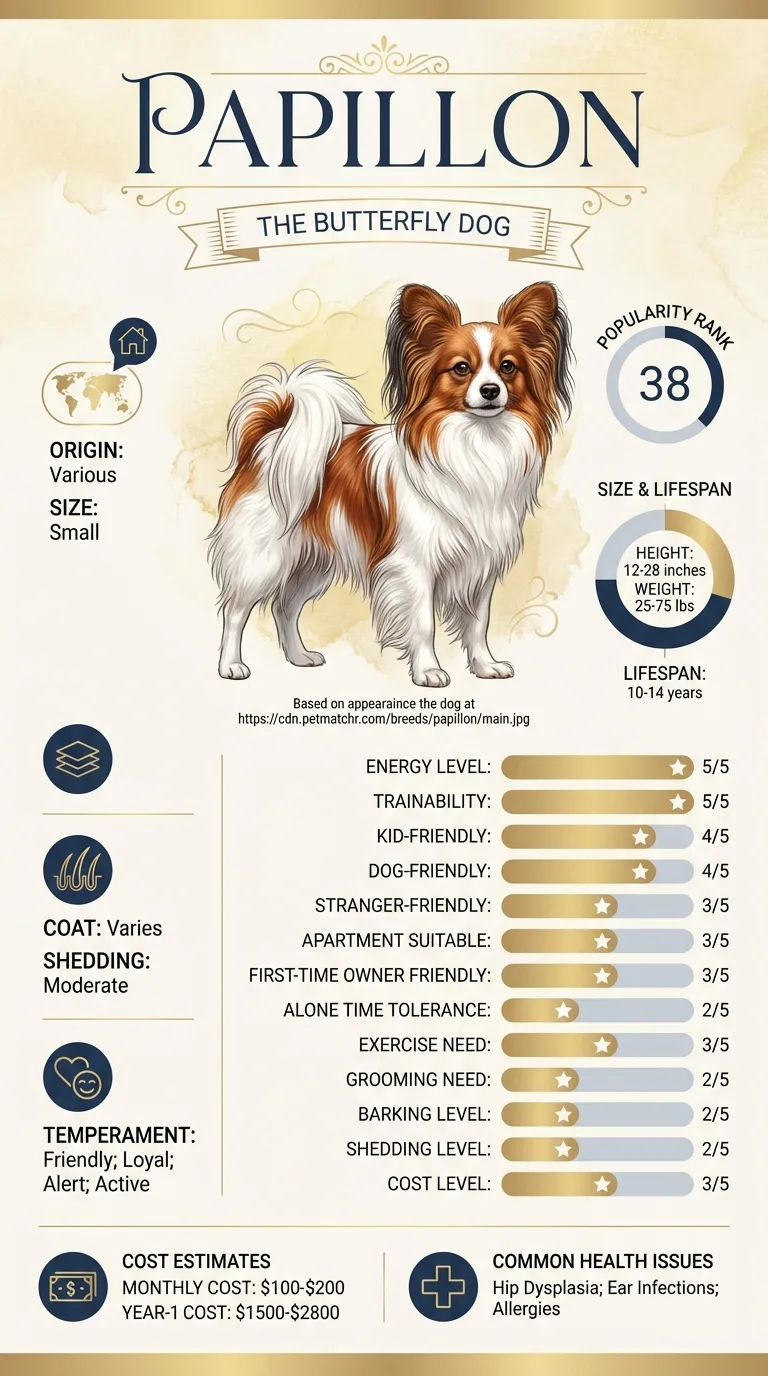
The variant behind this condition arose and persists in working retriever lines and has no described presence in continental toy spaniels. The Papillon's own relevant vulnerability is different: a collapsing trachea is on its documented health list, and a small body with high surface area relative to mass has less thermal and metabolic buffer than a large one. Its energy level of four combined with a moderate exercise requirement of three also means many Papillons are enthusiastic beyond their conditioning.
Ambient temperature dominates. A dog standing eight to eleven inches tall breathes air a few inches above ground that is far hotter than the air a person feels, and it radiates heat less efficiently than a large animal. Humidity compounds it by reducing evaporative cooling. Other contributors are hard surfaces, lack of shade and water on a walk, and the pattern of long inactive weekdays followed by a single intense weekend outing.
Treat collapse with bright red gums, frantic panting, vomiting or a dog that feels hot as heatstroke and an immediate emergency: begin cooling with tepid water and airflow while travelling, and do not delay to observe. Also seek emergency care for collapse with pale, white or blue gums, for a dog that does not recover within a few minutes, for repeated collapses in a day, or for laboured breathing that persists. Book a prompt appointment after any first collapse even in a dog that seems perfectly well afterwards, and describe the exact sequence, including whether coughing came first.
See all Papillon health problems, which breeds are prone to exercise induced collapse eic, or the full Papillon breed guide for temperament, exercise needs and ownership costs.
Investigating a first collapse usually takes one to three weeks including bloodwork and cardiac assessment, longer if a wearable rhythm monitor is needed to catch an intermittent problem. If the answer is heat or fitness, changes to routine show their effect immediately. If it is airway or cardiac, expect ongoing management across the remainder of a fourteen to sixteen year life.
A named cause and a dog that exercises within sensible limits without episodes. For most Papillons that means walks moved to cooler parts of the day, a gradual conditioning programme, water carried, and an owner who understands that the retriever disease they read about was never the explanation.
In an affected dog the pattern is remarkably consistent. Five to twenty minutes into strenuous activity, particularly activity with high excitement such as retrieving or field work, the gait becomes wobbly, then the hind legs give way, and in severe episodes all four limbs are affected. The dog stays alert throughout. Recovery is usually complete within five to twenty-five minutes of rest.
Body temperature rises sharply during episodes, and a small number of dogs have died during or shortly after one, which is why affected animals are managed by stopping activity at the first sign.
The variant was identified in Labrador Retrievers and has since been found in Chesapeake Bay Retrievers, Curly-Coated Retrievers, Boykin Spaniels and a handful of related breeds. A DNA test exists and is a standard part of breeding decisions in those populations.
Nothing connects it to the Papillon. The breed's documented health list runs to patellar luxation, progressive retinal atrophy, dental disease, an open fontanel and a collapsing trachea, and its ancestry lies in continental toy spaniels rather than in working retrievers.

Heat is first and is the one that kills. A dog cools by evaporation from the airway and has no meaningful capacity to sweat. A Papillon running hard on a warm day, especially a dark-coated one on hot ground eight inches below its nose, can reach a dangerous core temperature quickly. Heatstroke presents as frantic panting, bright red gums, staggering, vomiting and collapse, and it is a life-threatening emergency.
Low blood sugar is second, and it belongs specifically to small dogs. A lean Papillon that has played for two hours with no food has limited reserves, and glucose can fall enough to cause weakness and wobbling.
The airway is third. Collapsing trachea, documented in this breed, produces a hard honking cough that can itself cause fainting, and the sequence is cough first, collapse second.
Cardiac causes are fourth: a rhythm disturbance or advanced valve disease reducing output during exertion.
And orthopaedic pain can look like collapse when a knee gives way mid-stride.
Ferdi's five-year-old Papillon, Anka, went down in the garden on a July afternoon after twenty minutes of chasing a ball. Her back end folded and she lay panting hard, unable to stand. He found a description of exercise-induced collapse that fitted almost perfectly. He noted the time, carried her into the shade and rang the practice. The nurse asked one question: what colour are her gums. They were bright red rather than pale. That answer moved the case immediately. Ferdi was told to wet her with tepid water and drive in with the car windows open. Anka's temperature on arrival was well above normal and she was treated for heatstroke. She recovered fully over two days. She now plays before eight in the morning in summer, and Ferdi checks the ground temperature with his hand before every walk.
Key takeaway: Bright red gums separate the overheated dog from every other kind of collapse, and it is the one distinction that has to be made in the first minute rather than at the appointment.
The genetic condition is not documented in the breed and there is no reason to expect the variant here. A Papillon showing collapse after exercise needs its own workup, which will look at temperature, blood sugar, airway and heart rather than at a retriever gene.
By the context and the gums. Heatstroke happens in warm conditions after exertion, with frantic panting, bright red or brick-coloured gums, drooling, vomiting, staggering and a dog that feels hot to the touch. It is an emergency and cooling should begin on the way to the clinic.
The breed's exercise requirement rates three out of five, which is moderate, while its energy level rates four. In practice that means around forty to sixty minutes a day split into shorter outings, plus mental work, rather than long endurance efforts.
Possibly, and that is worth testing carefully. A dog that improves steadily with gradual conditioning was unfit. A dog that gets worse over weeks, or that collapses at a level of effort it used to manage easily, has something medical happening and should be examined.
There is no reason to. The variant is not present in this breed's population in any documented way, and the screening effort here belongs on the eyes, given progressive retinal atrophy is on the breed's health list, and on the kneecaps.
Stop all activity, move it into shade, note the time and the air temperature, check gum colour, and film the recovery if you can. Then call your vet and describe the sequence, including whether there was coughing before the collapse.
No. It is a specific inherited disorder of Labradors and a few related retriever and spaniel breeds, identified through a variant in the DNM1 gene, and it has no documented link to this breed.
Heatstroke. Bright red gums, frantic panting and staggering after exertion in warm weather is a life-threatening emergency, and every minute of delay matters.
Bloodwork and a cardiac examination typically run two to four hundred dollars. Adding an echocardiogram or a wearable rhythm monitor brings the total to five hundred to a thousand.
Walk before mid-morning and after dusk, carry water, test the ground with your hand, and choose shade and grass over pavement. A dog eight to eleven inches tall lives much closer to hot ground than you do.
It can reduce the arousal spikes that trigger episodes. Teaching a reliable recall and a settle cue lets you interrupt a dog that has flipped into flat-out chasing before it overheats or overexerts.
A one-page prep sheet for this condition: the signs, the questions to ask, what to get priced. Unlocks here.
You get: Vet visit prep sheet
No spam. One-click unsubscribe. See our privacy policy.
Preview page 1 before you decide.