Behavior
What are quick tips for managing EIC in Schnauzers?
Limit intense exercise, especially in warm weather, and ensure your dog has plenty of breaks. Monitor their energy levels and adjust activities based on their tolerance.

Quick answer
What are quick tips for managing EIC in Schnauzers?
Limit intense exercise, especially in warm weather, and ensure your dog has plenty of breaks. Monitor their energy levels and adjust activities based on their tolerance.
Schnauzer (Standard) exercise-induced collapse (EIC) can be alarming for dog owners. This condition causes sudden collapse during or after physical activity.
Owners of active Schnauzers who enjoy jogging or vigorous play may notice their dog suddenly collapsing. This can be stressful for families, especially those with children who want to engage actively with their pets.
This guide is not medical advice. If your dog shows pain, sudden behavior change, or worsening symptoms, consult a licensed veterinarian.
Some links may be affiliate links. We may earn a commission at no extra cost to you. We only suggest products we believe are helpful for dog owners.
We research and check what we publish, but we do not warrant that any figure, date, price, or statement is accurate, complete, or current, and we accept no liability for any loss, cost, injury, or other harm arising from the use of this site. Use it as one reference among several. You remain responsible for your own decisions and for your dog's care - confirm anything that matters with a licensed veterinarian or another qualified professional before you act on it. Full disclaimer.
Check this first
Recognizing when your Schnauzer (Standard) is experiencing exercise-induced collapse (EIC) is crucial. There are specific signs that indicate you should call your vet immediately. If your dog collapses during or after exercise and shows signs of severe distress, such as difficulty breathing, lethargy, or unresponsiveness, it's time to seek emergency help. These symptoms can indicate a serious health issue that requires prompt attention.
On the other hand, mild cases of EIC can often be monitored at home. If your Schnauzer seems to recover quickly after a brief episode of collapse, you can keep a close eye on them. Monitor their behavior and ensure they rest adequately. A detailed plan, including reduced exercise and avoiding triggers, can often help manage mild EIC episodes effectively. However, if the symptoms persist or worsen, don't hesitate to consult your vet for further advice.
If any of these apply, call your vet or an emergency clinic now. The rest of this page is for the cases that are not an emergency.
Schnauzer (Standard) exercise-induced collapse (EIC) is a concerning condition where your dog may suddenly collapse during or after moderate to intense exercise. This issue can be alarming for owners as it often occurs without warning, causing great distress both for the dog and its family. Typically, affected Schnauzers may seem fine one moment and then drop to the ground, unable to stand until they recover.
EIC is relatively common in Schnauzer (Standard) dogs, particularly those on the higher end of the energy scale. While not every Schnauzer will experience this issue, owners should be aware of the signs and manage exercise accordingly.
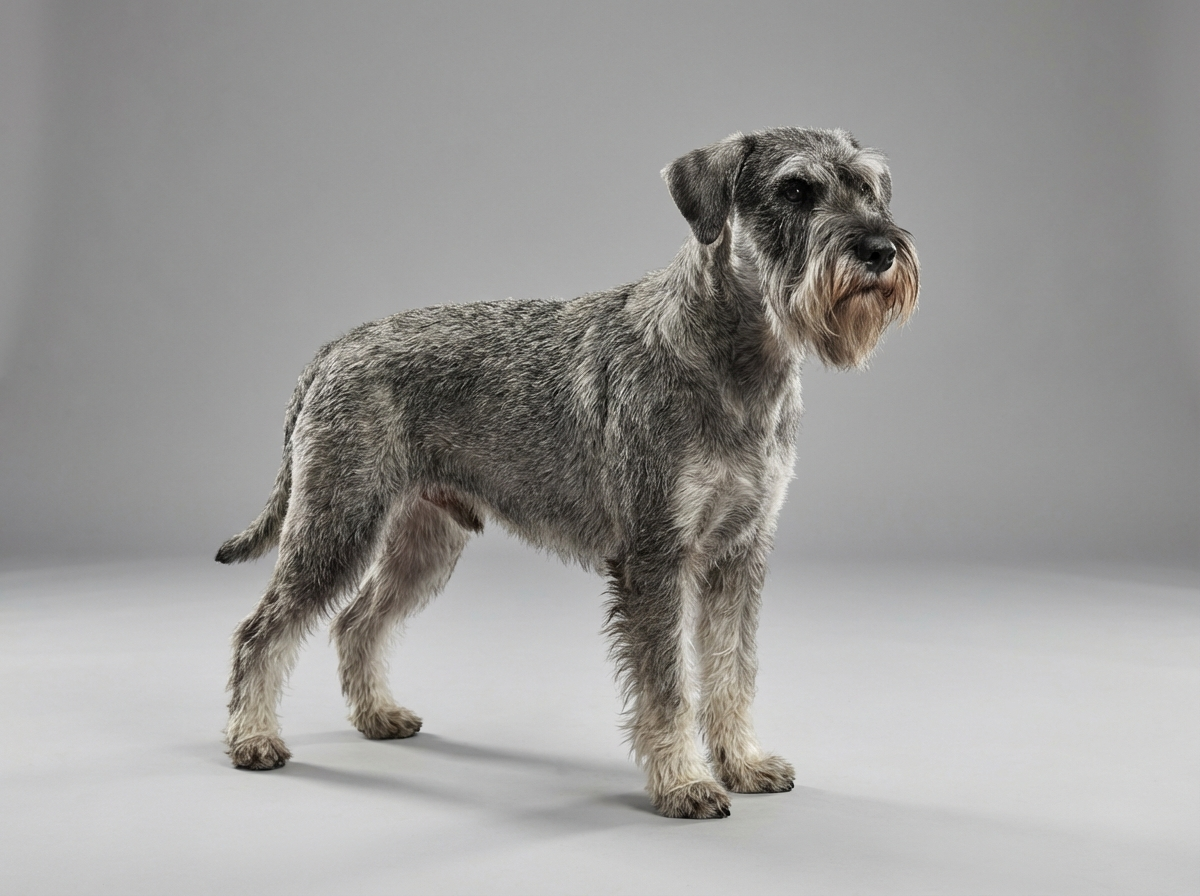
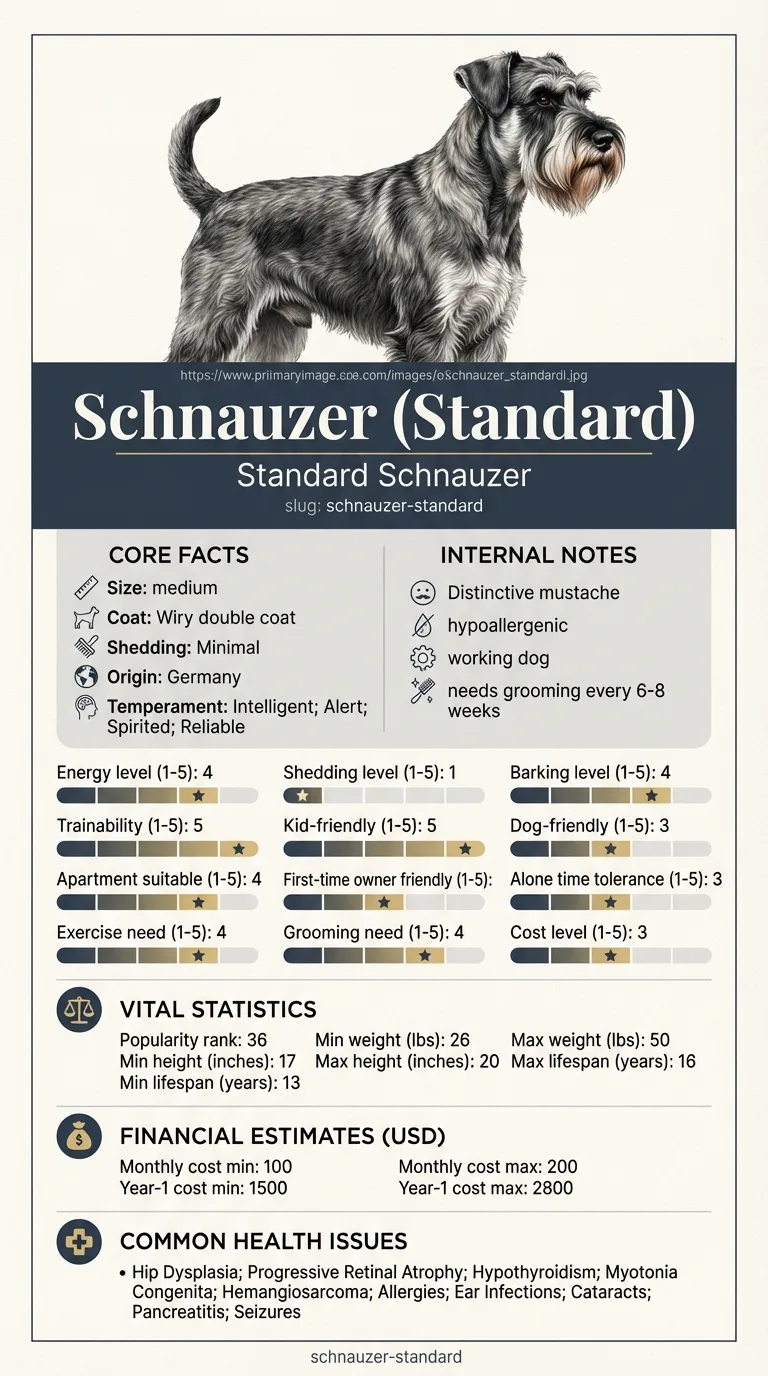
Schnauzers (Standard) are medium-sized dogs with a high energy level. Their intelligence and spirited nature can lead them to push themselves during play or exercise. This drive, coupled with their genetic predisposition, can contribute to exercise-induced collapse (EIC).
Environmental factors like temperature and humidity can worsen EIC. High heat or overexertion in warm weather can increase the risk of collapse. Additionally, inadequate hydration or lack of breaks during physical activity can trigger symptoms.
Consult your vet if your Schnauzer experiences repeated episodes of collapse, seems overly lethargic, or shows any unusual symptoms. Your vet may recommend tests to rule out other health issues and provide specific guidelines for safe exercise.
Avoiding common pitfalls can improve your Schnauzer (Standard)'s experience with exercise-induced collapse (EIC). Here are some mistakes to watch out for.
Start here: Standard Schnauzer Most Common Genetic Disorders: Screening
See all Schnauzer Standard health problems, which breeds are prone to exercise induced collapse eic, or the full Schnauzer Standard breed guide for temperament, exercise needs and ownership costs.
Expect to see improvements within 4 to 8 weeks of consistent care and management.
Your Schnauzer (Standard) should show reduced incidents of collapse during moderate exercise and regain energy more quickly afterwards.
Megan, a busy nurse in Denver, loved taking her Standard Schnauzer, Max, on long runs. However, she noticed that after some intense play, Max would suddenly collapse. Concerned, she consulted her vet and learned about exercise-induced collapse (EIC). With structured training, Megan adjusted Max's exercise routine to include shorter bursts of activity and more rest breaks. Over time, Max began to enjoy his playtime without collapsing, and Megan felt relieved and empowered.
Key takeaway: With proper management and training, Schnauzers (Standard) with EIC can still lead active, happy lives.
Schnauzer (Standard) exercise-induced collapse (EIC) is a genetic condition causing sudden collapse during or after exercise. It typically occurs in young, active dogs and can be triggered by intense physical activity.
To prevent exercise-induced collapse, avoid intense activities during hot weather or after meals. Gradually build up your dog's exercise tolerance and incorporate rest periods to help manage their energy levels.
If your Schnauzer collapses, immediately stop the activity and move them to a cool, shaded area. Monitor their breathing, and if they do not recover within a few minutes, contact your veterinarian for further guidance.
Currently, there is no cure for EIC, but managing your dog's exercise routine can help. Consult with your vet for a tailored exercise plan to keep your dog healthy and minimize the risk of collapse.
Yes, EIC can be diagnosed through a combination of your dog's history, physical examination, and sometimes genetic testing. If you suspect EIC, speak with your veterinarian for proper assessment.
Signs of EIC in Schnauzers include sudden weakness, loss of coordination, and collapse during or after intense exercise. These symptoms usually resolve quickly with rest, but it's important to discuss them with your vet.
Signs of exercise-induced collapse (EIC) in Schnauzers (Standard) can include sudden weakness, stumbling, or collapsing during or after exercise. These episodes often resolve with rest, but it's important to monitor your dog closely.
If your older Schnauzer (Standard) experiences exercise-induced collapse (EIC), it's crucial to adjust their exercise routine. Shorter, more frequent walks and low-impact activities can help prevent episodes while keeping them active.
If your Schnauzer (Standard) frequently experiences exercise-induced collapse (EIC), it's a good idea to consult your vet. They can rule out other health issues and suggest proper management strategies.
Yes, diet can play a role in managing exercise-induced collapse (EIC). A balanced diet that supports overall health may help improve your Schnauzer's stamina and recovery after exercise.
Exercise-induced collapse (EIC) does have a hereditary component in Schnauzers (Standard). If you have concerns, consider discussing your dog's lineage with your breeder or vet to better understand the risks.
Limit intense exercise, especially in warm weather, and ensure your dog has plenty of breaks. Monitor their energy levels and adjust activities based on their tolerance.
Train your Schnauzer gradually by starting with short, low-intensity activities and slowly increasing duration and intensity, allowing for rest periods.
EIC can be serious, but with proper management, many Schnauzers live normal lives. Knowing your dog's limits and taking precautions is key.
If a collapse occurs, stop all exercise and let your dog rest in a cool area. If symptoms persist, seek veterinary help immediately.
While EIC may lead to additional veterinary visits, managing the condition effectively can help minimize costs associated with emergencies.
A one-page prep sheet for this condition: the signs, the questions to ask, what to get priced. Unlocks here.
You get: Vet visit prep sheet
No spam. One-click unsubscribe. See our privacy policy.
Preview page 1 before you decide.