Health
What is diet-associated DCM?
Cases of dilated heart muscle disease reported in dogs, often in breeds with no predisposition, associated with diets high in peas, lentils and other pulses. The mechanism was never fully established.

Quick answer
What is diet-associated DCM?
Cases of dilated heart muscle disease reported in dogs, often in breeds with no predisposition, associated with diets high in peas, lentils and other pulses. The mechanism was never fully established.
The only realistic path from this large-breed disease to a nine pound spaniel runs through the food bowl, which makes it the one part of the subject worth a Papillon owner's attention.
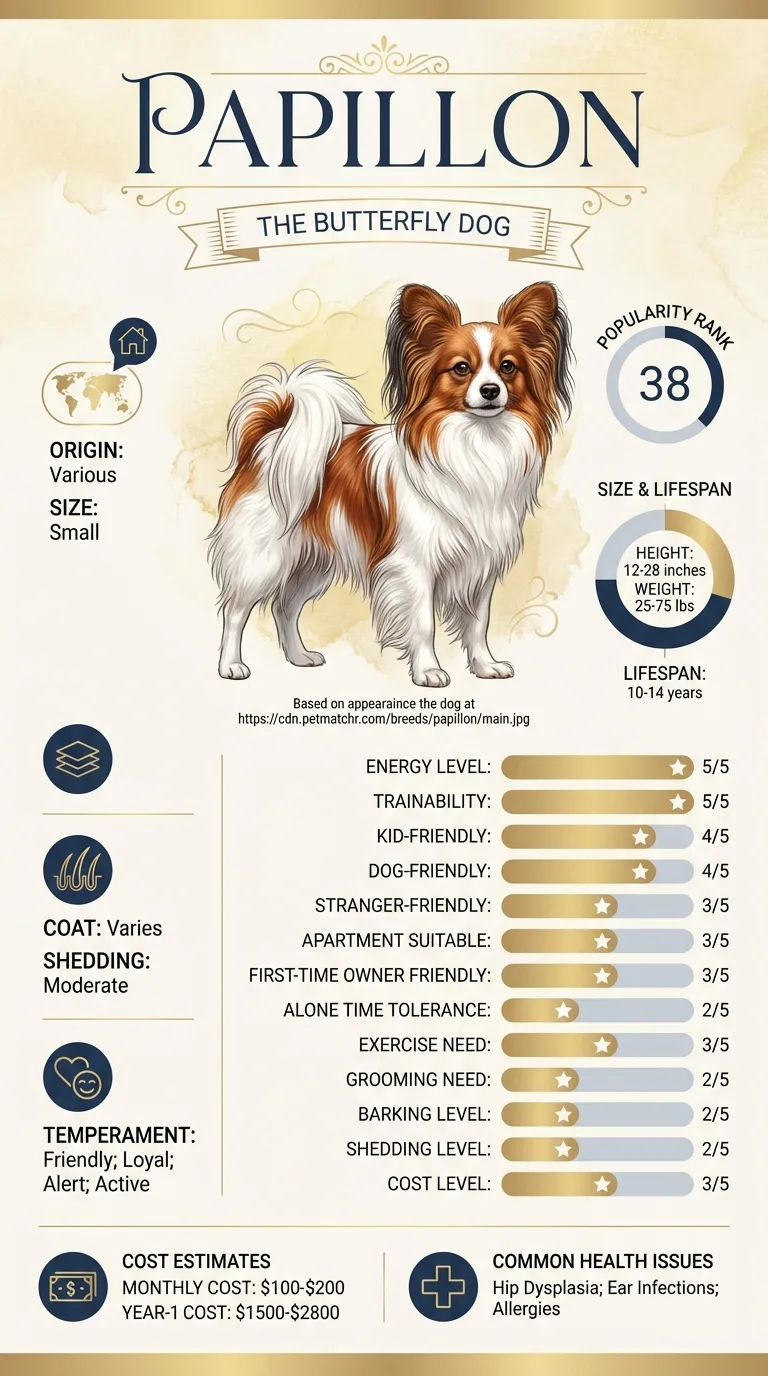
Owners choosing between an enormous number of premium foods with confident marketing, and anyone who switched to a grain-free diet in good faith and has since seen headlines about it.
This guide is not medical advice. If your dog shows pain, sudden behavior change, or worsening symptoms, consult a licensed veterinarian.
Some links may be affiliate links. We may earn a commission at no extra cost to you. We only suggest products we believe are helpful for dog owners.
We research and check what we publish, but we do not warrant that any figure, date, price, or statement is accurate, complete, or current, and we accept no liability for any loss, cost, injury, or other harm arising from the use of this site. Use it as one reference among several. You remain responsible for your own decisions and for your dog's care - confirm anything that matters with a licensed veterinarian or another qualified professional before you act on it. Full disclaimer.
Dilated cardiomyopathy is a weakening and stretching of the heart muscle that leaves the pump unable to eject blood effectively. It is a large and giant breed disease with a strong genetic component. A separate group of reported cases appeared in unexpected breeds eating particular diets, and that diet-associated form is the only version of this disease with any plausible relevance to a Papillon.
Genetically driven DCM is common in a handful of large breeds and effectively absent in toy ones. Diet-associated cases were reported in numbers large enough to prompt formal investigation but remain rare relative to the number of dogs eating those diets. It is not on the Papillon's documented health list, and most Papillons will never encounter it.
The Papillon has no documented predisposition to heart muscle disease. Its recorded issues are patellar luxation, progressive retinal atrophy, dental disease, an open fontanel and a collapsing trachea, none of which are cardiac. What makes this topic worth a page for the breed is that the diet-associated route bypasses breed entirely: it was reported across a range of dogs united by what they ate rather than by ancestry, and that is a risk any owner can adjust.
Diet is the environmental factor here and it is unusually actionable. The relevant variables are the proportion of pulses in the formulation, whether the manufacturer employs qualified nutritionists and runs feeding trials, and whether a home-prepared diet has been balanced by someone competent to do it. A Papillon's small daily ration means that upgrading to a better-evidenced food costs very little in absolute terms.
Seek emergency attention for laboured breathing at rest, breathing with an extended neck and elbows held out, blue or grey gums, sudden collapse, or a rapidly swelling abdomen. Muscle disease often presents for the first time as a crisis, which is exactly why it is feared. Book a prompt appointment for a new cough, reduced exercise tolerance, any fainting episode, or a sleeping breathing rate that has climbed above thirty and stayed there. Book a routine appointment to review your dog's diet if it is high in pulses, and ask whether measuring blood taurine is worth doing in your dog's case.
See all Papillon health problems, which breeds are prone to dilated cardiomyopathy dcm, or the full Papillon breed guide for temperament, exercise needs and ownership costs.
If a diet change is recommended, expect a transition over a week or two and reassessment of heart measurements at three to six months, since muscle recovery is slow where it happens at all. Taurine results take one to two weeks. For genetically driven DCM, the timeline is one of monitoring and medication rather than recovery. In most Papillons, the outcome of this whole subject is a food review and nothing further.
A dog eating a diet from a manufacturer that can answer questions about how it was formulated, a normal echocardiogram if one was ever indicated, and an owner who can read a food label without being steered by the front of the bag. Success here is mostly the absence of a story, arrived at deliberately rather than by luck.
The pattern reported to regulators involved dogs, many of them in breeds with no known predisposition, developing dilated hearts and reduced contraction while eating diets in which peas, lentils, chickpeas and other pulses appeared high in the ingredient list, frequently in place of grains.
Some affected dogs had low blood taurine, an amino acid essential for heart muscle function, and improved when supplemented. Others had normal taurine and improved anyway when the diet was changed, which suggested the mechanism was more complicated than a simple deficiency.
What has never been established is a single causal ingredient or a clean dose-response relationship. The association is real enough to have prompted large-scale investigation, and unclear enough that responsible summaries stop short of naming a culprit.
The practical position most cardiologists have settled on is unexciting and sound. Feed a diet from a manufacturer that employs veterinary nutritionists, runs feeding trials and publishes its research, and be cautious about diets built on pulses in place of grains, particularly from small producers.

Ingredient lists are marketing documents and are close to useless for judging nutritional adequacy. What is worth checking sits elsewhere on the packaging.
Look for a statement that the food is complete and balanced for the relevant life stage, and specifically whether that was established by feeding trials rather than by calculation alone. Feeding trials are more expensive and more informative.
Then ask the manufacturer four questions, which you can send by email: do you employ a full-time qualified veterinary nutritionist, who formulates your diets and what are their credentials, do you own your manufacturing plants, and what quality control and research do you publish. Companies that answer clearly and quickly are telling you something; companies that reply with marketing copy are also telling you something.
For a five to ten pound Papillon eating perhaps a hundred grams a day, the cost difference between a mainstream well-researched food and a boutique one is trivial in absolute terms. This is a breed where feeding the better-evidenced option is genuinely affordable.
If you think your Papillon has dilated cardiomyopathy, the plan is three steps: write down what you have seen and when it started, book a veterinary appointment rather than waiting for the next flare, and take video of the behaviour or symptom before you go — the thing you are worried about rarely happens in the consulting room. Screening in the parents covers patellar luxation, progressive retinal atrophy, dental disease.
What the vet visit should produce is a diagnosis and a written plan, not just reassurance: what is being ruled out, what the monitoring interval is, and which signs mean you come back sooner. Ask what the treatment costs across a year rather than per visit, because that is the number that decides whether you are managing this condition or reacting to it.
Between appointments, keep a short log — dates, what you saw, what changed. It is the single most useful thing an owner brings to a follow-up, and for dilated cardiomyopathy it is often what separates a clear pattern from a guess.
Corinne fed her Papillon, Suzu, a boutique grain-free food built around chickpeas and lentils, chosen because the packaging spoke about ancestral diets. When the reports surfaced she went looking for advice and found mostly argument. Her vet gave her the four questions to send. She emailed her current brand and three others. Her brand replied with a paragraph of marketing about natural ingredients and did not answer any of the four. Two of the others named their veterinary nutritionists, confirmed they own their plants, and linked to published feeding trials. Suzu moved to one of those over ten days. Her vet listened to her heart, found nothing abnormal, and recorded a baseline. No taurine test was thought necessary. Suzu is eight now with a normal heart and a food that costs Corinne about four dollars a month less than the previous one.
Key takeaway: You cannot evaluate a dog food by reading its ingredients, but you can evaluate the company that made it by asking four questions and reading the reply.
The honest answer is that a link was observed and never fully explained. Grain-free is not automatically a problem, and the concern centred on diets high in pulses. If your dog is on such a diet, it is worth a conversation with your vet rather than a panic.
Not without veterinary advice. Some affected dogs were taurine deficient and many were not, and supplementing blindly may mask a problem rather than solve it. If there is genuine concern, taurine can be measured in the blood.
No. It does not appear on the breed's documented health list, and the breeds classically affected are large and giant ones. The relevance of the diet story is precisely that it produced cases in breeds that would otherwise never be considered at risk.
Often you would not until it was advanced, which is the difficulty with muscle disease. Reduced exercise tolerance, a rising sleeping breathing rate, coughing, a swollen abdomen or a fainting episode are the signs. An echocardiogram is the only way to see the muscle directly.
In a proportion of reported cases, heart function improved substantially after the diet was changed and any deficiency corrected, which is unusual and encouraging for a disease that is normally progressive. It is not universal, and it depends on how far the muscle had already deteriorated.
Both can be adequate and both are frequently not. Home-prepared diets in particular are commonly deficient when analysed, because balancing a canine diet is genuinely difficult. If you feed one, have the recipe formulated by a qualified veterinary nutritionist rather than found online.
Cases of dilated heart muscle disease reported in dogs, often in breeds with no predisposition, associated with diets high in peas, lentils and other pulses. The mechanism was never fully established.
Ignore the ingredient list. Check whether it is complete and balanced by feeding trial, and ask the manufacturer whether they employ a qualified veterinary nutritionist and own their factories.
Barely. A Papillon eats roughly a hundred grams a day, so the difference between a boutique brand and a well-researched mainstream one is a few dollars a month within a typical eighty to one hundred and fifty dollar budget.
No. Transition over seven to ten days, mixing increasing proportions of the new food, since an abrupt change upsets a small digestive system and tells you nothing useful if anything goes wrong.
Yes. Feed measured meals at set times, remove uneaten food after fifteen minutes, and stop offering alternatives. Papillons are quick learners and quickly work out that supper does not improve if it is refused.
A one-page prep sheet for this condition: the signs, the questions to ask, what to get priced. Unlocks here.
You get: Vet visit prep sheet
No spam. One-click unsubscribe. See our privacy policy.
Preview page 1 before you decide.