Behavior
What are quick tips for Miniature Schnauzer cherry eye?
If you notice cherry eye, consult your vet promptly for the best treatment options. Keep your dog's eye clean to prevent irritation.

Quick answer
What are quick tips for Miniature Schnauzer cherry eye?
If you notice cherry eye, consult your vet promptly for the best treatment options. Keep your dog's eye clean to prevent irritation.
Cherry eye is a common issue among Miniature Schnauzers, affecting their appearance and comfort.
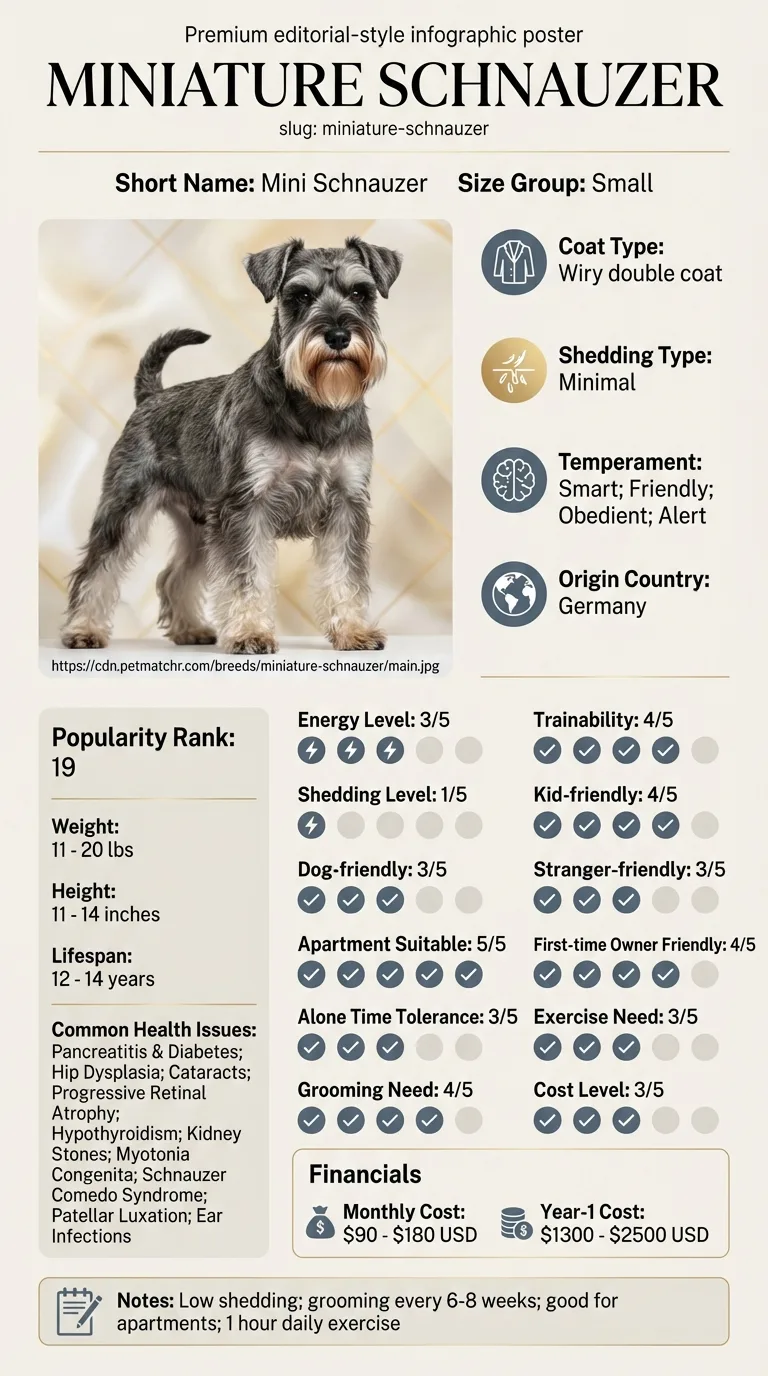
Many Miniature Schnauzer owners, especially first-time pet parents, can find themselves confused and worried about this issue. If your pup seems uncomfortable or if you notice changes in their eyes, you’re not alone in seeking solutions.
This guide is not medical advice. If your dog shows pain, sudden behavior change, or worsening symptoms, consult a licensed veterinarian.
Some links may be affiliate links. We may earn a commission at no extra cost to you. We only suggest products we believe are helpful for dog owners.
We research and check what we publish, but we do not warrant that any figure, date, price, or statement is accurate, complete, or current, and we accept no liability for any loss, cost, injury, or other harm arising from the use of this site. Use it as one reference among several. You remain responsible for your own decisions and for your dog's care - confirm anything that matters with a licensed veterinarian or another qualified professional before you act on it. Full disclaimer.
Check this first
It's important to know when Miniature Schnauzer cherry eye requires immediate veterinary attention and when it can be monitored at home. Emergency signs include severe redness, swelling, or discharge from the eye, as these suggest an infection or irritation that could worsen. If your dog seems to be in pain, is pawing at their eye, or shows a sudden change in behavior, these are red flags that mean you should call your vet right away.
On the other hand, if your Miniature Schnauzer's cherry eye is mild and doesn’t seem to cause discomfort, you can monitor it for a few days. Look for any changes in the size or appearance of the gland. If it’s not causing excessive redness or discharge and your dog is behaving normally, you might hold off on an emergency visit. However, keep a close eye on it, as these conditions can change quickly.
Ultimately, if you're ever in doubt, it’s always better to err on the side of caution and consult your vet. They can help you determine whether a visit is necessary or if a simple monitoring plan can be put in place.
If any of these apply, call your vet or an emergency clinic now. The rest of this page is for the cases that are not an emergency.
Miniature Schnauzer cherry eye is a condition where the tear gland in the eyelid prolapses, creating a noticeable bulge. This typically occurs in younger dogs and can be uncomfortable, leading to squinting or excessive tearing. Owners may notice a red or pink mass in the corner of the eye, which can be alarming.
Cherry eye is relatively common in Miniature Schnauzers, with many experiencing it at some point in their lives. It's important to monitor your dog's eyes and consult a vet if you notice symptoms, as early intervention can help manage the condition effectively.
Miniature Schnauzers are prone to cherry eye due to their anatomy. The shape of their eyes and eyelids can make the glands more susceptible to popping out. This breed's genetic predisposition plays a significant role in this issue.
Environmental factors such as allergies, irritants, or stress can exacerbate cherry eye. Changes in the dog's environment, like moving to a new home or introducing new pets, can lead to increased anxiety, which may trigger this condition.
If cherry eye persists or worsens, consult your vet. They can recommend treatment options, which may include medication or surgery if necessary. Regular check-ups can also help manage any underlying health issues that may contribute to cherry eye.
Avoiding these common mistakes can help improve your Miniature Schnauzer's cherry eye condition more effectively.
Start here: Miniature Schnauzer Most Common Genetic Disorders: Screening
See all Miniature Schnauzer health problems, which breeds are prone to cherry eye, or the full Miniature Schnauzer breed guide for temperament, exercise needs and ownership costs.
You can expect to see improvements in your Miniature Schnauzer's cherry eye within a few weeks to a couple of months with consistent care and management.
Success means the cherry eye is reduced or resolved, your dog appears comfortable, and there's no recurring irritation. Regular vet check-ups ensure your pup's eye health remains stable.
Maria, a first-time dog owner in Atlanta, noticed her Miniature Schnauzer, Max, developing a cherry eye shortly after adopting him. Initially, she was worried and unsure how to handle it. After consulting her veterinarian, she learned that while surgery could be an option, many cases can improve with proper care. Maria started a routine of gentle eye cleaning, applied prescribed ointments, and monitored Max's behavior closely. Over the next few months, she saw significant improvement. Max became more comfortable, and the cherry eye lessened. Maria felt relieved and gained confidence in managing Max's health.
Key takeaway: With proper care and veterinary guidance, managing Miniature Schnauzer cherry eye can lead to successful outcomes without immediate surgery.
Cherry eye occurs when the gland in the eyelid prolapses, often due to genetic predisposition or weak connective tissue. Miniature Schnauzers are particularly prone to this condition. If you notice this, it's important to consult with your vet for appropriate treatment. This answer relates to Miniature Schnauzer cherry eye.
Treatment for cherry eye typically involves surgical correction to reposition the gland. Your vet may recommend surgery if the condition is severe or causing discomfort. It's best to address this issue sooner rather than later to avoid complications.
While cherry eye can't always be prevented, maintaining a healthy lifestyle and regular vet check-ups can help. Keeping your Miniature Schnauzer's weight in check may also reduce the risk. Genetic factors play a significant role, so be aware of your dog's family history.
Cherry eye itself may not cause significant pain, but it can lead to irritation, discomfort, or secondary infections. If your dog is pawing at their eye or showing signs of distress, it's essential to seek veterinary care. Prompt treatment can help alleviate any discomfort.
While home management won't fix cherry eye, you can help reduce irritation. Keep the eye area clean and avoid letting your dog rub their face. Always follow your vet's advice regarding any medications or treatments prescribed for your dog.
Cherry eye occurs when the gland under the eyelid prolapses, becoming visible as a red lump. This can happen due to genetic predisposition, age, or stress. If your Mini Schnauzer has cherry eye, it's best to consult your vet for the right treatment.
In some cases, cherry eye may temporarily reduce in size or appear to go away, but it's unlikely to resolve completely without treatment. If left untreated, it can lead to further complications such as chronic irritation or infection. It's important to seek veterinary advice.
While cherry eye can occur at any age, it's more commonly seen in younger dogs. However, older Mini Schnauzers can develop it too, especially if they have other health issues. Regular vet check-ups can help monitor their eye health.
Treatment typically involves surgery to reposition the gland. Some vets may try medical management initially, but surgery is often the most effective solution. Always discuss the best options with your veterinarian based on your dog's specific situation.
While you can't entirely prevent cherry eye, maintaining your dog's overall health can help. Managing stress, providing a balanced diet, and regular vet visits are important. If you notice any signs of eye problems, contact your vet promptly.
If you notice cherry eye, consult your vet promptly for the best treatment options. Keep your dog's eye clean to prevent irritation.
Cherry eye usually requires veterinary intervention and doesn't resolve on its own. Early treatment can prevent complications.
Yes, cherry eye is relatively common in Miniature Schnauzers due to their genetic makeup. Awareness and early detection are key.
Visit your vet as soon as possible for a treatment plan, which may include surgery to correct the condition.
A one-page prep sheet for this condition: the signs, the questions to ask, what to get priced. Unlocks here.
You get: Vet visit prep sheet
No spam. One-click unsubscribe. See our privacy policy.
Preview page 1 before you decide.