Health
Is this breed prone to liver shunts?
No, it isn't a documented breed risk here, though congenital shunts can occur occasionally in puppies of any breed.

Quick answer
Is this breed prone to liver shunts?
No, it isn't a documented breed risk here, though congenital shunts can occur occasionally in puppies of any breed.
A puppy's liver is supposed to filter every drop of blood arriving from the gut; a shunt means some of that blood skips the filter entirely.
Owners of puppies that seem smaller or less energetic than littermates, and anyone whose puppy shows unusual behavior, especially after meals, that doesn't have another obvious explanation.
This guide is not medical advice. If your dog shows pain, sudden behavior change, or worsening symptoms, consult a licensed veterinarian.
Some links may be affiliate links. We may earn a commission at no extra cost to you. We only suggest products we believe are helpful for dog owners.
A liver shunt is an abnormal blood vessel that lets blood bypass the liver's filtering function, allowing toxins to build up and cause whole-body, often neurological-looking symptoms. It isn't part of this breed's documented health profile, but congenital shunts occur occasionally in puppies of any breed, making unexplained poor growth or post-meal behavior changes worth a real workup regardless of breed reputation.
This condition is not documented as a common issue in this breed, unlike certain small breeds and a few other specific large breeds where it's better recognized. It remains uncommon here, but not impossible, which is why persistent unexplained symptoms in a puppy shouldn't be dismissed purely based on breed.
This breed's own documented health record doesn't flag liver shunts as a known risk, unlike breeds with a specifically recognized congenital predisposition. When a shunt does occur here, it follows the same congenital vessel abnormality seen across dog breeds broadly rather than a breed-specific mechanism.
Protein content in the diet directly affects how much toxin load a compromised liver filtering system has to manage, which is why diet modification is a meaningful part of managing a confirmed shunt regardless of the underlying cause.
Talk to your vet promptly about a puppy that's notably smaller than littermates, slow to gain weight, or shows odd behavior after meals. Seek emergency care immediately for seizures, extreme disorientation, or collapse, which can indicate a more severe toxin buildup requiring urgent treatment.
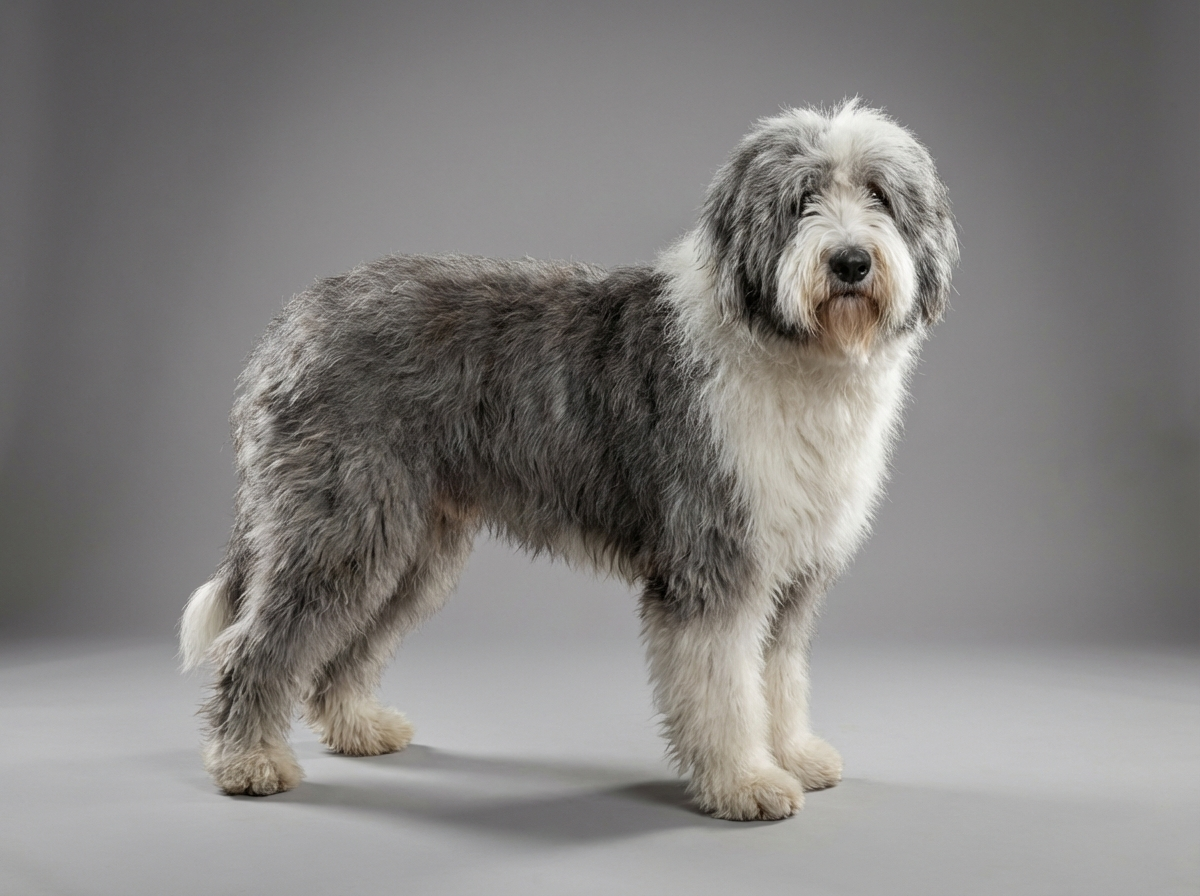
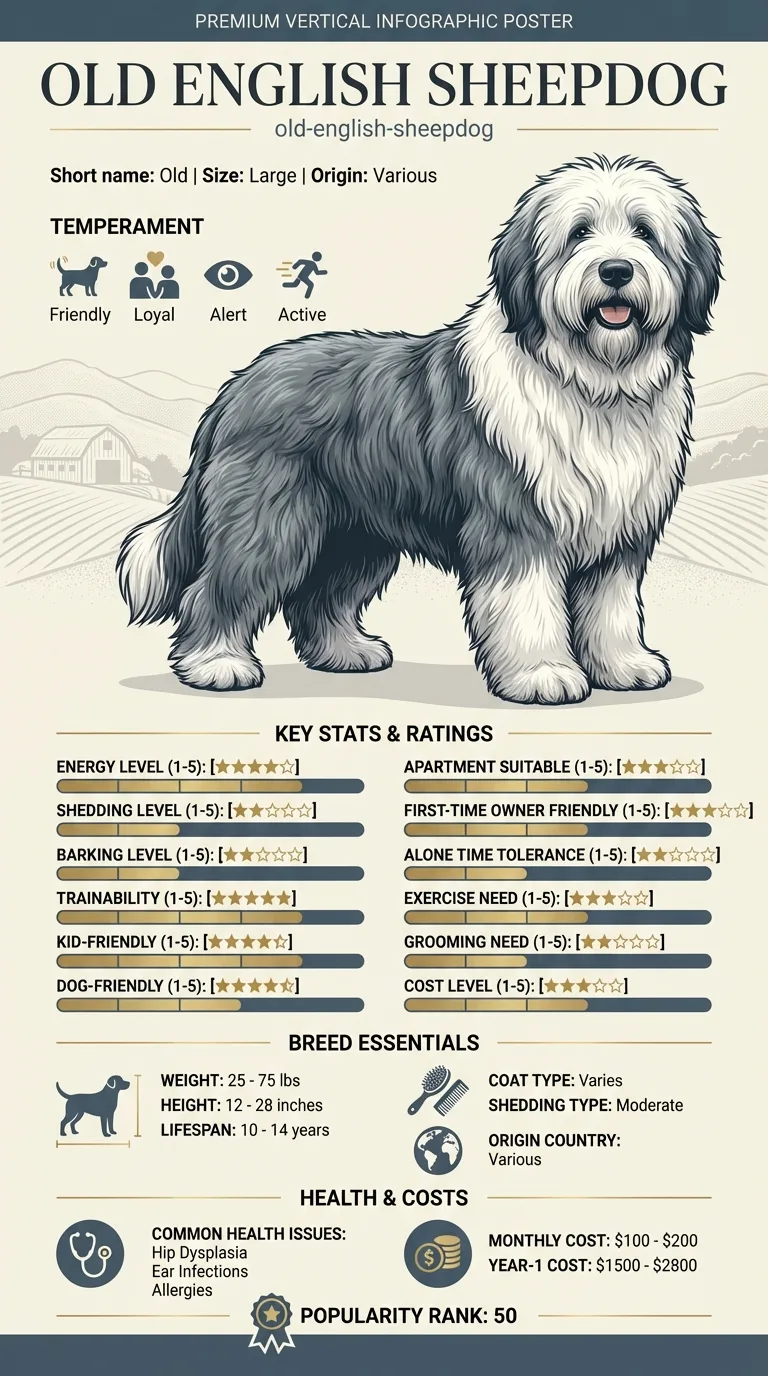
See all OLD English Sheepdog health problems, which breeds are prone to liver shunts, or the full OLD English Sheepdog breed guide for temperament, exercise needs and ownership costs.
Diagnosis typically follows within a couple of weeks once bile acid testing flags a concern, with imaging confirming the shunt's location shortly after. Surgical recovery, when surgery is appropriate, generally takes several weeks of restricted activity and monitoring.
Success looks like a puppy that resumes normal growth and behavior after treatment, whether through surgical correction or, for less accessible shunts, consistent lifelong diet and medication management.
Normally, blood from the intestines routes through the liver first, where toxins, including ammonia produced during digestion, get filtered out before that blood joins general circulation. A shunt is an abnormal vessel connection that lets a portion of that blood skip the liver entirely, meaning those toxins reach the brain and other organs unfiltered. This is why shunt symptoms often look neurological rather than obviously liver-related: disorientation, circling, head pressing, or seeming "spacey" particularly after a protein-rich meal, when toxin production from digestion peaks. A shunted puppy may also simply be smaller than littermates and slower to gain weight, since the liver plays a broader role in metabolism and growth beyond just filtering blood.
This condition isn't part of this breed's own documented health profile the way it is for a handful of small breeds like Yorkshire Terriers or certain other large breeds like Irish Wolfhounds, but congenital shunts can occur in puppies of essentially any breed, which is why unexplained poor growth or odd post-meal behavior deserves an actual workup rather than being dismissed based on breed alone.
Bloodwork showing elevated bile acids, particularly after a meal, is usually the first red flag, followed by imaging like ultrasound or a specialized CT scan to actually locate the abnormal vessel. Treatment depends on the shunt's location and the puppy's overall condition: some shunts can be surgically corrected, closing off the abnormal vessel and allowing blood flow to normalize through the liver, while others are managed medically with a modified diet and medication when surgery isn't a safe option. Outcomes vary considerably based on shunt type and how early it's caught, which is exactly why early recognition of subtle growth and behavior clues matters as much as the eventual treatment itself.

Biscuit, an Old English Sheepdog puppy in Cincinnati, was noticeably smaller than his littermates by twelve weeks old, and his owner Colin noticed he sometimes seemed to stare blankly at the wall for a few minutes after dinner. His vet, unwilling to dismiss the pattern despite the breed not being typically associated with liver shunts, ran bile acid bloodwork that came back significantly elevated. An ultrasound confirmed a congenital shunt, and Biscuit underwent surgical correction at four months old. His recovery took about six weeks of restricted activity, after which his growth caught up noticeably and the post-meal staring episodes stopped entirely.
Key takeaway: Biscuit's breed gave no reason to expect a liver shunt, but his vet took the actual symptoms seriously anyway, and that willingness to test rather than assume was what caught it early enough to treat surgically.
No, it isn't part of this breed's documented health profile the way it is for certain small breeds and a few other specific large breeds. It remains a possible, if uncommon, congenital condition in any puppy.
Smaller size and slower weight gain than littermates, along with neurological-looking symptoms like disorientation, circling, or head pressing especially after meals, are the most common early clues.
Bloodwork measuring bile acids, particularly before and after a meal, is typically the first screening step, followed by ultrasound or specialized imaging to locate the actual abnormal vessel if bile acids are elevated.
Many shunts can be surgically corrected, especially when caught relatively early, with a good chance of normal liver function afterward. Shunts that aren't surgical candidates are managed with lifelong diet and medication instead.
A sudden, severe neurological episode, seizures, extreme disorientation, or collapse, tied to a possible shunt should be treated as an emergency. A puppy with milder, ongoing symptoms still needs prompt veterinary evaluation, just not necessarily an emergency-room visit.
Yes, a modified protein diet is often part of management both before and after any surgical correction, since reducing the toxin load from digestion eases symptoms regardless of treatment stage.
Diagnostic imaging alone can run into the hundreds to low thousands of dollars, with surgical correction adding substantially more, making this one of the costlier congenital conditions to manage if it's confirmed.
No, it isn't a documented breed risk here, though congenital shunts can occur occasionally in puppies of any breed.
Often smaller than littermates with slower weight gain, sometimes showing disorientation or odd behavior especially after meals.
Bile acid bloodwork is the first screening step, followed by ultrasound or specialized imaging to locate the abnormal vessel.
Diagnostic imaging and surgical correction together can run into the thousands of dollars depending on shunt type and location.
Many can, particularly with early surgical correction, though outcomes depend on shunt type, location, and how early it was caught.
A one-page prep sheet for this condition: the signs, the questions to ask, what to get priced. Unlocks here.
You get: Vet visit prep sheet
No spam. One-click unsubscribe. See our privacy policy.
Preview page 1 before you decide.