Living
Which is heavier?
The Bernese Mountain Dog, at 70-115 lbs versus the Sheepdog's 60-100 lbs.

Quick answer
Which is heavier?
The Bernese Mountain Dog, at 70-115 lbs versus the Sheepdog's 60-100 lbs.
Bernese Mountain Dog or Old English Sheepdog? On paper they differ most on grooming need, and on the scales Bernese Mountain Dog is the heavier at 70–115 lbs. Here is how the two compare on everything that shapes an ordinary week.
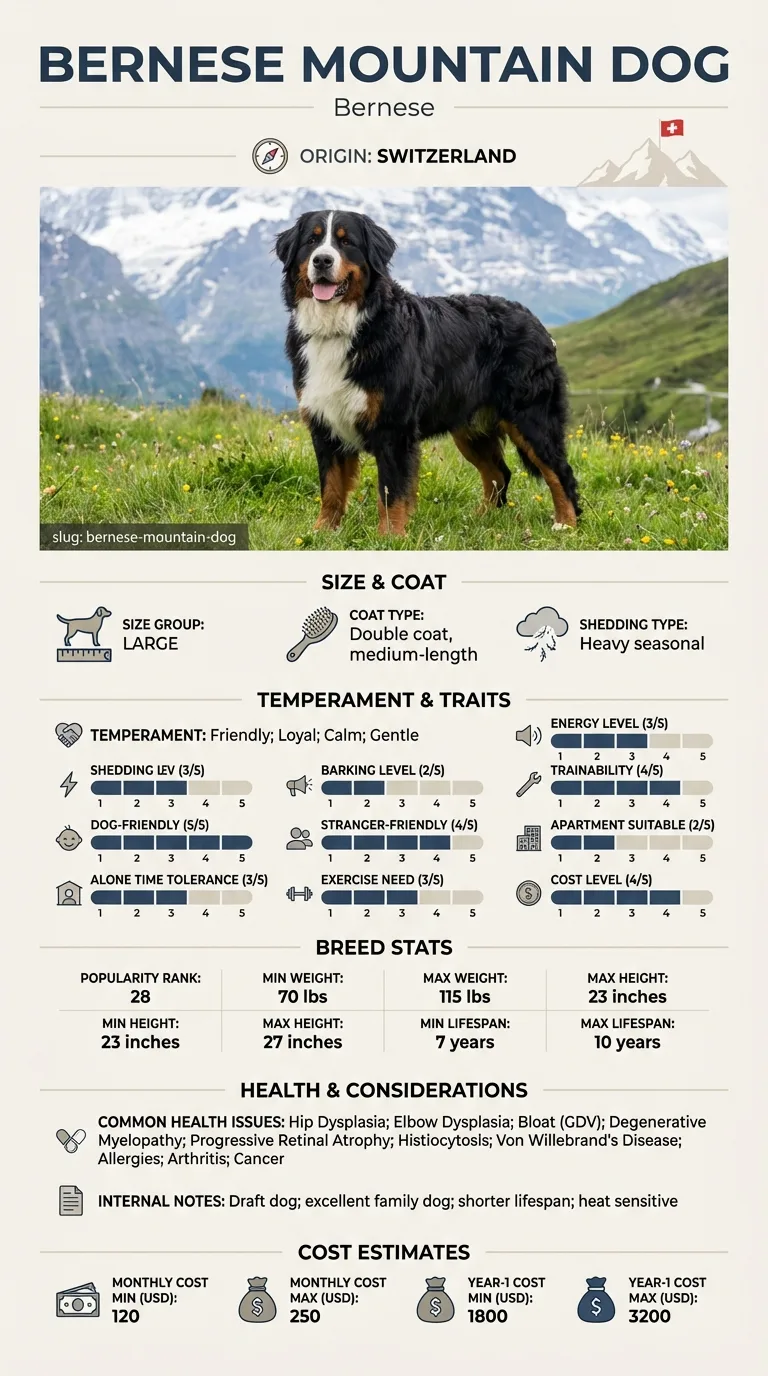
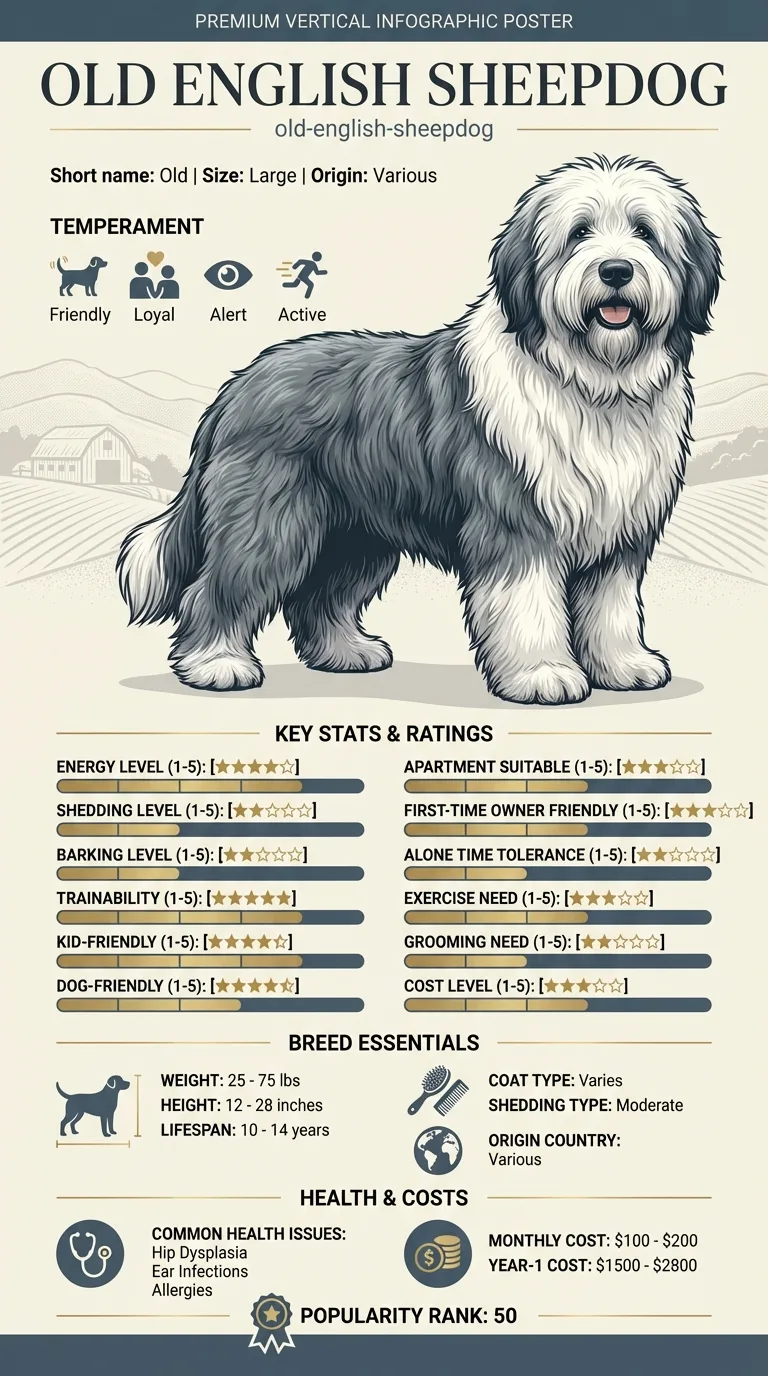
This is for someone already down to Bernese Mountain Dog and Old English Sheepdog and deciding between them. For this pair the decision usually turns on grooming need and good for first-time owners, so those are covered first and in most detail. Both rate 2/5 for flats, so housing does not settle this one. Breed history is left out; what follows is what you will actually live with.
Between Bernese Mountain Dog and Old English Sheepdog, grooming need is what separates them, and Bernese Mountain Dog is the lower-effort dog of the two to keep.
Choose Bernese Mountain Dog if this is your first dog, you do not want a standing grooming appointment and the dog will be alone during the working day.
Choose Old English Sheepdog if a smaller dog suits your car, your home or your back.
| Feature | bernese mountain dog | old english sheepdog | Winner |
|---|---|---|---|
| Size class | large | large | Equal |
| Weight | 70–115 lbs | 60–100 lbs | Equal |
| Height | 23–27 in | 20–24 in | Equal |
| Lifespan | 7–10 years | 10–12 years | old english sheepdog |
| Exercise need | Moderate (3/5) | Moderate (3/5) | Equal |
| Grooming need | Moderate (3/5) | Very high (5/5) | bernese mountain dog |
| Shedding | High (4/5) | High (4/5) | Equal |
| Energy level | Moderate (3/5) | Moderate (3/5) | Equal |
| Barking | Low (2/5) | Moderate (3/5) | bernese mountain dog |
| Apartment suitability | Low (2/5) | Low (2/5) | Equal |
| Good for first-time owners | High (4/5) | Low (2/5) | bernese mountain dog |
| Tolerates being alone | Moderate (3/5) | Low (2/5) | bernese mountain dog |
| Trainability | High (4/5) | Moderate (3/5) | bernese mountain dog |
| Good with kids | Very high (5/5) | Very high (5/5) | Equal |
| Good with other dogs | Very high (5/5) | High (4/5) | bernese mountain dog |
| Friendly to strangers | High (4/5) | High (4/5) | Equal |
| Cost level | High (4/5) | High (4/5) | Equal |
| Coat | Double coat, medium-length | Long, shaggy double coat | Equal |
| Origin | Switzerland | Various | Equal |
| Typical monthly cost | $120–$250 | $110–$240 | Equal |
| Typical first-year cost | $1,800–$3,200 | $1,700–$3,200 | Equal |
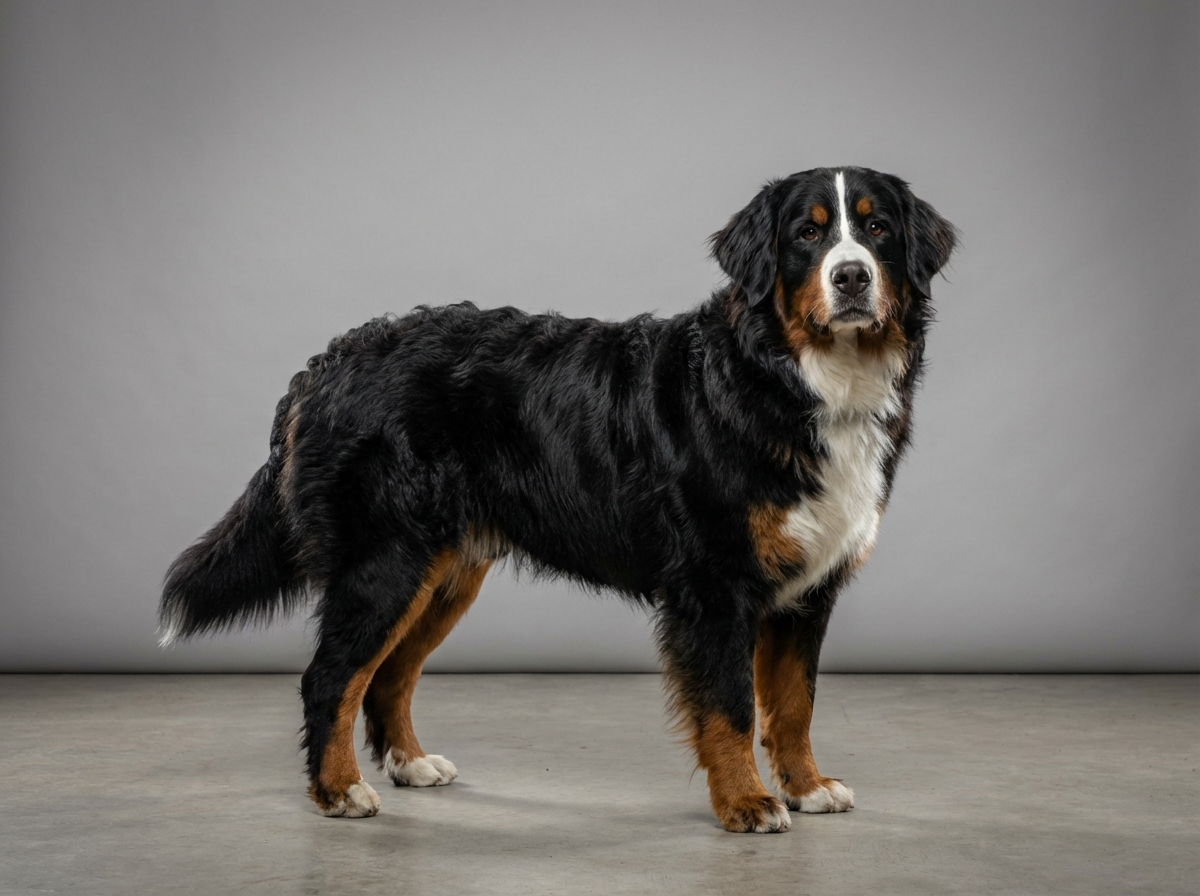
Both breeds land in the large size class, but the Bernese runs heavier at the top end, 70-115 lbs against the Old English Sheepdog's 60-100 lbs, while the Sheepdog's height range (20-24 in) sits a few inches below the Bernese's 23-27 in. The two are close enough in scale that build, rather than raw size, becomes the deciding factor, since the Sheepdog's famously shaggy, long double coat makes it look bulkier than its weight suggests, while the Bernese's tricolor coat is comparatively sleeker on a similarly substantial frame. Either dog will need a properly sized crate and vehicle space, but the Sheepdog's visual bulk can be misleading on the scale.
Exercise need and energy level are identical on paper, both moderate (3/5), so this pair doesn't split along activity level the way many comparisons do. The Old English Sheepdog's temperament list includes Playful and Watchful, suggesting bursts of herding-instinct energy around the yard rather than the Bernese's steadier, Calm disposition. In practice, both are satisfied with regular walks and yard time rather than intense daily exercise, making this one of the rare pairings where energy needs simply aren't the deciding factor; grooming and trainability carry more weight in this particular comparison.
Grooming is where these two truly diverge: the Old English Sheepdog rates very high (5/5) against the Bernese's moderate (3/5), reflecting the intensive brushing its long, shaggy double coat requires to prevent matting. Shedding, by contrast, is close, high (4/5) for the Bernese, also high (4/5) for the Sheepdog, so neither breed spares an owner from fur management, but the Sheepdog adds substantially more brushing time and professional grooming cost on top of that shedding. Anyone weighing these two should treat grooming, not shedding, as the real differentiator in day-to-day coat care.
Both breeds rate low (2/5) for apartment suitability, so neither is a natural fit for small spaces, largely because of their shared large size class and coat-shedding volume. Barking tips slightly toward the Bernese being quieter, low (2/5) against the Sheepdog's moderate (3/5), a difference that traces to the Sheepdog's herding heritage and Watchful temperament trait. Alone-time tolerance also favors the Bernese, moderate (3/5) versus the Sheepdog's low (2/5), worth noting for anyone who works long hours, since the more watchful, herding-bred Sheepdog is the more likely of the two to struggle with extended solitude.
This is one of the more lopsided categories in the comparison: the Bernese rates high (4/5) for first-time owners and high (4/5) for trainability, while the Old English Sheepdog rates low (2/5) and moderate (3/5) respectively. That combination, lower first-time suitability plus more moderate trainability plus very high grooming needs, makes the Sheepdog a better match for owners with some prior large-breed experience who are prepared for its Adaptable but independent-minded herding instincts. First-time owners drawn to the Sheepdog's shaggy charm should weigh that gap seriously before committing, and consider the calmer, more biddable Bernese instead.
Both breeds rate very high (5/5) with kids and high (4/5) with strangers, so either makes a warm family dog on the surface. The Bernese edges ahead with other dogs, very high (5/5) versus the Sheepdog's high (4/5), a modest advantage for multi-dog homes. Combined with the training gap noted above, the practical household picture favors the Bernese for families without prior large-breed experience, while the Old English Sheepdog's playful, watchful nature can suit experienced households, particularly ones who appreciate its herding instincts around active kids in a yard.
The Old English Sheepdog lives somewhat longer on average, 10-12 years against the Bernese's 7-10, and its health list is notably shorter, five conditions (Hip Dysplasia, Cataracts, Hypothyroidism, Primary Ciliary Dyskinesia, Bloat) against the Bernese's ten, which include Histiocytosis, Von Willebrand's Disease, Degenerative Myelopathy and Cancer. Both share Hip Dysplasia and Bloat (GDV) risk, a common thread among large, deep-chested breeds. The Bernese's longer, more serious health list, particularly its elevated cancer risk, is one of the most-cited concerns among Bernese owners and worth discussing directly with any breeder before committing.
Costs track closely: both breeds carry a high cost rating (4/5), with the Bernese running $120-$250 monthly against the Sheepdog's $110-$240, and near-identical first-year ranges, $1,800-$3,200 versus $1,700-$3,200. Given how close the food and vet-care costs likely run between two similarly sized large breeds, the real budget variable is the Sheepdog's very high grooming need, since that 5/5 rating typically means more frequent professional grooming appointments than the Bernese's moderate 3/5 coat care requires, even though it isn't fully broken out in the headline cost figures.
Bernese Mountain Dog weighs 70–115 lbs and lives 7–10 years; Old English Sheepdog weighs 60–100 lbs and lives 10–12 years. The two diverge most on grooming need and good for first-time owners. They are level on apartment suitability, cost level and energy level, so those cannot decide it. The comparison marks an easier option only where one exists. Facts like weight and country of origin are not scored. Both dogs are rated from the same dataset, which is what makes the numbers comparable with each other even though any individual dog sits somewhere inside its breed's range.

The Bernese, rated high (4/5) for first-time owners against the Sheepdog's low (2/5), thanks to its calmer, more biddable temperament.
The Old English Sheepdog, rated very high (5/5) versus the Bernese's moderate (3/5), due to its long, shaggy coat.
The Old English Sheepdog, typically 10-12 years versus the Bernese's 7-10 years.
Yes, they rate very high (5/5) with kids, matching the Bernese Mountain Dog's rating.
The Old English Sheepdog, rated moderate (3/5) against the Bernese's low (2/5).
No, its health list is shorter, covering five conditions compared to the Bernese's ten, which include more serious concerns like Histiocytosis and Cancer.
The Bernese, rated moderate (3/5) tolerance for being alone versus the Sheepdog's low (2/5).
The Bernese Mountain Dog, at 70-115 lbs versus the Sheepdog's 60-100 lbs.
The Bernese Mountain Dog, rated high (4/5) versus the Sheepdog's moderate (3/5).
The Bernese Mountain Dog, rated moderate (3/5) grooming versus the Sheepdog's very high (5/5).
The Bernese Mountain Dog, rated low (2/5) barking versus the Sheepdog's moderate (3/5).
Secure checkout on Stripe. We never see your card.
7-day money-back guarantee. Instant access.
Health information here is general and is not veterinary advice. If your dog shows pain, sudden behaviour change, or worsening symptoms, consult a licensed veterinarian.
Some links on this site are affiliate links. We may earn a commission at no extra cost to you, and we only suggest products we believe are helpful for dog owners.
We research and check what we publish, but we do not warrant that any figure, date, price, or statement is accurate, complete, or current, and we accept no liability for any loss, cost, injury, or other harm arising from the use of this site. Use it as one reference among several. You remain responsible for your own decisions and for your dog's care - confirm anything that matters with a licensed veterinarian or another qualified professional before you act on it. Full disclaimer.
Match your lifestyle to the right dog.
Take quizNot sure which breed is right for you? Take our 2-minute quiz to find out.
Take the quiz