What is the only intervention that actually prevents the twist?
Prophylactic gastropexy, which surgically anchors the stomach so it cannot rotate. It is usually done during another planned abdominal procedure and is a decision to make with your vet.
Quick answer
What is the only intervention that actually prevents the twist?
Prophylactic gastropexy, which surgically anchors the stomach so it cannot rotate. It is usually done during another planned abdominal procedure and is a decision to make with your vet.
Stomach torsion is a structural risk that comes with a deep-chested giant frame. You can shave the odds. You cannot make a Newfoundland into a dog that cannot bloat, and any advice implying otherwise is doing you harm.

For owners who have just brought home a Newfoundland puppy and want to set up a sensible feeding and exercise routine, and for owners who have been given a long list of rules and want to know which ones are worth following.
This guide is not medical advice. If your dog shows pain, sudden behavior change, or worsening symptoms, consult a licensed veterinarian.
Some links may be affiliate links. We may earn a commission at no extra cost to you. We only suggest products we believe are helpful for dog owners.
Bloat prevention in a Newfoundland is a matter of stacking small advantages against a structural risk that cannot be removed by management. Splitting meals, slowing eating, separating food from hard exercise and keeping mealtimes calm are all reasonable and cheap. Surgical gastropexy is the only measure that addresses the mechanism itself. Everything else adjusts probability, and no combination of routines makes a deep-chested giant breed immune.
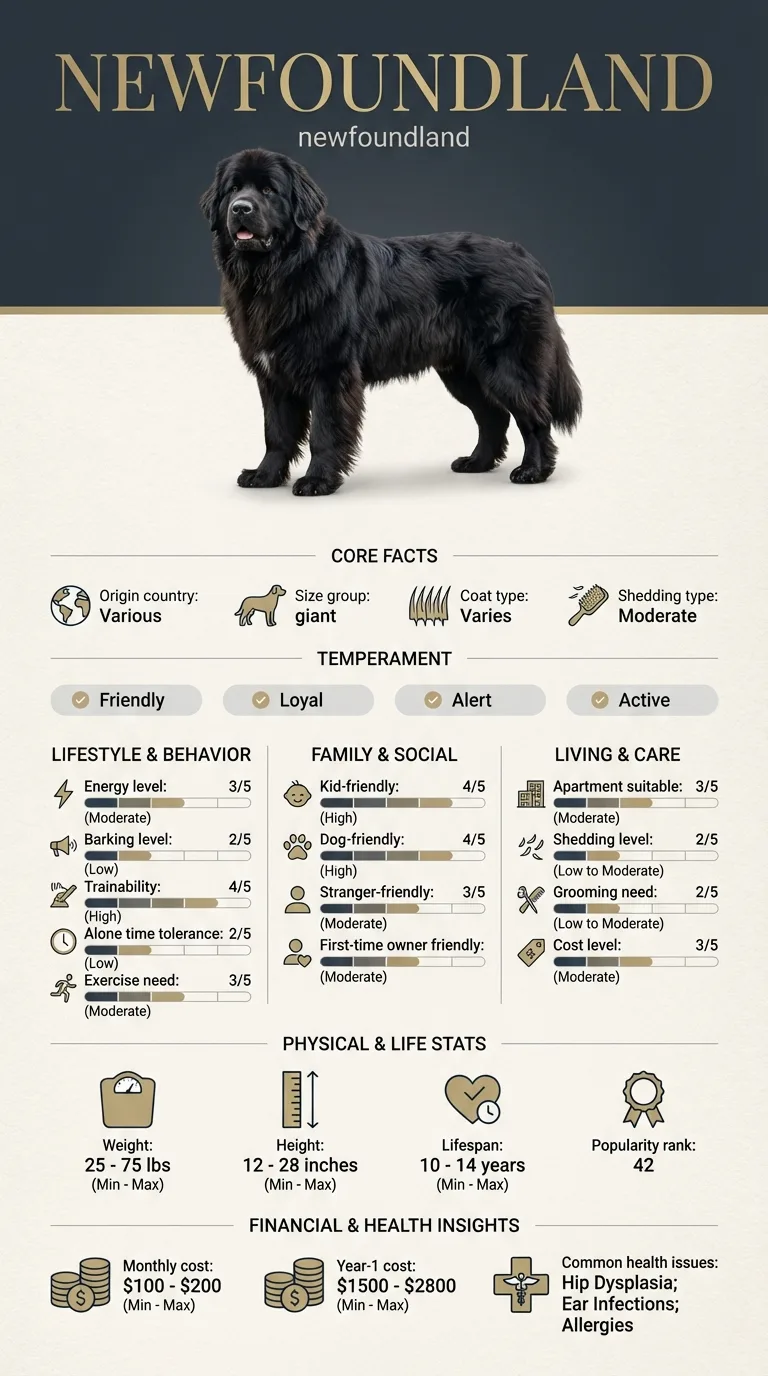
Bloat is one of the five conditions most often listed for the Newfoundland, alongside hip dysplasia, subaortic stenosis, dilated cardiomyopathy and cystinuria. Most individual dogs of the breed will never experience an episode. The reason it dominates giant-breed owner conversations out of proportion to its frequency is its speed and lethality, which makes even a modest lifetime probability worth planning around.
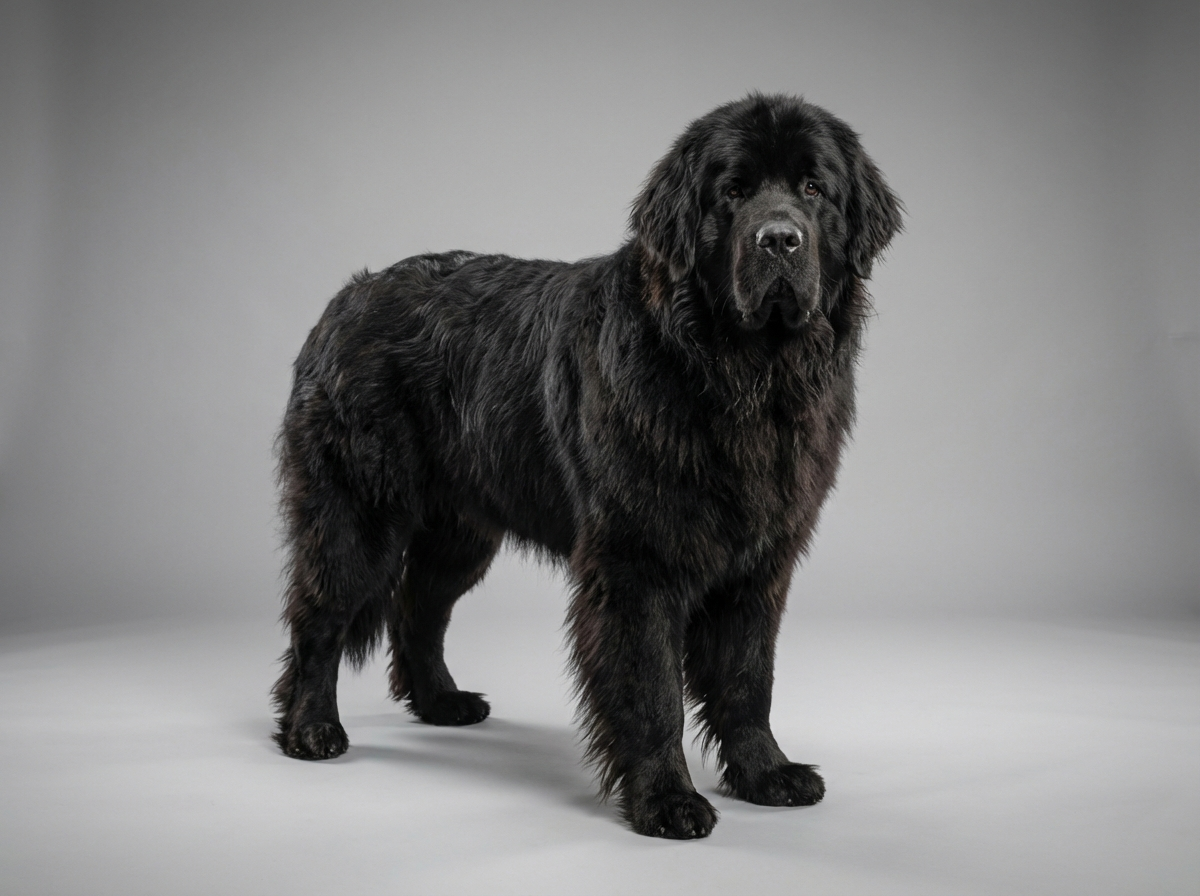
The mechanism is mechanical, and the Newfoundland's build supplies the mechanics. A tall, deep, narrow chest gives the stomach room to rotate on its axis once distended, and a body of 100 to 150 pounds means a large stomach and a lot of tissue to compromise once the blood supply is cut. Age raises risk, and a breed with a nine to ten year lifespan reaches the higher-risk years relatively quickly. Family history within the pedigree is a recognised factor, which makes this one of the few breed problems where a direct question to the breeder yields genuinely actionable information.
Nearly all the modifiable factors sit at the food bowl. How much is fed at once, how fast it goes down, whether other dogs are competing for it, how much water follows exertion, and what the dog does in the hour after eating. Household stress and changes of routine, including kennelling, appear frequently in case histories. Beyond the bowl, the decisive environmental factor is geography: an owner living twenty minutes from a twenty-four hour surgical hospital has a materially different situation from one living ninety minutes away, and that distance should influence how seriously a preventive gastropexy is considered.
Book a normal appointment to discuss feeding routine, bowl height and whether prophylactic gastropexy is right for your dog, ideally before any planned neuter, spay or other abdominal procedure. That conversation should include cardiac screening, since two of the breed's documented conditions are heart conditions. Separately, and far more urgently, go straight to an emergency hospital without calling around if your dog is retching repeatedly without producing anything, has a tight or drum-like belly, cannot settle or lie down, is drooling heavily and staring at its flank, has pale gums, or collapses. That is not a prevention question any more; it is a surgical emergency measured in hours.
See all Newfoundland health problems, which breeds are prone to bloat gdv, or the full Newfoundland breed guide for temperament, exercise needs and ownership costs.
Feeding changes can be made in a single week, and a fast eater usually slows within a fortnight of a slow-feed bowl and separate feeding. A prophylactic gastropexy performed alongside another procedure adds relatively little to recovery, with a couple of weeks of restricted activity. What no timeline delivers is certainty: risk reduction is permanent and partial, and owners should expect to keep the emergency plan in place for the dog's whole life regardless of what has been done.
Success is a household that has made the cheap changes, has had a real conversation with its vet about gastropexy rather than reading forums, knows where the nearest surgical hospital is, and has stopped believing that a perfect feeding routine confers immunity. A dog who eats calmly twice a day, keeps a lean body condition, and rests after meals is in a better position than one who does not, and that is the honest extent of what management achieves.
The strongest and least controversial risk factor is anatomy. Deep, narrow chests are associated with higher risk, and a Newfoundland standing 26 to 28 inches and weighing 100 to 150 pounds has exactly that build. You cannot change it, which is why the conversation moves so quickly to feeding.
A close relative with a history of bloat is another recognised risk factor, and it is one of the more useful questions to ask a breeder. Older dogs are generally at higher risk than young ones. Rapid eating and a single very large daily meal appear repeatedly in the literature as contributors, and dividing the daily ration into two or three meals is sensible, easy and costs nothing.
Raised feeding bowls are the interesting case. For years they were recommended as standard for giant breeds. Subsequent research associated raised bowls with increased risk in large and giant dogs, and the advice reversed. Many owners are still working from the original guidance. This is worth raising with your own vet rather than following whichever version you heard first, because there are individual dogs, such as those with oesophageal problems, for whom elevation is prescribed for other reasons.
Temperament has been examined too, with anxious or stressed dogs reported at greater risk. It is difficult to act on directly, but it argues for a settled, predictable routine around meals rather than a chaotic multi-dog scramble.
Every feeding rule adjusts the odds a little. Prophylactic gastropexy, in which the stomach is surgically attached to the abdominal wall so it cannot rotate, is the only intervention that changes the mechanics. It is worth an honest conversation with your vet.

If you think your Newfoundland has bloat, the plan is three steps: write down what you have seen and when it started, book a veterinary appointment rather than waiting for the next flare, and take video of the behaviour or symptom before you go — the thing you are worried about rarely happens in the consulting room. Screening in the parents covers hip dysplasia, subaortic stenosis, dilated cardiomyopathy.
What the vet visit should produce is a diagnosis and a written plan, not just reassurance: what is being ruled out, what the monitoring interval is, and which signs mean you come back sooner. Ask what the treatment costs across a year rather than per visit, because that is the number that decides whether you are managing this condition or reacting to it.
Between appointments, keep a short log — dates, what you saw, what changed. It is the single most useful thing an owner brings to a follow-up, and for bloat it is often what separates a clear pattern from a guess.
When Ana brought home Halley at nine weeks, her breeder handed her a typed care sheet. It recommended a raised feeder for a giant breed, one large evening meal, and a two-hour wait before exercise. The sheet was fifteen years old and had been photocopied many times. Ana took it to her vet at the first vaccination appointment. The vet went through it line by line. The raised feeder came out, because research had since associated elevated bowls with higher risk in large and giant dogs. One large meal became two, then settled at two for life. The exercise gap stayed, because although no specific number is proven, the principle is sound. They also had the harder conversation. Halley's mother had never bloated, but a grandmother in the line had. Ana lived thirty-five minutes from the nearest twenty-four hour surgical hospital. When Halley was spayed at fourteen months, after an echocardiogram cleared her heart, a gastropexy was done at the same time. Halley is now four. Ana still splits her meals, still keeps the hour after dinner quiet, and still has the emergency hospital saved in her phone, because she was told plainly that a pexy prevents the twist and not the gas.
Key takeaway: Take the old care sheet to your vet rather than following it. The cheap changes are worth making, the bowl-height advice has reversed, and gastropexy is the only measure that alters the mechanism itself.

Ask your vet about your individual dog rather than following a general rule. The historical advice recommended raised bowls for giant breeds; later research associated them with increased bloat risk in large and giant dogs, and much of the profession reversed the recommendation. Some dogs are prescribed elevated feeding for unrelated medical reasons, which is a different situation.
There is no single validated number, and any source quoting one with precision is overstating what is known. The general principle, separating meals from vigorous activity and swimming by a comfortable margin in both directions, is sensible and widely advised. Discuss a routine that fits your dog's day with your vet.
It is commonly advised and it is harmless, but it is not a proven preventive measure. What is better supported is slowing the speed of eating and dividing the ration. If soaking helps your dog eat more slowly, that is a reasonable reason to do it.
Family history is a recognised risk factor, so yes, it is relevant information. It is worth asking the breeder about bloat in the line, and worth mentioning to your vet when you discuss whether prophylactic gastropexy is appropriate for your dog.
No, and this is the most important caveat. A gastropexy is designed to prevent rotation, not gas distension. A dog with a pexy who is retching unproductively, has a tight abdomen or will not settle still needs emergency assessment. Owners who treat surgery as permanent immunity are the ones who delay.
Competition at mealtimes drives fast eating, which is one of the better-supported behavioural risk factors. Feeding dogs separately, in different rooms or crates, is one of the simpler and more effective changes a household with several dogs can make.
Prophylactic gastropexy, which surgically anchors the stomach so it cannot rotate. It is usually done during another planned abdominal procedure and is a decision to make with your vet.
Not generally. The advice reversed after research associated elevated feeding with increased risk in large and giant dogs. Ask your own vet, since some dogs need elevation for other medical reasons.
Split the daily ration into two or three meals and slow the speed of eating. It costs nothing, is well supported, and suits a breed prone to gaining weight anyway.
Vigorous activity close to a large meal is a commonly cited contributor. Separating the two by a comfortable margin is sensible, though no waiting period has been proven to eliminate risk.
Far less than emergency surgery, especially when added to a procedure already planned. Emergency GDV surgery commonly runs into thousands of dollars, so many owners of this breed treat the preventive option as insurance.
A one-page prep sheet for this condition: the signs, the questions to ask, what to get priced. Unlocks here.
You get: Vet visit prep sheet
No spam. One-click unsubscribe. See our privacy policy.
Preview page 1 before you decide.