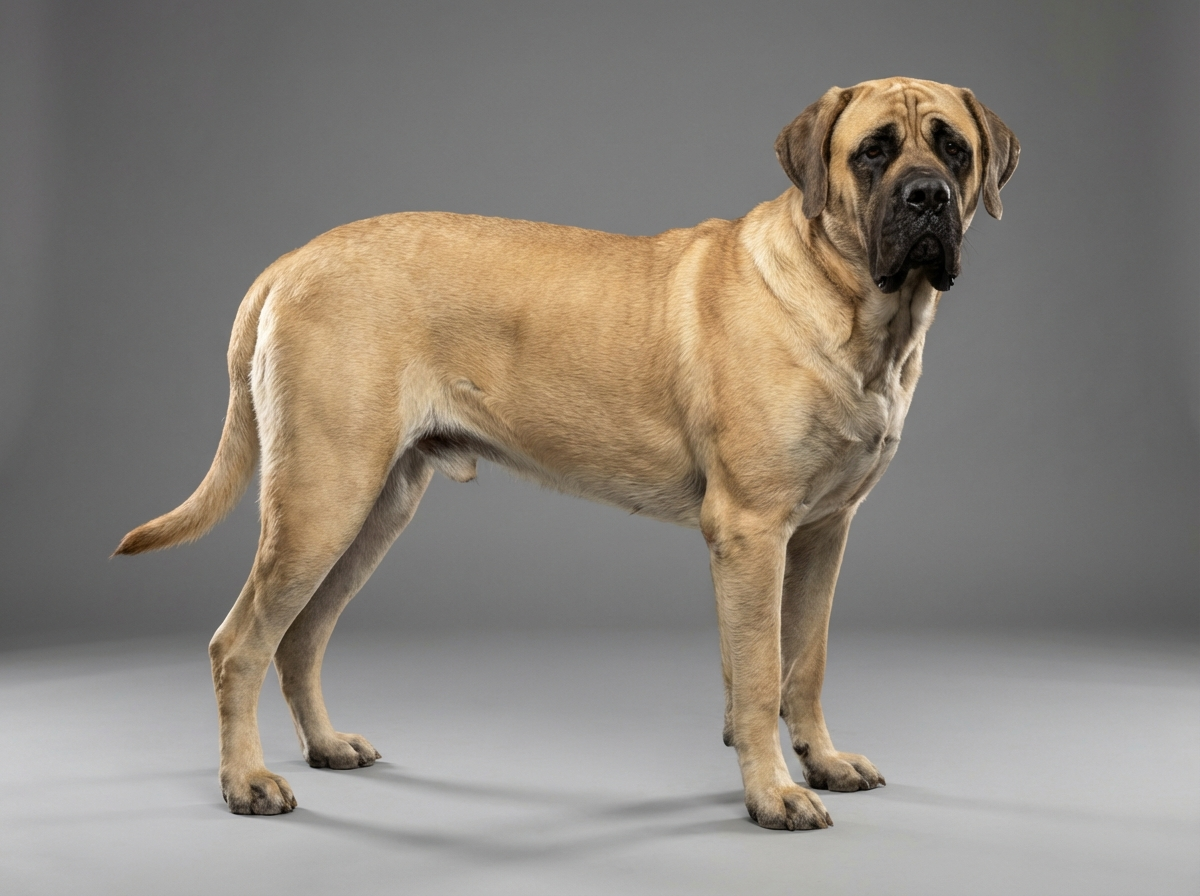
Health
Is comedone syndrome only found in Schnauzers?
No - it's most common in Schnauzers, but the underlying blocked-follicle process can occur in other breeds, including Mastiffs, though more rarely.

Quick answer
Is comedone syndrome only found in Schnauzers?
No - it's most common in Schnauzers, but the underlying blocked-follicle process can occur in other breeds, including Mastiffs, though more rarely.
The name says Schnauzer, but the skin process behind it isn't breed-locked - it's about follicles, oil, and skin that isn't a Schnauzer's at all.
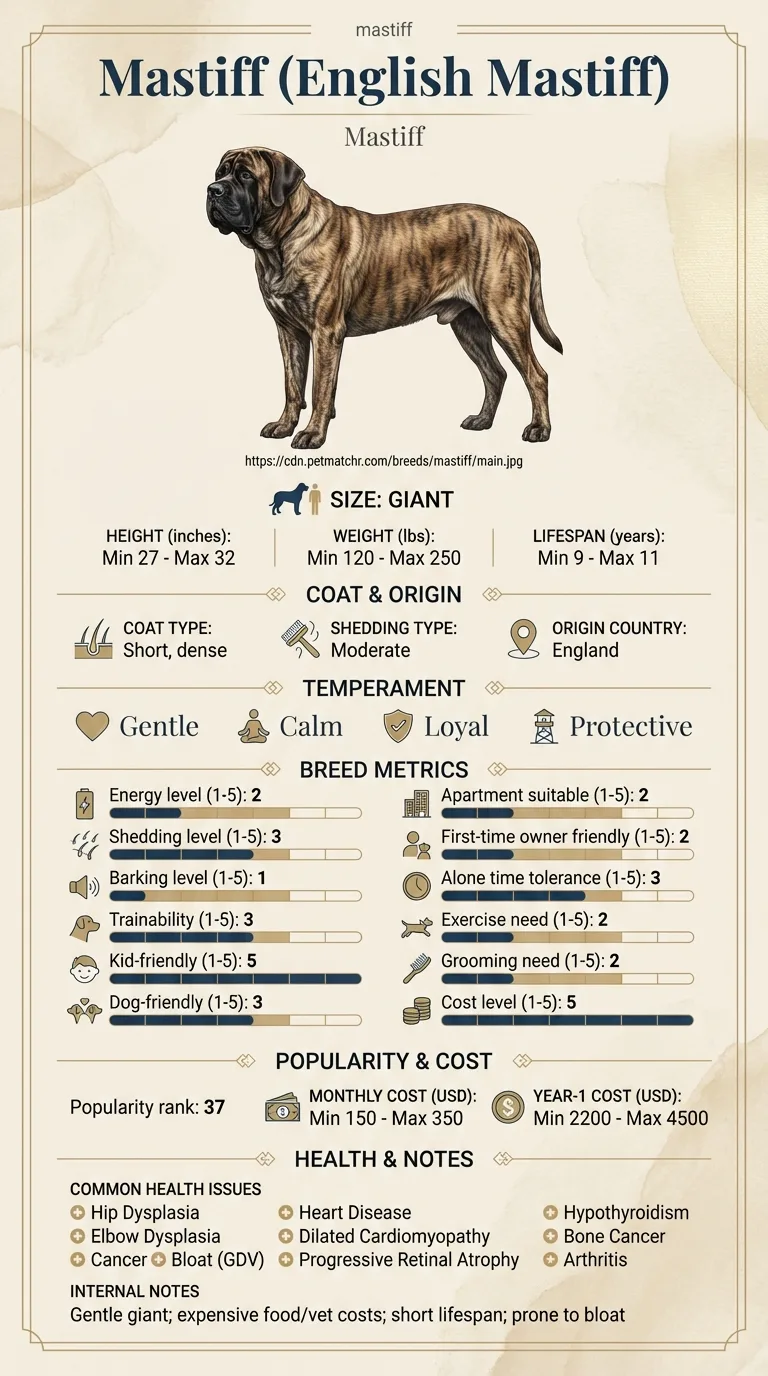
This is relevant to owners who've noticed small, firm, blackhead-like bumps along their Mastiff's back or spine and found information online that assumes the condition only applies to Schnauzers, leaving them unsure whether it's relevant to their own dog.
This guide is not medical advice. If your dog shows pain, sudden behavior change, or worsening symptoms, consult a licensed veterinarian.
Some links may be affiliate links. We may earn a commission at no extra cost to you. We only suggest products we believe are helpful for dog owners.
We research and check what we publish, but we do not warrant that any figure, date, price, or statement is accurate, complete, or current, and we accept no liability for any loss, cost, injury, or other harm arising from the use of this site. Use it as one reference among several. You remain responsible for your own decisions and for your dog's care - confirm anything that matters with a licensed veterinarian or another qualified professional before you act on it. Full disclaimer.
Comedone syndrome is a skin condition involving hair follicles blocked with oil and dead skin, producing small blackhead-like bumps typically along the back. It's named for and most closely associated with Schnauzers, but the underlying process isn't exclusive to that breed, and it can occasionally appear in other short-coated dogs, including Mastiffs.
This condition is uncommon in Mastiffs compared to Schnauzers, where it's a well-recognized breed issue. When it does appear outside that breed, it's usually mild and manageable rather than a significant ongoing health concern.
Comedone syndrome isn't tied to a documented genetic marker in this breed's known health profile, but the general biology, hair follicles becoming blocked with oil and keratin, can occur in any short, dense coat type, which describes this breed's coat. It's simply far less common here than in the breed it's named for.
Infrequent bathing, environmental grime, and skin that isn't regularly checked along the back can all contribute to follicles becoming blocked over time. Underlying hormonal issues affecting skin and coat quality can also make a dog more prone to this kind of follicular blockage.
See a vet if the bumps become red, swollen, tender, or start discharging, if they're spreading beyond the back, or if you're not confident the bumps are comedones rather than another skin condition needing different treatment.
Management focuses on keeping follicles clear and catching secondary infection early.

See all Mastiff health problems, which breeds are prone to schnauzer comedo syndrome, or the full Mastiff breed guide for temperament, exercise needs and ownership costs.
Mild cases often improve within a few weeks of consistent gentle bathing. Cases with secondary infection may take longer and typically need a specific veterinary treatment course rather than bathing alone.
Success looks like stable or reduced bump count and no signs of infection, not necessarily complete disappearance, since some dogs have an ongoing mild tendency toward this that's managed rather than cured.
The classic presentation is a row of small, firm, dark bumps running along the topline of the back, most often over the spine. Each bump is a blocked hair follicle distended with a plug of oil and dead skin cells, similar in principle to a blackhead in human skin. In mild cases they're mostly cosmetic; in more affected dogs, the blocked follicles can become secondarily infected, leading to redness, tenderness, or a low-grade odor along the affected area.
In a Mastiff, these bumps are worth distinguishing from other skin issues this breed is more commonly associated with, particularly fold-related infections around the face, which have a different location and cause. Comedone-type bumps along the spine, rather than in skin folds, point toward this specific follicular process instead.
If you think your Mastiff has schnauzer comedo syndrome, the plan is three steps: write down what you have seen and when it started, book a veterinary appointment rather than waiting for the next flare, and take video of the behaviour or symptom before you go — the thing you are worried about rarely happens in the consulting room. Screening in the parents covers hip dysplasia, elbow dysplasia, cancer.
What the vet visit should produce is a diagnosis and a written plan, not just reassurance: what is being ruled out, what the monitoring interval is, and which signs mean you come back sooner. Ask what the treatment costs across a year rather than per visit, because that is the number that decides whether you are managing this condition or reacting to it.
Between appointments, keep a short log — dates, what you saw, what changed. It is the single most useful thing an owner brings to a follow-up, and for schnauzer comedo syndrome it is often what separates a clear pattern from a guess.
Lena noticed a row of small, dark bumps along her Mastiff Coco's spine and assumed it was some kind of flea reaction, despite Coco being current on prevention. A closer look and a vet visit ruled out fleas and identified the bumps as comedones, blocked hair follicles, a condition Lena had only ever heard associated with Schnauzers. The vet explained that while it's true this is far more common in Schnauzers, the same skin process can occur in other short-coated breeds occasionally, including Mastiffs. Coco's case was mild, with no signs of infection, so the plan was straightforward: a gentle medicated shampoo every couple of weeks and regular checks along her back. Within about a month, the bumps had noticeably reduced, though Lena still checks Coco's spine during their regular grooming sessions, since the vet mentioned it can recur even after resolving.
Key takeaway: A condition's common name doesn't limit which dogs can actually get it - the underlying skin process matters more than the breed the condition happens to be named after.
Yes. The name reflects the breed where the condition was first and most commonly documented, but the underlying process of blocked, distended hair follicles can occur in other short-coated breeds, including Mastiffs, even though it's rarer there.
Small, firm, dark, blackhead-like bumps typically appearing in a row along the topline of the back, over the spine. They can be mild and cosmetic or become irritated and secondarily infected.
No. Facial fold infections are caused by moisture and friction trapped in loose skin folds around the face, while comedone syndrome involves blocked hair follicles typically along the back, a different location and mechanism.
Mild cases often respond to medicated shampoos designed to help clear follicular blockages. More significant or infected cases may need topical or oral treatment prescribed by a vet after confirming the diagnosis.
Mild cases are usually not painful, functioning more like a cosmetic issue. If follicles become secondarily infected, the area can become tender, red, or itchy, at which point veterinary treatment is warranted.
It's worth a vet visit to confirm the diagnosis rather than assume, since similar-looking bumps can sometimes have other causes. If it is comedone syndrome, most cases are manageable with appropriate skin care.
No - it's most common in Schnauzers, but the underlying blocked-follicle process can occur in other breeds, including Mastiffs, though more rarely.
Most often in a row along the topline of the back, over the spine, as small firm dark bumps.
Yes - blocked follicles can become secondarily infected, causing redness, tenderness, or discharge that needs veterinary treatment.
Gentle, vet-recommended medicated bathing can help, but avoid harsh scrubbing, which tends to irritate rather than clear the follicles.
No - they involve different locations and mechanisms, so a vet exam helps confirm which one is actually present.
A one-page prep sheet for this condition: the signs, the questions to ask, what to get priced. Unlocks here.
You get: Vet visit prep sheet
No spam. One-click unsubscribe. See our privacy policy.
Preview page 1 before you decide.