Health
Are Mastiffs more prone to eye injuries than eye disease?
A large share of everyday eye trouble in this breed is exposure-related injury rather than inherited disease, simply due to size and posture.

Quick answer
Are Mastiffs more prone to eye injuries than eye disease?
A large share of everyday eye trouble in this breed is exposure-related injury rather than inherited disease, simply due to size and posture.
A lot of Mastiff eye trouble isn't disease at all - it's a big dog's face meeting the world at exactly the wrong height.
This matters most for owners who let their Mastiff explore off-leash in brush, woods, or dog parks, and who assume redness or squinting after an outing is minor irritation rather than a scratch that needs attention.
This guide is not medical advice. If your dog shows pain, sudden behavior change, or worsening symptoms, consult a licensed veterinarian.
Some links may be affiliate links. We may earn a commission at no extra cost to you. We only suggest products we believe are helpful for dog owners.
We research and check what we publish, but we do not warrant that any figure, date, price, or statement is accurate, complete, or current, and we accept no liability for any loss, cost, injury, or other harm arising from the use of this site. Use it as one reference among several. You remain responsible for your own decisions and for your dog's care - confirm anything that matters with a licensed veterinarian or another qualified professional before you act on it. Full disclaimer.
A meaningful portion of the eye trouble Mastiffs experience comes from simple physical exposure rather than inherited disease - the eyes of a large dog moving nose-down through the world encounter more everyday hazards than owners often expect, and small injuries can escalate quickly if missed.
Minor eye irritation from everyday exposure is common enough that most Mastiff owners will deal with at least one incident over the dog's life, usually resolving quickly when caught early.
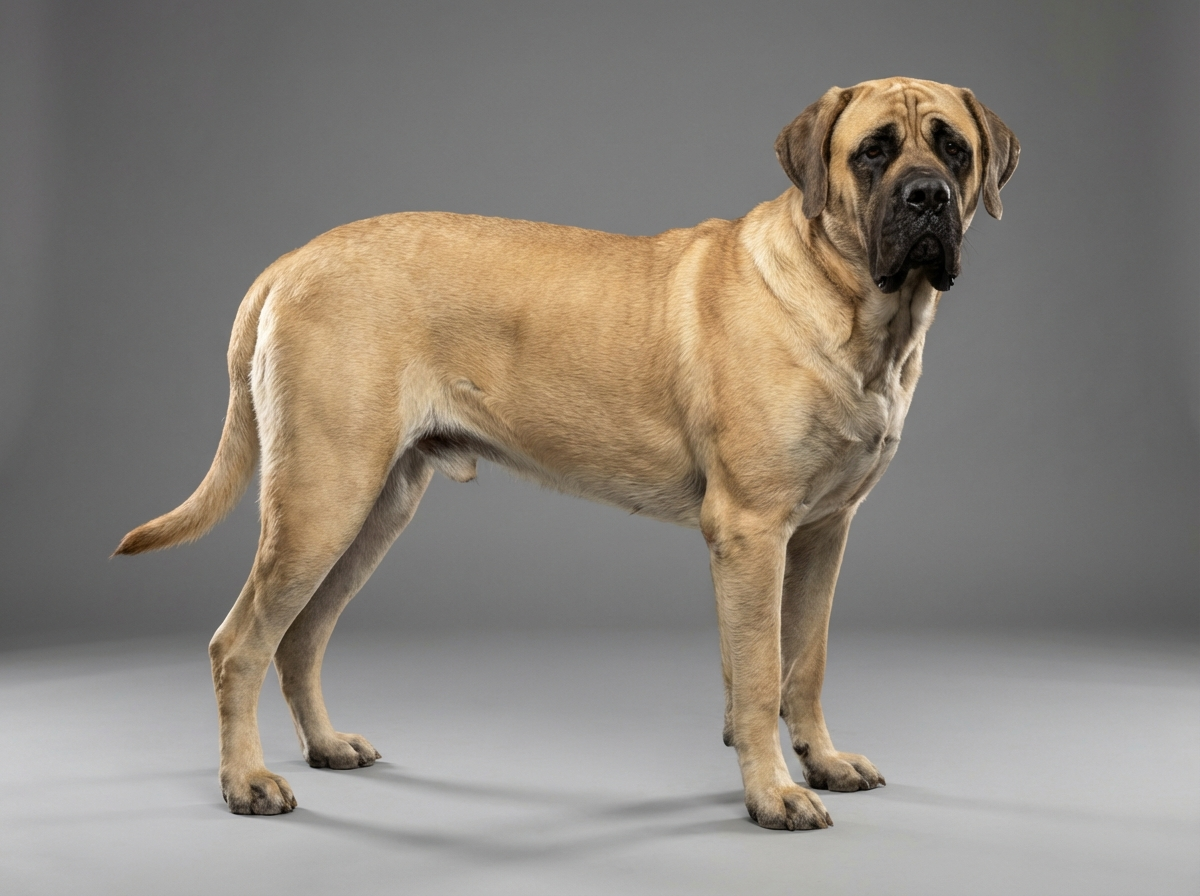
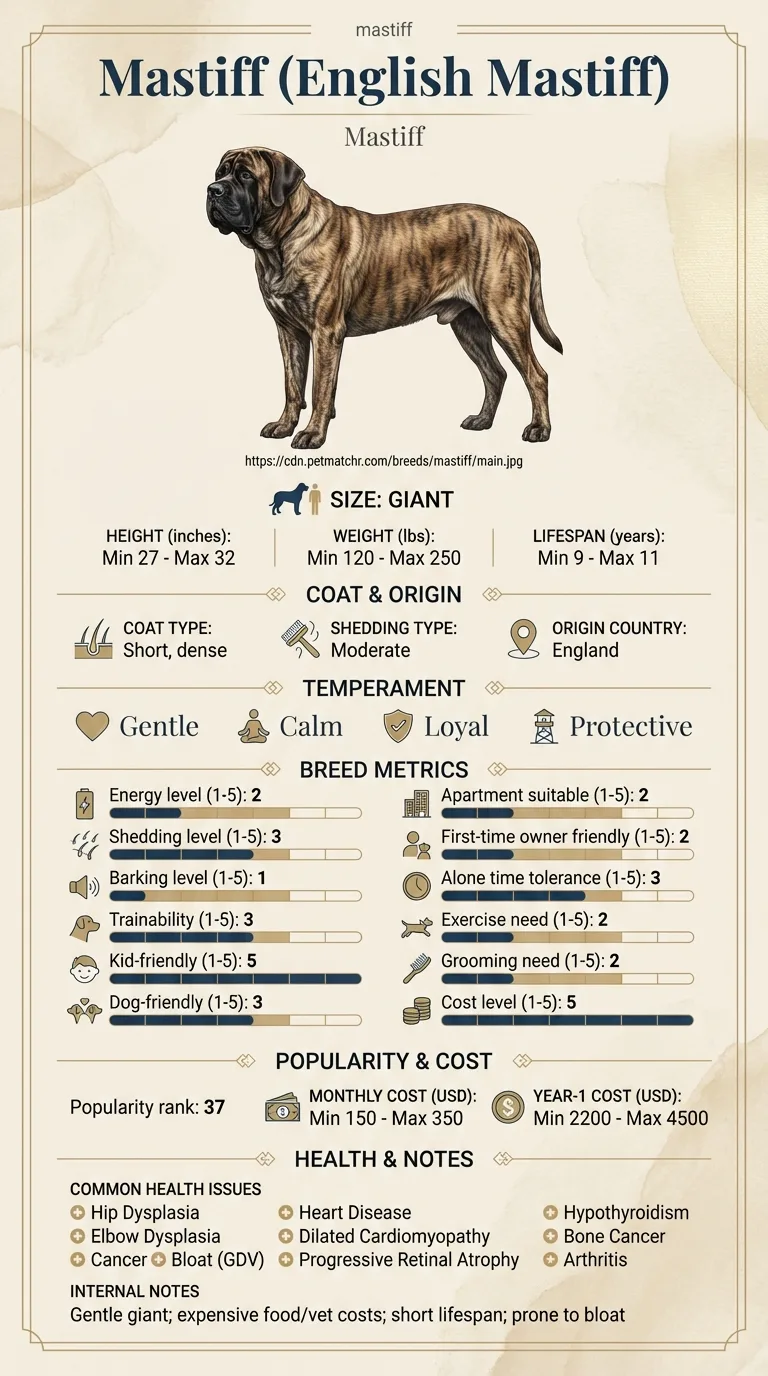
A dog this size, standing 27 to 32 inches at the shoulder with a heavy head and loose facial skin, brings its eyes closer to ground-level hazards than most breeds when sniffing or exploring. The same loose skin around the eyes that can predispose to conformation issues also means less taut protection against incidental knocks and scratches.
Homes with regular access to yards, trails, or off-leash areas with brush and undergrowth raise the odds of incidental contact. Car rides with an open window, dog parks with boisterous play styles, and cluttered indoor spaces sized for smaller dogs all add to the everyday exposure this breed's eyes face.
See a vet the same day for one-sided redness, squinting, pawing at the eye, or visible cloudiness following an activity like a walk or rough play. Injury-related eye problems can worsen within 24 to 48 hours, so early treatment matters more than with most minor scrapes elsewhere on the body.
See all Mastiff health problems, which breeds are prone to eye problems, or the full Mastiff breed guide for temperament, exercise needs and ownership costs.
Minor injury-related eye irritation caught early typically resolves within a few days to a week with appropriate care. Delayed treatment can extend recovery to two weeks or more and increases the chance of complications.
Success looks like catching redness or squinting on day one and treating it before it progresses, not eliminating every scratch - some incidental contact is close to unavoidable in a dog that explores the world nose-first.
A few everyday situations account for most of the injury-related eye trouble in this breed.
Early injury often looks subtle: a bit more blinking than usual, mild redness, or the dog rubbing its face against furniture or the ground. Left alone, a small scratch on the surface of the eye can turn into a deeper ulcer within a day or two, especially once the dog's own rubbing makes it worse.
The useful habit is a quick visual check after any outing where the dog was moving through brush or playing roughly - look for visible redness, unusual tearing, or squinting in one eye specifically. Catching it in the first day, before the dog has irritated it further, generally means a much simpler and shorter treatment course.

If you think your Mastiff has eye problems, the plan is three steps: write down what you have seen and when it started, book a veterinary appointment rather than waiting for the next flare, and take video of the behaviour or symptom before you go — the thing you are worried about rarely happens in the consulting room. Screening in the parents covers hip dysplasia, elbow dysplasia, cancer.
What the vet visit should produce is a diagnosis and a written plan, not just reassurance: what is being ruled out, what the monitoring interval is, and which signs mean you come back sooner. Ask what the treatment costs across a year rather than per visit, because that is the number that decides whether you are managing this condition or reacting to it.
Between appointments, keep a short log — dates, what you saw, what changed. It is the single most useful thing an owner brings to a follow-up, and for eye problems it is often what separates a clear pattern from a guess.
Ngozi noticed her Mastiff Tank squinting one eye after an off-leash hike through a wooded trail, and assumed he was just tired from the heat. By evening the squinting hadn't improved, and Tank had started pawing gently at the side of his face. A same-day vet visit found a small corneal scratch, likely from a branch or thorn during the hike, that hadn't yet progressed to a full ulcer thanks to the quick visit. A short course of prescribed drops and a recheck a week later confirmed it had healed cleanly. Ngozi changed one habit afterward: a thirty-second look at both of Tank's eyes any time he'd been off-leash in brush, which she now does before even getting back in the car. It takes almost no time and has caught two more minor scrapes early since.
Key takeaway: Most eye injuries in this breed are avoidable disasters, not inevitable ones - a quick check after rough outdoor time catches problems while they're still simple to treat.
Their size and the way they move through brush or greet other dogs at close range put their eyes in contact with more everyday hazards - twigs, paws, and debris - than a smaller or higher-carried head would encounter as often.
Injury-related redness usually affects one eye and follows a specific activity - a walk through brush, rough play, or a car ride with the window down. Redness in both eyes with no clear trigger is more likely allergy or another systemic cause.
It carries real risk of grit or debris hitting the eye at speed. Keeping the window only partly open, or using the dog's harness to limit how far the head extends, reduces that exposure.
Avoid rinsing with anything other than a vet-approved saline solution, keep the dog from rubbing the area if possible, and have it examined within the day. Scratches can progress to deeper ulcers quickly if irritated further.
Yes, particularly close-range play where a paw or muzzle can make contact with the eye. It's worth watching play style with dogs that paw at the face during interaction.
A quick glance after any walk through brush, tall grass, or rough terrain is a reasonable habit, since catching a scratch on day one usually means a much simpler recovery than catching it after it's worsened.
A large share of everyday eye trouble in this breed is exposure-related injury rather than inherited disease, simply due to size and posture.
Ground-level exploration through brush or tall grass, which brings the eyes into direct contact with twigs and debris.
It increases exposure to grit and wind at speed, so limiting how far the head extends out the window helps reduce injury risk.
A minor scratch can progress to a deeper ulcer within a day or two, especially if the dog rubs at the irritated eye.
One-sided redness following an activity like a walk or rough play points toward injury, and is worth a same-day look if it doesn't improve quickly.
A one-page prep sheet for this condition: the signs, the questions to ask, what to get priced. Unlocks here.
You get: Vet visit prep sheet
No spam. One-click unsubscribe. See our privacy policy.
Preview page 1 before you decide.