Living
What causes rust-colored tear stains?
Tears overflowing due to narrow drainage ducts, combined with yeast growth on the resulting constantly damp fur beneath the eye.

Quick answer
What causes rust-colored tear stains?
Tears overflowing due to narrow drainage ducts, combined with yeast growth on the resulting constantly damp fur beneath the eye.
A rust-brown stain running from the corner of the eye down the muzzle looks alarming the first time an owner really notices it. Most of the time it is tears, not infection.
Owners of light-coated Chihuahuas where staining is most visible, and anyone who has tried a stain-removal product without addressing why the tears are overflowing in the first place.
This guide is not medical advice. If your dog shows pain, sudden behavior change, or worsening symptoms, consult a licensed veterinarian.
Some links may be affiliate links. We may earn a commission at no extra cost to you. We only suggest products we believe are helpful for dog owners.
We research and check what we publish, but we do not warrant that any figure, date, price, or statement is accurate, complete, or current, and we accept no liability for any loss, cost, injury, or other harm arising from the use of this site. Use it as one reference among several. You remain responsible for your own decisions and for your dog's care - confirm anything that matters with a licensed veterinarian or another qualified professional before you act on it. Full disclaimer.
A set of everyday, low-grade eye issues in this breed stems from prominent eyes and a shortened facial structure affecting tear drainage and blink coverage rather than from infection or injury. Tear overflow producing visible staining, and mild dryness from incomplete blinking, are the two most common patterns, and both are managed with routine hygiene rather than urgent treatment, as long as they stay within their usual mild, stable pattern.
Tear staining and mild dry-eye patterns are extremely common in this breed and in other breeds with similarly shaped eyes and faces, and are considered a routine cosmetic and hygiene concern rather than a significant health problem in the great majority of cases.
Prominent eyes sitting in a comparatively shallow socket, part of this breed's skull structure, change both how completely the eyelids sweep the eye's surface with each blink and how efficiently the tear drainage ducts at the inner corner clear normal tear production. Eye infections are separately documented among this breed's health issues, and the moisture and irritation from these everyday problems can sometimes act as one of several contributing factors toward that broader risk.
Wind, dust, dry indoor air from heating or air conditioning, and bright sunlight all increase evaporation from an already less-protected corneal surface, worsening squinting and discomfort. Long hair around the eyes that is not kept trimmed holds moisture against the skin longer, extending the conditions that support staining.
Book a routine appointment if tear staining or mild squinting is new, worsening, or affects one eye much more than the other, so drainage anatomy and corneal surface health can be properly assessed. Seek same-day care for a cloudy cornea, visible pain, a held-shut eye, or discharge that changes color or thickness, since these indicate a different and more urgent problem than routine staining or dryness.
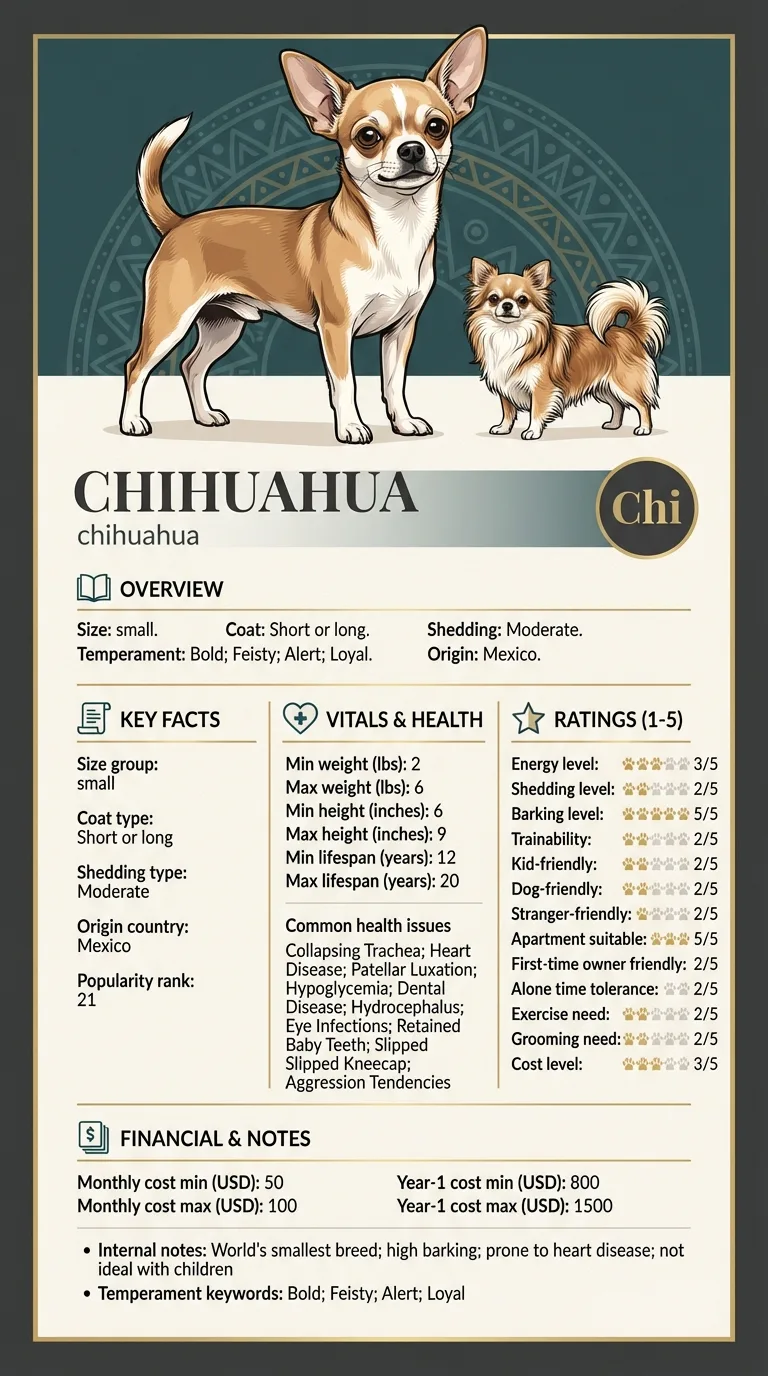
See all Chihuahua health problems, which breeds are prone to eye problems, or the full Chihuahua breed guide for temperament, exercise needs and ownership costs.
Visible improvement in staining from a consistent daily hygiene routine typically appears within two to four weeks, as existing stained fur grows out and is replaced by cleaner growth. Mild dryness managed with a recommended lubricating drop usually shows comfort improvement within days.
Success is a manageable, stable routine rather than a permanent cure, since the underlying facial and eye structure driving both patterns does not change. A well-managed dog has minimal staining, blinks comfortably in ordinary conditions, and shows no signs of pain or one-sided worsening.
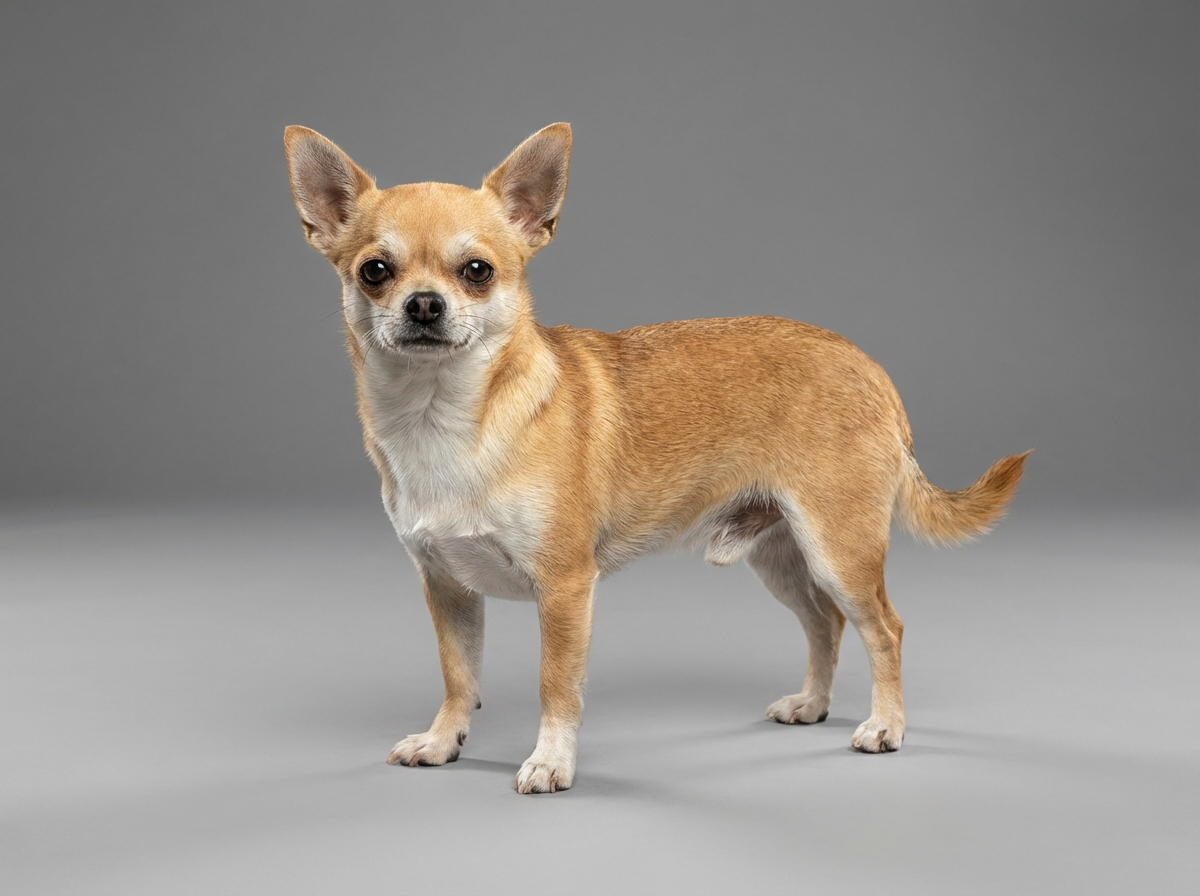
Epiphora, visible tear overflow down the face, happens when tears are produced normally but do not drain efficiently through the small ducts at the inner corner of the eye into the nose. In a breed with a shortened muzzle and shallow orbit, those drainage channels can be narrower or more angled than in a longer-faced dog, so tears pool and spill over rather than draining away invisibly. Constant moisture on the fur beneath the eye then oxidizes and attracts yeast, producing the rust-brown staining that light-coated dogs show most visibly.
A separate, less obvious problem is incomplete blinking. A prominent eye that sits somewhat forward of the socket can mean the eyelids do not sweep completely across its surface with every blink, leaving a lower strip of the cornea slightly under-lubricated compared with the rest. Over time this can produce a dry patch, mild chronic irritation, or a dog who squints more in wind, air conditioning or bright light than would otherwise be expected.
Neither of these is the same as a painful red eye or a corneal scratch, and neither typically needs urgent treatment. What they need is routine hygiene and, in more pronounced dry-patch cases, a lubricating drop recommended by a vet, plus enough awareness to notice if a normally mild pattern suddenly changes into something more painful or one-sided, which does shift the situation toward the more urgent end of eye problems in this breed.

Products marketed to remove staining treat the fur; these steps address the moisture underneath it.
If you think your Chi has eye problems, the plan is three steps: write down what you have seen and when it started, book a veterinary appointment rather than waiting for the next flare, and take video of the behaviour or symptom before you go — the thing you are worried about rarely happens in the consulting room. Screening in the parents covers collapsing trachea, heart disease, patellar luxation.
What the vet visit should produce is a diagnosis and a written plan, not just reassurance: what is being ruled out, what the monitoring interval is, and which signs mean you come back sooner. Ask what the treatment costs across a year rather than per visit, because that is the number that decides whether you are managing this condition or reacting to it.
Between appointments, keep a short log — dates, what you saw, what changed. It is the single most useful thing an owner brings to a follow-up, and for eye problems it is often what separates a clear pattern from a guess.
Nena's white coat showed every bit of the rust-brown staining beneath both eyes, and her owner Guadalupe had tried three different marketed stain-removal products over about six months, each producing a brief cosmetic improvement that faded within days. Nothing seemed to actually stop the staining from returning. A vet visit reframed the problem: Nena's tears were draining slowly through naturally narrow ducts, so the fur beneath her eyes was damp for hours at a time every day, and the products were treating the resulting stain rather than the ongoing moisture causing it. The actual fix was unglamorous: a daily wipe-and-dry routine after breakfast, and keeping the hair just below each eye trimmed shorter than the rest of her face. Within three weeks, new growth coming in beneath both eyes was visibly cleaner, and staining that had built up over months faded out as it grew past the eye area. Guadalupe still does the daily wipe, because the underlying tear drainage never changed; what changed was that the moisture no longer sits against the fur long enough to stain it.
Key takeaway: Stain removers treat fur that is already stained. The actual cause is moisture sitting against the skin for hours every day, and a boring daily habit addresses that far more reliably than a product that only ever reaches the surface.
Not usually on its own. It is most often simple tear overflow combined with yeast growth on constantly damp fur. It becomes a concern for infection if the discharge changes color, thickens, smells, or is accompanied by redness or squinting.
Daily hygiene manages the visible staining effectively in most dogs, but the underlying tear drainage anatomy generally does not change, so ongoing routine care rather than a one-time fix is the realistic expectation.
A prominent eye with slightly incomplete blink coverage can develop a dry patch on part of the cornea, and wind accelerates evaporation from that area, producing more noticeable squinting than in a dog with fuller blink coverage.
A mild, consistent pattern of squinting in specific conditions like wind or bright light is usually manageable with lubricating drops if your vet recommends them. A new, worsening or constant dryness, or a cloudy appearance to the cornea, warrants a proper examination rather than assuming it is the same mild pattern.
Chronic tear staining and mild dryness are low-grade and stable day to day. A true emergency looks different: sudden onset, one eye clearly worse than the other, visible cloudiness, a held-shut eye, or obvious pain, all of which need same-day attention rather than routine hygiene.
The underlying tear overflow happens regardless of coat color, but the rust-brown discoloration is simply far less visible against a dark coat, which is why the issue is reported more often by owners of light or white-coated dogs.
Tears overflowing due to narrow drainage ducts, combined with yeast growth on the resulting constantly damp fur beneath the eye.
Usually no. It is a cosmetic and hygiene issue rather than a medical emergency, unless discharge changes character or is paired with pain.
Wipe and dry the area once a day, keep surrounding hair trimmed, and avoid leaving the fur constantly damp.
Incomplete blink coverage from a prominent eye can leave part of the cornea drier than the rest, making it more sensitive in these conditions.
A one-page prep sheet for this condition: the signs, the questions to ask, what to get priced. Unlocks here.
You get: Vet visit prep sheet
No spam. One-click unsubscribe. See our privacy policy.
Preview page 1 before you decide.