Health
Why are Akitas prone to eye injuries?
Their fairly prominent eye placement and active, outdoor-oriented nature put the eyes at more physical risk than in some other breeds.

Quick answer
Why are Akitas prone to eye injuries?
Their fairly prominent eye placement and active, outdoor-oriented nature put the eyes at more physical risk than in some other breeds.
While genetic eye disease gets most of the attention, a simple scratch, poke, or foreign object is one of the more common and preventable eye problems an active, outdoor-loving Akita can face.
Owners of active Akitas that spend a lot of time outdoors, in brush, tall grass, or off-leash exploring, are the ones most likely to encounter an eye injury.
This guide is not medical advice. If your dog shows pain, sudden behavior change, or worsening symptoms, consult a licensed veterinarian.
Some links may be affiliate links. We may earn a commission at no extra cost to you. We only suggest products we believe are helpful for dog owners.
We research and check what we publish, but we do not warrant that any figure, date, price, or statement is accurate, complete, or current, and we accept no liability for any loss, cost, injury, or other harm arising from the use of this site. Use it as one reference among several. You remain responsible for your own decisions and for your dog's care - confirm anything that matters with a licensed veterinarian or another qualified professional before you act on it. Full disclaimer.
Check this first
A visibly injured eye — bleeding, a protruding object, an oddly shaped pupil, or an eye that looks different in size or position compared to the other — needs immediate emergency veterinary care. Sudden, severe squinting combined with excessive tearing and obvious pain also warrants same-day attention, since a corneal ulcer can worsen rapidly without treatment.
Mild irritation with slight redness or watering after outdoor activity, without severe pain or an obvious visible injury, can sometimes be checked at home briefly for visible debris, but should still be seen by a vet within the day if it doesn't quickly resolve on its own.
Because the eye can go from a minor scratch to a serious ulcer within a day or two, when in doubt after any incident involving brush, sticks, or rough outdoor play, a same-day vet visit is the safer choice.
If any of these apply, call your vet or an emergency clinic now. The rest of this page is for the cases that are not an emergency.
Beyond inherited eye disease, physical eye injury is a real and often underappreciated risk for the Akita, given the breed's fairly prominent eye placement and active, outdoor-oriented temperament. Scratches, embedded debris, and other trauma from brush, sticks, or rough play are common enough to warrant real attention and prompt treatment.
Physical eye injuries are a common presenting complaint at general veterinary practices for active, outdoor-oriented dogs of many breeds, and an Akita's activity style and eye placement make this a realistic, ongoing risk throughout its life rather than a rare occurrence.
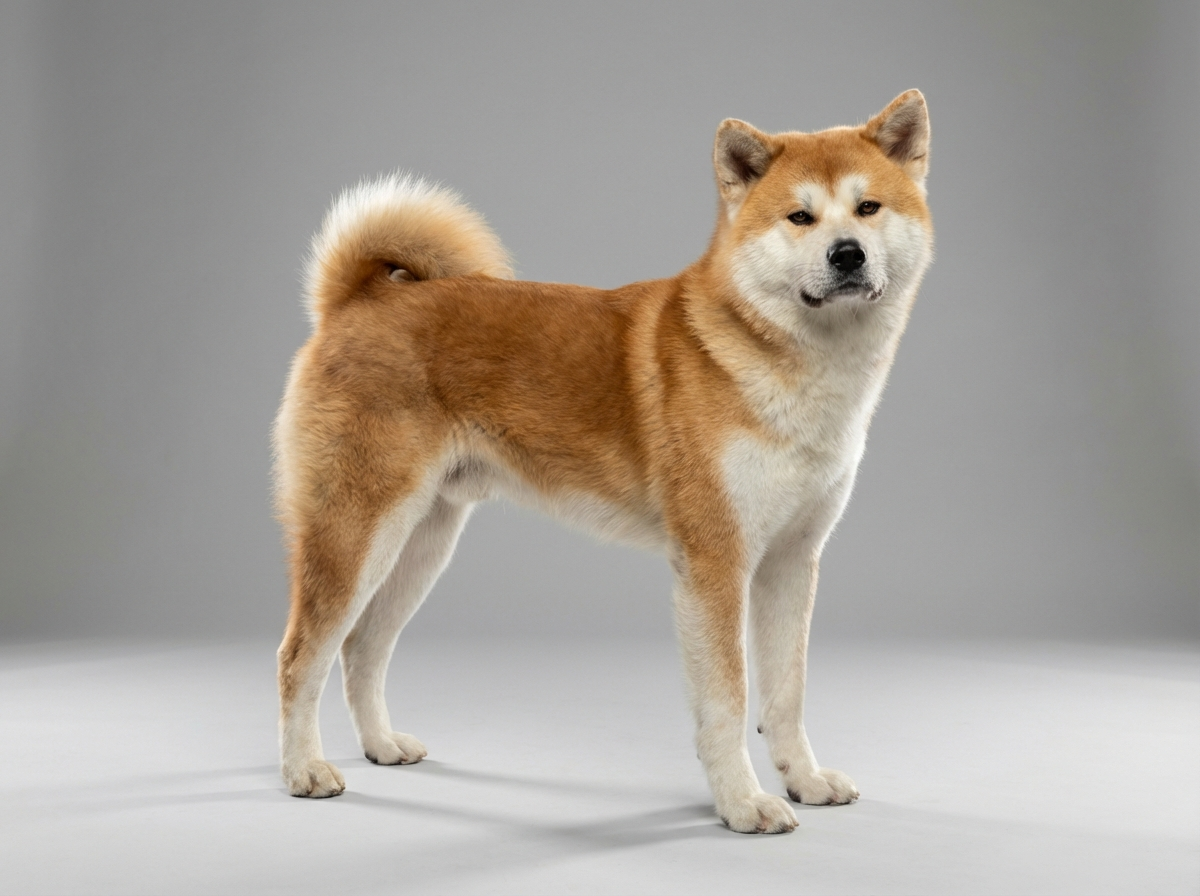
The Akita's eyes sit somewhat prominently in the skull, with a bit less deep-set bony protection than some other large breeds, which leaves them a bit more exposed during vigorous outdoor activity. Combined with this breed's confident, exploratory temperament and willingness to push through brush or engage in rough play, the physical exposure adds up to a genuine, distinct injury risk apart from any inherited eye condition.
Dense brush, wooded trails, and rough outdoor play are the main environmental triggers for physical eye injury. A dog that spends significant time in these environments carries meaningfully more injury risk than one whose exercise happens mostly in open, cleared areas.
Seek emergency care immediately for a visibly injured eye, an oddly shaped pupil, or severe pain with excessive tearing. See a vet the same day for persistent squinting or redness after outdoor activity that doesn't quickly resolve.
Eye injuries can escalate quickly if not recognized and treated promptly. Avoid these mistakes.
See all Akita health problems, which breeds are prone to eye problems, or the full Akita breed guide for temperament, exercise needs and ownership costs.
Minor corneal scratches typically heal within a few days to a week with appropriate treatment. More significant injuries or ulcers may need one to two weeks of closer monitoring and follow-up exams to confirm full healing.
Success is prompt recognition and treatment of any eye injury, leading to full healing without lasting damage or vision impact, and continued enjoyment of outdoor activity with reasonable precautions in place.
After a long off-leash hike through wooded trails near his home in Bend, Blake noticed his Akita Chief squinting hard and pawing at one eye. Blake brought him to the vet the same day rather than waiting to see if it would clear up. A fluorescein stain revealed a corneal scratch, likely from a branch or piece of brush. Chief was started on antibiotic eye drops and wore an e-collar for a week to prevent further rubbing. A follow-up exam confirmed the scratch had fully healed, and Blake now does a quick eye check after every wooded trail hike.
Key takeaway: An active, outdoor-loving Akita faces real physical eye injury risk — prompt treatment for any post-activity squinting or redness prevents a minor scratch from becoming a more serious problem.
This breed's fairly prominent eye placement combined with an active, often outdoor-oriented temperament means the eyes are more exposed during brush-running, rough play, and general exploration than in a breed with deeper-set eyes or a more sedentary lifestyle.
Squinting, excessive tearing, redness, and pawing at the eye are common signs; the eye itself might look slightly cloudy over the scratched area, though this can be subtle without an exam using special dye to highlight the injury.
A vet applies a special fluorescein stain that highlights any scratch or ulcer on the cornea under a blue light, which is a quick, straightforward diagnostic step.
Antibiotic eye drops or ointment to prevent infection, sometimes pain medication, and often an e-collar to prevent further self-trauma from rubbing or pawing at the eye.
A straightforward corneal scratch typically costs $150 to $350 to diagnose and treat; a more significant ulcer or one requiring specialist care can cost considerably more.
You can't eliminate the risk entirely for an active outdoor breed, but avoiding dense brush during high-speed play and checking your dog's eyes after outdoor sessions can help catch problems early.
Minor scratches often heal within a few days to a week with appropriate treatment; deeper injuries or ulcers can take longer and need closer monitoring.
Their fairly prominent eye placement and active, outdoor-oriented nature put the eyes at more physical risk than in some other breeds.
Squinting, excessive tearing, redness, or pawing at the eye after outdoor activity.
Around $150 to $350 for a straightforward corneal scratch.
Yes — checking for visible debris or irritation after brush or tall grass exposure can catch problems early.
Not without vet guidance — some human products aren't appropriate for canine eye injuries.
A one-page prep sheet for this condition: the signs, the questions to ask, what to get priced. Unlocks here.
You get: Vet visit prep sheet
No spam. One-click unsubscribe. See our privacy policy.
Preview page 1 before you decide.