Health
Is glaucoma an emergency in dogs?
Yes - untreated eye pressure from glaucoma can cause permanent blindness within hours to a day, so it needs immediate veterinary attention.

Quick answer
Is glaucoma an emergency in dogs?
Yes - untreated eye pressure from glaucoma can cause permanent blindness within hours to a day, so it needs immediate veterinary attention.
Glaucoma doesn't give you a week to think it over - untreated pressure can cost a dog its sight within hours, not months.
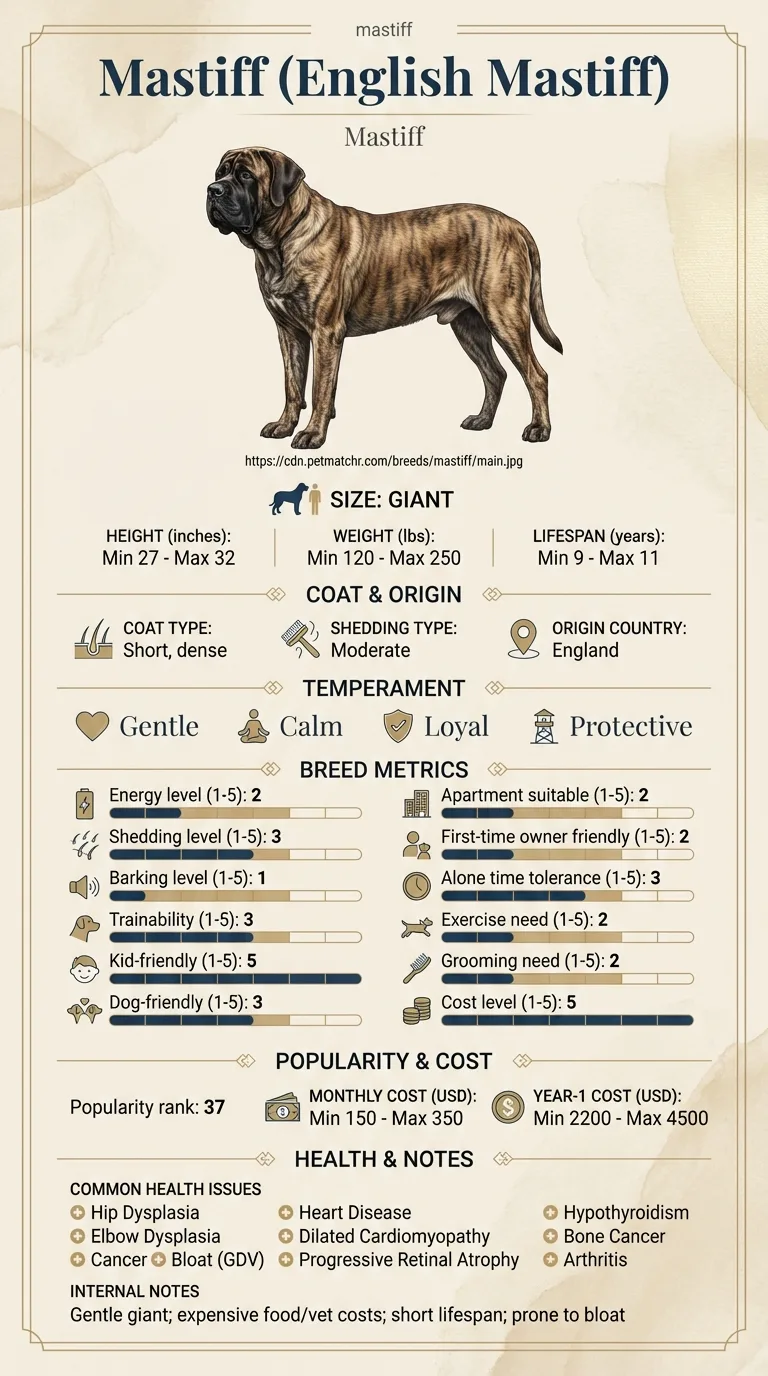
This matters for any Mastiff owner who notices a sudden change in one eye - redness, cloudiness, apparent pain, or a visibly bulging appearance - and needs to know immediately whether this is an emergency or something that can wait for a routine appointment.
This guide is not medical advice. If your dog shows pain, sudden behavior change, or worsening symptoms, consult a licensed veterinarian.
Some links may be affiliate links. We may earn a commission at no extra cost to you. We only suggest products we believe are helpful for dog owners.
We research and check what we publish, but we do not warrant that any figure, date, price, or statement is accurate, complete, or current, and we accept no liability for any loss, cost, injury, or other harm arising from the use of this site. Use it as one reference among several. You remain responsible for your own decisions and for your dog's care - confirm anything that matters with a licensed veterinarian or another qualified professional before you act on it. Full disclaimer.
Check this first
These signs, especially appearing suddenly, point toward glaucoma and warrant an emergency vet visit, not a scheduled appointment.
If any of these apply, call your vet or an emergency clinic now. The rest of this page is for the cases that are not an emergency.
Glaucoma is a buildup of pressure inside the eye that can cause severe pain and permanent vision loss within a remarkably short window if untreated. Unlike most of the eye conditions associated with this breed, glaucoma's timeline makes it one of the few true same-day emergencies an owner needs to recognize immediately rather than monitor.
Glaucoma is less universally documented in this breed than joint or cardiac conditions, but eye pressure disease is a recognized concern across many large and giant breeds, and its severity means it deserves attention out of proportion to how often it occurs.
This breed's documented risk for other eye conditions - cataracts, progressive retinal atrophy, and structural eyelid issues tied to loose facial skin - reflects a broader pattern of ocular vulnerability that can also include glaucoma, whether through an inherited drainage predisposition or as a downstream effect of another eye problem like chronic inflammation or lens displacement.
Environment plays a smaller direct role in glaucoma than in some other eye conditions, but untreated chronic eye irritation, injury, or inflammation from any cause can eventually progress into secondary glaucoma if left unaddressed, which is part of why prompt treatment of any eye issue in this breed matters.
Treat sudden eye redness, cloudiness, apparent pain, squinting, or a visibly bulging eye as an emergency requiring same-day veterinary care. This is one of the few conditions in this guide where waiting even a day can mean permanent vision loss.
See all Mastiff health problems, which breeds are prone to glaucoma, or the full Mastiff breed guide for temperament, exercise needs and ownership costs.
Treatment decisions typically need to happen within hours of noticing symptoms to have the best chance of preserving vision. Long-term, glaucoma is usually a managed, monitored condition rather than one that's fully resolved, even after successful initial treatment.
Success looks like pain control and preserved vision where possible, or a comfortable, pain-free eye if vision can't be saved - the priority shifts from saving sight to saving comfort once the pressure has been present too long.
Glaucoma comes in two broad forms. Primary glaucoma is an inherited predisposition affecting the eye's internal drainage structure, often showing up first in one eye with a real risk of the second eye developing it later. Secondary glaucoma develops as a consequence of another problem - inflammation, injury, a dislocated lens, or chronic uveitis - raising pressure as a downstream effect rather than a standalone genetic issue.
For an owner, the distinction matters less in the moment of an emergency and more for long-term management: primary glaucoma means the other eye needs ongoing monitoring even after one eye is treated, while secondary glaucoma means finding and addressing the underlying cause is just as important as treating the pressure itself.
If you think your Mastiff has glaucoma, the plan is three steps: write down what you have seen and when it started, book a veterinary appointment rather than waiting for the next flare, and take video of the behaviour or symptom before you go — the thing you are worried about rarely happens in the consulting room. Screening in the parents covers hip dysplasia, elbow dysplasia, cancer.
What the vet visit should produce is a diagnosis and a written plan, not just reassurance: what is being ruled out, what the monitoring interval is, and which signs mean you come back sooner. Ask what the treatment costs across a year rather than per visit, because that is the number that decides whether you are managing this condition or reacting to it.
Between appointments, keep a short log — dates, what you saw, what changed. It is the single most useful thing an owner brings to a follow-up, and for glaucoma it is often what separates a clear pattern from a guess.
Aaron noticed his Mastiff Zeus squinting and pawing at one eye on a Friday evening, and the eye looked more red than usual. Having dealt with minor eye irritation before, Aaron considered waiting until Monday to see if it settled down. Something about how uncomfortable Zeus seemed changed his mind, and he called an emergency vet instead. A pressure check confirmed acute glaucoma, already significantly elevated, and Zeus was started on emergency treatment within the hour to try to bring the pressure down and preserve what vision remained. The affected eye ended up with permanently reduced vision despite the fast response, but the vet was clear that waiting through the weekend would very likely have meant losing it entirely, and possibly losing the eye itself to chronic pain. Zeus now gets his other eye checked regularly, since primary glaucoma carries real risk of eventually affecting both.
Key takeaway: With glaucoma, the instinct to wait and see is exactly the wrong one - a red, painful eye in this breed deserves same-day urgency even if it turns out to be something less serious.
Permanent vision loss from untreated high eye pressure can occur within as little as a day, sometimes faster. Any sudden redness, pain, or cloudiness in one eye should be treated as an emergency rather than something to monitor overnight.
Primary glaucoma stems from an inherited drainage structure issue within the eye itself. Secondary glaucoma develops as a result of another problem, such as inflammation, injury, or a dislocated lens, raising pressure indirectly.
With primary glaucoma, the second eye is at meaningfully increased risk over time and typically needs ongoing preventive monitoring or treatment even before symptoms appear there.
Some cases are managed with pressure-lowering medication, especially if caught early, but many require surgical options depending on how advanced the pressure buildup is and whether vision can still be preserved.
A vet or veterinary ophthalmologist measures internal eye pressure with a specialized instrument called a tonometer, which is quick and non-invasive, alongside a broader eye exam to check for an underlying cause.
Untreated high pressure can cause permanent, irreversible blindness in the affected eye, and in advanced cases the eye can become chronically painful enough that surgical removal is eventually recommended for comfort.
Yes - untreated eye pressure from glaucoma can cause permanent blindness within hours to a day, so it needs immediate veterinary attention.
Redness, cloudiness, apparent pain, squinting, and sometimes a visibly bulging appearance to the affected eye.
With the inherited primary form, the second eye carries meaningfully higher risk and usually needs ongoing monitoring.
With a quick, non-invasive instrument called a tonometer, used during an eye exam at a vet or veterinary ophthalmologist's office.
It can be, particularly if specialist referral or surgery is needed, so budgeting for potential ophthalmology costs is worthwhile in breeds at risk.
A one-page prep sheet for this condition: the signs, the questions to ask, what to get priced. Unlocks here.
You get: Vet visit prep sheet
No spam. One-click unsubscribe. See our privacy policy.
Preview page 1 before you decide.