Behavior
What are quick tips for Great Dane eye problems?
Regular vet visits, a safe living environment, and a balanced diet can help prevent eye issues in Great Danes.

Quick answer
What are quick tips for Great Dane eye problems?
Regular vet visits, a safe living environment, and a balanced diet can help prevent eye issues in Great Danes.
Great Dane eye problems can affect their quality of life and comfort. Understanding these issues is essential for their well-being.
New Great Dane owners or those unaware of the breed's specific health risks often struggle with eye issues. It can be particularly challenging for families with busy lifestyles, as they may not notice changes in their dog's behavior until the problem worsens.
This guide is not medical advice. If your dog shows pain, sudden behavior change, or worsening symptoms, consult a licensed veterinarian.
Some links may be affiliate links. We may earn a commission at no extra cost to you. We only suggest products we believe are helpful for dog owners.
We research and check what we publish, but we do not warrant that any figure, date, price, or statement is accurate, complete, or current, and we accept no liability for any loss, cost, injury, or other harm arising from the use of this site. Use it as one reference among several. You remain responsible for your own decisions and for your dog's care - confirm anything that matters with a licensed veterinarian or another qualified professional before you act on it. Full disclaimer.
Check this first
Red-flag signs that mean you should call your vet now include sudden blindness, persistent squinting, or excessive tearing. If your Great Dane's eyes appear swollen, red, or if there's any discharge, these are also urgent signs. Additionally, if your dog is rubbing its eyes frequently or showing signs of pain, it’s essential to seek veterinary help right away.
On the other hand, mild cases can often be watched and managed at home. If your Great Dane has minor redness or irritation without other severe symptoms, monitor the situation closely. You can try to soothe the irritation with artificial tears, but ensure that you have a plan to consult your vet if the condition doesn't improve within a couple of days. Keep an eye on any changes in behavior, such as increased pawing at the eyes or reluctance to play.
In summary, act quickly for severe symptoms and be vigilant about milder issues. Keeping a close watch on your Great Dane's eye health is essential, especially since they can be prone to specific eye problems. If you ever feel uncertain, it’s always best to err on the side of caution and consult your vet.
If any of these apply, call your vet or an emergency clinic now. The rest of this page is for the cases that are not an emergency.
Great Dane eye problems can be a significant concern for owners, often manifesting as redness, discharge, or squinting. These symptoms may occur due to various factors, including genetic predispositions and environmental triggers. Owners might notice their Great Dane struggling with vision or appearing uncomfortable, which can be distressing.
Eye problems in Great Danes are relatively common due to their size and specific health vulnerabilities. Many owners report experiencing some form of eye issue during their dog's lifetime, making regular vet check-ups essential.
Great Danes are prone to certain genetic eye conditions, such as cataracts and progressive retinal atrophy. These issues may develop as they age, affecting their vision significantly. Their large size can also lead to physical stress on their eyes.
Environmental factors like dust, smoke, and allergens can irritate a Great Dane's eyes. Overexposure to bright sunlight or harsh weather conditions may also contribute to eye problems. Additionally, lack of regular veterinary check-ups can lead to undiagnosed issues.
Talk to your vet if you notice any changes in your Great Dane's vision, such as excessive tearing, redness, or cloudiness in their eyes. If they seem to have difficulty navigating their environment or are in pain, it's important to get a professional evaluation.
Here are some common mistakes that can worsen Great Dane eye problems, along with safer alternatives.
Start here: Great Dane Most Common Genetic Disorders: What to Screen For
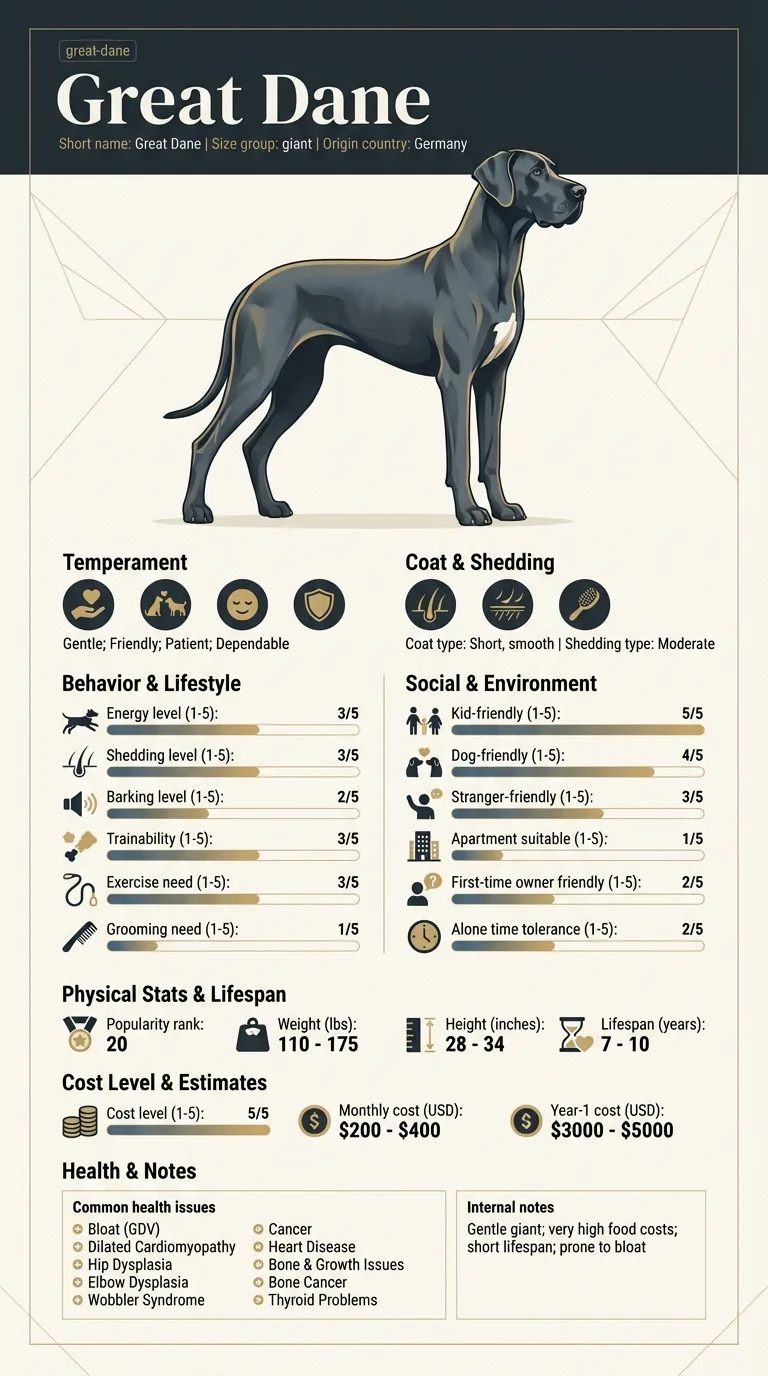
See all Great Dane health problems, which breeds are prone to eye problems, or the full Great Dane breed guide for temperament, exercise needs and ownership costs.
You can expect to see improvements in your Great Dane's eye problems within 4 to 8 weeks of consistent care and follow-up with your vet. However, some cases may require longer adjustments based on severity.
Success means your Great Dane shows reduced discomfort, fewer signs of irritation, and improved overall eye health. You'll notice more comfortable behavior and a happier, more active pet.
Sarah, a busy veterinary technician, adopted Max, a 2-year-old Great Dane. She quickly noticed he had frequent eye discharge and squinted often. Concerned, she consulted her vet, who recommended a regimen of cleaning Max's eyes daily and using prescribed eye drops. Sarah also learned to adjust Max's environment to minimize dust and allergens. After several weeks of dedicated care and training, Max's eye problems significantly improved, and he became much more playful and relaxed.
Key takeaway: With proper care and attention, many Great Dane eye problems can be managed effectively, improving your dog's quality of life.
Great Danes can experience various eye problems due to their size and anatomy. Common issues include cataracts, progressive retinal atrophy, and eyelid abnormalities. Regular vet check-ups can help identify these problems early.
Preventing eye problems in Great Danes involves regular eye examinations and ensuring their environment is safe from sharp objects. Proper nutrition and maintaining a healthy weight can also contribute to overall eye health.
Watch for signs like excessive tearing, redness, squinting, or cloudiness in the eyes. If your Great Dane is rubbing their eyes or seems to have difficulty seeing, it's essential to consult a vet.
Yes, Great Danes are more susceptible to certain eye conditions due to their physical traits. Their large size can lead to issues that smaller breeds may not face, so vigilance is key.
While training won't prevent eye problems, it can help your Great Dane avoid situations that may lead to injuries. Teaching commands like 'leave it' can keep them away from hazardous objects.
Swollen eyes in Great Danes can indicate an allergic reaction or an infection. It's essential to consult your vet immediately, as they can provide appropriate treatment and advice.
Yes, some eye problems in Great Danes can be hereditary, such as cataracts and progressive retinal atrophy. If you notice any changes in your dog's vision, have them evaluated by a veterinarian.
To prevent eye problems, ensure your Great Dane has regular vet check-ups and a healthy diet. Additionally, be mindful of their environment to avoid injuries and irritants.
Older Great Danes can be more susceptible to eye issues due to age-related changes. Regular veterinary check-ups can help catch any problems early.
Regular vet visits, a safe living environment, and a balanced diet can help prevent eye issues in Great Danes.
You should check your Great Dane's eyes weekly for any changes or abnormalities. If you notice anything unusual, contact your vet immediately.
Common issues include cataracts, entropion, and dry eye. Early detection and treatment are crucial for preventing serious complications.
In some cases, surgery may be required, especially for conditions like cataracts or eyelid problems. Always consult with a veterinarian for the best course of action.
A one-page prep sheet for this condition: the signs, the questions to ask, what to get priced. Unlocks here.
You get: Vet visit prep sheet
No spam. One-click unsubscribe. See our privacy policy.
Preview page 1 before you decide.