Health
Are published hip dysplasia rates reliable?
Only loosely. They describe dogs whose radiographs were voluntarily submitted, which systematically differs from the whole population in ways that can skew the figure either direction.

Quick answer
Are published hip dysplasia rates reliable?
Only loosely. They describe dogs whose radiographs were voluntarily submitted, which systematically differs from the whole population in ways that can skew the figure either direction.
Every published hip dysplasia percentage describes the dogs somebody chose to x-ray. That is not the same population as the dogs that exist.
Buyers comparing breeds by their published dysplasia rates, owners trying to work out whether a breeder's paperwork is meaningful, and anyone who has found three different prevalence figures for the same breed and wants to know which one to believe.
This guide is not medical advice. If your dog shows pain, sudden behavior change, or worsening symptoms, consult a licensed veterinarian.
Some links may be affiliate links. We may earn a commission at no extra cost to you. We only suggest products we believe are helpful for dog owners.
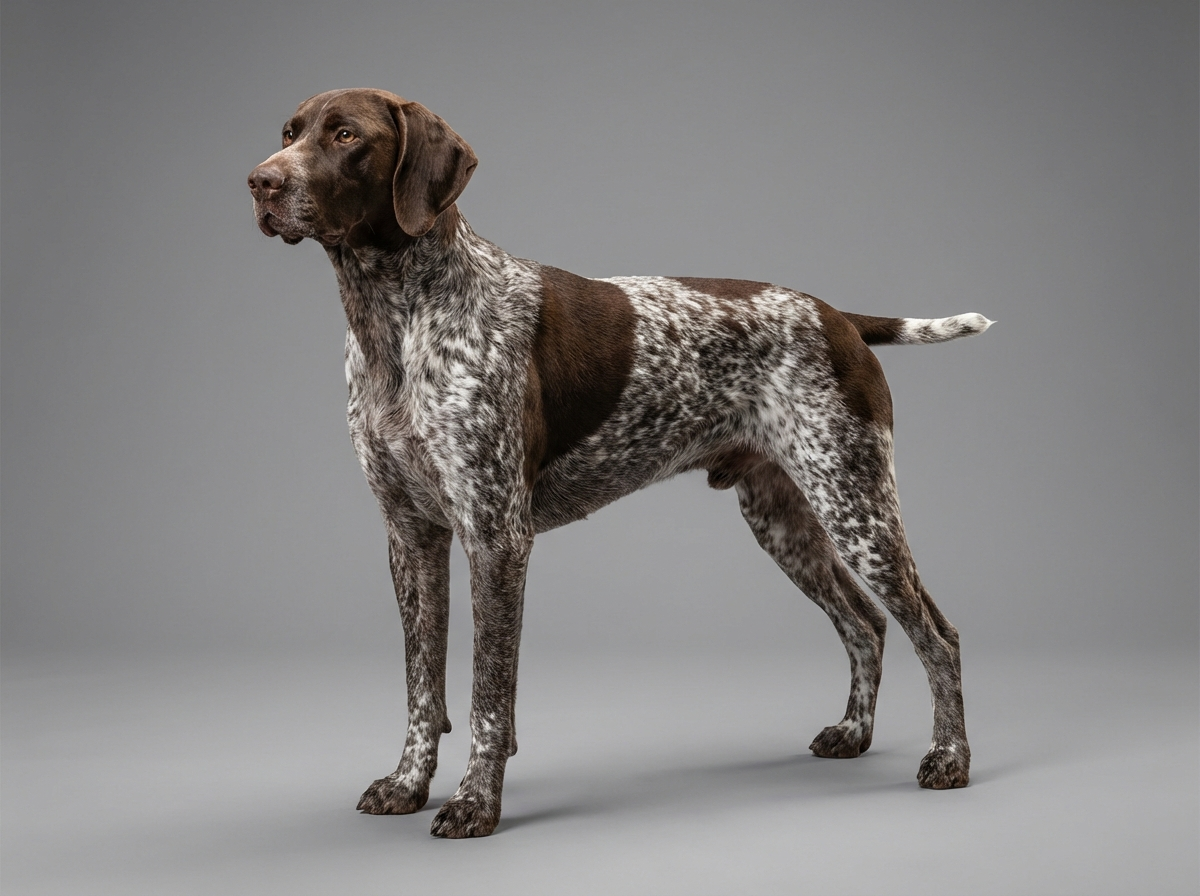
Prevalence questions about hip dysplasia in German Shorthaired Pointers rarely have the clean answer owners are looking for. Registry percentages are shaped by who chose to radiograph and who chose to submit, so they describe a self-selected sample rather than the breed. The useful work for a buyer is not finding the right national figure but reading an individual breeder's multi-generation records and understanding what rearing contributes on top of genetics.
Hip dysplasia is documented as this breed's leading listed health concern, so it is not rare, and prospective owners are right to take it seriously. At the same time, the majority of German Shorthaired Pointers reach their 10 to 12 year lifespan without hip disease that limits them. Both statements are true, and holding them together is the honest position that any single percentage tends to destroy.
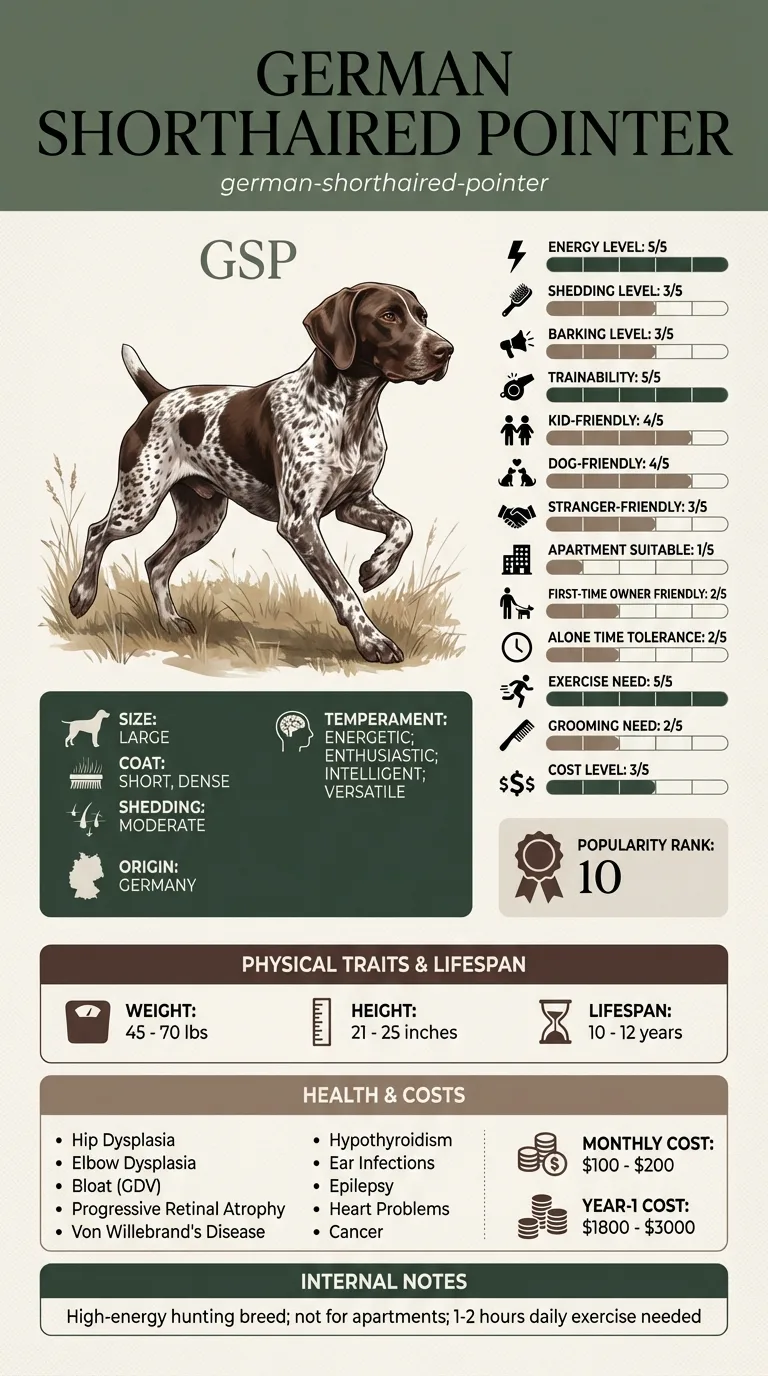
German Shorthaired Pointers sit in the structural risk band for this condition: a 45 to 70 pound, 21 to 25 inch dog that reaches adult size quickly, with hip dysplasia named explicitly in its documented health issues alongside elbow dysplasia. The breed's popularity, ranking about tenth, means a large registered population and therefore a substantial volume of screening data, which paradoxically can make the breed's published figures look less favourable than those of rarely screened breeds. High screening participation is a sign of a responsible breed community, not a sign of worse hips.
The statistical picture is also shaped by non-biological factors. Screening costs money and requires sedation, so participation varies with region and with whether a breeder is producing show, field or pet stock. Different national schemes grade to different philosophies, so the same radiograph can produce differently flavoured results. Working-line dogs are more likely to be radiographed after a performance problem, while pet dogs with mild changes are often never imaged at all, and both patterns quietly move the numbers.
Statistics do not create urgency, but the underlying condition can. Arrange a prompt appointment if a young German Shorthaired Pointer develops a bunny-hopping gait, will not rise easily, or shows reluctance to jump, because options during the growth window are time-limited. Seek immediate care for sudden inability to bear weight on a hind limb, which points to acute injury rather than developmental disease. Discuss formal hip evaluation with your vet before making any breeding decision, and ask which scheme they use and the minimum age at which results are valid.
See all German Shorthaired Pointer health problems, which breeds are prone to hip dysplasia prevalence, or the full German Shorthaired Pointer breed guide for temperament, exercise needs and ownership costs.
Evaluating breeders properly takes weeks, not an afternoon, and good litters are often booked months ahead. Formal hip screening on your own dog cannot produce an official result until the minimum scheme age, which for most systems means waiting until at least the end of the first year. Any hope of a definitive prevalence figure should be abandoned at the outset; the data does not exist in that form.
Success here is a decision made on the strongest available evidence rather than a comfortable number. It looks like a folder of dated certificates for a specific line, a clear understanding that risk was reduced rather than eliminated, and a first year of rearing that gave your dog the best structural chance. Feeling certain is not the goal, because certainty was never available.
Hip statistics come from voluntary registries. A breeder radiographs a dog, and then decides whether to submit the films. Nobody is compelled to submit a poor result.
That single fact bends every number that follows. If mediocre films are quietly binned and good ones are registered, the published dysplasia rate for a breed is lower than the true rate. This is called submission bias and it is well recognised by the people who run these schemes.
There is a second distortion working the other way. Registries receive films mostly from breeding candidates and from dogs whose owners suspected a problem, so certain datasets are enriched for the very dogs most likely to be affected. Depending on which registry, which country and which decade you are reading, the bias can point in either direction.
The result is that breed-to-breed comparisons in league-table form are close to meaningless. A breed with a strong screening culture can post a worse-looking percentage than a breed where almost nobody screens at all, purely because it is looking harder.
The individual documents in front of you are worth more than any breed-wide statistic, provided you read them for what they actually establish.

Callum spent a winter comparing GSP litters and started by looking up breed hip statistics, which sent him in circles across three sources with three different figures. He changed approach and asked four breeders the same three questions: scores for both parents, scores for the grandparents, and what the previous litters had produced. Two breeders answered vaguely. One sent a spreadsheet. The spreadsheet included a dam graded only fair, with a note explaining why she had been bred and to which dog. Callum found that more reassuring than the kennel where every dog was excellent, and took a puppy from that line. His dog is six now, with unremarkable hips. He is careful to say that this proves nothing about his decision, only that it was the decision he could defend.
Key takeaway: Stop hunting for the breed's percentage and start asking one breeder for a line's record. Transparency about an imperfect result is a stronger signal than a page of perfect ones.
Any single figure you find should be treated cautiously, because published rates reflect the dogs that were radiographed and submitted rather than the breed as a whole. What can be said confidently is that hip dysplasia is common enough in GSPs to head their documented health list, and that most individual dogs still live without a clinically limiting hip problem.
Because the disease is about joint conformation and laxity, not about mass. A shallow socket is a shallow socket at any size. Large breeds dominate the conversation because their body weight converts the same anatomical fault into clinical lameness more reliably, not because small dogs are immune.
Cross-breed league tables are the least reliable use of this data, for the submission-bias reasons above. A more useful comparison is between individual breeding lines within the breed, which is exactly what a breeder's multi-generation records let you do and what a national percentage never will.
They do, and in screened breeds with active selection they have generally moved in a favourable direction over decades. Interpreting that trend is complicated by changes in screening participation and grading practice, so improvement in the published number is not automatically improvement in the population.
Choosing a breed on published dysplasia percentages is a weak strategy. Choosing a breeder within a breed on the basis of transparent multi-generation screening is a strong one. The variation between lines inside a breed is typically larger than the variation between breed averages.
No commercially available genetic test currently replaces radiographic evaluation for hip conformation, because the trait involves many genes with modest individual effects plus a large environmental contribution. Radiographic screening of breeding animals remains the working tool.
Only loosely. They describe dogs whose radiographs were voluntarily submitted, which systematically differs from the whole population in ways that can skew the figure either direction.
Ask for scored results on both parents by a named scheme, plus results from previous litters and grandparents. Line history beats parent scores alone.
No. They meaningfully improve the odds. Hip conformation is polygenic and heavily influenced by growth-phase rearing, so no pairing removes the risk entirely.
No. It occurs in small breeds too. Large breeds simply convert the same joint laxity into visible lameness more often because of the load they carry.
A substantial share. Lean body condition and sensible exercise through the first year are the strongest levers available once the puppy is in your house.
A one-page prep sheet for this condition: the signs, the questions to ask, what to get priced. Unlocks here.
You get: Vet visit prep sheet
No spam. One-click unsubscribe. See our privacy policy.
Preview page 1 before you decide.