Costs
German Shorthaired Pointer cost in New York City
About $165–$320/month, $2,350–$3,900 for year one — among the priciest this site tracks, where this breed's real size rules out both subway travel and most co-op buildings.

See German Shorthaired Pointer price across all cities →
Quick answer
German Shorthaired Pointer cost in New York City
About $165–$320/month, $2,350–$3,900 for year one — among the priciest this site tracks, where this breed's real size rules out both subway travel and most co-op buildings.
A German Shorthaired Pointer in New York City costs about $165–$320 a month, with the first year around $2,350–$3,900 — among the highest this site tracks, where this breed's real adult size rules out two things smaller breeds take for granted here: subway travel and most co-op buildings.
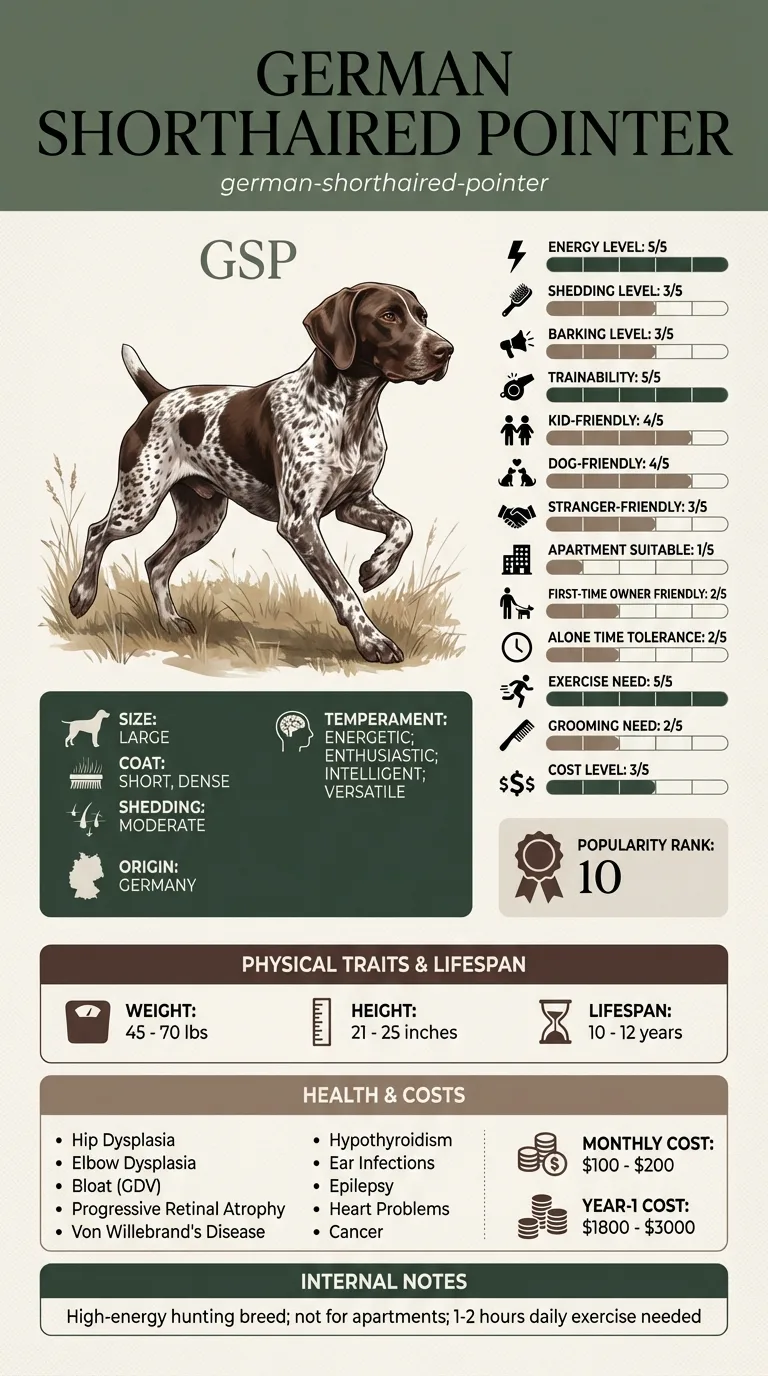
Bloat is a sudden emergency risk given this breed's deep chest — no warning, immediate surgery needed. Hip and elbow dysplasia are the separate, ongoing joint risks worth budgeting real, recurring vet attention for.
These figures reflect New York City's top-tier general pricing, with real transit and housing logistics factored into how this breed's owners actually live day to day.
Estimate · source: estimation · confidence: medium · updated 2026-10-06 · not a quote
| Item | Cost range |
|---|---|
One-time setup (initial vet visit, spay/neuter, gear) Covers the first exam, vaccinations, spay/neuter if needed, and gear sized for this breed's large adult weight — priced at New York City's top-tier rates. | $465 - $790 |
| Item | Cost range |
|---|---|
Food Among the highest food costs this site tracks for a large, highly active breed, consistent with New York City's overall high price level. | $85 - $135 |
Taxi or rideshare transit A real, recurring cost given this breed's real size ruling out standard subway travel. | $30 - $80 |
Dog-walking service A near-necessary cost given this breed's real exercise needs and the city's dense, largely yard-free housing. | $90 - $180 |
Each range starts from a national baseline for this breed's size class and is then adjusted for local cost of living and veterinary pricing. The baselines, and the source each one came from, are listed on our sources page (dataset 2026.09). Two inputs, the purchase price and the emergency reserve, have no published national figure we could verify, so we leave them to you rather than invent them.
These are planning estimates, not quotes. Your own numbers will move with the individual dog, your vet and your insurer. Build a budget with your own figures.
For a German Shorthaired Pointer in New York City, insurance is especially worth taking seriously given this breed's extensive documented joint and bloat risk combined with the city's genuinely high general and emergency-care pricing.
This breed's real bloat and joint statistics make insurance a near-necessity here — buy before a diagnosis, not after, since pre-existing conditions won't be covered.
Self-insuring is reasonable only for a household that's already earmarked real, substantial savings specifically sized for New York City's premium pricing.
New York City's costs run among the highest this site tracks, but the real, low-cost planning here is confirming the practical rules that shape daily life with a breed this size.
MTA rules require any dog riding the subway to be fully enclosed in a carrier, a rule that works fine for a small breed but is a genuine practical impossibility for a dog in this breed's documented 45-to-70-pound range. That means taxis, rideshares or walking are the realistic transit options here, a real, ongoing cost and logistics factor most smaller-breed owners in the city don't face.
Housing carries a similar real constraint: a meaningful share of New York City's housing stock is co-op rather than condo, and co-op boards commonly cap pet weight well under this breed's documented size, sometimes as low as 25 or 30 pounds. Confirming a building's actual policy before falling for a unit is worth doing rather than assuming a pet-friendly listing means this specific breed qualifies.
NYC's overall veterinary and pet-service pricing sits at or near the top of every metro this site tracks, and apartment living without a yard makes professional dog-walking a routine, near-necessary cost for a breed with this much real exercise demand.

A New York City couple house-hunting with their German Shorthaired Pointer found their options narrowing fast once they started actually calling buildings, with co-op after co-op citing weight limits their dog exceeded by a wide margin. Switching their search to condo buildings, generally more permissive on pet weight, finally turned up real options, though it took longer than either of them expected. The family now warns other prospective owners of this breed to check building policy before falling for a listing.
Key takeaway: In New York City specifically, this breed's real size closes off a meaningful share of the housing market most smaller-breed owners never have to think about.
About $165–$320, among the highest this site tracks, driven by the region's high overall cost of vet care and pet services.
Roughly $2,350–$3,900, including the initial vet exam, spay/neuter if needed, and gear on top of ongoing monthly costs.
Not practically — MTA rules require full carrier enclosure, and this breed's real 45-to-70-pound adult weight makes that genuinely impossible, unlike a small breed that fits a soft-sided carrier.
Often not — many co-op boards cap pet weight well under this breed's documented size range, sometimes as low as 25 or 30 pounds, worth confirming before signing anything.
Especially worth pricing out given this breed's extensive documented joint and bloat risk combined with the city's above-average pricing, bought while the dog is young and before anything is on record.
Around $1,150 covers a typical significant vet visit in this market, reflecting the city's genuinely high general pricing.
About $165–$320/month, $2,350–$3,900 for year one — among the priciest this site tracks, where this breed's real size rules out both subway travel and most co-op buildings.
This guide is not medical advice. If your dog shows pain, sudden behavior change, or worsening symptoms, consult a licensed veterinarian.
Some links may be affiliate links. We may earn a commission at no extra cost to you. We only suggest products we believe are helpful for dog owners.
We research and check what we publish, but we do not warrant that any figure, date, price, or statement is accurate, complete, or current, and we accept no liability for any loss, cost, injury, or other harm arising from the use of this site. Use it as one reference among several. You remain responsible for your own decisions and for your dog's care - confirm anything that matters with a licensed veterinarian or another qualified professional before you act on it. Full disclaimer.
One sheet with every line item, the emergency fund and when insurance pays off - unlocks on this page.
You get: 12-month budget sheet
No spam. One-click unsubscribe. See our privacy policy.
See a sample page before you decide.