DogBreedCompass
← Back to breed profile

Understanding Miniature Schnauzer Diabetes: Causes and Solutions

Miniature Schnauzer diabetes is a growing concern among dog owners. This endocrine disorder can significantly impact your pup's health and quality of life.

Understanding Miniature Schnauzer Diabetes: Causes and Solutions infographic

This issue often affects owners of senior Miniature Schnauzers, particularly those who may not be aware of the breed's susceptibility to diabetes. Busy pet parents juggling work and family may find it challenging to provide the necessary care and monitoring.

Important reminder

This guide is not medical advice. If your dog shows pain, sudden behavior change, or worsening symptoms, consult a licensed veterinarian.

Some links may be affiliate links. We may earn a commission at no extra cost to you. We only suggest products we believe are helpful for dog owners.

What this problem looks like

Miniature Schnauzer diabetes is an endocrine disorder that often affects these dogs as they age. It can lead to increased thirst, frequent urination, and weight loss despite having a normal or increased appetite. Owners may notice their Mini Schnauzer becoming lethargic or experiencing changes in behavior as the disease progresses.

Common triggers

  • Obesity and poor diet
  • Lack of exercise
  • Genetic predisposition
  • Stress or illness

Diabetes is relatively common in Miniature Schnauzers, particularly those over the age of 7. Studies show that small breed dogs, including this breed, are at a higher risk for developing diabetes, making awareness and early detection key.

Why this happens

Breed factors

Miniature Schnauzers are predisposed to diabetes due to their genetic makeup. This breed is more likely to develop conditions like pancreatitis, which can lead to diabetes. Additionally, their weight can impact insulin sensitivity, making them more vulnerable.

Environment factors

The environment plays a significant role in the development of diabetes in Miniature Schnauzers. Poor diet, lack of exercise, and obesity can contribute to this condition. Stressful situations or significant life changes may also trigger insulin issues.

What you can try

At-home strategies

  • Monitor your Miniature Schnauzer's weight and adjust their diet to maintain a healthy weight. Use a vet-recommended balanced diet and consider low-carb options.
  • Establish a regular exercise routine. Aim for at least one hour of moderate exercise each day, such as walks or playtime, to help manage their weight.
  • Keep a consistent feeding schedule. Feed your Miniature Schnauzer at the same times each day to stabilize their blood sugar levels.

When to consider a trainer

If your Miniature Schnauzer shows signs of anxiety or difficulty adjusting to dietary changes, consider hiring a dog trainer. A professional can help with behavioral issues that may arise and guide you on proper training techniques.

When to talk to your vet

If you notice symptoms like excessive thirst, frequent urination, or unexplained weight loss, consult your veterinarian immediately. These can be signs of diabetes that require prompt attention and management.

Realistic expectations

Managing Miniature Schnauzer diabetes typically takes a few weeks to establish a routine, and ongoing adjustments may be needed.

Success looks like your Miniature Schnauzer maintaining stable blood sugar levels, showing good energy, and enjoying a better quality of life.

Mistakes that make this worse

Avoiding these common mistakes can help your Miniature Schnauzer manage diabetes better.

  • Ignoring Symptoms: Owners sometimes overlook signs of diabetes, like excessive thirst or frequent urination. Be proactive and consult a vet if you notice these changes.
  • Inconsistent Diet: Skipping meals or changing food brands frequently can disrupt your dog's insulin levels. Stick to a consistent diet recommended by your vet to help maintain stable blood sugar.
  • Overfeeding Treats: Giving too many treats, especially high-carb ones, can worsen diabetes. Opt for low-calorie, vet-approved treats and keep them to a minimum.
  • Neglecting Exercise: A sedentary lifestyle can lead to weight gain and worsen diabetes symptoms. Ensure your Miniature Schnauzer gets regular exercise, like daily walks or playtime.
  • Relying on Home Remedies: Some owners try unproven home remedies to manage diabetes. Always consult your vet before introducing new treatments or supplements.
  • Skipping Vet Visits: Regular check-ups are critical for managing diabetes. Don’t skip these appointments; they help monitor your dog's health and adjust treatment as needed.
  • Not Monitoring Blood Sugar: Failing to track your dog's blood sugar levels can lead to serious health complications. Work with your vet to establish a monitoring routine.

When Miniature Schnauzer Diabetes is an Emergency

Knowing when your Miniature Schnauzer's diabetes is an emergency can save their life. Look for red-flag signs that mean you should call your vet immediately. These include sudden weight loss, excessive thirst, frequent urination, lethargy, or vomiting. If your dog shows these symptoms, don’t wait. A quick veterinary response is crucial.

On the other hand, if your Mini Schnauzer shows mild symptoms like increased appetite, slight weight gain, or occasional fatigue, you can monitor their condition. Create a plan that includes regular vet check-ups, a consistent diet, and exercise. Keep a close eye on any changes in behavior or health.

In summary, severe symptoms require immediate veterinary attention, while mild cases can often be managed at home with the right approach. Always trust your instincts; if you're unsure, it's better to err on the side of caution and consult your vet.

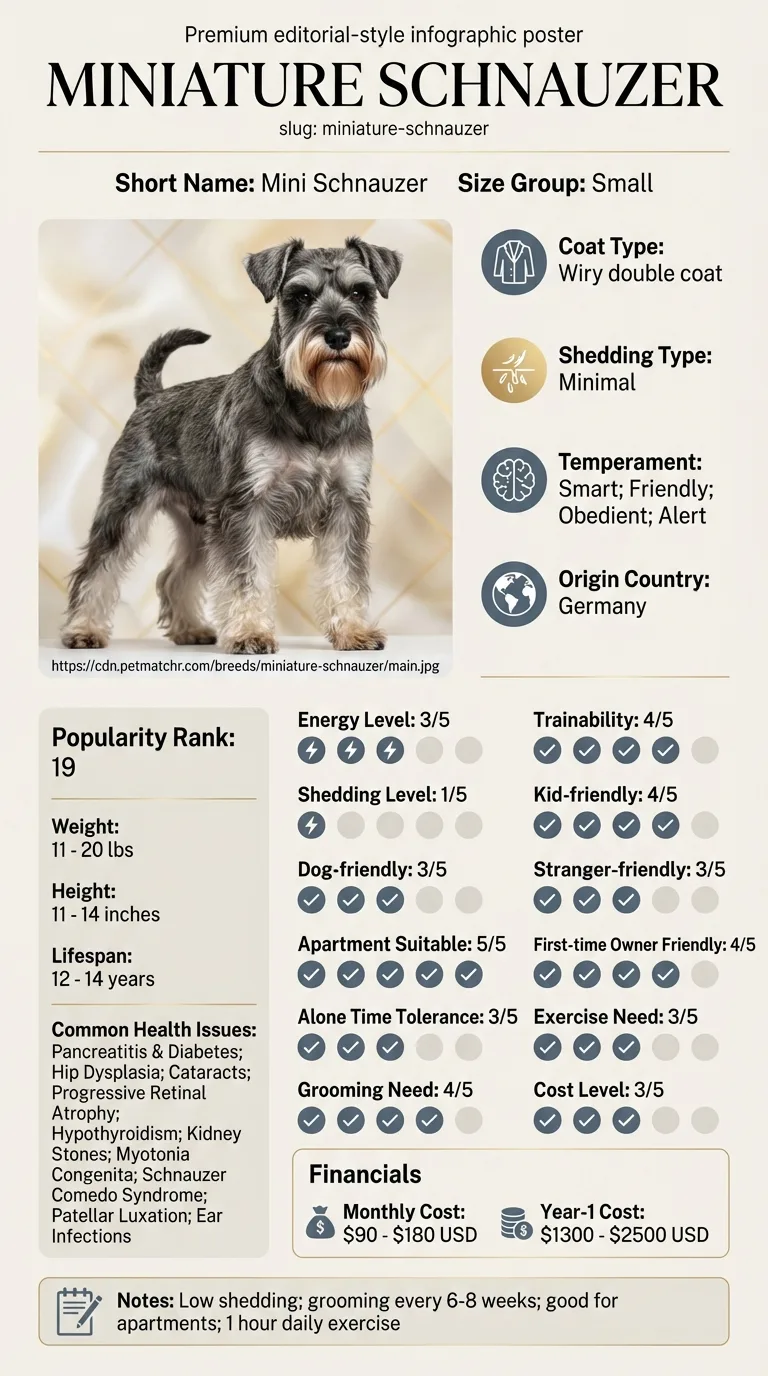
Understanding Miniature Schnauzer Diabetes: Causes and Solutions - When Miniature Schnauzer Diabetes is an Emergency

Maria and Max: Overcoming Miniature Schnauzer Diabetes

Maria, a busy nurse, noticed that her Miniature Schnauzer, Max, was drinking more water than usual and losing weight. After visiting the vet, she learned that Max had diabetes. Determined to help him, Maria researched how to stop Miniature Schnauzer diabetes and adjusted Max's diet while incorporating regular exercise. She set a schedule for insulin injections and monitored his blood sugar levels daily. Over time, Max regained his energy and was back to playing with his favorite toys.

Key takeaway: With dedication and a structured approach, managing Miniature Schnauzer diabetes is possible, leading to a happier and healthier life for your dog.

Frequently asked questions

Why does my Miniature Schnauzer have diabetes?

Miniature Schnauzers can develop diabetes due to a combination of genetics, obesity, and a poor diet. This breed is prone to health issues like pancreatitis, which can lead to diabetes. Regular vet check-ups and a balanced diet are crucial for early detection.

How can I manage my Miniature Schnauzer's diabetes?

Managing Miniature Schnauzer diabetes involves a consistent routine of insulin shots, a special diet, and regular exercise. Work with your veterinarian to create a meal plan that stabilizes blood sugar levels. Regular monitoring of their glucose levels is also important.

What are the symptoms of diabetes in Miniature Schnauzers?

Symptoms of diabetes in Miniature Schnauzers include excessive thirst, frequent urination, weight loss, and lethargy. If you notice these signs, consult your vet promptly for testing and treatment. Early intervention can improve their quality of life.

Can diet help prevent diabetes in Miniature Schnauzers?

Yes, a proper diet can help prevent diabetes in Miniature Schnauzers. Focus on high-fiber, low-fat foods that promote healthy weight and stable blood sugar levels. Avoid overfeeding and treat them with healthy snacks, like veggies, instead of high-calorie options.

Are there specific training techniques for diabetic Miniature Schnauzers?

Training a diabetic Miniature Schnauzer involves consistency and positive reinforcement. Use treats sparingly and opt for low-calorie ones. Establish a routine for feeding and insulin administration, so your dog understands what to expect.

What are the early signs of diabetes in a Miniature Schnauzer?

Early signs of diabetes in a Miniature Schnauzer can include increased thirst, frequent urination, and weight loss despite a good appetite. If you notice these symptoms, it's important to consult your vet for proper testing.

Can Miniature Schnauzers develop diabetes at a young age?

While diabetes is more common in older dogs, Miniature Schnauzers can develop diabetes at a young age, especially if they are overweight. Regular check-ups with your vet can help catch any early signs.

How can I manage my Miniature Schnauzer's diabetes through diet?

Managing your Miniature Schnauzer's diabetes often involves a consistent diet that is low in sugar and high in fiber. Consult your vet for specific dietary recommendations to help control blood sugar levels.

Is insulin treatment necessary for Miniature Schnauzers with diabetes?

Many Miniature Schnauzers with diabetes require insulin treatment to manage their condition effectively. Your vet will determine the best course of action based on your dog's specific needs.

How often should I monitor my Miniature Schnauzer's blood sugar levels?

Monitoring your Miniature Schnauzer's blood sugar levels can vary based on your dog's treatment plan. Typically, regular checks before meals and at different times may be recommended by your vet to ensure optimal management.

Quick answers

View more answers
Behavior

What are quick tips for Miniature Schnauzer diabetes?

Monitor their weight and adjust their diet as recommended by your vet. Ensure they get regular exercise to maintain a healthy lifestyle. Keep a consistent feeding schedule to help regulate their blood sugar.

Costs

How much does diabetes treatment cost for a Miniature Schnauzer?

The monthly costs for managing diabetes in a Miniature Schnauzer can range from $90 to $180. This includes insulin, special food, and regular vet visits.

Health

Is diabetes hereditary in Miniature Schnauzers?

Yes, diabetes can have a genetic component in Miniature Schnauzers. Breeders should screen for diabetes in parent dogs to reduce the risk in puppies.

Related DogBreedCompass guides

Related guides