Health
What does genetic load mean on a DNA panel?
The total count of disease-associated variants flagged in a dog's DNA, most of which are recessive and require two copies to cause disease.

Quick answer
What does genetic load mean on a DNA panel?
The total count of disease-associated variants flagged in a dog's DNA, most of which are recessive and require two copies to cause disease.
A high number on a genetic panel looks alarming next to a breed with a much lower one. Most of what that number is actually counting will never make a healthy dog sick.
New owners reading a DNA panel result full of unfamiliar variant names, and breeders trying to make responsible pairing decisions without over-reacting to a raw variant count.
This guide is not medical advice. If your dog shows pain, sudden behavior change, or worsening symptoms, consult a licensed veterinarian.
Some links may be affiliate links. We may earn a commission at no extra cost to you. We only suggest products we believe are helpful for dog owners.
We research and check what we publish, but we do not warrant that any figure, date, price, or statement is accurate, complete, or current, and we accept no liability for any loss, cost, injury, or other harm arising from the use of this site. Use it as one reference among several. You remain responsible for your own decisions and for your dog's care - confirm anything that matters with a licensed veterinarian or another qualified professional before you act on it. Full disclaimer.
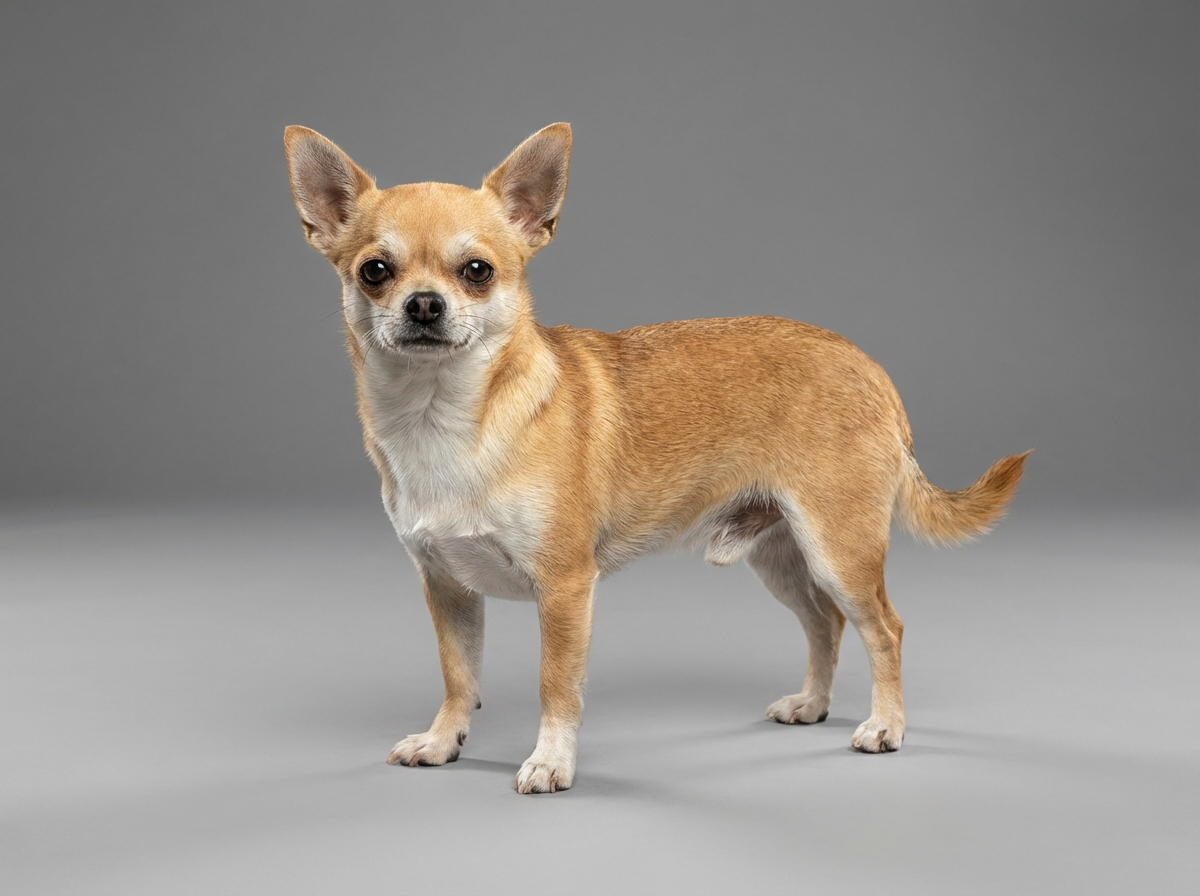
Genetic-diversity research using DNA panel data has repeatedly ranked this breed among those carrying the highest concentration of disease-associated variants of any studied breed. This reflects the breed's population history, including a small original founding group and a later popularity boom concentrated through a limited number of widely used sires, rather than describing any individual dog's likely health. Most flagged variants are recessive and require two inherited copies to cause disease.
This is a population-level statistic rather than an individual diagnosis, and it applies broadly across the breed rather than to specific unlucky dogs. Genetic-diversity studies comparing many breeds consistently place this one toward the higher end for flagged variant concentration.
The breed's documented origin from a small population, combined with a historical period of very low international numbers before a major popularity surge, created the classic conditions for reduced genetic diversity: a limited founding gene pool, followed by concentration of that pool's variants through popular individual sires used disproportionately in breeding. This is the mechanism population geneticists point to when explaining why some purebred populations carry a higher concentration of flagged variants than others.
Modern breeding practices that favor a small number of internationally popular or prize-winning sires, rather than distributing breeding more broadly across the population, continue to reinforce this pattern generation after generation. Demand-driven popularity booms, where breeding volume increases faster than the underlying gene pool diversifies, compound the effect further.
Bring any genetic panel result to your vet for interpretation, particularly any variant listed as affected rather than carrier, so you understand what monitoring or precautions, if any, are genuinely warranted. This is a discussion topic rather than an emergency, and there is no urgency attached to a routine panel result on its own.
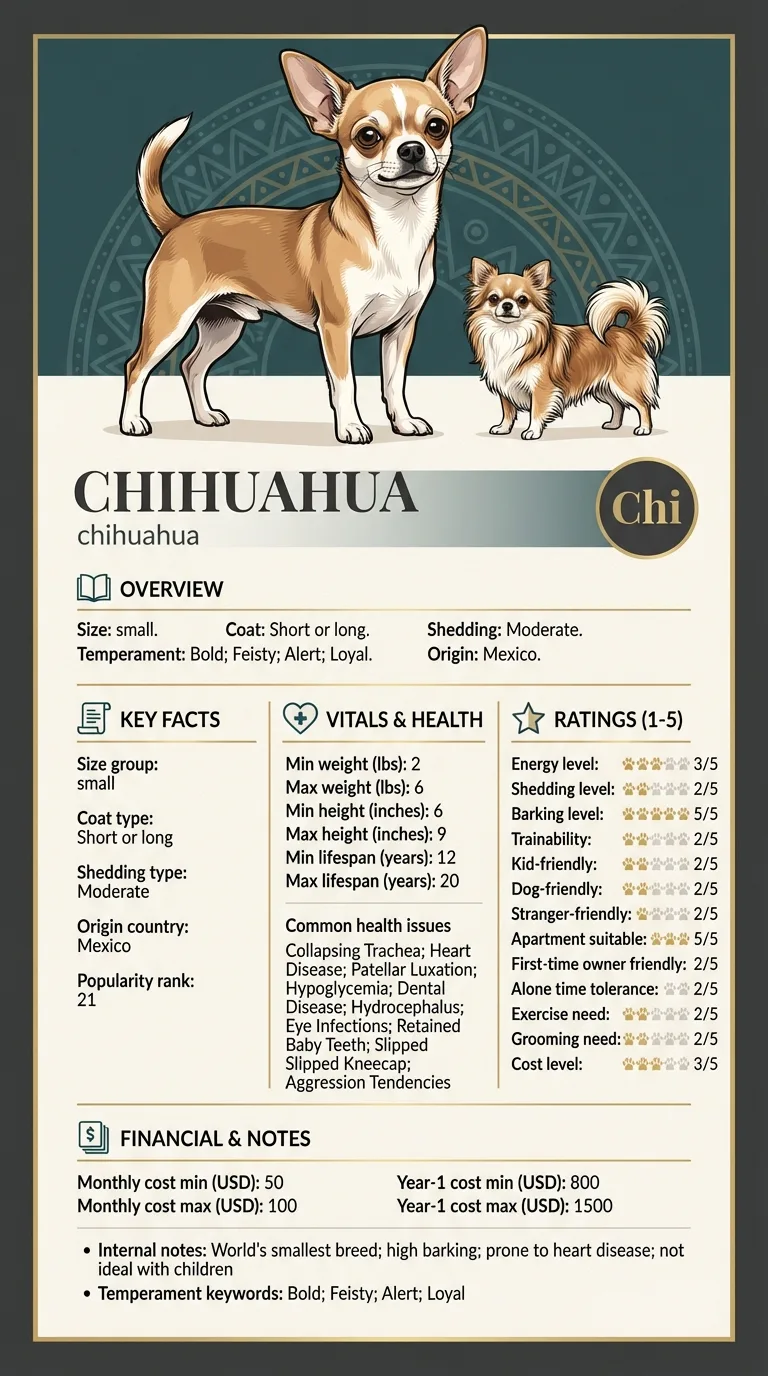
See all Chihuahua health problems, which breeds are prone to genetic load, or the full Chihuahua breed guide for temperament, exercise needs and ownership costs.
Understanding what a genetic panel actually means for your specific dog is typically a single conversation with your vet, not an ongoing process. Any population-level change in genetic diversity, by contrast, unfolds across generations of breeding decisions rather than within an individual dog's lifetime.
Success for an individual owner is simply an accurate understanding of what a panel result does and does not mean for their dog. Success at the population level, which is a much longer project, looks like breeding decisions that gradually reduce the concentration of harmful recessive pairings over successive generations.
This breed descends from a small original population in Mexico, and its numbers internationally stayed very low for a long stretch of the early twentieth century before a sharp rise in popularity. A small founding population concentrates whatever variants happened to be present in it, and a subsequent boom in popularity, run through a comparatively limited number of widely used sires, concentrates them further, a well-documented pattern in population genetics sometimes called the popular sire effect. The result, generations later, is a population in which a genetic panel testing for hundreds of known disease-associated variants across many breeds tends to flag more of them here than in a breed with a larger, more varied founding population.
The important nuance is what most of those variants actually are. The overwhelming majority on a typical panel are recessive, meaning a dog needs two copies, one from each parent, to be at risk of the associated condition; a dog with a single copy is a carrier, not an affected individual, and is not expected to develop that condition. A high total count is mostly measuring how many recessive variants exist somewhere in the breed's collective gene pool, not how many are likely to combine into disease in any one dog.
This population-level history connects directly to conditions already documented in the breed, including patellar luxation, heart disease and hydrocephalus. Genetic load is the underlying mechanism; those specific documented conditions are its visible, individual expression, and a panel result is best read as one input into breeding and monitoring decisions rather than as a verdict on a particular dog's future.

A raw variant count is the least useful number on the report; these are more informative.
Fernanda was comparing two Chihuahua litters before choosing a puppy, and one breeder proudly shared a genetic panel showing a notably lower total variant count than the other litter's results, framing it as the healthier option. The higher-count litter's breeder, a longtime member of a health-focused breed club, suggested Fernanda actually read what each flagged variant meant before deciding anything. Working through both reports with a vet, Fernanda found that the lower-count litter had one puppy listed as affected for a joint-related variant requiring lifelong monitoring, while the higher-count litter's flagged variants were almost entirely single-copy carrier results for conditions requiring two copies to matter, none of which applied to the puppy she was considering. She chose from the higher-count litter, on the specific puppy's individual results rather than the litter's aggregate number, and has since made a habit of asking breeders for panel details rather than summary statistics.
Key takeaway: A total variant count tells you about a breed's population history, not about the dog in front of you. The individual results underneath that number, specifically which are carrier and which are affected, are what actually matters for a single puppy.
No. The number mostly reflects how many recessive variants exist somewhere across the breed's population history. A dog needs two copies of a specific variant to be affected by the condition it is linked to, so most flagged variants in an individual dog remain carrier status only and are never expected to cause disease.
A historically small founding population, combined with a later surge in popularity concentrated through relatively few widely used sires, is a well-documented pattern that reduces genetic diversity and concentrates variants already present, a dynamic population geneticists refer to as the popular sire effect.
A total count alone is not a meaningful basis for that decision. What matters more is whether specific variants are listed as affected rather than carrier, and whether the associated conditions are ones you understand and are prepared to monitor.
Conditions such as patellar luxation, heart disease and hydrocephalus, all documented in this breed, are examples of the visible, individual outcomes that a population's broader genetic load can produce. Genetic load describes the underlying population pattern; specific diagnoses are its expression in particular dogs.
Careful pairing decisions that avoid combining two carriers of the same recessive variant, along with broadening the pool of sires used rather than concentrating on a few popular individuals, are the main tools available, though changing a population-level pattern happens gradually across generations rather than quickly.
Small founding populations and popular-sire concentration affect many purebred dog populations to varying degrees. This breed is frequently cited as ranking particularly high in genetic-diversity studies specifically, but it is not a unique phenomenon confined to it alone.
The total count of disease-associated variants flagged in a dog's DNA, most of which are recessive and require two copies to cause disease.
A historically small founding population and later concentration through popular sires reduced genetic diversity, a documented pattern in population genetics.
No. Carrier means one copy of a variant is present; most conditions on these panels require two copies to actually cause disease.
Avoid pairing two carriers of the same variant and consider using a wider range of sires rather than a few popular individuals.
A one-page prep sheet for this condition: the signs, the questions to ask, what to get priced. Unlocks here.
You get: Vet visit prep sheet
No spam. One-click unsubscribe. See our privacy policy.
Preview page 1 before you decide.