Health
What are quick tips for managing Schnauzer (Standard) genetic load?
Regular vet check-ups and maintaining a healthy diet are key to managing genetic load. Early intervention can help address health issues before they become serious.

Quick answer
What are quick tips for managing Schnauzer (Standard) genetic load?
Regular vet check-ups and maintaining a healthy diet are key to managing genetic load. Early intervention can help address health issues before they become serious.
Schnauzer (Standard) genetic load refers to the concentration of harmful genetic variants in the breed. This can lead to various health issues and impact your dog's quality of life.
New and experienced Schnauzer (Standard) owners alike may face challenges with genetic load. Those who are unaware of the potential health risks might find themselves surprised by unexpected vet visits and medical expenses.
This guide is not medical advice. If your dog shows pain, sudden behavior change, or worsening symptoms, consult a licensed veterinarian.
Some links may be affiliate links. We may earn a commission at no extra cost to you. We only suggest products we believe are helpful for dog owners.
We research and check what we publish, but we do not warrant that any figure, date, price, or statement is accurate, complete, or current, and we accept no liability for any loss, cost, injury, or other harm arising from the use of this site. Use it as one reference among several. You remain responsible for your own decisions and for your dog's care - confirm anything that matters with a licensed veterinarian or another qualified professional before you act on it. Full disclaimer.
Check this first
Understanding when Schnauzer (Standard) genetic load becomes an emergency is crucial for pet owners. There are clear signs that indicate a need for immediate veterinary attention. If your Schnauzer shows symptoms like severe lethargy, difficulty breathing, or sudden changes in behavior, these are red flags. Additionally, if your dog has seizures, collapses, or exhibits uncontrolled bleeding, call your vet right away.
If any of these apply, call your vet or an emergency clinic now. The rest of this page is for the cases that are not an emergency.
The Schnauzer (Standard) can be prone to a condition known as genetic load, which means they may carry a higher concentration of harmful genetic variants. This can lead to various health issues, such as hip dysplasia and progressive retinal atrophy. As a pet owner, you might notice symptoms like lethargy, frequent illness, or unexpected behavioral changes, which can be concerning.
Genetic load is fairly common in the Schnauzer (Standard) breed, especially if they come from lines that have not been carefully bred for health. Being aware of this risk is crucial for potential owners.
Schnauzers (Standard) can inherit a range of genetic traits, which may include certain health issues. Their genetic load, or the presence of harmful genetic variants, is often a result of breeding practices that prioritize appearance over health. This breed is prone to conditions like hip dysplasia and progressive retinal atrophy, which can affect their overall well-being.
Environmental factors like diet, exercise, and stress levels can also exacerbate genetic predispositions. A poor diet may lead to health issues, while insufficient exercise can increase anxiety and behavior problems. Additionally, a stressful living environment can trigger or worsen existing genetic conditions.
If you suspect that your Schnauzer's genetic load is leading to health problems, such as mobility issues or chronic conditions, consult your vet. They can diagnose potential health issues and provide treatment options tailored to your dog's needs.
Avoiding common pitfalls can help improve your Schnauzer's overall health and behavior. Here are some mistakes to watch out for.
Start here: Standard Schnauzer Most Common Genetic Disorders: Screening
See all Schnauzer Standard health problems, which breeds are prone to genetic load, or the full Schnauzer Standard breed guide for temperament, exercise needs and ownership costs.
With consistent care and monitoring, you can start to see improvements in your Schnauzer's (Standard) behavior within 3 to 6 months.
Success looks like a Schnauzer that shows fewer signs of anxiety and better adaptability to new environments, alongside a more balanced temperament.
Not all signs of genetic load in Schnauzer (Standard) require emergency care. If your dog seems a bit off but is still eating, drinking, and engaging in activities, monitor their condition closely. Minor issues like slight lethargy or occasional vomiting can often be managed at home with a plan. However, keep a close eye on them and consult your vet if symptoms persist or worsen.

Emma, a first-time dog owner in Seattle, adopted Max, a spirited Standard Schnauzer. Soon after bringing him home, she noticed that he exhibited signs of high anxiety, barking excessively and struggling to settle when left alone. After consulting with a vet, Emma learned about the genetic load issues common in Schnauzers and how they could affect behavior. She committed to a training program focused on reducing anxiety and improving Max’s social skills. Over several months, with the help of a trainer and lots of patience, Max became more relaxed and learned to enjoy his alone time without excessive barking.
Key takeaway: Understanding the genetic load in Schnauzers can help owners like Emma better manage their dog's behavior and develop effective training strategies.
Signs of genetic load in a Schnauzer (Standard) can include unusual health issues or a higher frequency of certain conditions like hip dysplasia or allergies. If your dog seems to have recurring health problems that are not typical for the breed, it may be worth discussing genetic testing with your vet.
To mitigate genetic load, ensure regular vet check-ups and genetic testing. Early detection of potential health issues allows for better management and treatment.
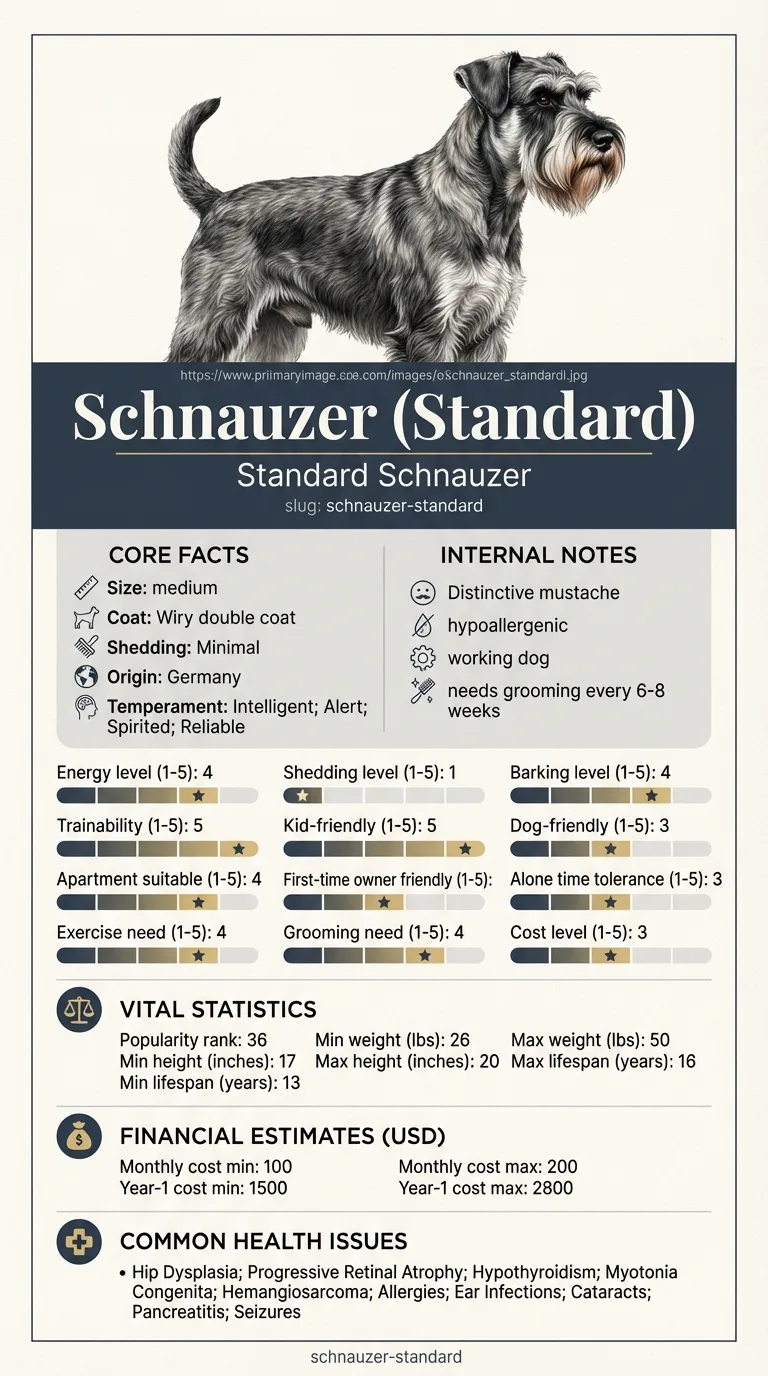
Common health issues include hip dysplasia, progressive retinal atrophy, and hypothyroidism. Regular vet visits can help catch these problems early.
Training should focus on building a routine that accommodates their needs. Incorporate gentle exercise and mental stimulation to help maintain their health and well-being.
While you can't change your current Schnauzer's genetics, you can prevent genetic load in future pets by choosing breeders who conduct health screenings and promote responsible breeding practices.
Genetic load can potentially shorten your Schnauzer's lifespan due to increased health risks. Regular care and monitoring can help enhance their longevity.
As Schnauzers (Standard) age, they may experience more health issues related to genetic load, such as cataracts or progressive retinal atrophy. Regular vet check-ups become crucial to monitor and manage these potential concerns effectively.
If your Schnauzer (Standard) is displaying behavioral problems, consider seeking professional training or behavior modification help. Understanding that some behaviors may stem from genetic predisposition can help you address them with appropriate strategies.
Yes, breeding practices that prioritize genetic health can help reduce the effects of genetic load in Schnauzer (Standard) puppies. If you're considering getting a puppy, look for reputable breeders who conduct health screenings and genetic testing.
Consult your vet if you notice any unusual signs like chronic health problems or behavioral changes in your Schnauzer (Standard). Early intervention can make a significant difference in managing genetic health issues.
Regular vet check-ups and maintaining a healthy diet are key to managing genetic load. Early intervention can help address health issues before they become serious.
Aim for at least annual vet visits, or more frequently if your Schnauzer shows any signs of health issues. This is crucial for monitoring genetic conditions.
Expect to spend between $100 to $200 monthly on your Schnauzer (Standard) for food, vet care, and grooming. Budgeting around $1,500 to $2,800 for the first year is advisable.
Yes, training can help alleviate anxiety by providing structure and mental stimulation. Focus on positive reinforcement techniques to build their confidence.
Schnauzers can be prone to behavioral issues, especially if not properly trained. Understanding their genetic load can help address potential problems early.
A one-page prep sheet for this condition: the signs, the questions to ask, what to get priced. Unlocks here.
You get: Vet visit prep sheet
No spam. One-click unsubscribe. See our privacy policy.
Preview page 1 before you decide.