Costs
What are quick tips for managing Alaskan Malamute insurance claims?
To manage insurance claims, keep your Malamute healthy with regular vet visits and preventive care. Training can also help prevent accidents that lead to claims.

Quick answer
What are quick tips for managing Alaskan Malamute insurance claims?
To manage insurance claims, keep your Malamute healthy with regular vet visits and preventive care. Training can also help prevent accidents that lead to claims.
Alaskan Malamute insurance claims can be a headache for pet owners, especially when unexpected health issues arise.
First-time dog owners or families with busy lifestyles often struggle with Alaskan Malamute insurance claims due to their unique health needs and expenses. Those who aren’t familiar with the breed's specific health issues may find themselves overwhelmed by unexpected vet bills.
This guide is not medical advice. If your dog shows pain, sudden behavior change, or worsening symptoms, consult a licensed veterinarian.
Some links may be affiliate links. We may earn a commission at no extra cost to you. We only suggest products we believe are helpful for dog owners.
We research and check what we publish, but we do not warrant that any figure, date, price, or statement is accurate, complete, or current, and we accept no liability for any loss, cost, injury, or other harm arising from the use of this site. Use it as one reference among several. You remain responsible for your own decisions and for your dog's care - confirm anything that matters with a licensed veterinarian or another qualified professional before you act on it. Full disclaimer.
Check this first
Understanding when Alaskan Malamute insurance claims indicate an emergency can save your dog’s life. Red flags that require immediate veterinary attention include sudden severe symptoms like uncontrollable vomiting, difficulty breathing, or significant bleeding. If your Malamute exhibits these signs, call your vet right away.
Other alarming symptoms include lethargy, pale gums, or signs of pain, such as whining or hiding. If your dog refuses to eat or drink for more than a day, it’s also wise to seek help. These can indicate serious health issues that may lead to costly insurance claims.
On the other hand, if your Alaskan Malamute shows mild symptoms, such as occasional coughing or a minor rash, you can monitor the situation for a few days. Keep an eye on their behavior and appetite. If symptoms persist or worsen, contact your vet. Having a plan in place for regular check-ups can also help manage costs and insurance claims effectively.
If any of these apply, call your vet or an emergency clinic now. The rest of this page is for the cases that are not an emergency.
Alaskan Malamute insurance claims can be a significant concern for owners. These dogs tend to experience various health issues that can lead to higher vet bills, making timely insurance claims essential. Common problems include hip dysplasia and other hereditary conditions, which may result in frequent claims during your Malamute's life.
Insurance claims are relatively common for Alaskan Malamutes, especially considering their size and potential health problems. Owners should be prepared to navigate these claims as part of responsible ownership.
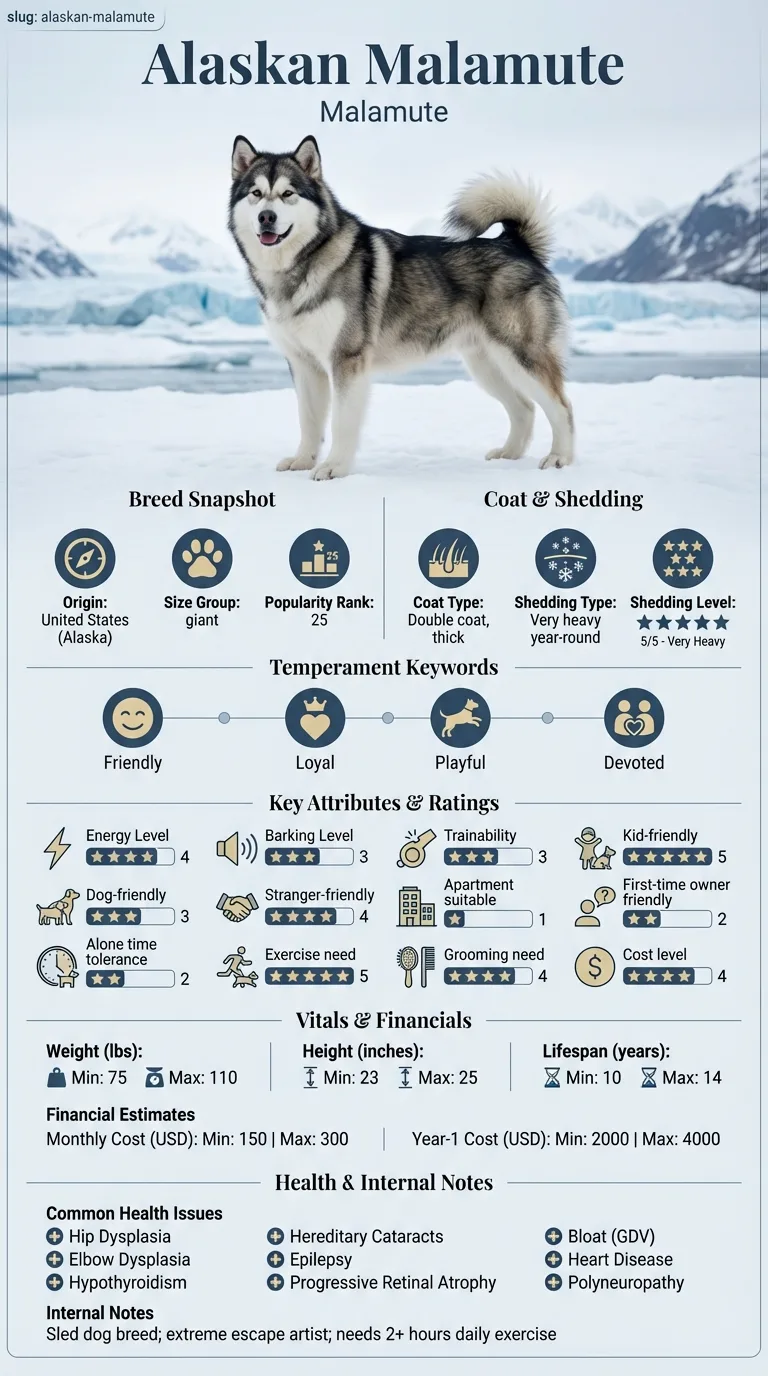
Alaskan Malamutes are a giant breed known for certain health issues that can lead to more frequent insurance claims. Common concerns include hip and elbow dysplasia, which can result in costly treatments. Their predisposition to certain genetic conditions may also contribute to higher claim rates.
The environment plays a crucial role in the health of an Alaskan Malamute. Lack of proper exercise and mental stimulation can lead to obesity and anxiety-related issues, increasing the likelihood of health problems. Additionally, if they are not trained to manage their energy, they may develop behavior issues that could result in accidents or injuries.
If your Malamute shows signs of pain, lethargy, or unusual behaviors, contact your vet immediately. Regular check-ups are essential, especially if you have concerns about inherited health conditions that may lead to insurance claims.
Avoiding these common mistakes can help you manage Alaskan Malamute insurance claims more effectively.
Start here: Alaskan Malamute Most Common Genetic Disorders: Screening
See all Alaskan Malamute health problems, which breeds are prone to insurance claims, or the full Alaskan Malamute breed guide for temperament, exercise needs and ownership costs.
You may start seeing improvements in 4 to 8 weeks with consistent care and follow-up with your vet.
Success means having fewer incidents leading to insurance claims and a well-adjusted Alaskan Malamute who is happy and healthy.
When Sarah adopted Bella, her Alaskan Malamute, she quickly learned that Bella had a habit of chewing furniture and digging. After a few months, Sarah noticed these behaviors were leading to costly insurance claims. Determined to help Bella, Sarah enrolled in an Alaskan Malamute insurance claims training course. With patience and a structured plan, she focused on redirecting Bella's energy through daily exercise and engaging toys. Over time, Bella became calmer and happier, leading to fewer destructive behaviors and no new claims.
Key takeaway: With the right training and commitment, you can reduce your Alaskan Malamute's problematic behaviors and avoid expensive insurance claims.
Alaskan Malamutes may have higher insurance claims due to their predisposition to certain health issues like hip dysplasia and hypothyroidism. These breeds often require more veterinary care, which can lead to increased claims. Understanding these risks can help you prepare and manage your dog's health more effectively.
To reduce insurance claims for your Alaskan Malamute, focus on preventive care like regular vet check-ups and vaccinations. Additionally, maintaining a healthy weight and providing plenty of exercise can help prevent common health problems. Consider enrolling in training programs to address any behavioral issues that may lead to accidents.
Common health issues for Alaskan Malamutes include hip dysplasia, elbow dysplasia, and hypothyroidism. These conditions often require medical attention, leading to higher insurance claims. Regular veterinary visits and a balanced diet can help mitigate these risks.
Training your Alaskan Malamute can help reduce the likelihood of accidents that lead to insurance claims. Positive reinforcement techniques work well for this breed, especially when addressing behaviors like chewing or digging. Consistent training helps establish boundaries and can reduce the risk of injury.
Costs associated with Alaskan Malamute insurance claims can range from $150 to $300 monthly, depending on the specific health issues your dog may have. Additionally, first-year costs can range from $2,000 to $4,000. Being aware of these costs helps you budget for your pet's care.
To reduce the risk of insurance claims, ensure your Alaskan Malamute maintains a healthy weight and receives regular exercise. Routine veterinary check-ups can also catch health issues early, which may help avoid costly treatments down the line.
Yes, older Alaskan Malamutes tend to have more health issues, which can lead to higher insurance claims. As they age, conditions like arthritis and heart disease may become more common, so expect potential increases in vet visits and associated claims.
Consider changing your Alaskan Malamute's insurance policy if you notice frequent claims or if your dog's health changes significantly. Additionally, if you find a policy that offers better coverage or lower premiums, it might be worth exploring.
Yes, specific training can help reduce risks associated with behavior problems, which may lead to insurance claims. Training programs focused on socialization, anxiety management, and obedience can improve your dog's behavior and overall health.
To manage insurance claims, keep your Malamute healthy with regular vet visits and preventive care. Training can also help prevent accidents that lead to claims.
Aim for at least once a year for check-ups, but more frequently if your Malamute shows signs of health issues. Regular visits can catch problems early.
Yes, effective training can reduce the likelihood of accidents that lead to claims. Focus on positive reinforcement techniques to encourage good behavior.
Common claims include those related to hip dysplasia and other hereditary conditions. Understanding these can help you plan for your dog's health care.
Lower costs by maintaining your dog's health through diet, exercise, and preventive care. Good health can lead to fewer claims and lower premiums.
A one-page prep sheet for this condition: the signs, the questions to ask, what to get priced. Unlocks here.
You get: Vet visit prep sheet
No spam. One-click unsubscribe. See our privacy policy.
See a sample page before you decide.
Early access list
The free prep sheet covers the same-day warning signs, a symptom log and the questions to ask. We are considering a fuller kit that adds a cost worksheet for the usual tests and treatments (US price ranges with their sources) and a plain-English guide to ways of covering the bill. It is not built yet; this list tells us whether it is worth building.
One email, no spam, unsubscribe anytime. Information only, not veterinary advice.