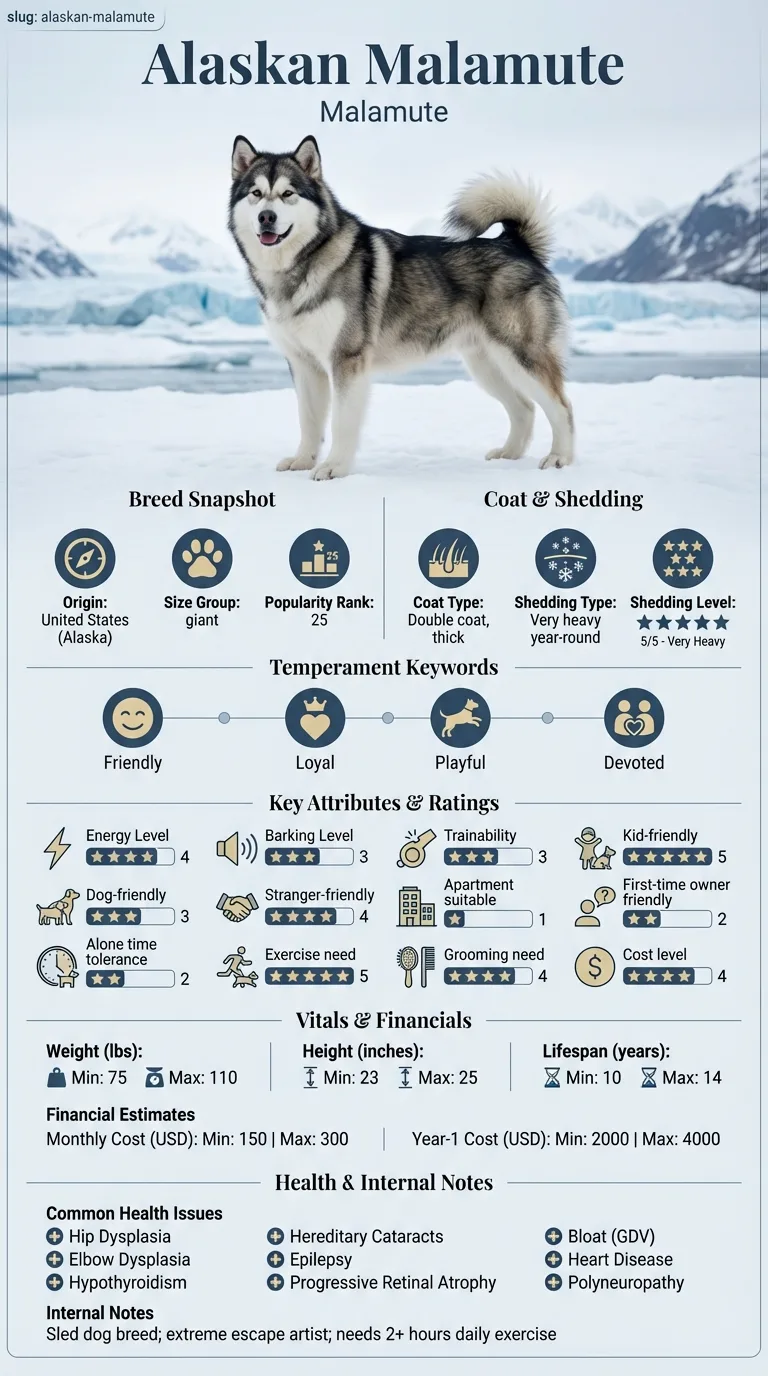
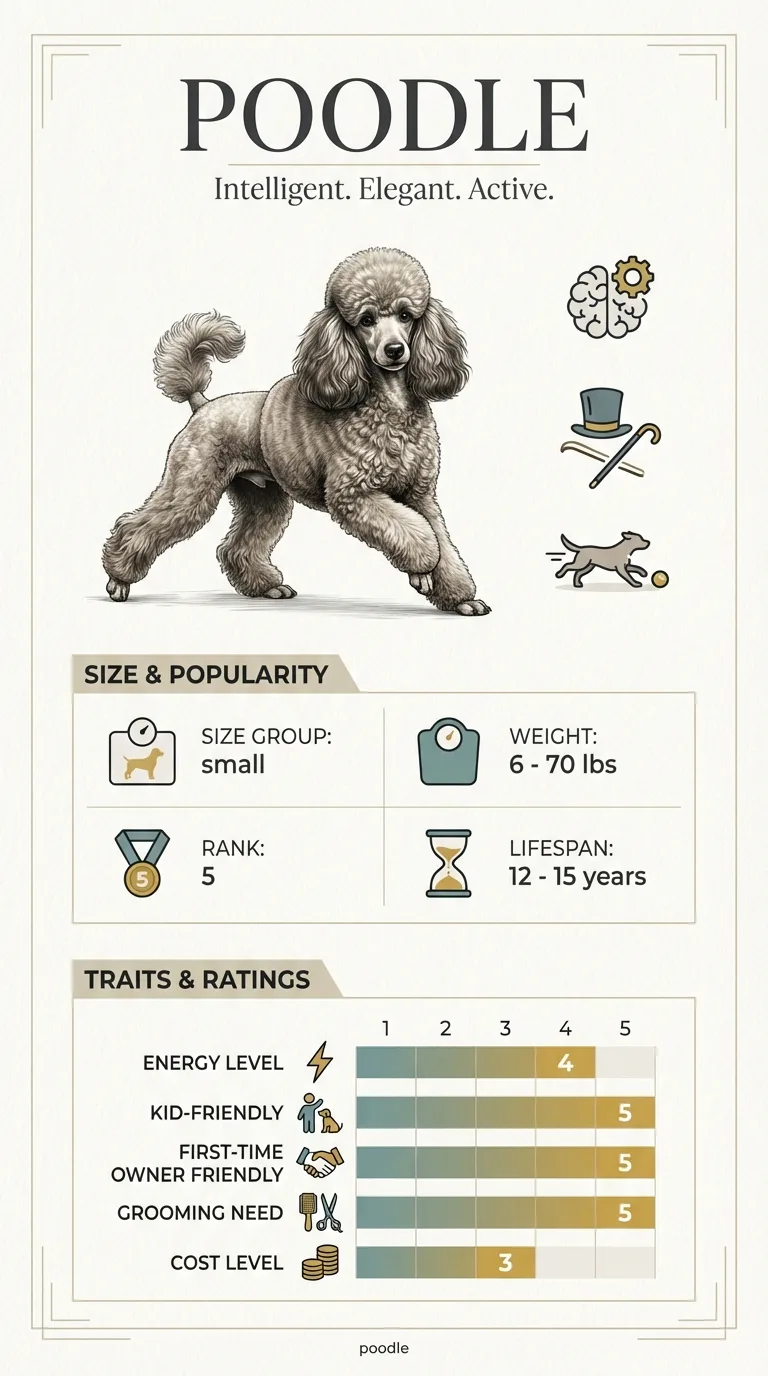
Both breeds record 4/5 for energy, which is where the similarity ends.
A Poodle's exercise need scales with its variety, and in every case a meaningful share of it can be met mentally. This is a working retriever's brain: scent games, training sessions, trick work, retrieving and swimming all count as genuine work, and twenty minutes of thinking tires a Poodle in a way twenty minutes of walking does not. That flexibility is the single most useful thing about the breed for a busy household — a bad-weather day is not a lost day.
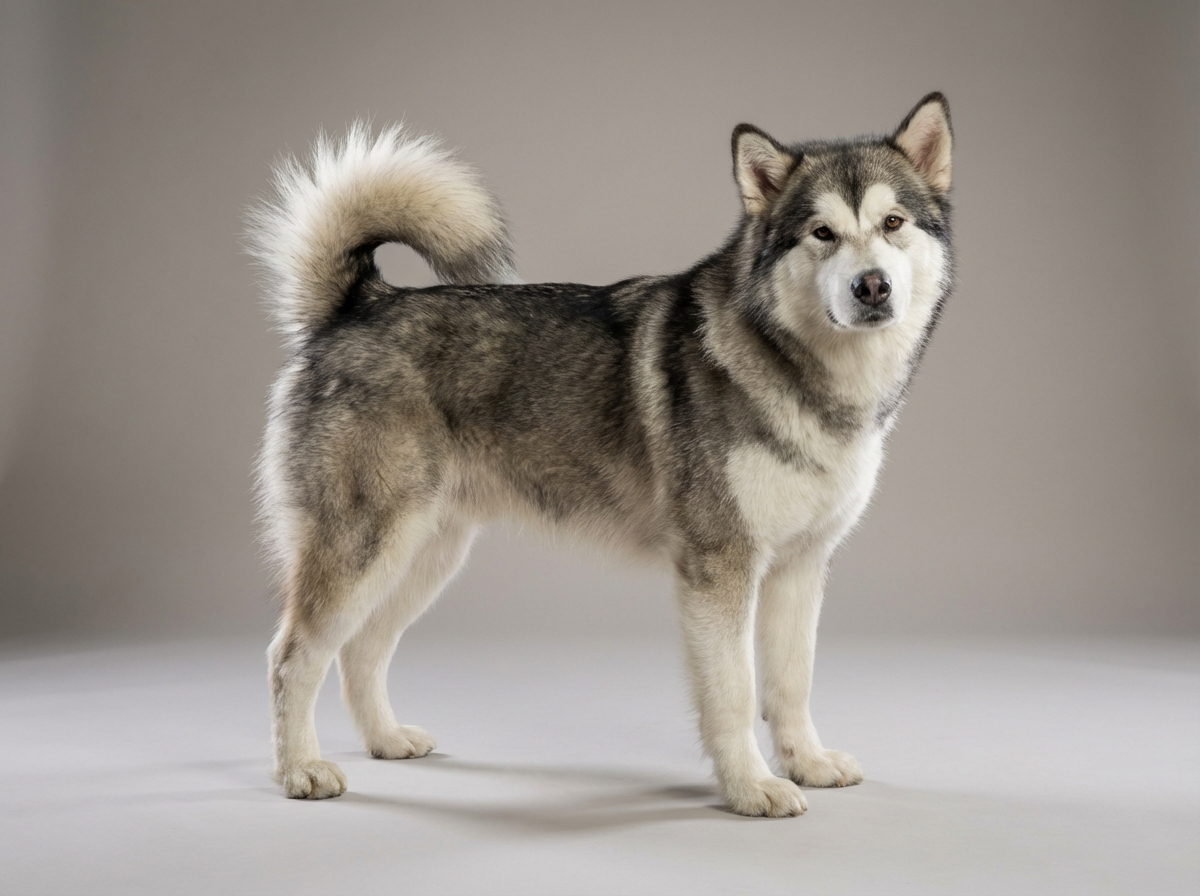
The Malamute's 5/5 has no such flexibility. Two hours minimum, and the activity has to include physical resistance to register: a loaded pack, a pulling harness, a rig or scooter, snow, steep ground. Fetch is declined. Puzzle feeders do not substitute. And in a warm climate the Arctic double coat sets a hard ceiling, pushing the whole routine to first and last light for several months of the year.
Climate is worth one more line. A Poodle's single coat gives little insulation, so it feels cold quickly and benefits from a coat in winter — but it is comfortable in warmth. The Malamute is the exact reverse, and there is no clipping it as a summer workaround.
On cost the Poodle runs roughly $100 to $300 a month depending on size, against the Malamute's $150 to $300, and a first year of $1,500 to $4,000 against $2,000 to $4,000. At the Standard end the two breeds are identical. What differs is where the money goes — food and weight-based veterinary pricing for the Malamute, the groomer for the Poodle.
If your household can genuinely supply two hours of outdoor physical work a day, the Malamute is a magnificent dog. If it cannot, the Poodle is not a compromise. It is a different and considerably more adaptable animal.