Living
What is the size and energy level of a Labradoodle?
Labradoodles are medium-sized dogs, weighing between 15 to 65 pounds, and they have a high energy level, requiring plenty of exercise.

The Labradoodle dog breed is a friendly and energetic hybrid, perfect for families and individuals alike. Their low-shedding coat makes them an appealing choice for allergy sufferers.
Best for: Labradoodles are perfect for active families who love being outdoors and can dedicate time to play and exercise. They do well in homes with children, as their friendly and tolerant demeanor makes them great playmates. First-time dog owners will also appreciate their trainability and eagerness to please. If you’re looking for a medium-sized dog that can adapt to various living situations, including apartments (with enough exercise), the Labradoodle might be your ideal match.
Avoid if: If you lead a very sedentary lifestyle or have limited time for daily exercise, a Labradoodle may not be the best fit for you. They require significant physical activity to prevent boredom and potential behavior issues. Additionally, if you’re someone who doesn’t want to commit to grooming, their coats need regular care to avoid mats and tangles. Potential owners who travel frequently or work long hours might find it challenging, as Labradoodles don't tolerate being alone for long periods.
"The Labradoodle dog breed is a lively and friendly companion that combines the best traits of both the Labrador Retriever and the Poodle. Known for their wavy to curly coat, they tend to shed less, making them a popular choice for families and individuals with allergies. With a medium size and an energetic personality, Labradoodles thrive in active households where they can participate in family activities, play games, and enjoy long walks. Their sociable nature means they usually get along well with kids, other dogs, and even strangers, making them great family pets. However, they do require regular grooming and exercise to stay happy and healthy."


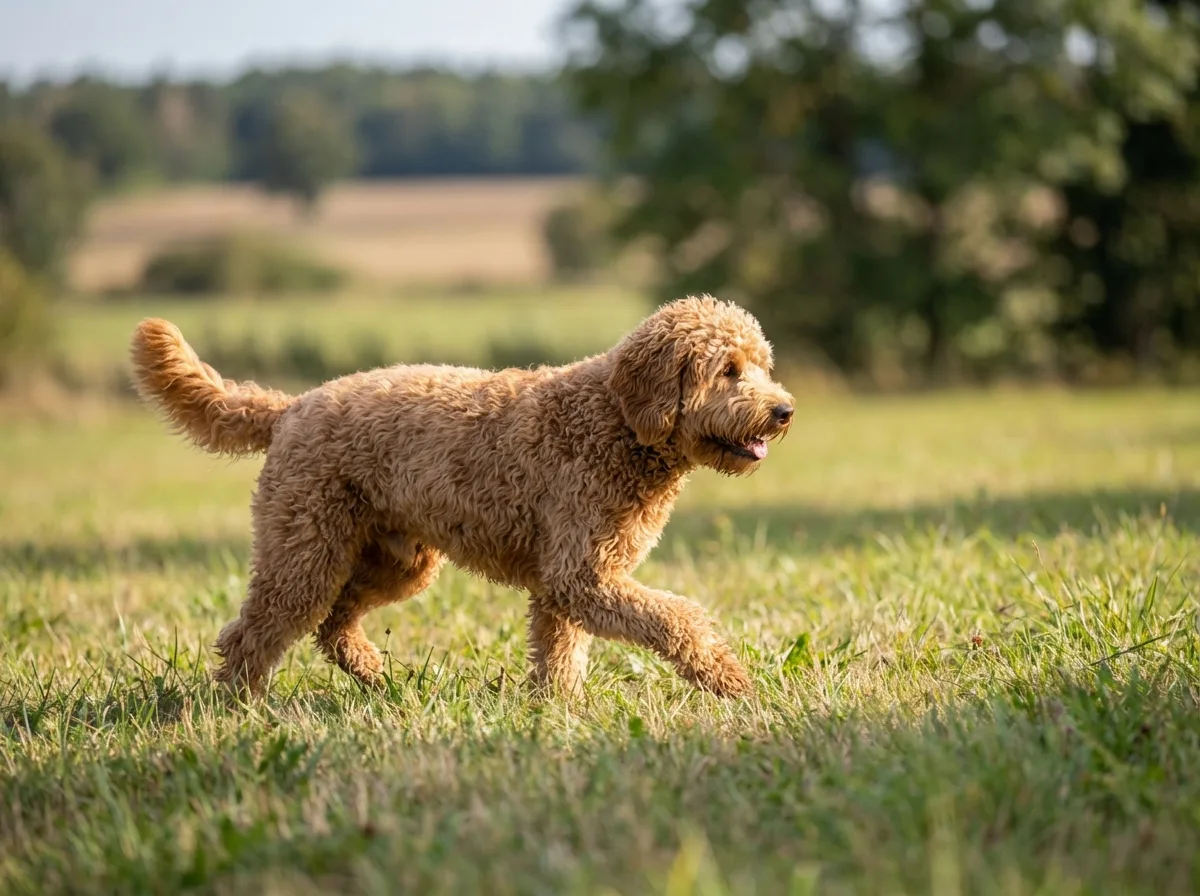

The Labradoodle dog breed is a great fit for active families and individuals who enjoy spending time outdoors. However, they may not be the best choice for busy professionals who are often away from home.
Build my first 30 days with a Labradoodle →
The Labradoodle dog breed is known for its energetic, loyal, and friendly nature. They thrive on social interaction, making them great companions for families and individuals alike. Their athletic build means they love to play and exercise, which is essential for their happiness.
This breed is also quite trainable, which makes them suitable for first-time dog owners.
While Labradoodles can adapt to apartment living, they do best in homes where they have space to run and play. Regular exercise is crucial, so plan for daily walks and playtime to keep them happy. Grooming is also important, as their wavy to curly coat requires regular maintenance to prevent matting.

Understanding the pros and cons of the Labradoodle can help you decide if this breed fits your lifestyle.

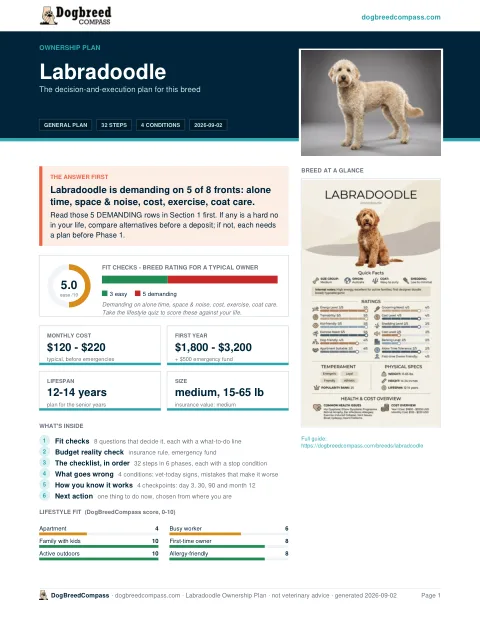
The Labradoodle is demanding on 5 of 8 fronts: alone time, space & noise, cost, exercise, coat care. If any of those is a hard no in your life, this is not a good fit - compare a close cousin instead. If not, each one needs a plan before you commit, not after.
How many hours a day will the dog be alone? Demanding - Alone-time tolerance: low. Away 6+ hours most days means daily cover (walker or daycare) or a different breed. Decide this before anything else.
Where will the dog live, and how much noise can the building take? Demanding - Apartment suitability: low; barking: low. Rated poorly for apartment living: needs a house with space, or an owner who will out-walk the building.
What can you spend every month, including a buffer for vet bills? Demanding - Typical monthly cost: $120 - $220; cost level 4/5. A high-cost breed ($120 - $220 a month before emergencies, and vet bills run higher than average). Decide your number before you decide the dog.
Have you trained a dog before? Easy - First-time-owner friendliness: high; trainability: very high. Forgiving for first-time owners; trainability makes the Phase 3 basics quick.
Are there children in the home (now or soon)? Easy - Kid-friendly: very high. Good with children when supervised; size and energy are the things to manage around toddlers.
How much exercise will you actually give, on a bad week? Demanding - Exercise need: very high; energy: very high. Needs 60+ minutes of real exercise most days, every season. If that is not realistic, neither is this breed.
How much hair and grooming can you live with? Demanding - Shedding: low (Wavy to curly); grooming need: high. Heavy shedding or a coat that needs professional grooming: a monthly groomer bill or a serious brushing habit, not optional.
Any other pets at home? Easy - Dog-friendly: high. Generally easy with other dogs; cats are an individual question to ask the breeder or rescue.
A good fit if the demanding rows above have a plan you can name today; you should avoid this breed if one of them is something you would be hoping to change later. Take the lifestyle quiz to have these scored against your own answers.

The Labradoodle dog breed is often a great fit for families with kids. Their friendly and energetic nature makes them excellent companions for children, providing both entertainment and affection. Known for their loyalty and playfulness, Labradoodles typically enjoy being around kids, and their medium size allows them to interact safely without being too overwhelming.
Additionally, their intelligence and trainability help them learn appropriate behaviors around young children. However, like any breed, there are some considerations to keep in mind when introducing a Labradoodle into a family environment.

Labradoodles are medium-sized dogs with moderate exercise needs, making them suitable for various living environments. However, there are important considerations when it comes to apartment living versus having a house with a yard.
In an apartment, a Labradoodle can adapt well if given enough exercise and mental stimulation. This breed thrives on regular walks, playtime, and activities to keep them engaged. However, if you live in a noisy building with close neighbors, be aware that Labradoodles can be vocal and may bark, which could disturb others.
It’s crucial to train them to control their barking and to provide them with a calm space to relax.
On the other hand, a house with a yard is often the better choice for a Labradoodle, especially if you have a busy lifestyle. Access to outdoor space allows them to run and play freely, which is essential for their energy levels. They also enjoy having a secure area to explore and can engage in activities like fetch or agility training.
However, owning a yard does mean you need to maintain it, and you’ll want to ensure it’s secure to keep your Labradoodle safe.
If you live in a smaller apartment but can commit to daily exercise routines and mental challenges, a Labradoodle can be a great fit. However, if you’re away from home often or have limited time for walks, a house with a yard would be the ideal environment for this energetic breed. In summary, while Labradoodles can thrive in an apartment setting with proper care and attention, having a backyard is strongly preferred for their overall well-being and happiness.

Caring for a Labradoodle involves regular grooming and health maintenance to keep them looking great and feeling their best. Due to their wavy to curly coat, weekly brushing is essential to prevent matting and reduce shedding. You’ll want to set aside about 30 minutes each week for brushing.
Bathing your Labradoodle every 4-6 weeks can help keep their coat clean and healthy, adding another hour or so to your grooming time. Don't forget to check their ears weekly for any signs of infection and clean them as needed, which can take about 10 minutes. Nail trimming should be done every 3-4 weeks, usually taking around 15 minutes.
Dental health is also important. Aim to brush your Labradoodle's teeth several times a week, which can take about 5-10 minutes each time. Regular vet visits are essential; typically, you should schedule a check-up at least once a year.
This will help catch any potential health issues early, and vet visits can average $50 to $100 each.
In terms of ongoing costs, grooming expenses for a Labradoodle can range from $50 to $150 per grooming session if you choose professional services, depending on your location and the groomer’s rates. If you do it yourself, expect to spend about $100 annually on supplies like brushes, shampoos, and dental care products. Overall, budgeting around $150 to $250 monthly for grooming and health care is a good idea, ensuring you cover both routine grooming and vet visits.
Most Labradoodles live somewhere between 12 and 14 years. Most vets start senior screening for the Labradoodle at around 8, when annual bloodwork becomes worth the money. hip dysplasia is the condition we document most prominently for this breed, and it is worth screening for early. Body mass tracks lifespan closely, and 65 lb keeps the Labradoodle near the middle of that curve. Before buying, ask the breeder for screening results covering hip dysplasia, elbow dysplasia, progressive retinal atrophy — those are the Labradoodle conditions our records list first.
| Labradoodle lifecycle | Figure |
|---|---|
| Typical Labradoodle lifespan | 12–14 years |
| Labradoodle counts as senior from | about 8 years |
| Labradoodle size class | Medium |
| Adult Labradoodle weight | 15–65 lb |
| Origin | Australia |
The Labradoodle range is wide because it covers well-kept dogs and neglected ones. Weight control and routine dental work are the two levers with the clearest evidence behind them.
Expect an adult Labradoodle to settle at 15–65 lb. Labradoodles carry a wavy to curly coat and shed at a low level. Puppies reach adult weight at around 15 months.
| Labradoodle measurement | Figure |
|---|---|
| Adult Labradoodle weight | 15–65 lb |
| Labradoodle height at the shoulder | 14–24 in |
| Labradoodle shedding | low (low to minimal) |
| Labradoodle coat | wavy to curly |
| Labradoodle grooming need | high |
Expect high grooming: this is the recurring cost people underestimate. Allergy sufferers should read the shedding row rather than the word hypoallergenic: Labradoodles sit at low with a wavy to curly coat. Temperament ratings for the Labradoodle read energetic, loyal, friendly, and the breed sits at number 25 for popularity in our data, with the breed developed in Australia.
Owning a Labradoodle comes with various costs, especially in the first year. Be prepared for initial expenses, along with ongoing monthly costs to keep your furry friend happy and healthy.
Full Labradoodle price guide →
The Labradoodle is generally a healthy breed, but like all dogs, they can be prone to certain health issues. Regular vet check-ups and a healthy lifestyle can help mitigate risks.
Labradoodles typically live between 12 to 14 years. It's important to provide them with regular exercise and proper nutrition throughout their life to maintain their health.
Labradoodles are known for their friendly and energetic nature, making them relatively easy to train. However, they can also exhibit stubbornness if not properly guided.
If you struggle with basic commands or notice behavioral issues like excessive barking or chewing, seeking professional training can be beneficial. Early socialization and training classes are also advised for first-time owners.
Labradoodles are medium-sized dogs, weighing between 15 to 65 pounds, and they have a high energy level, requiring plenty of exercise.
Common health issues for Labradoodles include hip dysplasia, allergies, and heart problems. Regular vet visits can help in early detection and management.
Owning a Labradoodle can cost between $1,500 to $2,500 annually, with initial costs in the first year ranging from $1,800 to $3,200.
12–14 years, with senior care usually starting around 8.
Yes, the Labradoodle dog breed is known for being family-friendly. They are loyal, energetic, and love spending time with kids, making them a great addition to households with children.
Labradoodles can adapt to apartment living, but they need regular exercise to thrive. While they're medium-sized and can fit in smaller spaces, they do best with an active lifestyle, so daily walks and playtime are essential.
A Labradoodle typically needs about 60 minutes of exercise each day. Regular activities like walks, runs, or play sessions keep them happy and healthy, thanks to their high energy levels.
Labradoodles require moderate grooming due to their wavy to curly coat. Regular brushing is needed to prevent matting, and professional grooming every few months is recommended to keep their coat in top shape.
Labradoodles can face several health issues, including hip and elbow dysplasia, allergies, and heart problems. Regular vet check-ups and a healthy lifestyle can help manage these risks.
Yes, Labradoodles are often recommended for first-time dog owners due to their friendly nature and trainability. With proper guidance and training, they can be a rewarding companion for new pet parents.
Labradoodles are known for having low to minimal shedding, making them a good choice for people with allergies. However, regular grooming is still important to maintain their coat and minimize loose hair.
Yes, Labradoodles are known for their friendly and loyal temperament, making them great companions for families. They typically get along well with children and can be very playful, which is ideal for family dynamics.
Labradoodles require regular grooming due to their wavy to curly coat. It's best to brush them at least once a week and schedule professional grooming every couple of months to keep their coat healthy and reduce shedding.
While Labradoodles can live in apartments, they do need regular exercise to thrive. If you have the time to take them out for walks and playtime, they can adapt well to smaller living spaces.
Labradoodles have a high energy level and require daily exercise to keep them happy and healthy. Activities like walks, fetch, and agility training are great ways to meet their exercise needs.
Labradoodles typically live 12 to 14 years, and are usually treated as senior dogs from about 8. Keeping the dog lean, staying current on dental care and screening for the conditions this breed carries are what move an individual dog toward the top of that range.
An adult Labradoodle weighs 15–65 lb and stands 14–24 inches at the shoulder. Growth finishes at around 15 months for a medium breed.
Every condition we have documented for the Labradoodle, grouped by body system.
Open the Labradoodle health hub →
Open the Labradoodle comparison hub →
Also see: Labradoodle Anxiety: Signs, Triggers & a 7-Day Plan
7-day money-back guarantee. Instant access.
Take the lifestyle quiz first to get it personalised to your home, schedule and budget.
DogBreedCompass is an information website. Everything here - including breed traits, cost estimates, health explanations and calculator results - is general reference material shared for information only. It is not veterinary, medical, legal, or financial advice, and reading it does not create a veterinarian-client-patient or any other professional relationship.
We research and check what we publish, but we do not warrant that any figure, date, price, or statement is accurate, complete, or current, and we accept no liability for any loss, cost, injury, or other harm arising from the use of this site. Use it as one reference among several. You remain responsible for your own decisions and for your dog's care - confirm anything that matters with a licensed veterinarian or another qualified professional before you act on it.
Read the full disclaimer for the complete position on accuracy, liability and your responsibility as the reader.
Take the Lifestyle Match quiz to see how this breed fits your day-to-day life, schedule, and budget.
Take the quizAlready settled on a Labradoodle? Find names for this breed