DogBreedCompass

Malamute or French Spaniel: Two Working Breeds Few People Meet

Four ratings match here — exercise, energy, strangers and time alone — and both are 5/5 exercise working dogs that need a genuinely active household. The French Spaniel is also one of the quietest sporting breeds at 2/5 barking, and one of the hardest dogs on this site to actually find.

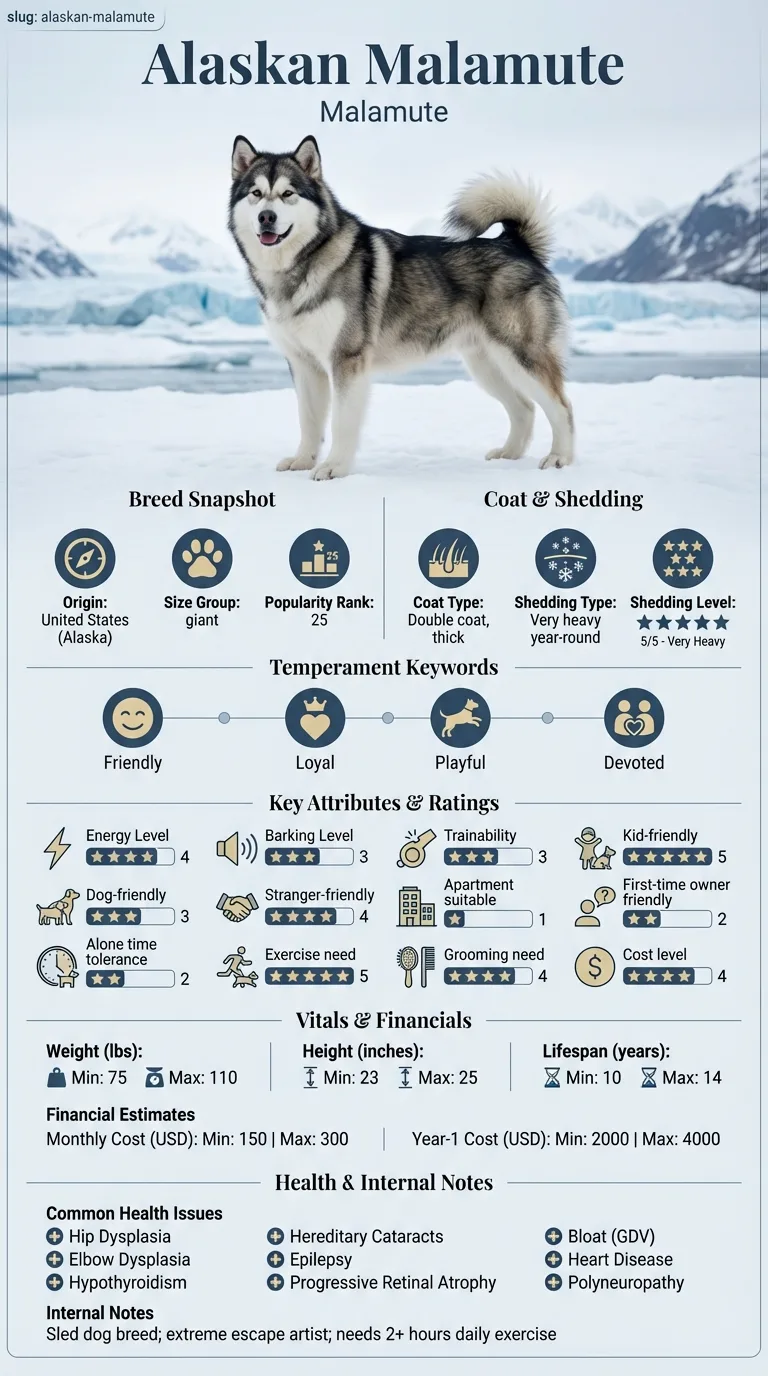
alaskan malamute infographic
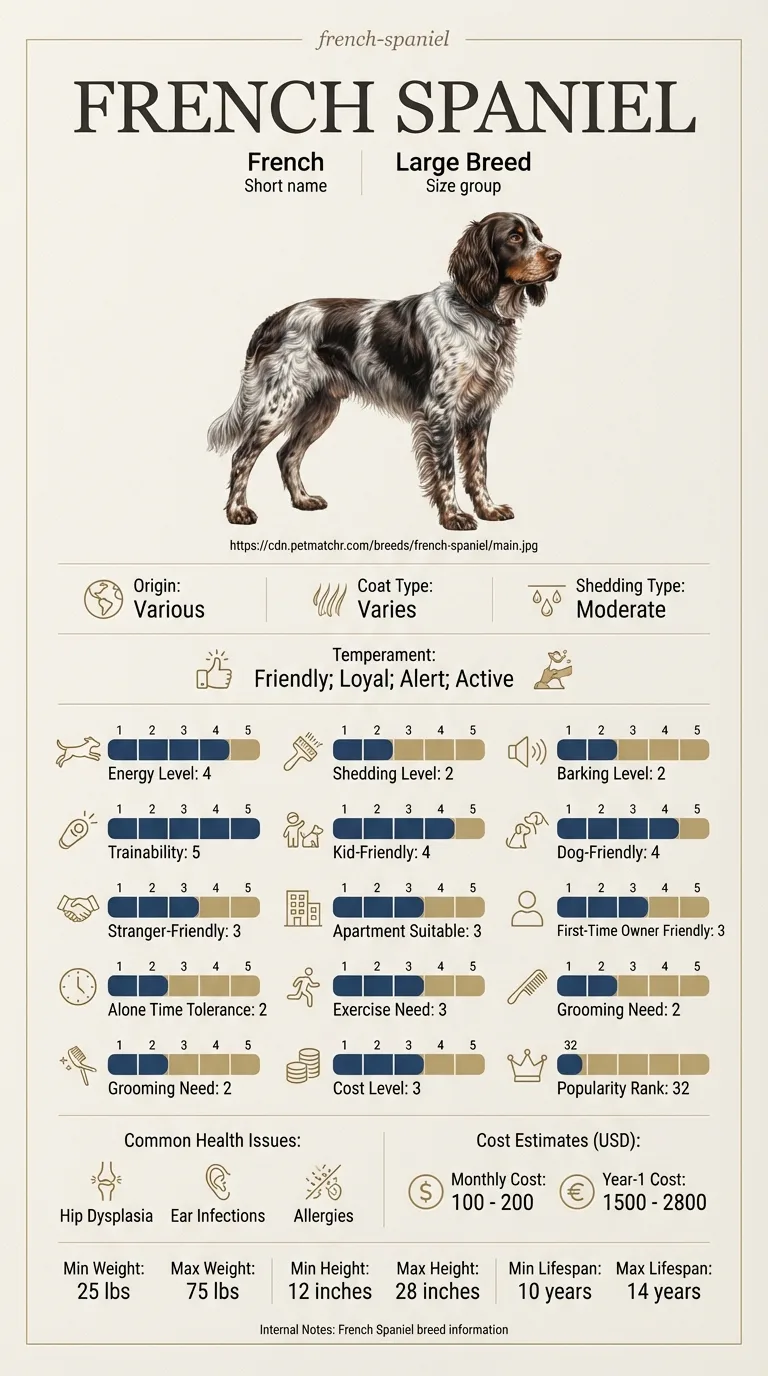
french spaniel infographic

This page is for someone weighing two uncommon working breeds. It covers what each wants from two hours a day, the noise difference, an inherited neurological disorder with a DNA test, coat and ear care, and cost.

Quick verdict

The French Spaniel is quieter, cheaper, more trainable and far harder to source; the Malamute is stronger, hairier and easier to find.

Choose alaskan malamute if...

Choose the Alaskan Malamute if the work you can offer is physical rather than structured and you want a large northern breed. It lives 10 to 14 years against the French Spaniel's 10 to 12 and rates 5/5 with children against 4/5. You are accepting $150–$300 a month against $100–$200, 5/5 shedding and a 1/5 apartment rating.

Choose french spaniel if...

Choose the French Spaniel if you are genuinely active and want a sociable, biddable dog that settles completely indoors. It rates 4/5 for trainability, children and other dogs, barks at only 2/5, grooms at 3/5 and costs $100–$200 a month. You are accepting a long search for a breeder and daily ear care.

Head-to-head comparison

Featurealaskan malamutefrench spanielWinner
Weight75–110 lbs45–60 lbsEqual
Height23–25 in21–24 inEqual
Lifespan10–14 years10–12 yearsalaskan malamute
CoatThick double coatMedium, flat, featheredEqual
Grooming needHigh (4/5)Moderate (3/5)french spaniel
SheddingVery high (5/5)Moderate (3/5)french spaniel
Energy levelHigh (4/5)High (4/5)Equal
Exercise needVery high (5/5)Very high (5/5)Equal
TrainabilityModerate (3/5)High (4/5)french spaniel
BarkingModerate (3/5)Low (2/5)french spaniel
Good with kidsVery high (5/5)High (4/5)alaskan malamute
Good with other dogsModerate (3/5)High (4/5)french spaniel
Friendly to strangersHigh (4/5)High (4/5)Equal
Apartment suitabilityVery low (1/5)Low (2/5)french spaniel
Good for first-time ownersLow (2/5)Moderate (3/5)french spaniel
Tolerates being aloneLow (2/5)Low (2/5)Equal
Typical monthly cost$150–$300$100–$200french spaniel
Typical first-year cost$2,000–$4,000$1,400–$2,900french spaniel

Deep dive

Alaskan Malamute vs French Spaniel: two 5/5s, two different jobs

Both rate 5/5 for exercise and 4/5 for energy, and the content diverges completely.

A French Spaniel is a pointing dog. It quarters ground methodically, works at a distance, freezes on scent and holds — and that is a mental activity as much as a physical one. Scent work, directional training and searching varied cover satisfy it far better than distance does. An hour of proper work in a wood does more than two hours on a lead.

A Malamute is tired by resistance: carting, scootering, canicross, loaded hikes. There is no scent-work shortcut, and walking beside you barely registers.

The failure modes differ. The French Spaniel is noted for settling completely once the work is done, and an under-stimulated one becomes restless rather than noisy — which makes the problem easier to miss and no less real. An under-exercised Malamute excavates the garden and leaves through the fence.

Both need secure fencing, the spaniel because it will follow scent and the Malamute because it will follow a decision.

Quiet, sociable and closely bonded

The French Spaniel's 2/5 barking is unusual for a sporting breed — most spaniels rate 3/5 or higher and get louder when under-worked. Combined with a strong tendency to settle indoors, it makes a surprisingly restful house dog once the day's work has happened.

At 4/5 trainability it is willing and soft. It responds to a light hand, food and encouragement, and it shuts down under sharp correction more visibly than most gundogs — owners who raise their voices get less rather than more.

At 2/5 for solitude it is closely bonded, and long unbroken absences produce anxiety, destruction at exit points and refusal to eat. Absence training from the first week and a midday walker for a full-time household are the standard answers.

The Malamute at 2/5 shares the rating and fails differently: it is bored rather than frightened, and boredom in a hundred-pound sled dog is expressed as earthworks.

On people both are sociable — 4/5 with strangers each — and neither guards anything at all.

Acral mutilation syndrome and the DNA test for it

Acral mutilation syndrome appears on the French Spaniel's condition list and it is worth naming because it is both rare and unmistakable once you know what you are looking at.

It is an inherited sensory neuropathy. Affected dogs lose sensation in their feet, and because they cannot feel pain there they lick, chew and injure their own paws without any sign of distress. Signs appear in puppyhood, usually between three and twelve months: persistent licking of the feet, unexplained wounds, missing nails, and — the giveaway — no reaction to injuries that should obviously hurt.

There is a DNA test, and responsible breeders use it so that two carriers are never mated together. Because the French Spaniel population is small, asking for this specific result matters more than any general assurance about health would.

Hip dysplasia, ear infections, epilepsy and eye conditions complete the list. Hip scores as numbers and eye certification are the corresponding asks.

The Malamute's own DNA-testable item is inherited polyneuropathy, which shows in young dogs as exercise intolerance, a wobbly gait and a changed bark.

Feathering and ears against undercoat and rake

The French Spaniel rates 3/5 for grooming and 3/5 for shedding. Its medium flat coat with feathering on the ears, legs and tail needs brushing through a couple of times a week and picks up burrs and grass seeds from cover.

Grass seeds are the seasonal hazard — barbed, unable to back out, and migrating inward from between the toes or an ear canal. Two minutes of checking feet, ears and armpits after summer walks prevents most of the minor surgery they cause.

Drop ears mean the usual spaniel routine: check inside daily and dry thoroughly after every swim or wet walk, because each infection thickens the canal and makes the next one harder to treat.

The Malamute rates 4/5 and 5/5. Its coat needs almost nothing for most of the year and then a rake and several long sessions during two heavy blows. It never mats, never needs a groomer, and should never be clipped — a double coat insulates against heat as well as cold.

So the spaniel is a steady weekly obligation with a daily ear habit, and the Malamute is two intense fortnights with year-round hair underneath.

Finding one, and what it costs

The practical obstacle with a French Spaniel is availability. It is one of the rarer gundogs outside France and Canada, litters are infrequent, and a wait is normal.

That is not only an inconvenience. A small population means health testing matters more rather than less, and it makes a breeder's transparency the main thing you are assessing while you wait. Use the time to ask about the acral mutilation result, hip scores, eye certification and epilepsy in the line.

The Malamute is far easier to source, which brings its own risk — popularity produces poorly bred litters, and the questions to ask are the polyneuropathy DNA result, hip and elbow scores and eye certification.

On money the French Spaniel runs $100–$200 a month against $150–$300, and $1,400–$2,900 against $2,000–$4,000 in the first year, though purchase price for a rare breed can be higher than the running cost suggests.

On lifespan the Malamute is ahead at 10 to 14 years against 10 to 12, and only it carries a real bloat risk.

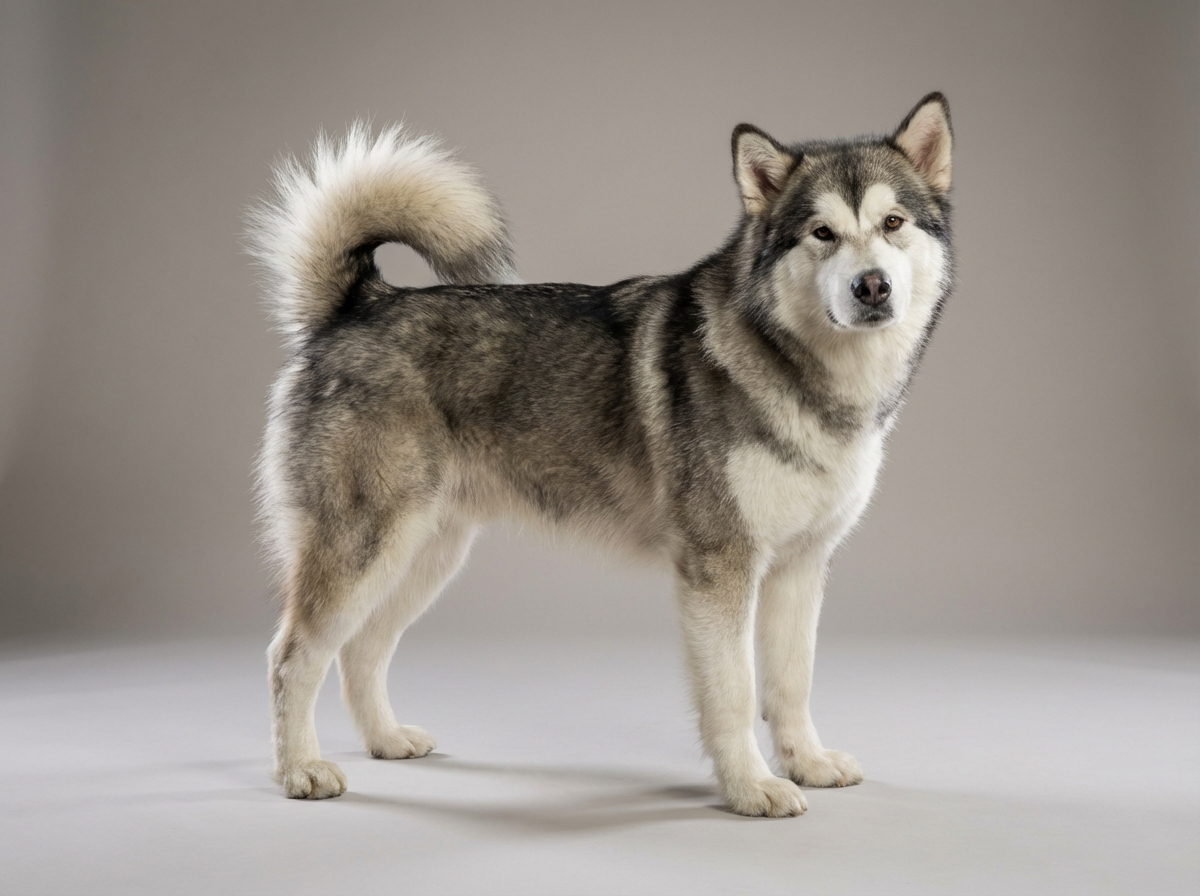
Alaskan Malamute vs French Spaniel at a glance

Four ratings match here — exercise, energy, strangers and time alone — and both are 5/5 exercise working dogs that need a genuinely active household. The French Spaniel is also one of the quietest sporting breeds at 2/5 barking, and one of the hardest dogs on this site to actually find a breeder for.

The French Spaniel is quieter, cheaper at $100 to $200 a month against $150 to $300, and more trainable at 4/5, and it settles completely indoors once its exercise is met. The Malamute is stronger, hairier at 5/5 shedding, and considerably easier to source, but needs secure fencing and a home with cold weather to be at its best.

Choose the Malamute if the work you can offer is physical rather than structured and you want a large northern breed. Choose the French Spaniel if you are genuinely active and want a sociable, biddable dog willing to wait for you to find one.

Frequently asked questions

Do both breeds need the same exercise?

Both rate 5/5 and the content differs completely. A French Spaniel is a pointing breed tired by searching — scent work and directional training do far more than distance. A Malamute is tired by resistance: carting, scootering or loaded hikes, with no scent-work shortcut available.

Is the French Spaniel a quiet dog?

Yes, unusually so for a sporting breed — 2/5 for barking against the Malamute's 3/5, where most spaniels rate 3/5 or higher. Combined with a strong tendency to settle indoors it makes a restful house dog, though an under-worked one becomes restless rather than noisy, which is easy to miss.

What is acral mutilation syndrome?

An inherited sensory neuropathy in which affected dogs lose feeling in their feet and injure them without distress — persistent licking, unexplained wounds and missing nails, usually appearing between three and twelve months. There is a DNA test, and any breeder should be able to give both parents' status.

Is a French Spaniel hard to find?

Yes. It is one of the rarer gundogs outside France and Canada, litters are infrequent and a wait is normal. A small population makes health testing more important rather than less, so use the wait to assess how openly a breeder discusses testing and the dogs behind the litter.

Which is better with other dogs?

The French Spaniel at 4/5 against the Malamute's 3/5. Malamute same-sex intolerance is common and usually appears at social maturity around two years old rather than in puppyhood. Both are sociable with people at 4/5 and neither is any use as a guard.

Which copes better with being left alone?

Neither — both rate 2/5. The French Spaniel tends toward anxiety and destruction at exit points; the Malamute toward boredom and earthworks. Absence training from week one and cover for a full working day apply whichever dog you choose.

Which is cheaper to keep?

The French Spaniel, at $100–$200 a month against the Malamute's $150–$300, and $1,400–$2,900 against $2,000–$4,000 in the first year. Purchase price for a rare breed can be higher than the running cost suggests, so budget for that separately.

Quick answers

View more answers
Living

Malamute vs French Spaniel: which should I choose?

The French Spaniel if you are active, want a quiet sociable dog that settles indoors, and can wait for a litter. The Malamute if the work you can offer is physical rather than structured and you want a large northern breed.

Costs

How much does each cost per month?

The Malamute runs $150–$300 a month and the French Spaniel $100–$200, with first-year totals of $2,000–$4,000 and $1,400–$2,900. Grooming is 4/5 against 3/5.

Health

What should I ask a French Spaniel breeder?

The DNA result for acral mutilation syndrome in both parents, hip scores as numbers, eye certification, and whether epilepsy has appeared in the line. In a small population, willingness to answer openly is the main thing you are assessing.

Behavior

Which is quieter?

The French Spaniel at 2/5 against the Malamute's 3/5. The Malamute howls rather than barks, which carries a long way, though a well-exercised one is largely silent.

Related DogBreedCompass guides

  • Alaskan Malamute breed guideThe Malamute profile covers exercise, containment and the breed's coat.
  • French Spaniel breed guideThe French Spaniel profile covers working style, coat care and inherited disease testing.
  • Malamute vs BrittanyThe Brittany is the smaller French pointing breed most often weighed against this one.
  • Akita vs French SpanielThe Akita comparison covers the same French Spaniel issues against a guardian breed.
  • French Spaniel ear infectionsEar infections are the routine maintenance issue in any drop-eared sporting breed.
  • Malamute bloat and GDVBloat is a genuine emergency in the Malamute and every owner should know the signs.

Related guides

Important reminder

Health information here is general and is not veterinary advice. If your dog shows pain, sudden behaviour change, or worsening symptoms, consult a licensed veterinarian.

Some links on this site are affiliate links. We may earn a commission at no extra cost to you, and we only suggest products we believe are helpful for dog owners.

Find Your Perfect Breed

Match your lifestyle to the right dog.

Take quiz

Find your match

Not sure which breed is right for you? Take our 2-minute quiz to find out.

Take the quiz