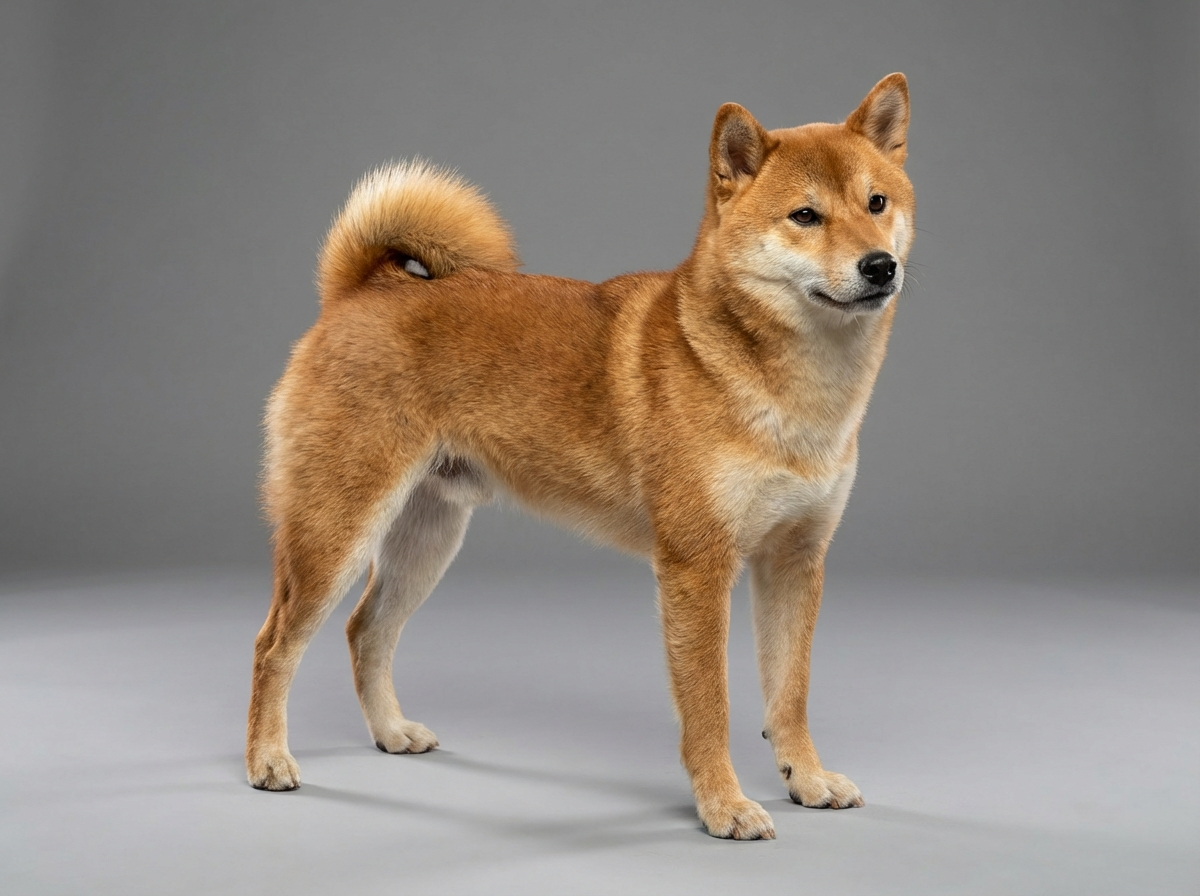
Akita or Saint Bernard: A Guardian or an Alpine Sofa
Quick answer
Akita vs Saint Bernard: which should I choose?
The Saint Bernard if you want an exceptionally gentle giant, have the floor space and can absorb the cost and the drool. The Akita if lifespan and budget matter, or if you want a dog that actually guards.
Three rows tie exactly here — barking at 2/5, grooming at 3/5 and tolerating time alone at 3/5 — and then the Saint Bernard is up to 180 pounds, costs $150 to $310 a month and lives 8 to 10 years. Size is the whole story with this breed, and everything else follows from it.
This page is for someone who wants a very large, gentle dog and needs the practical consequences spelled out. It covers the choice between the rough and smooth coats, drool and heat, eyelid and cardiac problems, lifespan, and where the money goes.
Quick verdict
The Saint Bernard is the friendlier, calmer dog with the shorter life and the far larger bill; the Akita costs less, lives longer and does the guarding.
Choose akita if...
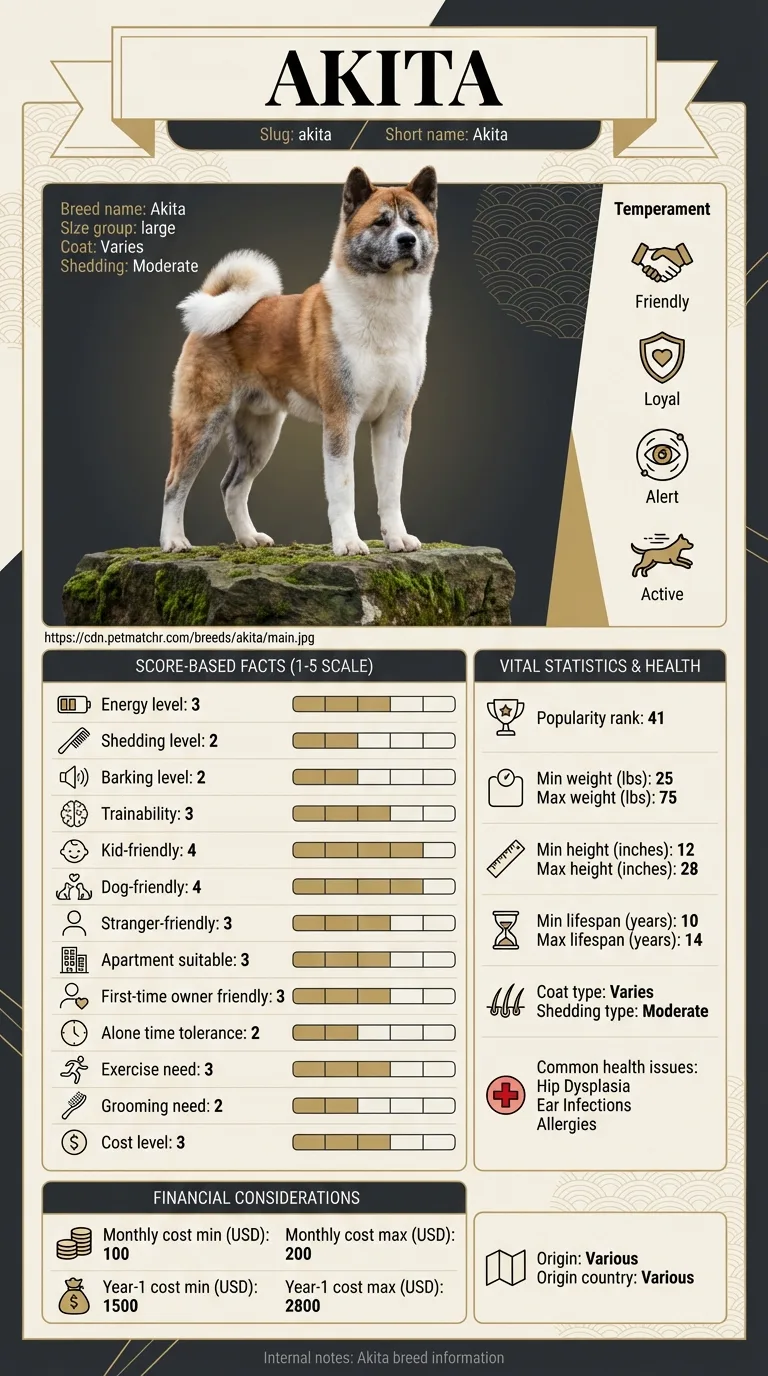
Choose the Akita if lifespan and cost matter. It lives 10 to 13 years against the Saint Bernard's 8 to 10, costs $110–$240 a month against $150–$310, does not drool, and rates 2/5 for apartments against 1/5. You are accepting 1/5 for first-time owners, 2/5 with other dogs and strangers, and 5/5 shedding.
Choose saint bernard if...
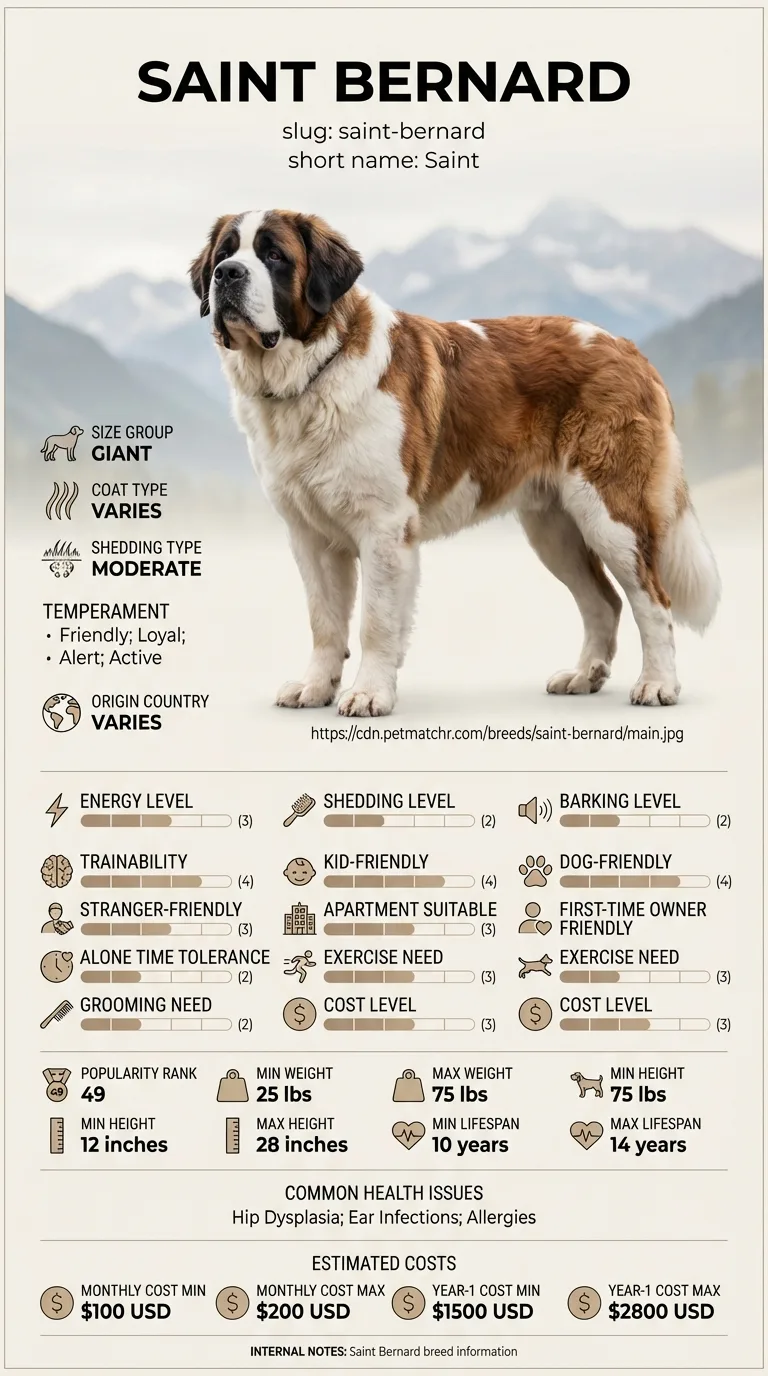
Choose the Saint Bernard if you want an exceptionally gentle giant and have the space and budget. It rates 5/5 with children, 4/5 with other dogs and strangers, needs only 2/5 exercise, and barks at 2/5. You are accepting up to 180 pounds, heavy drool, real heat intolerance and an 8 to 10 year life.
Head-to-head comparison
Feature
akita
saint bernard
Winner
Weight
70–130 lbs
120–180 lbs
Equal
Height
24–28 in
26–30 in
Equal
Lifespan
10–13 years
8–10 years
akita
Coat
Dense double coat
Short or long double coat
Equal
Grooming need
Moderate (3/5)
Moderate (3/5)
Equal
Shedding
Very high (5/5)
High (4/5)
saint bernard
Energy level
Moderate (3/5)
Low (2/5)
Equal
Exercise need
Moderate (3/5)
Low (2/5)
saint bernard
Trainability
Moderate (3/5)
Moderate (3/5)
Equal
Barking
Low (2/5)
Low (2/5)
Equal
Good with kids
Moderate (3/5)
Very high (5/5)
saint bernard
Good with other dogs
Low (2/5)
High (4/5)
saint bernard
Friendly to strangers
Low (2/5)
High (4/5)
saint bernard
Apartment suitability
Low (2/5)
Very low (1/5)
akita
Good for first-time owners
Very low (1/5)
Moderate (3/5)
saint bernard
Tolerates being alone
Moderate (3/5)
Moderate (3/5)
Equal
Typical monthly cost
$110–$240
$150–$310
akita
Typical first-year cost
$1,700–$3,200
$2,200–$4,200
akita
Deep dive
Rough or smooth: a choice that changes the work
The Saint Bernard comes in two coat varieties and buyers are often unaware there is a decision to make.
The smooth-coated dog has a short dense double coat. It sheds heavily but the work is easy — a rubber curry and a rake in the shedding seasons — and it dries quickly after a wet walk.
The rough-coated dog carries a long double coat with feathering, and it needs brushing through to the skin two or three times a week, more when it is dropping coat. It mats behind the ears, in the ruff and on the trousers, holds mud and water, and takes a long time to dry.
Both shed at 4/5, which on a 160-pound dog is a substantial amount of hair. Grooming rates 3/5 as an average across the two.
Neither variety should ever be clipped, and the same rule applies to the Akita: a double coat insulates against heat as well as cold.
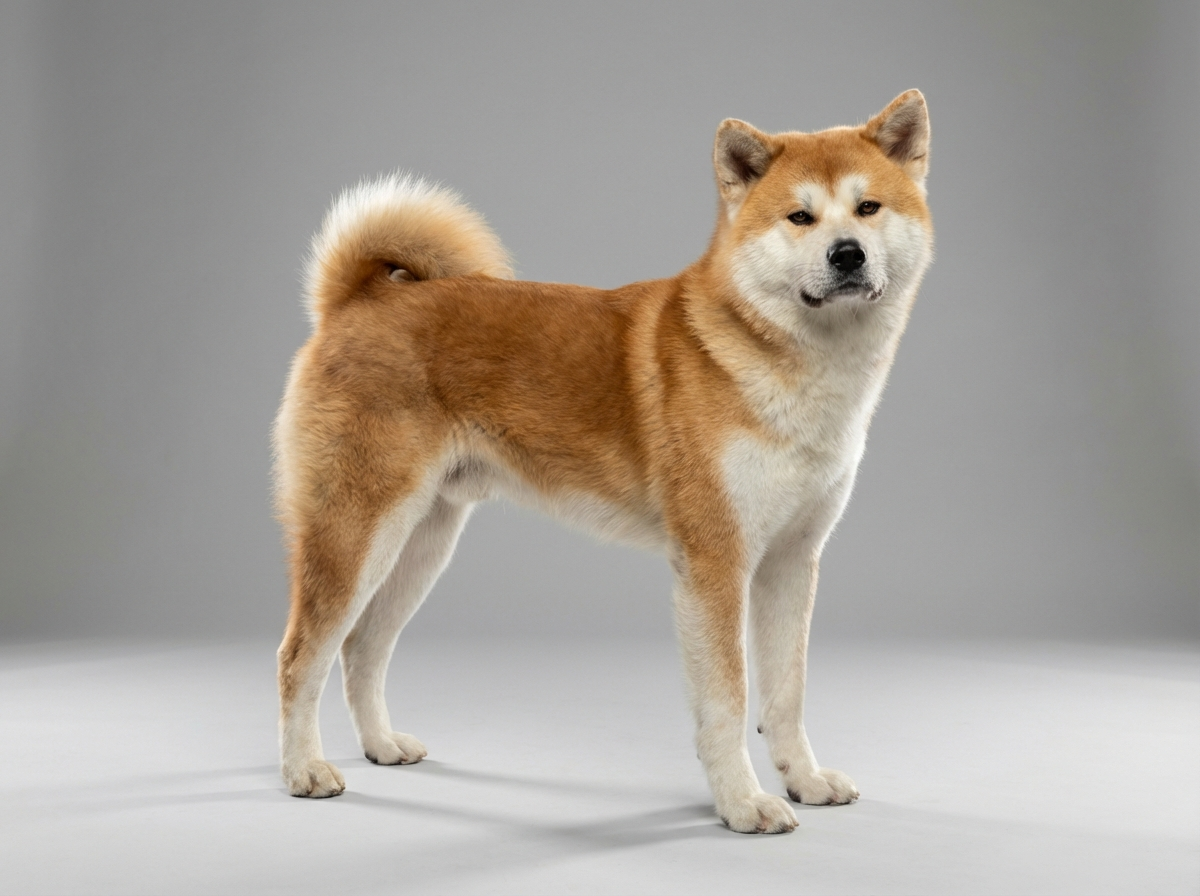
The Akita's own coat is denser and shorter, and the work is concentrated — a weekly brush for ten months, then two or three weeks of raking twice a year.
Drool, heat and the daily reality of the size
Two practicalities dominate life with a Saint Bernard and neither shows up in a rating.
The first is drool. Loose flews collect saliva which is then distributed by a head shake — walls, furniture, trousers, visitors. Households keep towels in every room, and if this would bother you it is a sufficient reason to choose differently.
The second is heat. A heavy double-coated dog with a great deal of mass and relatively little surface area sheds heat slowly. Saint Bernards overheat readily, and summer exercise has to move to the cool ends of the day with shade and water available.
The third, which is less discussed, is logistics. A dog this size that cannot walk cannot be carried. A ramp and a large-dog stretcher bought early are worth more than most equipment, because the evening you need them is not an evening you can shop.
The Akita is a large dog rather than a giant one, has a dry mouth, and manages heat better than its coat suggests — though it too should walk early and late in summer.
Eyelids, hearts, joints and bloat
Entropion appears on the Saint Bernard's list and it is a direct consequence of the head. Heavy facial skin and loose lids mean the lid can roll inward so the lashes abrade the cornea — painful, damaging to sight, and surgically correctable. Ectropion, the outward roll that leaves the eye exposed and dry, occurs for the same reason. A Saint Bernard squinting or with a persistently weeping eye should be examined rather than wiped.
Dilated cardiomyopathy is the cardiac entry, common across giant breeds, and cardiac examination from middle age is sensible.
Hip and elbow dysplasia are the orthopaedic pair, and both parents should have scores you can see as numbers. Growth management matters as much as genetics: a large-breed puppy food with controlled calcium and energy, no calcium supplementation, a visibly lean puppy, and restricted forced exercise until the growth plates close.
Bloat completes the list and is an emergency measured in hours. Both breeds are deep-chested; both households should know the signs and consider a preventive gastropexy at neutering.
The Akita adds autoimmune and endocrine disease and lives two to three years longer.
Where $150 to $310 a month goes
The Saint Bernard runs $150–$310 a month and $2,200–$4,200 in the first year, against the Akita's $110–$240 and $1,700–$3,200.
Food is the visible part — a 160-pound dog eats a great deal, and large-breed puppy food for eighteen months is a serious line on its own. Everything else scales too: parasite treatment, most medications, anaesthesia, joint supplements and boarding are all priced by weight.
The large risks are large in proportion. Bloat surgery, cardiac management, eyelid correction and orthopaedic procedures in a giant dog are all four-figure events, and insurance for giant breeds is priced with that in mind. Check the excess structure as well as the premium.
The one place the Saint Bernard saves you money is exercise equipment and time — 2/5, two moderate walks, timed around temperature.
And the number that frames all of it is the lifespan. Eight to ten years is a short return on that investment, and it is the honest reason many people who love the breed choose something smaller the second time.
Akita vs Saint Bernard: quiet, calm and enormous
These two are more alike in daily rhythm than the size difference suggests. Both are quiet at 2/5, both cope with a working day at 3/5, both need moderate grooming at 3/5, and neither is a busy dog indoors.
The Saint Bernard is much the friendlier animal: 5/5 with children, 4/5 with other dogs and strangers, against 3/5, 2/5 and 2/5. It is a rescue breed, not a guard breed, and its bulk does the deterring without any intent behind it.
It also needs less exercise — 2/5 against 3/5 — which is counter-intuitive for a dog that worked in mountain snow, and reflects what a modern adult Saint Bernard actually is: a slow, heavy dog that overheats easily and should not be pushed.
The decisive numbers are cost and lifespan. $150–$310 a month against $110–$240, and 8 to 10 years against 10 to 13.
And the apartment rating is 1/5, the lowest available, for a dog with a 2/5 exercise need — that rating is entirely about floor space.
Akita or Saint Bernard: A Guardian or an Alpine Sofa - Akita vs Saint Bernard: quiet, calm and enormous
Frequently asked questions
What is the difference between rough and smooth Saint Bernards?
The smooth-coated dog has a short dense double coat that sheds heavily but needs only a curry brush and a rake in the shedding seasons. The rough-coated dog has a long feathered coat that mats behind the ears, in the ruff and on the trousers, needs brushing to the skin two or three times a week, and takes a long time to dry.
How much do Saint Bernards drool?
A great deal, and it is the most underestimated part of ownership. Loose flews pool saliva which is then distributed by a head shake onto walls, furniture and clothing. Owners keep towels in every room. The Akita has a dry, tight mouth and does not do this at all.
Why does a Saint Bernard rate 1/5 for apartments when it needs so little exercise?
Because that rating is about floor space rather than output. At 2/5 exercise it is one of the least demanding dogs to walk. But a 30-inch dog weighing up to 180 pounds needs room to turn around, lie down and get past furniture, and a flat rarely provides it.
How much exercise does a Saint Bernard need?
Only 2/5 — two moderate walks for an adult, timed around temperature, because the breed overheats readily. What matters far more is restraint during growth: restricted forced exercise, no stairs or jumping, and a visibly lean puppy until the growth plates close.
What is entropion and why does it affect this breed?
The eyelid rolls inward so the lashes abrade the cornea, which is painful and damages sight. Heavy facial skin and loose lids make it common in Saint Bernards, along with ectropion, the outward roll that leaves the eye exposed and dry. Both are surgically correctable — a weeping or squinting eye should be examined, not wiped.
Which lives longer?
The Akita, at 10 to 13 years against the Saint Bernard's 8 to 10. Size is the driver: bloat, cardiac disease and joint problems all appear at elevated rates in giant breeds, and the cumulative load on the heart and skeleton is simply greater.
Which costs more to keep?
The Saint Bernard, at $150–$310 a month against the Akita's $110–$240, and $2,200–$4,200 against $1,700–$3,200 in the first year. Food explains part of it and weight-dosed medication, anaesthesia and boarding explain the rest.
The Saint Bernard if you want an exceptionally gentle giant, have the floor space and can absorb the cost and the drool. The Akita if lifespan and budget matter, or if you want a dog that actually guards.
Costs
How much does each cost per month?
The Saint Bernard runs $150–$310 a month and the Akita $110–$240, with first-year totals of $2,200–$4,200 and $1,700–$3,200. Nearly everything for a giant breed is priced by weight.
Living
Which is better with children?
The Saint Bernard at 5/5 against the Akita's 3/5 — it is a rescue breed rather than a guard breed and genuinely tolerant. The caveat is momentum: 160 pounds moving through a room needs managing around toddlers.
Health
Can either coat be clipped in summer?
No. A double coat insulates against heat as well as cold, and clipping often produces a coarser regrowth that insulates worse. Move summer walks to early morning and late evening for both breeds instead.
Related DogBreedCompass guides
Akita breed guide – The Akita profile covers guardian temperament and the long socialisation window the breed needs.
Saint Bernard breed guide – The Saint Bernard profile covers coat varieties, growth management and heat tolerance.
Akita vs Newfoundland – The Newfoundland is the other heavy-coated giant most often weighed against it.
Akita vs Great Dane – The Great Dane is the taller giant with a similar bloat and growth profile.
Saint Bernard genetic disorders – The inherited conditions worth screening for before buying a Saint Bernard puppy.
Akita autoimmune diseases – Autoimmune disease is the Akita's most distinctive burden and the first question for a breeder.
Health information here is general and is not veterinary advice. If your dog shows pain, sudden behaviour change, or worsening symptoms, consult a licensed veterinarian.
Some links on this site are affiliate links. We may earn a commission at no extra cost to you, and we only suggest products we believe are helpful for dog owners.
We research and check what we publish, but we do not warrant that any figure, date, price, or statement is accurate, complete, or current, and we accept no liability for any loss, cost, injury, or other harm arising from the use of this site. Use it as one reference among several. You remain responsible for your own decisions and for your dog's care - confirm anything that matters with a licensed veterinarian or another qualified professional before you act on it. Full disclaimer.