Akita or Bernese Mountain Dog: Guardian or Gentle Giant?
Quick answer
Akita vs Bernese Mountain Dog: which should I choose?
The Bernese for a family: 5/5 with children and other dogs, 4/5 for first-time owners, and a famously gentle temperament — provided you accept a 7 to 10 year lifespan. Choose the Akita for guardian instinct, a quieter house and three more years.
The Bernese Mountain Dog rates 5/5 with children, 5/5 with other dogs and 4/5 with strangers — it is one of the gentlest large breeds there is. It also lives 7 to 10 years, the shortest lifespan on this site, and that fact deserves to be part of the decision rather than a footnote discovered later.
This is for someone choosing between two large, striking, thick-coated dogs. It covers the substantial lifespan gap and the cancer risk behind it, the sociability difference, the exercise and shedding realities, and what each costs to keep.
Quick verdict
The Bernese is the family dog and the Akita is the guardian; the Bernese asks you to accept a short life, and the Akita asks you to do years of socialisation work.
Choose akita if...
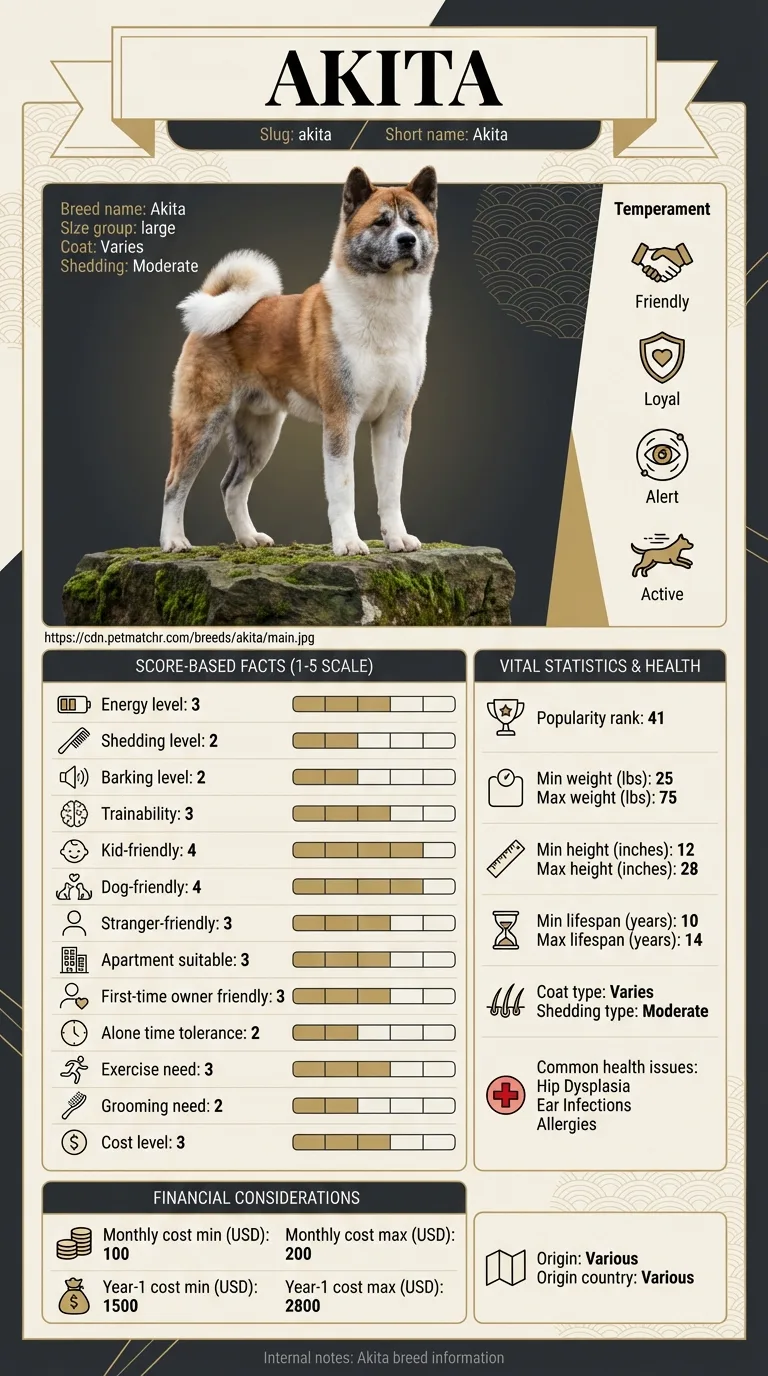
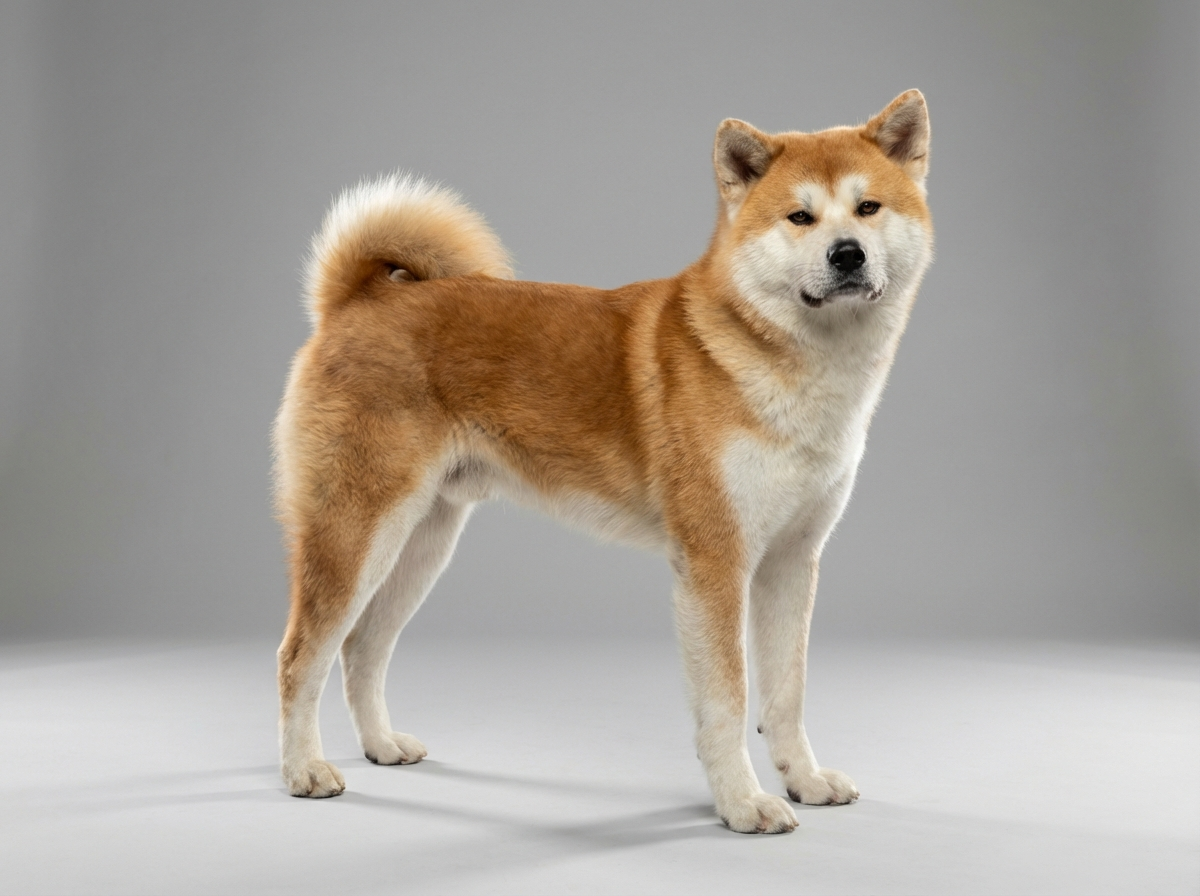
Choose the Akita if you want guardian instinct in a quiet dog — 2/5 barking, 3/5 exercise, 3/5 for time alone — and you can handle 1/5 first-time suitability, 2/5 with strangers and other dogs, and up to 130 pounds. It also lives meaningfully longer, 10 to 13 years against 7 to 10.
Choose bernese mountain dog if...
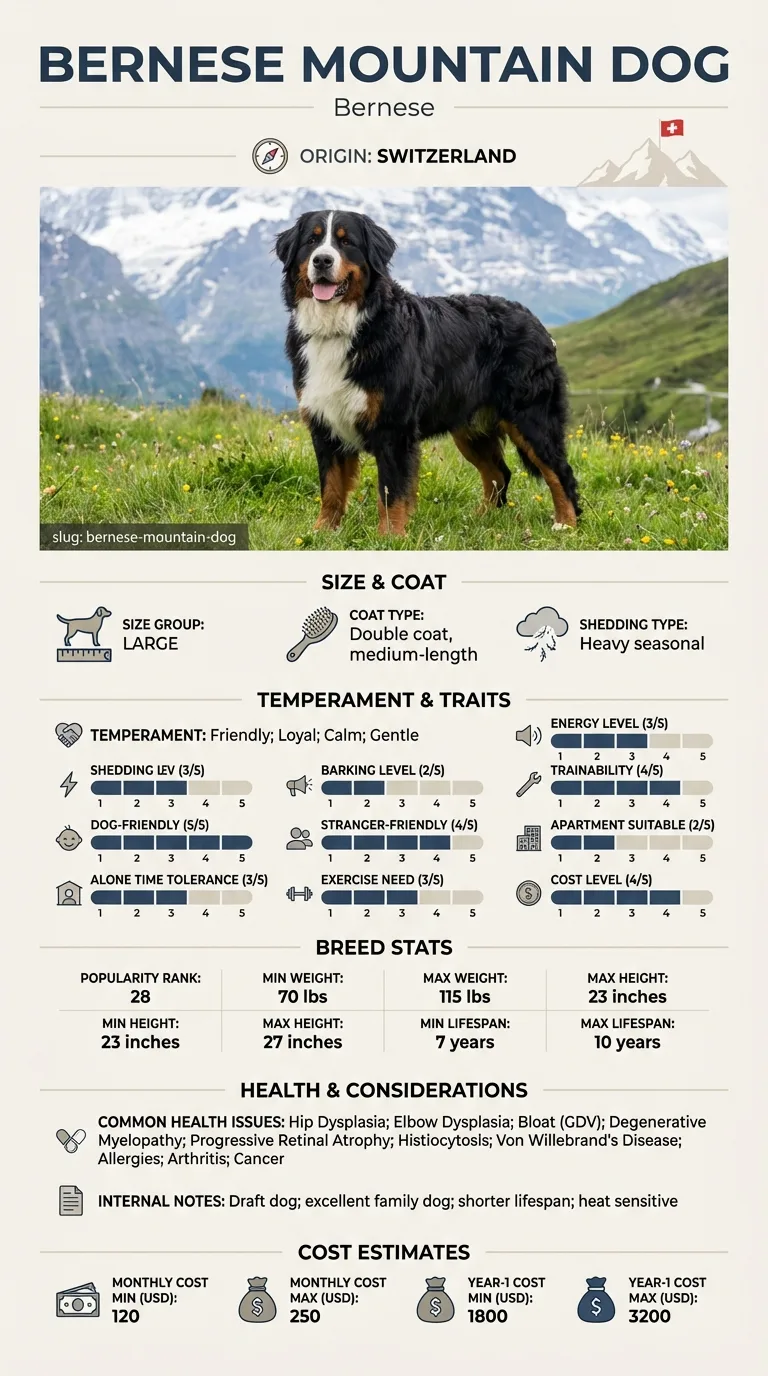
Choose the Bernese Mountain Dog if you want a gentle family giant: 5/5 with children, 5/5 with other dogs, 4/5 for first-time owners, 4/5 trainability, and a temperament that is famously tolerant. Accept a 7 to 10 year lifespan, high cancer risk, heavy seasonal shedding at 4/5, and $120–$250 a month.
Head-to-head comparison
Feature
akita
bernese mountain dog
Winner
Weight
70–130 lbs
70–115 lbs
Equal
Height
24–28 in
23–27 in
Equal
Lifespan
10–13 years
7–10 years
akita
Coat
Dense double coat
Medium-length double coat
Equal
Grooming need
Moderate (3/5)
Moderate (3/5)
Equal
Shedding
Very high (5/5)
High (4/5)
bernese mountain dog
Energy level
Moderate (3/5)
Moderate (3/5)
Equal
Exercise need
Moderate (3/5)
Moderate (3/5)
Equal
Trainability
Moderate (3/5)
High (4/5)
bernese mountain dog
Barking
Low (2/5)
Low (2/5)
Equal
Good with kids
Moderate (3/5)
Very high (5/5)
bernese mountain dog
Good with other dogs
Low (2/5)
Very high (5/5)
bernese mountain dog
Friendly to strangers
Low (2/5)
High (4/5)
bernese mountain dog
Apartment suitability
Low (2/5)
Low (2/5)
Equal
Good for first-time owners
Very low (1/5)
High (4/5)
bernese mountain dog
Tolerates being alone
Moderate (3/5)
Moderate (3/5)
Equal
Typical monthly cost
$110–$240
$120–$250
akita
Typical first-year cost
$1,700–$3,200
$1,800–$3,200
akita
Deep dive
Seven to ten years, and why
The Bernese Mountain Dog's lifespan is the hardest fact on this page and the one most often glossed over at the point of buying a puppy.
A large part of it is cancer. Bernese carry an unusually high cancer burden, and histiocytic sarcoma — an aggressive cancer that is rare in dogs generally — appears in the breed at rates seen almost nowhere else. It sits on the breed's condition list for that reason. The breed also carries degenerative myelopathy, a progressive spinal-cord disease, alongside the hip and elbow dysplasia that any dog of this size may have.
The practical consequence is worth stating plainly. A Bernese bought as a puppy when a child is eight may not see that child finish school. Owners of the breed generally describe it as worth it and simultaneously as the hardest part of loving one.
The Akita at 10 to 13 years is not long-lived either, but it is three years better at both ends, and its burden is autoimmune and endocrine disease rather than aggressive cancer.
The gentlest large breed against a guardian
The Bernese was a Swiss farm dog that pulled carts, moved stock and lived in the house. It needed to be safe around children, other farm dogs and anyone who came up the track, and it was bred accordingly. Its 5/5 with children and 5/5 with other dogs are genuinely earned, and the breed's reputation for being soft and slightly clingy is accurate.
That softness has a flip side worth knowing: Bernese tend to be sensitive dogs. Harsh handling lands hard and produces a shut-down dog rather than a corrected one, and many are slow to mature emotionally, staying puppyish well into their third year on a body that is already a hundred pounds.
The Akita rates 3/5 with children, 2/5 with other dogs and 2/5 with strangers. It assesses visitors and decides. Its dog intolerance is often same-sex and typically arrives at social maturity around two, catching owners out. Deliberate socialisation from eight weeks and continuing for years makes the trait proportionate rather than absent.
On trainability the Bernese takes it at 4/5 against 3/5, mostly because it wants to please and the Akita does not particularly.
Two double coats, both heavy
Grooming rates 3/5 for both, and the work is broadly the same kind: brushing through a double coat, more of it during the seasonal blow, and never clipping either dog because the coat insulates against heat as much as cold.
The Akita sheds at 5/5 against the Bernese's 4/5, and its moult is the more dramatic of the two. The Bernese has longer hair with feathering, so what it does drop is more visible and it collects more mud and burrs on the legs and skirts.
Both struggle in heat. The Bernese in particular was built for Swiss winters and is heat-intolerant; in a hot climate expect exercise to move to the cool hours for a good part of the year for either dog.
Drool is worth a mention for the Bernese, which is a moderately drooly breed. The Akita is comparatively dry-mouthed.
Moderate exercise, and a growth warning for both
Both rate 3/5 for energy and 3/5 for exercise, which is a genuine match. Neither is a running partner. A solid daily walk plus some engagement suits both, and both are content to lie down for long stretches afterwards.
The growth warning applies to both and is often missed. A dog that will reach a hundred pounds grows fast on soft joints, and forced running, repetitive jumping, and long walks on hard surfaces before the growth plates close are associated with joint problems later. Both breeds already carry hip and elbow dysplasia. Let a large puppy set its own pace for the first year to eighteen months.
The Bernese specifically was bred to pull, and carting is a genuinely enjoyable outlet for the breed once it is fully grown — it gives a heavy, willing dog a job that suits its build.
Bloat, screening and what each costs
Both are deep-chested and both carry bloat. Gastric dilatation-volvulus presents as unproductive retching, a tight distended abdomen and obvious distress, and it is measured in hours. Every owner of either breed should know it on sight.
For a Bernese, ask a breeder about cancer history in the line specifically, alongside hip and elbow scores and eye certificates. For an Akita, ask about autoimmune and thyroid history, and tell any vet unfamiliar with the breed about its known anaesthesia sensitivity before a procedure.
Costs are within a few dollars: $120–$250 a month for the Bernese against $110–$240 for the Akita, with first-year totals of $1,800–$3,200 and $1,700–$3,200. For the Bernese, insurance is worth pricing early and taking seriously — a breed with this cancer profile is one where a lifetime policy limit gets tested.
Akita vs Bernese Mountain Dog: similar size, opposite natures
On the physical rows these two are close. Weight 70 to 130 against 70 to 115, height within an inch, the same 3/5 for energy, exercise and grooming, the same 2/5 for barking, the same 3/5 for time alone, the same 2/5 for apartments, and costs within ten dollars a month of each other.
They separate on two things only, and both are large.
Temperament: the Bernese takes children 5/5, other dogs 5/5, strangers 4/5 and first-time suitability 4/5, against the Akita's 3/5, 2/5, 2/5 and 1/5.
Lifespan: the Akita lives 10 to 13 years, the Bernese 7 to 10. That is not a rounding difference. It is the shortest expected life of any breed on this site.
Akita or Bernese Mountain Dog: Guardian or Gentle Giant? - Akita vs Bernese Mountain Dog: similar size, opposite natures
Frequently asked questions
Which lives longer, an Akita or a Bernese Mountain Dog?
The Akita, at 10 to 13 years against the Bernese's 7 to 10 — the shortest expected lifespan on this site. The gap is driven largely by cancer: Bernese carry an unusually high burden, and histiocytic sarcoma appears in the breed at rates seen almost nowhere else. It is worth factoring into the decision rather than discovering later.
Which is better with children and other dogs?
The Bernese, decisively — 5/5 with both against the Akita's 3/5 with children and 2/5 with other dogs. It was a Swiss farm dog that lived alongside family, stock and other dogs, and the tolerance is genuine. Akita dog intolerance is a breed trait, often same-sex, that typically emerges at around two years old.
Do they need the same amount of exercise?
Yes — both rate 3/5 for energy and 3/5 for exercise, and neither is a running partner. A solid daily walk suits both. For both, avoid forced running and repetitive jumping while the dog is still growing, since each can exceed a hundred pounds and both carry hip and elbow dysplasia.
Which sheds more?
The Akita at 5/5 against the Bernese's 4/5, with the more dramatic seasonal moult. Grooming rates 3/5 for both. The Bernese's longer coat with feathering makes what it does drop more visible and collects more mud and burrs. Neither should ever be clipped, since both double coats insulate against heat as well as cold.
Is either good for a first-time owner?
The Bernese at 4/5, comfortably — it is gentle, willing and trainable at 4/5, though its size and sensitivity need respecting. The Akita rates 1/5 and is among the least beginner-suited breeds here, because its guardian instinct sharpens with maturity and requires years of deliberate socialisation.
What should I ask a Bernese breeder?
Ask about cancer history in the line first, since that is the breed's defining health issue, then hip and elbow scores and eye certificates. Degenerative myelopathy also appears in the breed and has a DNA test. Price a lifetime insurance policy early — this is a breed where the policy limit gets tested.
Which costs more to keep?
They are close: $120–$250 a month for the Bernese against $110–$240 for the Akita, with first-year totals of $1,800–$3,200 and $1,700–$3,200. Expected veterinary spend over a lifetime is likely higher for the Bernese given its cancer profile, even though the monthly figures are similar.
Akita vs Bernese Mountain Dog: which should I choose?
The Bernese for a family: 5/5 with children and other dogs, 4/5 for first-time owners, and a famously gentle temperament — provided you accept a 7 to 10 year lifespan. Choose the Akita for guardian instinct, a quieter house and three more years.
Health
How long do Bernese Mountain Dogs live?
Typically 7 to 10 years, the shortest on this site, driven largely by a high cancer burden including histiocytic sarcoma. The Akita manages 10 to 13.
Costs
How much does each cost per month?
The Akita runs $110–$240 a month and the Bernese Mountain Dog $120–$250, with first-year totals of $1,700–$3,200 and $1,800–$3,200.
Living
Do they need different exercise?
No — both rate 3/5 for exercise and 3/5 for energy. Both need their growth protected as puppies, since either can pass a hundred pounds and both carry joint dysplasia.
Related DogBreedCompass guides
Akita breed guide – The Akita profile covers guardian temperament and the sustained socialisation the breed needs.
Health information here is general and is not veterinary advice. If your dog shows pain, sudden behaviour change, or worsening symptoms, consult a licensed veterinarian.
Some links on this site are affiliate links. We may earn a commission at no extra cost to you, and we only suggest products we believe are helpful for dog owners.
We research and check what we publish, but we do not warrant that any figure, date, price, or statement is accurate, complete, or current, and we accept no liability for any loss, cost, injury, or other harm arising from the use of this site. Use it as one reference among several. You remain responsible for your own decisions and for your dog's care - confirm anything that matters with a licensed veterinarian or another qualified professional before you act on it. Full disclaimer.