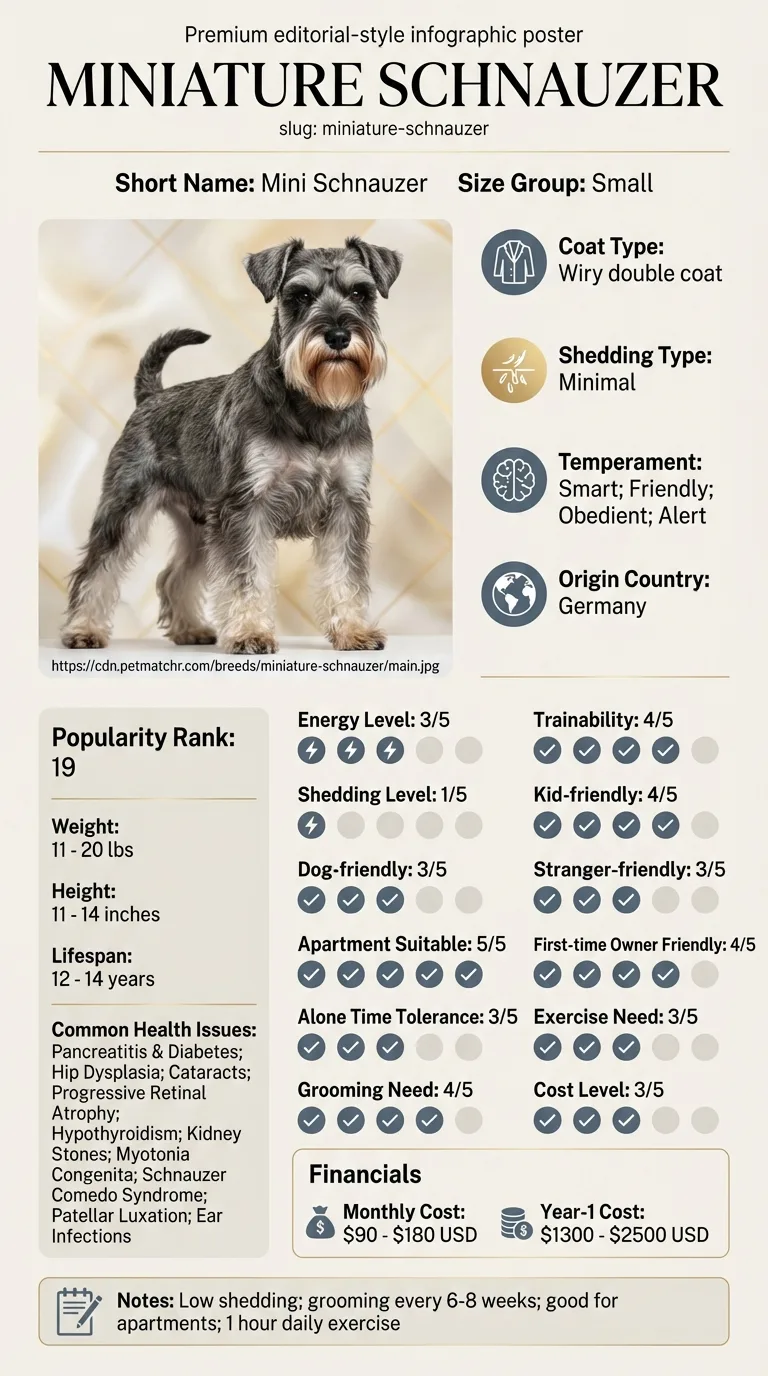
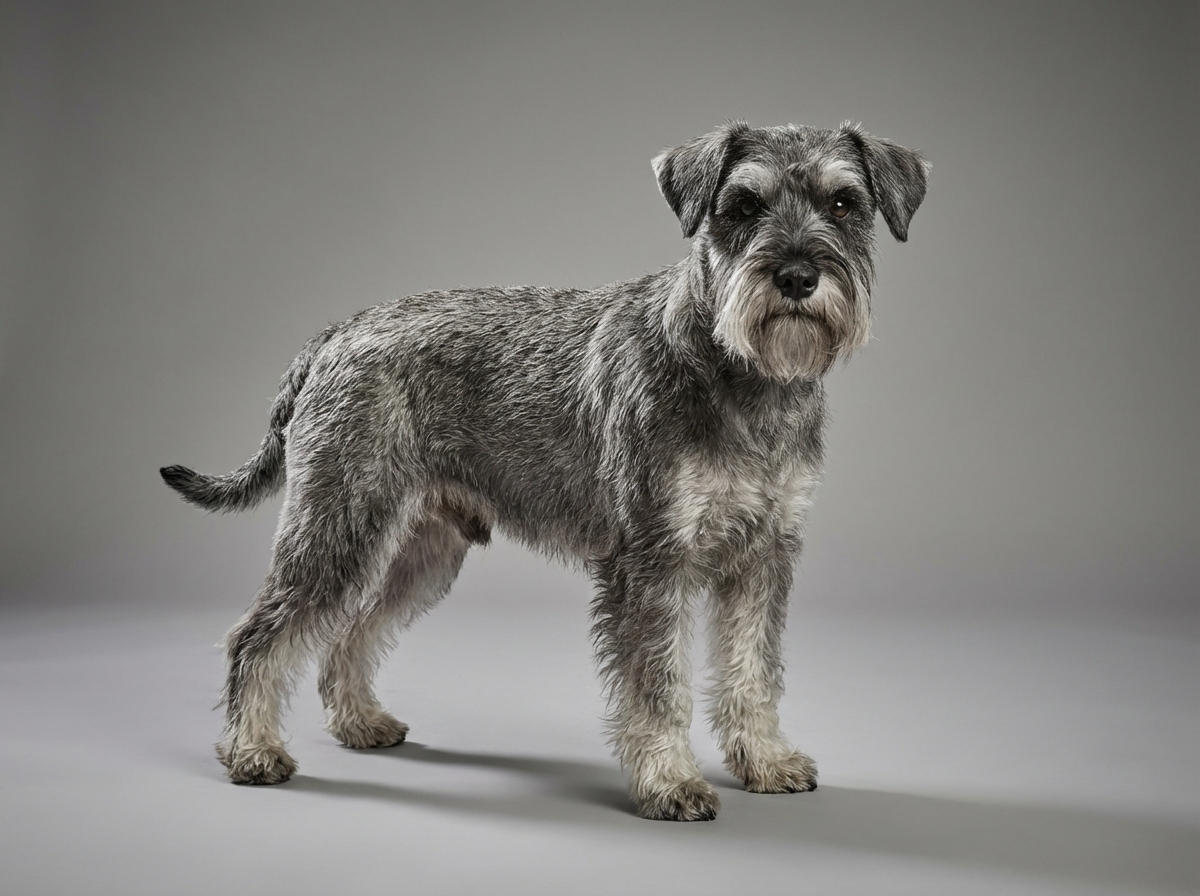
What are quick tips for managing Miniature Schnauzer's weight?
Keep a consistent feeding schedule, measure their food, and limit treats. Regular exercise is vital, aiming for at least an hour a day. Always consult your vet for personalized advice.
The Miniature Schnauzer's genetic predisposition to obesity can be a serious concern for owners. This breed may have a POMC gene mutation, leading to an increased appetite and weight gain. (Miniature Schnauzer genetic predisposition to obesity)

Owners of Miniature Schnauzers, particularly those who may not be aware of their dog's genetic tendencies, often find themselves struggling to manage their pet's weight. Busy families and first-time dog owners may face challenges in creating a balanced diet and exercise routine.
This guide is not medical advice. If your dog shows pain, sudden behavior change, or worsening symptoms, consult a licensed veterinarian.
Some links may be affiliate links. We may earn a commission at no extra cost to you. We only suggest products we believe are helpful for dog owners.
The Miniature Schnauzer genetic predisposition to obesity can be a daily struggle for owners. This breed often faces challenges due to a genetic mutation in the POMC gene, which leads to increased appetite and weight gain. If you're not careful, your Mini Schnauzer may become overweight, impacting their health and happiness.
Obesity is a common issue among Miniature Schnauzers, affecting a significant portion of the breed. Many owners struggle with their dog's weight, making it essential to manage their diet and exercise routines effectively.
Miniature Schnauzers may have a genetic predisposition to obesity due to a mutation in the POMC gene. This mutation can lead to an increased appetite, making it more challenging for them to maintain a healthy weight.
Environmental factors also play a significant role. If Miniature Schnauzers lack regular exercise or are overfed with high-calorie treats, they're more likely to gain weight. Stress or boredom can also contribute to unhealthy eating habits.
If your Miniature Schnauzer struggles with training or motivation during exercise, consider hiring a professional trainer. They can provide tailored solutions based on your dog's specific needs.
If you notice significant weight gain or suspect health issues, consult your vet. They can help assess your dog's health and suggest a proper diet or additional interventions.
With consistent training and dietary management, you can see improvements in your Miniature Schnauzer's weight and behavior within 3 to 6 months.
Success means maintaining a healthy weight for your Miniature Schnauzer, where they feel energetic and are less prone to health issues related to obesity.
Avoiding these common mistakes can help manage your Miniature Schnauzer’s genetic predisposition to obesity effectively.
Recognizing when your Miniature Schnauzer's weight issue is an emergency is crucial. If your dog shows signs of severe lethargy, vomiting, or difficulty breathing, these could be red flags. Another urgent sign is if they suddenly refuse food or water, which can indicate serious health problems requiring immediate veterinary attention.

On the other hand, if your Miniature Schnauzer is overweight but still active, eating regularly, and showing no signs of distress, you may simply need to monitor their weight. Implementing a structured diet and exercise plan can often help manage their weight effectively. Regular vet check-ups can also help track your dog's progress and catch any potential issues early.

Emily, a busy nurse in Chicago, adopted Max, her Miniature Schnauzer. She soon noticed he had a tendency to beg for food and seemed a bit heavier than the vet recommended. After learning about his genetic predisposition to obesity, Emily committed to a structured feeding schedule and increased his playtime. Over several months, Max lost weight and became more active, proving that with the right guidance, they could overcome the odds.
Key takeaway: Understanding your Miniature Schnauzer's genetic predisposition to obesity is crucial. With a solid plan and dedication, you can help them live a healthier, happier life.

The Miniature Schnauzer may have a genetic predisposition to obesity due to a mutation in the POMC gene. This mutation can increase their appetite, making it harder to maintain a healthy weight. Understanding this can help you take proactive steps to manage their diet and exercise. This answer relates to Miniature Schnauzer genetic predisposition to obesity.
To prevent obesity, monitor their food intake and provide regular exercise. Aim for at least one hour of activity daily and consider using a measuring cup for their food. Consulting with your vet for a tailored diet plan can also be beneficial.
Positive reinforcement training can be effective for managing your Miniature Schnauzer's weight. Teaching commands like 'sit' and 'stay' can make training sessions fun and engaging. Incorporate exercise into playtime to keep them active and mentally stimulated.
The amount to feed your Miniature Schnauzer can vary based on their weight, age, and activity level. Generally, they should eat between 1/2 to 1 cup of high-quality dog food daily, divided into two meals. Always consult your vet for specific recommendations.
Signs of obesity include difficulty in feeling their ribs, excessive weight gain, and lethargy. If your Miniature Schnauzer struggles to keep up during walks or has trouble jumping, these may be indicators of weight issues. Regular vet check-ups can help monitor their weight.
If your Miniature Schnauzer is overweight, you may notice difficulty in feeling their ribs, a lack of a defined waist, or decreased energy levels. Regular weigh-ins and visual assessments can help track their weight. If you suspect obesity, consulting your vet is a good step to take.
Yes, older Miniature Schnauzers can be more prone to obesity due to decreased activity levels and metabolic changes. It's essential to adjust their diet and exercise routine as they age. Regular vet check-ups will help manage their weight effectively.
Weight loss can be safe for your Miniature Schnauzer, but it should be gradual and supervised by a veterinarian. Rapid weight loss can lead to health issues, so aim for a balanced diet and regular exercise plan. Always consult your vet before starting a weight loss program.
Training your Miniature Schnauzer to be more active can involve incorporating fun games and regular walks into their routine. Using toys and treats as motivation can also encourage more movement. Consistency and positive reinforcement are key in making exercise enjoyable.
To reduce obesity risk, consider a high-quality, balanced diet that meets their nutritional needs without excess calories. Portion control and avoiding table scraps can also help maintain a healthy weight. Always discuss dietary changes with your vet to ensure they are suitable.
Keep a consistent feeding schedule, measure their food, and limit treats. Regular exercise is vital, aiming for at least an hour a day. Always consult your vet for personalized advice.
Use toys for fetch, explore new walking routes, or set up an obstacle course at home. Engaging activities can keep them excited about exercise.
Yes, a high-protein, low-carb diet can help manage their weight. Make sure to choose food that supports their energy needs without excessive calories.
Training can distract them from food and provide mental stimulation. Incorporating tricks and commands can reduce their focus on eating.