Behavior
What are quick tips for managing Rottweilers with obesity?
Limit treats and high-calorie foods, ensure regular exercise, and provide portion-controlled meals. Consult your vet for a nutritional plan tailored to your Rottweiler's needs.

Quick answer
What are quick tips for managing Rottweilers with obesity?
Limit treats and high-calorie foods, ensure regular exercise, and provide portion-controlled meals. Consult your vet for a nutritional plan tailored to your Rottweiler's needs.
Rottweilers can face a genetic predisposition to obesity, which is important for their health and wellness.
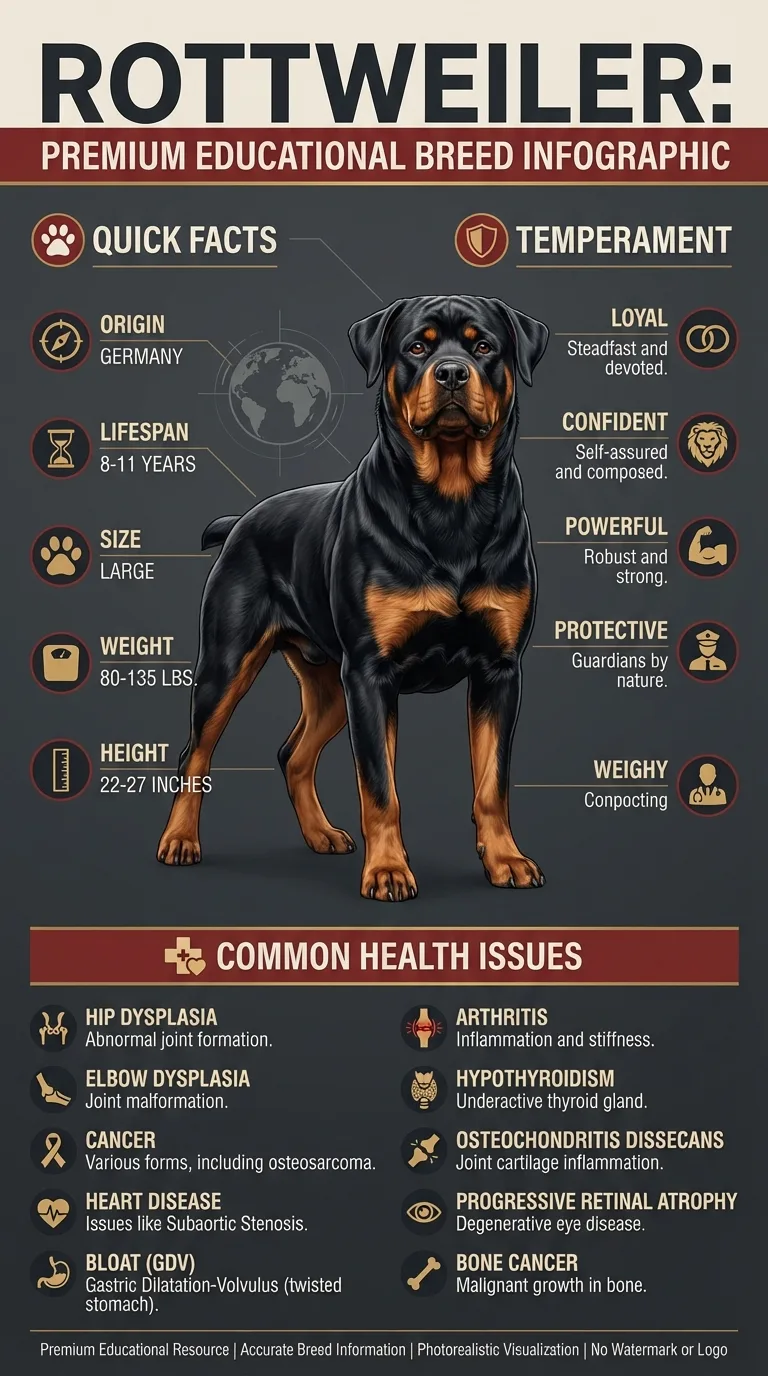
Many Rottweiler owners, especially those who are new to the breed, may struggle with managing their dog's weight. Busy families or individuals might find it challenging to monitor their dog's diet and exercise, making it easier for obesity to develop.
This guide is not medical advice. If your dog shows pain, sudden behavior change, or worsening symptoms, consult a licensed veterinarian.
Some links may be affiliate links. We may earn a commission at no extra cost to you. We only suggest products we believe are helpful for dog owners.
We research and check what we publish, but we do not warrant that any figure, date, price, or statement is accurate, complete, or current, and we accept no liability for any loss, cost, injury, or other harm arising from the use of this site. Use it as one reference among several. You remain responsible for your own decisions and for your dog's care - confirm anything that matters with a licensed veterinarian or another qualified professional before you act on it. Full disclaimer.
Check this first
Understanding when your Rottweiler’s genetic predisposition to obesity requires immediate attention can be crucial for their health. Some signs indicate you should call your vet right away, while others can be monitored at home with a plan.
Look for these red-flag signs that mean you should seek veterinary care now: - Sudden weight gain of more than 5% over a short period. - Signs of lethargy or inability to exercise, especially if they are usually active. - Difficulty breathing or excessive panting when at rest.
- Vomiting or diarrhea that lasts more than 24 hours. - Changes in behavior, like increased irritability or withdrawal.
If your Rottweiler shows any of these symptoms, contact your vet immediately. These may indicate underlying health issues that require professional treatment.
On the other hand, if your Rottweiler is simply gaining weight slowly or has a slightly increased appetite, you can usually monitor them at home. Here’s what to look for: - Gradual weight gain that can be tracked over weeks. - Increased interest in food but without changes in behavior or activity.
- Slight changes in energy levels that aren’t drastic.
In these cases, work on adjusting their diet and exercise routine. Regular check-ins with your vet can help keep their weight in check while managing their genetic predisposition to obesity. Keeping a log of their food intake and activity will also be beneficial for discussions with your vet during check-ups.
Remember, proactive measures can prevent serious health issues down the line, so be attentive to their needs.
If any of these apply, call your vet or an emergency clinic now. The rest of this page is for the cases that are not an emergency.
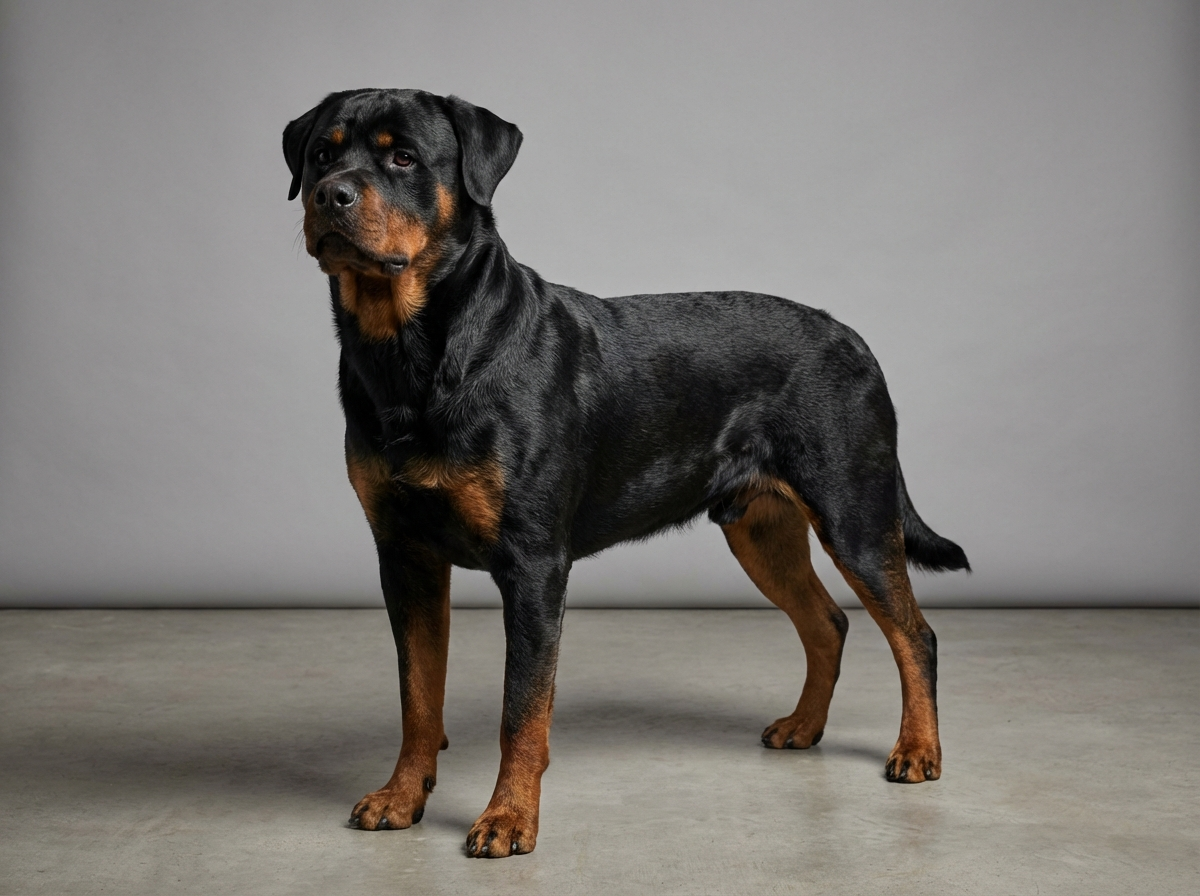
Rottweilers are large and powerful dogs, but they can struggle with a genetic predisposition to obesity. This condition often leads to weight gain if not managed properly. Typical day-to-day signs include a noticeable increase in body weight, decreased energy levels, and difficulty in performing physical activities that they once enjoyed.
The genetic predisposition to obesity is relatively common in Rottweilers, especially if their diet and exercise needs are not closely monitored. Many owners report similar struggles, making it crucial to implement a balanced diet and regular activity.
Rottweilers can be genetically predisposed to obesity due to a mutation in the POMC gene. This mutation can cause an increased appetite, making it harder for them to feel full. As a result, Rottweilers may overeat if not monitored closely.
Environmental factors also play a significant role. If a Rottweiler lives in a home with easy access to food or lacks regular exercise, they may gain weight. Stress and boredom can lead to overeating, especially if they don't have enough mental and physical stimulation.
If you notice significant weight gain or changes in appetite despite following a routine, consult your vet. They can rule out any underlying health issues and help create a proper weight management plan.
Avoiding common pitfalls can help manage your Rottweiler's genetic predisposition to obesity. Here are some mistakes to watch out for, along with safer alternatives.
See all Rottweiler health problems, which breeds are prone to genetic predisposition to obesity, or the full Rottweiler breed guide for temperament, exercise needs and ownership costs.
Expect to see some changes in your Rottweiler's weight and energy levels within 3 to 6 months of implementing a new diet and exercise routine.
Success means your Rottweiler maintains a healthy weight, has increased energy, and enjoys daily activities without excessive fatigue.
Meet Sarah, a busy nurse in Chicago who adopted a Rottweiler named Max. At first, Max was a playful pup, but as he grew, he started gaining weight due to his love for food and a lack of exercise. After a vet visit revealed that Max had a genetic predisposition to obesity, Sarah knew she needed to make changes. With the help of a tailored diet plan and daily walks, she began to see improvements. Over six months, Max lost ten pounds and became more energetic, making their walks much more enjoyable.
Key takeaway: With dedication and a solid plan, you can help your Rottweiler overcome genetic challenges and lead a healthier life.
Rottweilers may have a genetic predisposition to obesity due to a mutation in the POMC gene, which is associated with appetite regulation. This mutation can lead to increased hunger and weight gain if not managed properly. Understanding this genetic link is crucial for effective weight management. This answer relates to Rottweiler genetic predisposition to obesity.
To manage your Rottweiler's weight, focus on a balanced diet and regular exercise. Monitor their food intake, avoid overfeeding, and consult your vet for a tailored nutrition plan. Consistent training and active playtime can help keep your Rottweiler fit.
Positive reinforcement training works well for Rottweilers, especially for those with a genetic predisposition to obesity. Use treats sparingly and focus on praise and play as rewards. Incorporating activities that stimulate both their mind and body can also help prevent weight gain.
Aim for at least 60 minutes of exercise daily for your Rottweiler. This can include walks, playtime, and training sessions. Regular activity is essential to maintain a healthy weight and overall well-being.
If your Rottweiler is overweight, consult your vet to create a weight loss plan. Start by adjusting their diet, increasing exercise, and monitoring their weight regularly. Gradual weight loss is safer and more sustainable.
Common signs of an overweight Rottweiler include difficulty in feeling their ribs, reduced energy levels, and an inability to exercise as they used to. If your dog has a visible belly or struggles to get up, these may be indicators of obesity.
While diet is crucial, managing a Rottweiler's genetic predisposition to obesity also requires regular exercise and training. Consult with a vet for tailored advice on proper nutrition and activity levels for your dog.
Older Rottweilers may benefit from shorter, more frequent walks and gentle play sessions. Engaging them in mentally stimulating activities can also help keep them active without overexerting themselves.
Rottweilers may face more challenges with weight management due to their genetic predisposition to obesity. This means that consistent monitoring and a proactive approach to diet and exercise are essential.
If you notice significant weight gain or your dog is unable to engage in normal activities, it's time to consult a vet. They can help assess your Rottweiler's overall health and provide a tailored weight management plan.
Limit treats and high-calorie foods, ensure regular exercise, and provide portion-controlled meals. Consult your vet for a nutritional plan tailored to your Rottweiler's needs.
Obesity can lead to serious health issues like heart disease, diabetes, and joint problems in Rottweilers. Maintaining a healthy weight is crucial for their longevity and quality of life.
Yes! Use positive reinforcement to encourage healthy eating habits. Reward them for eating their meals without begging or overeating.
Daily food intake varies, but a typical Rottweiler needs around 3 to 5 cups of high-quality dog food based on their weight and activity level. Consult your vet for specific recommendations.
A one-page prep sheet for this condition: the signs, the questions to ask, what to get priced. Unlocks here.
You get: Vet visit prep sheet
No spam. One-click unsubscribe. See our privacy policy.
Preview page 1 before you decide.