Behavior
What are some quick tips for managing a Jack Russell Terrier's weight?
Control portions and avoid free-feeding. Incorporate daily exercise and limit high-calorie treats.

Quick answer
What are some quick tips for managing a Jack Russell Terrier's weight?
Control portions and avoid free-feeding. Incorporate daily exercise and limit high-calorie treats.
Jack Russell Terriers can have a genetic predisposition to obesity, making weight management a key concern for owners.
New and experienced owners alike may find this problem challenging, especially those who may not be familiar with the specific needs of this breed. If you're a busy pet parent juggling work and family, it can be tough to stay on top of your JRT's diet and exercise.
This guide is not medical advice. If your dog shows pain, sudden behavior change, or worsening symptoms, consult a licensed veterinarian.
Some links may be affiliate links. We may earn a commission at no extra cost to you. We only suggest products we believe are helpful for dog owners.
We research and check what we publish, but we do not warrant that any figure, date, price, or statement is accurate, complete, or current, and we accept no liability for any loss, cost, injury, or other harm arising from the use of this site. Use it as one reference among several. You remain responsible for your own decisions and for your dog's care - confirm anything that matters with a licensed veterinarian or another qualified professional before you act on it. Full disclaimer.
Check this first
It's crucial to know when your Jack Russell Terrier's genetic predisposition to obesity requires immediate veterinary attention. If your dog suddenly gains a significant amount of weight, shows signs of lethargy, or is excessively thirsty, these could be red flags. Additionally, if your dog is having trouble breathing or displays any signs of distress, call your vet immediately.
If any of these apply, call your vet or an emergency clinic now. The rest of this page is for the cases that are not an emergency.
Jack Russell Terriers (JRTs) can have a genetic predisposition to obesity, primarily due to a mutation in the POMC gene. This mutation can lead to an increased appetite, making it easier for these small dogs to gain weight. Day-to-day, this can manifest as persistent begging for food, a lack of interest in exercise, and difficulty controlling their weight, especially if their diet isn't carefully managed.
This issue is relatively common among Jack Russell Terriers, especially if they are not given enough physical activity or are overindulged in treats. It’s vital for owners to be aware of their dog's eating habits and exercise needs to prevent obesity-related health problems.
Jack Russell Terriers (JRTs) have a genetic predisposition to obesity due to a mutation in the POMC gene. This mutation can lead to an increased appetite, making them more prone to overeating. Additionally, their small size means that extra weight can significantly impact their health.
The environment plays a crucial role in a JRT's weight management. Limited exercise, poor diet, and easy access to high-calorie treats can contribute to weight gain. Furthermore, a lack of mental stimulation can lead to boredom eating, which can exacerbate the issue.
It's important to consult your vet if you notice significant weight gain or health issues related to obesity. Your vet can evaluate your dog's overall health, recommend a balanced diet, and determine if any underlying health problems need attention.
Avoiding these common mistakes can help manage your Jack Russell Terrier's genetic predisposition to obesity effectively.
Start here: Jack Russell Terrier Most Common Genetic Disorders
See all Jack Russell Terrier health problems, which breeds are prone to genetic predisposition to obesity, or the full Jack Russell Terrier breed guide for temperament, exercise needs and ownership costs.
With consistent dietary adjustments and follow-up, you can expect to see noticeable improvements in your Jack Russell Terrier's weight and behavior within 3 to 6 months.
Success means your Jack Russell Terrier maintains a healthy weight, shows increased energy during play, and exhibits improved obedience during training sessions.
In less severe cases, such as gradual weight gain or changes in appetite, you can monitor your Jack Russell Terrier at home. Keep an eye on their activity level and adjust their diet if necessary. Implement a consistent exercise routine and consider consulting with a vet for a tailored plan.

Sarah, a busy single mom in a small apartment, adopted Max, a spirited Jack Russell Terrier. She soon noticed that Max was gaining weight despite their daily walks. After a visit to the vet, Sarah learned that Max had a genetic predisposition to obesity due to a POMC gene mutation. With guidance, she adjusted Max's diet to include high-protein, low-carb meals, and incorporated more interactive playtime. Over six months, Max lost the extra pounds and became more energetic and playful, ultimately thriving in his new routine.
Key takeaway: With the right diet and exercise plan, even a Jack Russell Terrier with a genetic predisposition to obesity can achieve a healthy weight and a happier life.
Jack Russell Terriers can have a genetic predisposition to obesity due to a mutation in the POMC gene. This mutation can lead to an increased appetite, making it more challenging to maintain a healthy weight. It's important to monitor their diet and exercise to counteract this tendency. This answer relates to Jack Russell Terrier genetic predisposition to obesity.
To manage your Jack Russell Terrier's weight, focus on a balanced diet with controlled portions. Regular exercise is also crucial; aim for at least 60 minutes of activity daily. Consult your vet for a tailored weight management plan.
Positive reinforcement training works well for Jack Russell Terriers. Use treats sparingly and focus on rewarding good behavior, such as exercising or maintaining a healthy diet. Incorporate fun activities that keep them engaged and moving.
Avoid high-calorie snacks and foods that are rich in fillers. Opt for high-quality, specifically formulated dog food that meets their nutritional needs without excess calories. Always consult your vet before making any dietary changes.
Weigh your Jack Russell Terrier monthly to monitor their weight. This will help you catch any weight gain early and adjust their diet or exercise routine as needed. If you notice significant changes, consult your vet.
If your Jack Russell Terrier is already overweight, consult your vet for a tailored weight loss plan. Start by adjusting their diet and increasing exercise gradually to promote healthy weight loss. Monitoring their progress regularly is essential to ensure they lose weight safely.
Yes, training can help manage your Jack Russell Terrier's weight. Incorporate fun activities that require physical exertion, like agility training or fetch. Positive reinforcement during training can also curb excessive begging or food-seeking behaviors.
You can assess your Jack Russell Terrier's weight by checking their body condition score. You should easily feel their ribs without excess fat covering and see a noticeable waist when viewed from the side. Regular vet check-ups can also help ensure they stay within a healthy weight range.
Obesity in Jack Russell Terriers can lead to various health issues, including joint problems, diabetes, and heart disease. These issues can significantly impact their quality of life and lifespan. Maintaining a healthy weight through diet and exercise is crucial to preventing these complications.
Control portions and avoid free-feeding. Incorporate daily exercise and limit high-calorie treats.
Aim for at least 60 minutes of exercise daily to keep your Jack Russell Terrier healthy and fit.
Look for difficulty in feeling their ribs, a lack of waist when viewed from above, and lethargy during play.
Yes, training can help reinforce better eating habits and encourage regular exercise, aiding in weight management.
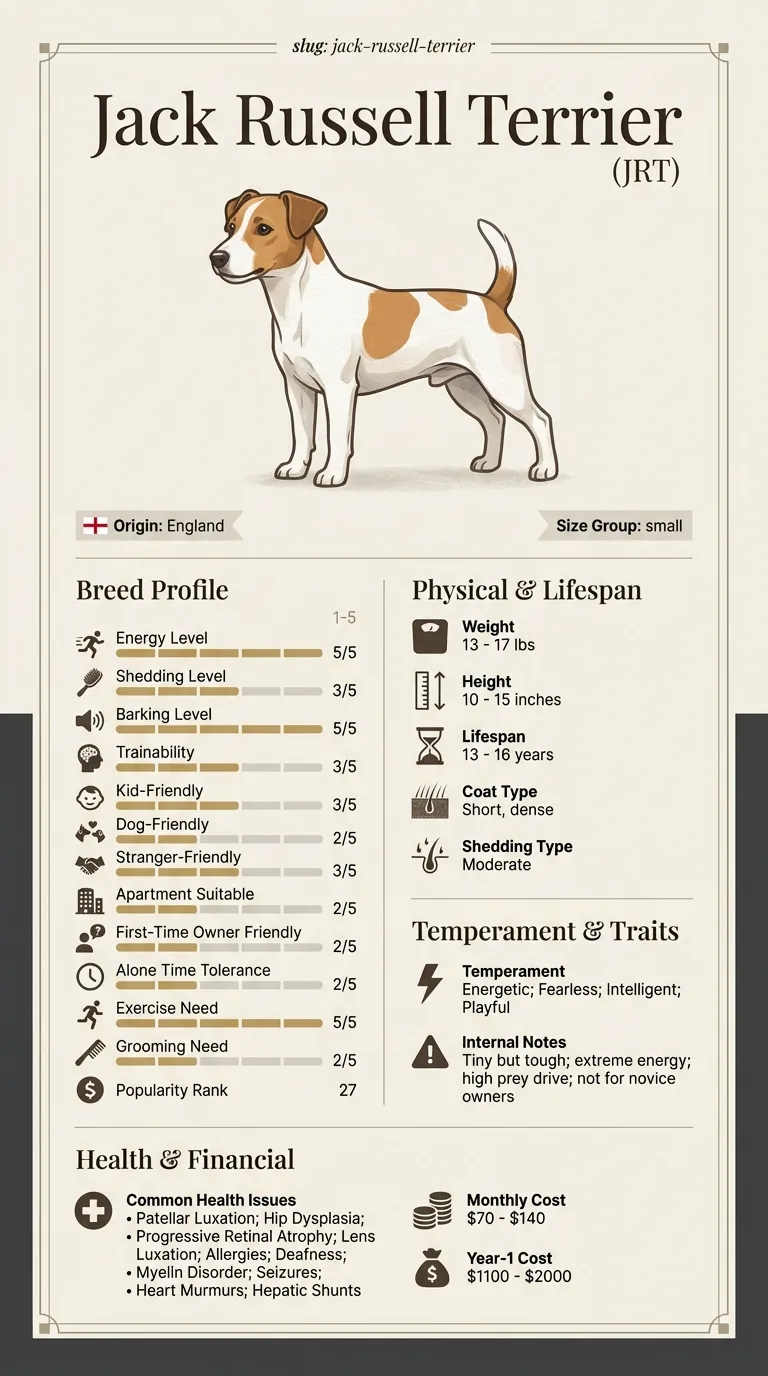
You can expect to spend between $70 to $140 monthly on food for your Jack Russell Terrier, depending on their dietary needs.
A one-page prep sheet for this condition: the signs, the questions to ask, what to get priced. Unlocks here.
You get: Vet visit prep sheet
No spam. One-click unsubscribe. See our privacy policy.
Preview page 1 before you decide.