Health
Is elongated soft palate a real risk for Welsh Springer Spaniels?
No — it's a brachycephalic-breed condition, and the Welsh Springer Spaniel has a normal, moderate-length muzzle.

Quick answer
Is elongated soft palate a real risk for Welsh Springer Spaniels?
No — it's a brachycephalic-breed condition, and the Welsh Springer Spaniel has a normal, moderate-length muzzle.
BOAS surgery stories are common online, but the anatomy behind elongated soft palate belongs to flat-faced breeds, not to a dog built like the Welsh Springer Spaniel.
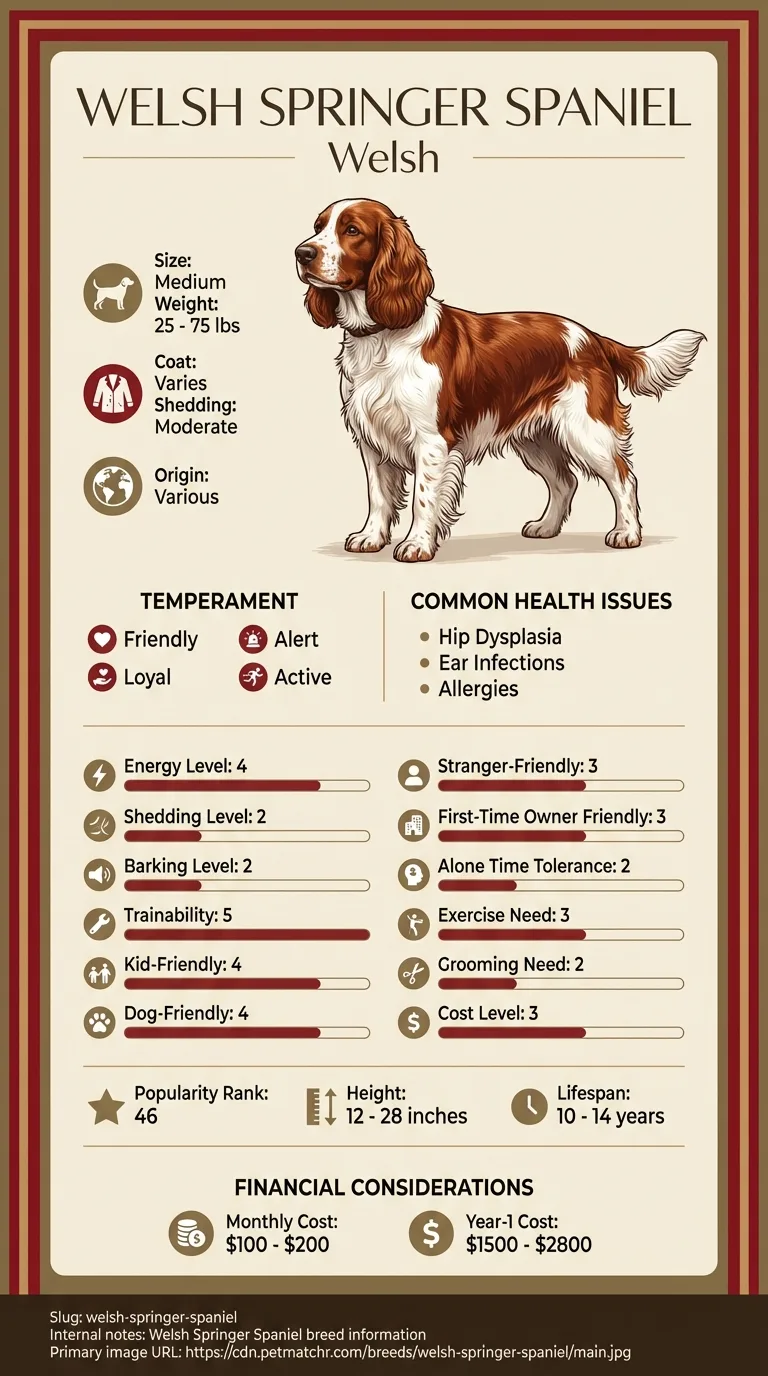
Owners who've read about BOAS in general dog health content, or who know someone with a brachycephalic breed, and want to know whether it applies to their moderate-muzzled Welsh Springer Spaniel are the audience for this page.
This guide is not medical advice. If your dog shows pain, sudden behavior change, or worsening symptoms, consult a licensed veterinarian.
Some links may be affiliate links. We may earn a commission at no extra cost to you. We only suggest products we believe are helpful for dog owners.
We research and check what we publish, but we do not warrant that any figure, date, price, or statement is accurate, complete, or current, and we accept no liability for any loss, cost, injury, or other harm arising from the use of this site. Use it as one reference among several. You remain responsible for your own decisions and for your dog's care - confirm anything that matters with a licensed veterinarian or another qualified professional before you act on it. Full disclaimer.
Elongated soft palate, part of brachycephalic obstructive airway syndrome, is a structural condition documented in flat-faced breeds such as Bulldogs, Pugs, and French Bulldogs. It is not established as occurring in Welsh Springer Spaniels, whose moderate, proportionate muzzle doesn't produce the anatomy behind this condition.
Elongated soft palate and BOAS are common enough in severely brachycephalic breeds that surgical correction is a routine referral topic in veterinary medicine, but the condition isn't recognized in moderate-muzzled breeds at all. For a Welsh Springer Spaniel, it is not a relevant health statistic, making the breed's documented conditions like hip dysplasia and ear infections far more useful places to focus attention.
The genetic and structural drivers behind elongated soft palate are specific to breeds selected for dramatically shortened, flattened skulls, a trait not present in the Welsh Springer Spaniel's breed standard. The Welsh Springer's moderate muzzle proportions mean there's no established breed-specific mechanism producing this condition.
Because this condition isn't relevant to Welsh Springer Spaniel anatomy, there are no environmental triggers to manage for it specifically. General respiratory health factors, like allergen exposure, heat, and body weight, still apply to this breed but relate to different, unrelated causes of breathing changes.
See a vet promptly for persistent noisy breathing, coughing, exercise intolerance, or any sign of real respiratory distress. In a Welsh Springer Spaniel, your vet will likely investigate allergies, infection, or weight rather than a structural airway defect that isn't documented in this breed.
General dog health content often covers BOAS without specifying which breeds it actually affects, which can create unnecessary worry for owners of moderate-muzzled breeds. Here are the mistakes to avoid when researching this topic for a Welsh Springer Spaniel.
See all Welsh Springer Spaniel health problems, which breeds are prone to elongated soft palate, or the full Welsh Springer Spaniel breed guide for temperament, exercise needs and ownership costs.
Because elongated soft palate isn't relevant to Welsh Springer Spaniel anatomy, there's no disease timeline, monitoring schedule, or surgical decision point to plan around for this specific condition. Any timeline worth tracking belongs to the breed's actual documented conditions, such as periodic hip and eye screening through adulthood.
Success here means recognizing that this particular airway condition doesn't apply to the breed and redirecting attention to the Welsh Springer Spaniel's genuinely documented risks. An owner who understands hip dysplasia, ear infection prevention, and the breed's eye and thyroid screening needs is better prepared than one focused on a condition their dog's anatomy doesn't produce.
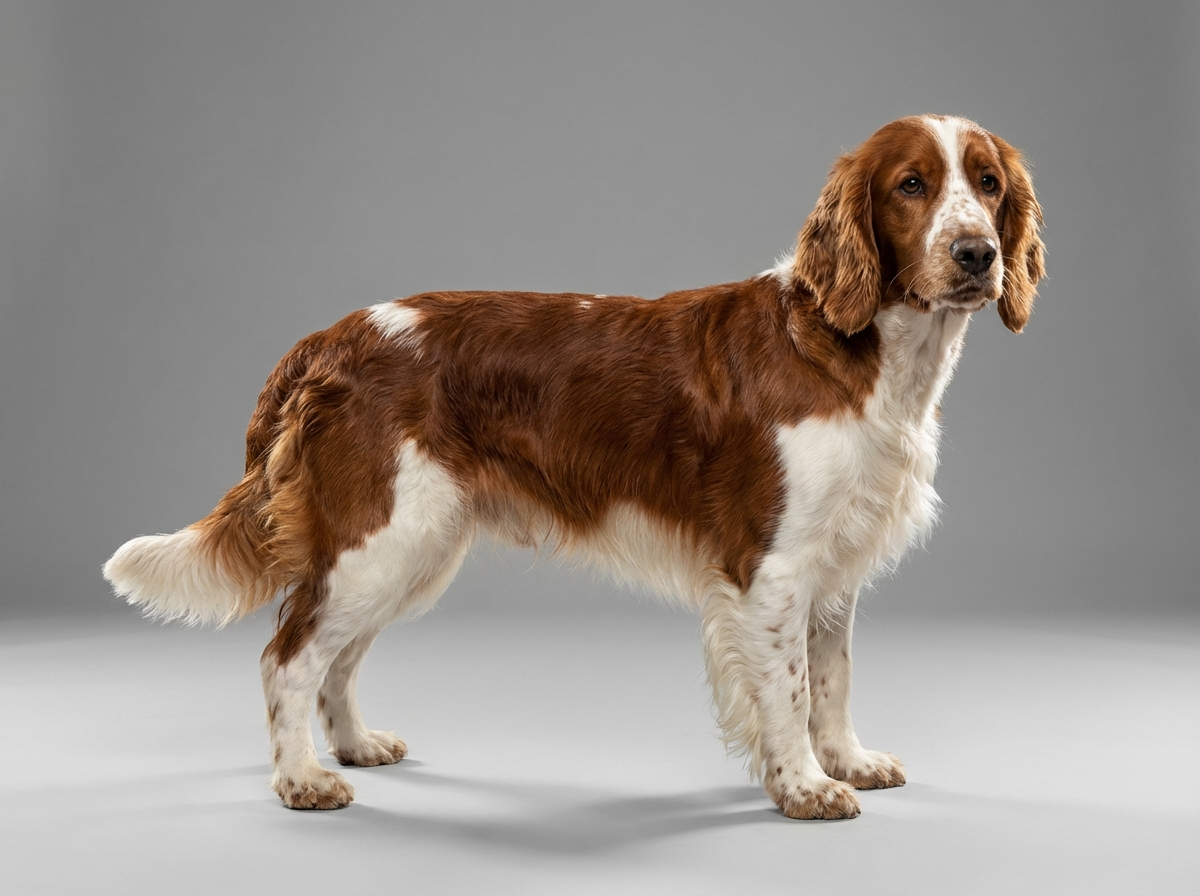
The Welsh Springer Spaniel has a mesocephalic head shape: a muzzle of moderate, proportionate length relative to its skull, not the shortened, compressed structure seen in brachycephalic breeds. Elongated soft palate develops when a dog's soft tissue, including the soft palate, doesn't shrink to match a dramatically shortened skull, creating a functional airway obstruction.
Because the Welsh Springer's skull and muzzle proportions were never bred toward that extreme, there's no equivalent mismatch between soft tissue length and airway space. This is why the condition isn't documented in this breed, in contrast to breeds like the Bulldog or French Bulldog where it's a recognized structural concern.

Ruling out BOAS doesn't mean breathing symptoms should be ignored in this breed. Persistent coughing, wheezing, blue-tinged gums, or real difficulty recovering from normal exercise all warrant a prompt veterinary visit regardless of breed.

Priya, in Asheville, North Carolina, had spent weeks reading about canine airway problems after a coworker's French Bulldog needed surgery for BOAS. When she found a breeder litter of Welsh Springer Spaniel puppies, she asked point-blank whether the breed carried any soft palate risk before signing a deposit. Her vet explained that elongated soft palate is a structural issue tied to the shortened, flattened skulls bred into brachycephalic dogs, and a Welsh Springer's moderate, proportionate muzzle simply doesn't share that anatomy. The conversation shifted instead to what actually matters for this breed: hip and eye screening on the parents, and a plan for routine ear care once the puppy came home.
Key takeaway: A structural airway condition tied to flat-faced skull anatomy isn't a realistic concern for a moderate-muzzled breed like the Welsh Springer Spaniel — hip dysplasia, ear infections, and the breed's other documented conditions are where a new owner's attention is genuinely useful.
It's a structural airway abnormality where the soft palate at the back of the mouth is too long relative to the airway, partially blocking it during breathing. It's a core component of brachycephalic obstructive airway syndrome (BOAS), documented in flat-faced breeds like Bulldogs, French Bulldogs, and Pugs.
It isn't established or documented as occurring in Welsh Springer Spaniels. This is a condition tied to the shortened skull structure of brachycephalic breeds, and the Welsh Springer has a proportionate, moderate-length muzzle that doesn't produce this anatomy.
No. Brachycephalic breeds have visibly flattened faces and shortened muzzles, such as Bulldogs, Pugs, and Boston Terriers. The Welsh Springer Spaniel has a classic spaniel head shape with a well-proportioned muzzle length, placing it outside this category entirely.
Seasonal allergies, kennel cough, mild obesity, or normal post-exercise panting are all far more likely explanations in this breed. None of these are related to the structural airway obstruction seen in flat-faced dogs.
Yes, conditions like laryngeal paralysis, allergic airway irritation, or obesity-related breathing difficulty can occur across breeds, including Welsh Springer Spaniels. These are separate issues from BOAS and are evaluated and managed differently by a veterinarian.
Hip dysplasia, ear infections, epilepsy, glaucoma, and hypothyroidism are the conditions actually documented in this breed. These deserve far more attention from an owner than an airway condition that isn't relevant to the breed's anatomy.
Occasional snoring, especially when sleeping in certain positions, is common across many breeds and isn't a sign of BOAS in a non-brachycephalic dog. Persistent loud breathing, exercise intolerance, or collapse would warrant a veterinary visit, but these would point to something other than an elongated soft palate.
No — it's a brachycephalic-breed condition, and the Welsh Springer Spaniel has a normal, moderate-length muzzle.
It's documented in flat-faced breeds like Bulldogs, French Bulldogs, Pugs, and Boston Terriers.
Persistent coughing, wheezing, or exercise intolerance warrant a vet visit, but these point to causes unrelated to BOAS in this breed.
Occasional snoring is common and normal across many non-brachycephalic breeds, including the Welsh Springer Spaniel.
Routine ear cleaning and hip and eye screening are the more relevant recurring costs for a Welsh Springer Spaniel owner.
A one-page prep sheet for this condition: the signs, the questions to ask, what to get priced. Unlocks here.
You get: Vet visit prep sheet
No spam. One-click unsubscribe. See our privacy policy.
Preview page 1 before you decide.