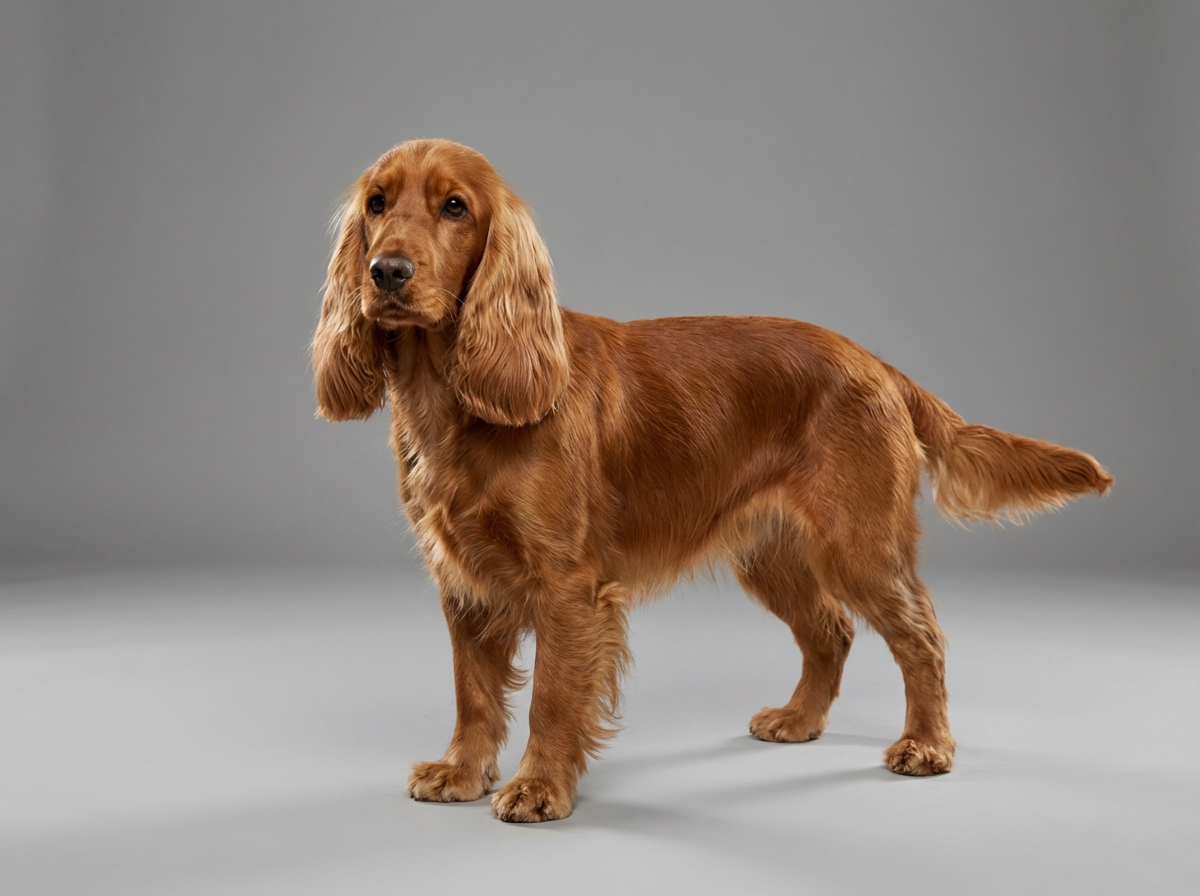
Health
Is this a documented risk for Welsh Springer Spaniels?
Not formally documented, but the breed's high energy, athletic build, and hip dysplasia risk together raise practical odds of knee strain.

Quick answer
Is this a documented risk for Welsh Springer Spaniels?
Not formally documented, but the breed's high energy, athletic build, and hip dysplasia risk together raise practical odds of knee strain.
For a breed built for exactly that kind of explosive, changeable movement in the field, the knee's stabilizing ligament works overtime for years before, for some dogs, it finally gives.

Owners of highly active, athletic Welsh Springer Spaniels, especially those doing regular field work, fetch, or agility, are the ones most likely to encounter this, often with no warning at all.
This guide is not medical advice. If your dog shows pain, sudden behavior change, or worsening symptoms, consult a licensed veterinarian.
Some links may be affiliate links. We may earn a commission at no extra cost to you. We only suggest products we believe are helpful for dog owners.
We research and check what we publish, but we do not warrant that any figure, date, price, or statement is accurate, complete, or current, and we accept no liability for any loss, cost, injury, or other harm arising from the use of this site. Use it as one reference among several. You remain responsible for your own decisions and for your dog's care - confirm anything that matters with a licensed veterinarian or another qualified professional before you act on it. Full disclaimer.
A cruciate ligament injury is a tear, partial or complete, of the knee's main stabilizing ligament, typically causing sudden or intermittent hind-leg lameness. It isn't formally documented as a breed-specific risk for the Welsh Springer Spaniel, but the breed's high exercise need, athletic build, and documented hip dysplasia risk together create real, cumulative stress on the knee joints.
Cruciate ligament injury isn't among the Welsh Springer Spaniel's five specifically documented health issues, but it's one of the most common orthopedic injuries in active, medium to large dogs generally, and this breed's energetic, working lifestyle places it squarely in that higher-activity category.
The breed's documented high exercise need and energetic temperament translate into frequent hard stops, turns, and jumps during typical activity. Combined with the documented risk of hip dysplasia, which can shift extra compensatory load onto the knees, these factors together create meaningful cumulative stress on the cruciate ligament over years.
Repetitive high-impact activity, particularly on hard or slick surfaces, along with excess body weight, are the most significant external contributors. Dogs doing regular field work or fetch on uneven ground face more of the sudden directional stress that tends to precede a tear.
See your vet promptly if your dog suddenly holds up a hind leg, shows persistent or worsening lameness, or has visible swelling around the knee. Same-day evaluation is reasonable for sudden, severe lameness rather than waiting to see if it improves on its own.
See all Welsh Springer Spaniel health problems, which breeds are prone to cruciate ligament injuries, or the full Welsh Springer Spaniel breed guide for temperament, exercise needs and ownership costs.
Surgical recovery typically involves 8 to 12 weeks of restricted, rehabilitation-guided activity, with a gradual return to normal exercise over the following months. Conservative management without surgery, where appropriate, generally takes longer to reach a stable, comfortable outcome.
Success looks like a stable, functional knee that supports normal daily activity, even if peak athletic performance doesn't fully return. Watching the opposite knee closely afterward is part of realistic long-term management, not a sign something went wrong.
The Welsh Springer Spaniel carries a high documented exercise need and an energetic temperament, and in practice that means a lot of hard running, sudden direction changes, and jumping, exactly the movements that place the most load on the cranial cruciate ligament. Unlike a steady jog, flushing and retrieving work involves constant acceleration, deceleration, and pivoting.
This breed also carries a documented risk of hip dysplasia, and when a hip isn't moving quite normally, a dog can unconsciously shift more load onto the knees to compensate, adding further strain to the cruciate ligament over time. This connection between hip mechanics and knee stress is well recognized in veterinary medicine generally, even without a specific cruciate predisposition documented for this breed.
Unlike some breeds where a single traumatic event tears an otherwise healthy ligament, many cruciate injuries in active, athletic dogs develop from cumulative, repetitive microdamage that weakens the ligament gradually before a final, seemingly ordinary movement causes it to fail.
Recognizing which pattern your dog is showing helps set expectations for the vet visit and the treatment options that follow.

If you think your Welsh has cruciate ligament injuries, the plan is three steps: write down what you have seen and when it started, book a veterinary appointment rather than waiting for the next flare, and take video of the behaviour or symptom before you go — the thing you are worried about rarely happens in the consulting room. Screening in the parents covers hip dysplasia, ear infections, epilepsy.
What the vet visit should produce is a diagnosis and a written plan, not just reassurance: what is being ruled out, what the monitoring interval is, and which signs mean you come back sooner. Ask what the treatment costs across a year rather than per visit, because that is the number that decides whether you are managing this condition or reacting to it.
Between appointments, keep a short log — dates, what you saw, what changed. It is the single most useful thing an owner brings to a follow-up, and for cruciate ligament injuries it is often what separates a clear pattern from a guess.
Idris, a six-year-old Welsh Springer Spaniel who spent most weekends flushing birds in the field with his owner Rhys, was mid-sprint chasing a thrown dummy when he suddenly pulled up, holding his left hind leg completely off the ground. Rhys got him to the vet within the hour. Exam and imaging confirmed a full cranial cruciate tear. Given Idris's activity level and size, the vet recommended surgical stabilization rather than conservative management. Surgery went smoothly, and Idris spent ten weeks in a structured rehabilitation program, starting with leash walks and slowly progressing back toward normal activity. Rhys now watches Idris's right knee closely during exercise, aware from his vet that the uninjured leg carries added risk after this kind of injury.
Key takeaway: A sudden, dramatic limp in an athletic dog is often a cruciate tear rather than a minor strain, and getting imaging quickly gives the clearest path to the right treatment decision.
There's no formally documented breed-specific predisposition, but this breed's high exercise need, energetic build, and documented hip dysplasia risk all combine to place meaningful stress on the knee joints over an active life.
Many dogs that tear one cruciate ligament go on to injure the other knee within one to two years, often because they compensate by shifting more weight onto it. Vets typically recommend monitoring the healthy knee closely afterward.
Surgical repair, most commonly a TPLO or similar stabilization procedure, typically costs $3,000 to $6,000 per knee depending on the surgeon, technique, and region.
For active, larger dogs, surgery generally gives the best long-term outcome. Conservative management, rest and rehabilitation, can work for some smaller or less active dogs, but your vet is the right person to weigh this for your individual dog.
There's no guaranteed prevention, but maintaining a lean weight, building steady muscle through regular moderate exercise, and avoiding repetitive hard stops on slick surfaces can all reduce cumulative strain on the joint.
Most dogs need 8 to 12 weeks of restricted activity and rehabilitation after surgery before returning to normal exercise, with full return to high-intensity activity sometimes taking a few months longer.
Not formally documented, but the breed's high energy, athletic build, and hip dysplasia risk together raise practical odds of knee strain.
Sudden, non-weight-bearing lameness in a hind leg, often occurring mid-activity, is the clearest sign of a full tear.
Surgical repair commonly costs $3,000 to $6,000 per knee depending on technique and location.
Yes, many dogs injure the second knee within one to two years due to compensating for the first injury.
Most dogs need 8 to 12 weeks of restricted activity before returning to normal exercise levels.
A one-page prep sheet for this condition: the signs, the questions to ask, what to get priced. Unlocks here.
You get: Vet visit prep sheet
No spam. One-click unsubscribe. See our privacy policy.
Preview page 1 before you decide.
Early access list
The free prep sheet covers the same-day warning signs, a symptom log and the questions to ask. We are considering a fuller kit that adds a cost worksheet for the usual tests and treatments (US price ranges with their sources) and a plain-English guide to ways of covering the bill. It is not built yet; this list tells us whether it is worth building.
One email, no spam, unsubscribe anytime. Information only, not veterinary advice.