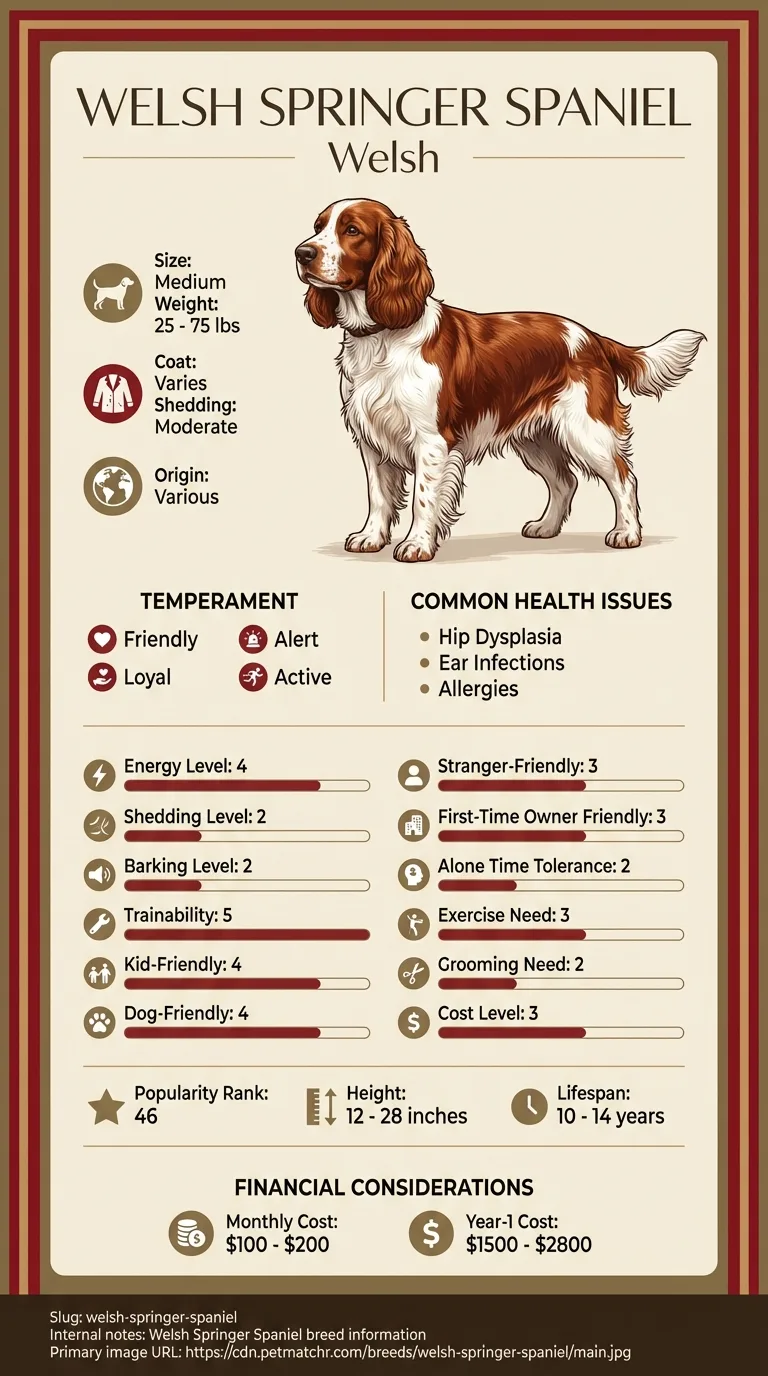
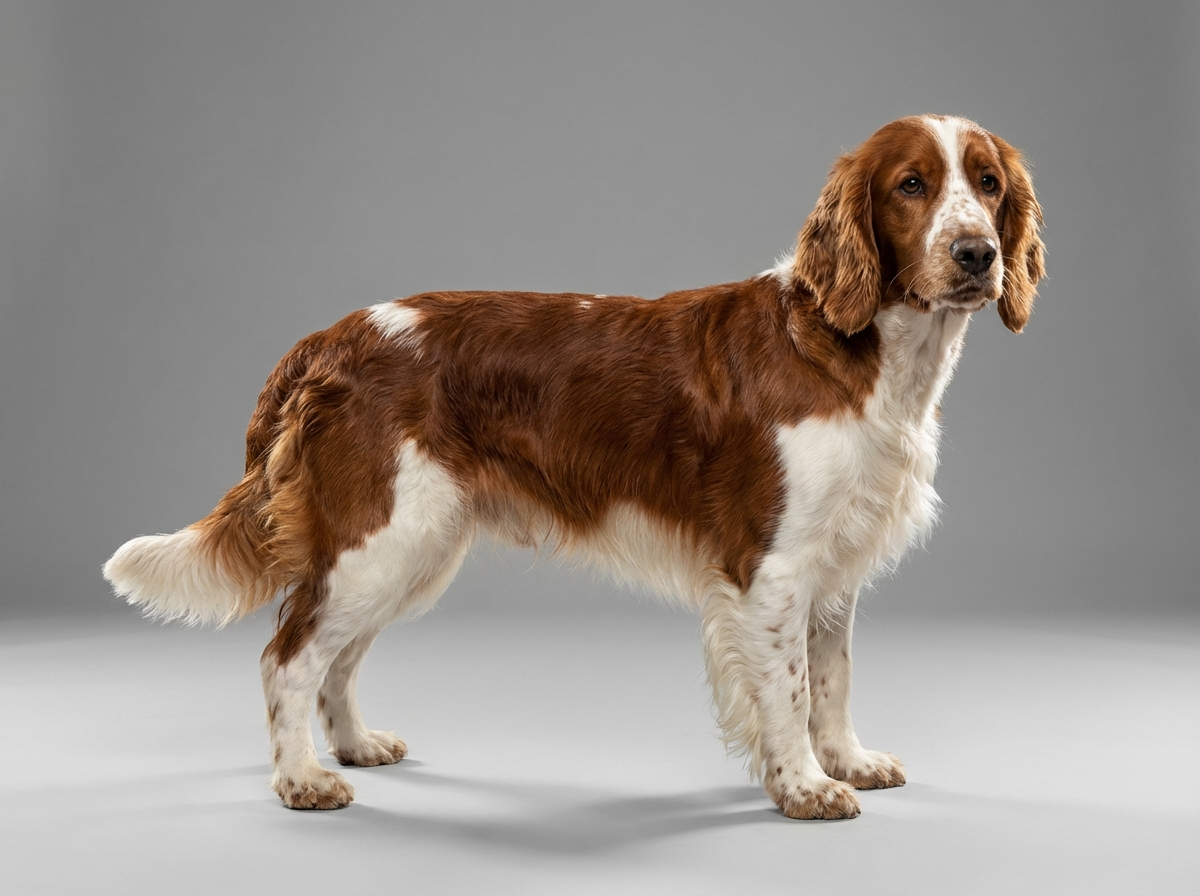
Exposure comes from breathing in spores from disturbed soil, which makes the relevant question how much time a dog spends with its face near freshly turned ground. A Welsh Springer Spaniel is a flushing gundog. Its whole working method is nose-down quartering, and a bored one with a 4 out of 5 energy rating digs. That is not a criticism of the breed; it is a description of an exposure profile.
Many dogs that inhale the organism never become unwell. Those that do typically show something vague first — a cough that lingers, a mild fever, reduced appetite, unusual tiredness. In a proportion of cases the infection spreads beyond the lungs, most notably to bone, which shows up as lameness that does not resolve. That last presentation is worth flagging specifically, because in a breed with documented hip dysplasia a persistent limp is very easily attributed to the wrong thing.
Treatment is antifungal medication given daily, usually for six to twelve months at minimum and sometimes considerably longer, with monitoring along the way. That is the cost: not a single dramatic bill, but a long recurring one.
The practical reduction measures are modest but real. Discourage digging and give the dog something better to do with its nose — scent games on grass rather than excavation in bare dirt. Avoid walking during dust storms and in the hours after one, and keep the dog away from active construction and freshly graded lots, which are the classic disturbed-soil scenarios. Landscaping with ground cover rather than leaving bare dirt in a yard helps. And mention any lingering cough or unexplained lameness to your veterinarian with the words "we live in Phoenix" attached, because that framing changes what gets tested.