Health
Why do purebred dogs carry documented heritable health risks?
Their comparatively concentrated gene pool, from closed studbooks, concentrates whatever heritable conditions run in the breed's ancestry.

Quick answer
Why do purebred dogs carry documented heritable health risks?
Their comparatively concentrated gene pool, from closed studbooks, concentrates whatever heritable conditions run in the breed's ancestry.
The purebred-versus-mixed comparison isn't really about which dog is 'better' — it's about how concentrated a gene pool is, and what that concentration predictably produces.
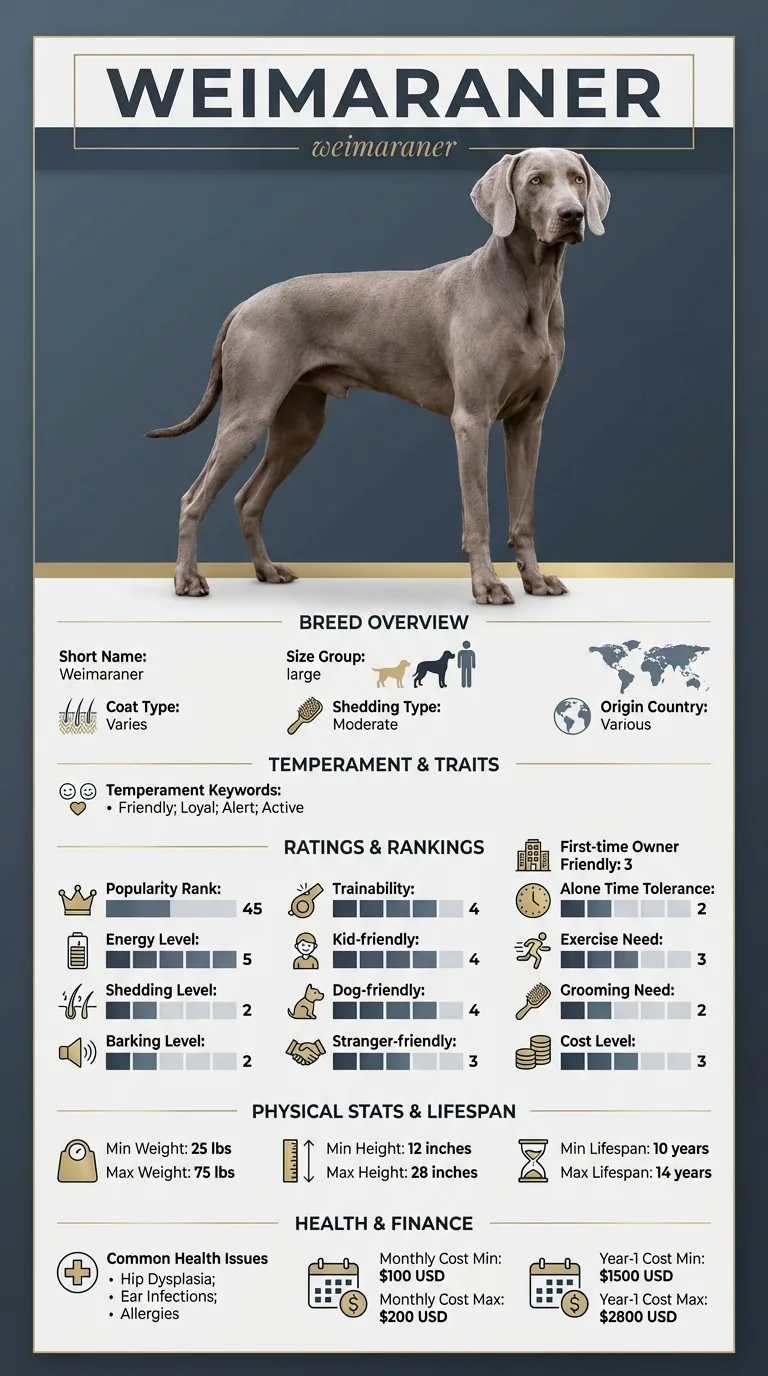
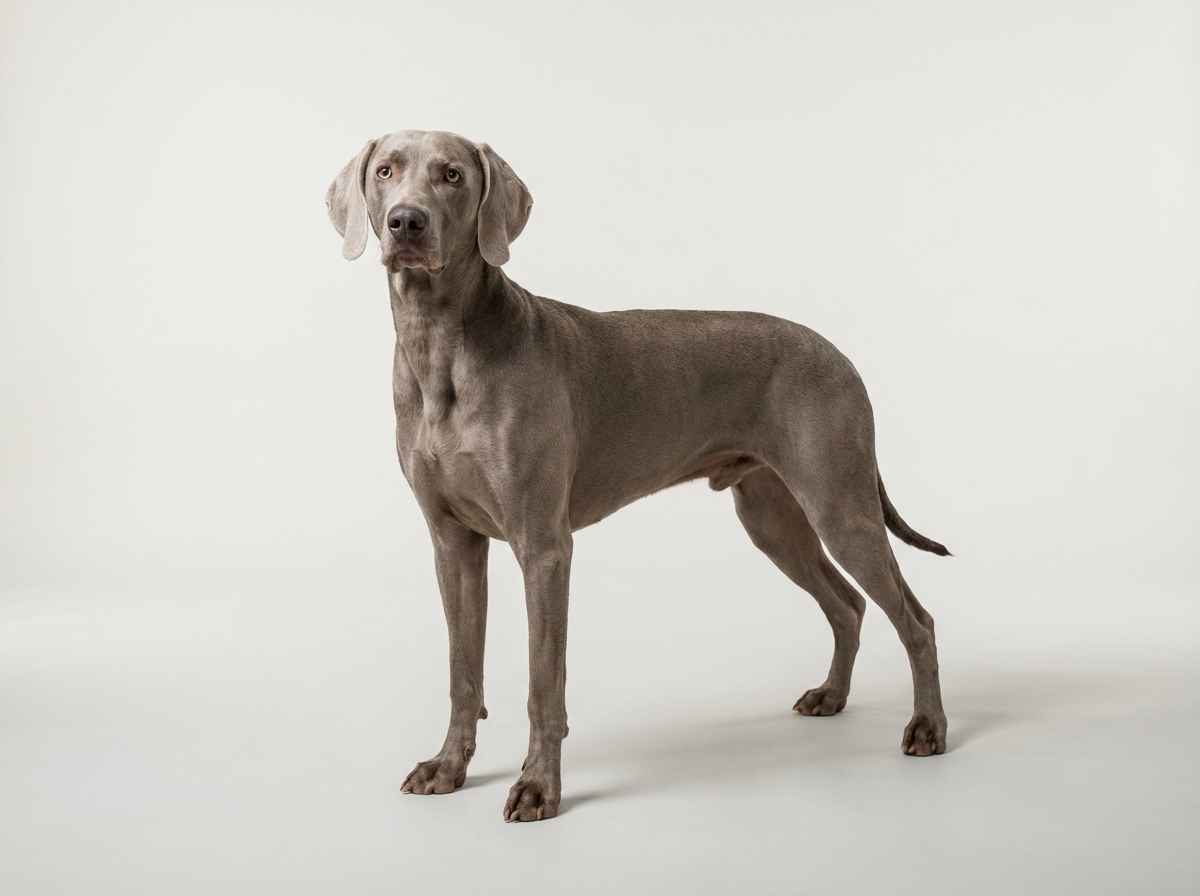
This is most relevant to prospective owners deciding between a purebred Weimaraner and a mixed-breed dog, and to current owners trying to understand why certain conditions are specifically documented and screened for in this breed.
This guide is not medical advice. If your dog shows pain, sudden behavior change, or worsening symptoms, consult a licensed veterinarian.
Some links may be affiliate links. We may earn a commission at no extra cost to you. We only suggest products we believe are helpful for dog owners.
We research and check what we publish, but we do not warrant that any figure, date, price, or statement is accurate, complete, or current, and we accept no liability for any loss, cost, injury, or other harm arising from the use of this site. Use it as one reference among several. You remain responsible for your own decisions and for your dog's care - confirm anything that matters with a licensed veterinarian or another qualified professional before you act on it. Full disclaimer.
Purebred dogs, including Weimaraners, carry documented higher risk for certain heritable conditions compared to mixed-breed dogs, a consequence of concentrated gene pools from closed studbooks rather than any inherent flaw in the breed. For Weimaraner owners, this pattern is most concretely reflected in documented conditions like Von Willebrand disease and hip dysplasia, which is useful, actionable information rather than a reason for alarm.
The purebred-versus-mixed-breed health risk pattern is a well-documented general finding across veterinary genetics research, and it applies to Weimaraners in the specific form of the breed's own documented heritable conditions rather than as a generic, unspecified risk.
The Weimaraner's specific documented heritable conditions, Von Willebrand disease and hip dysplasia among them, reflect this breed's own genetic ancestry and the concentration effect of closed studbook breeding, which is the direct mechanism behind the broader purebred-versus-mixed risk pattern.
Breeder screening practices and the specific pairings chosen within a breeding population directly influence how much of this documented genetic risk is actually passed on to future generations, making breeder choice a meaningful environmental factor within an otherwise genetic risk pattern.
This is primarily a decision-making and planning topic rather than a medical emergency one, but it's worth discussing with your vet at your dog's first wellness visit, so they can tailor screening and monitoring to the breed's documented risk profile from the start.
See all Weimaraner health problems, which breeds are prone to purebred vs mixed breeds, or the full Weimaraner breed guide for temperament, exercise needs and ownership costs.
This is a lifelong consideration rather than something with a fixed timeline — it informs ongoing screening and monitoring decisions throughout a dog's life rather than resolving at any single point.
Success looks like using the breed's documented risk pattern productively — informed breeder questions, appropriate screening, and realistic budgeting — rather than either dismissing it or treating it as an inevitable outcome for your specific dog.
Purebred dogs descend from a comparatively limited gene pool, since breed standards and closed studbooks intentionally restrict which dogs can be bred to maintain consistent traits. That same concentration that gives a Weimaraner its predictable size, coat, and temperament also concentrates whatever heritable health conditions happen to run in the breed's genetic background, since there's simply less genetic diversity available to dilute them.
For the Weimaraner specifically, this pattern shows up in documented conditions like Von Willebrand disease, a genetic bleeding disorder, and hip dysplasia, a structurally inherited joint condition. These aren't random — they're documented, breed-recognized concerns precisely because the breed's specific genetic history includes them at meaningfully higher rates than the general dog population.
This pattern doesn't mean every purebred Weimaraner will develop a heritable condition, or that a mixed-breed dog is automatically healthier — mixed-breed dogs can still inherit conditions present in either parent breed, and individual health outcomes vary enormously regardless of ancestry. What the pattern does mean is that choosing a purebred Weimaraner comes with a more predictable, documented list of conditions to actually watch for and screen against, which is arguably an advantage for informed ownership rather than purely a downside.
The practical takeaway for a prospective or current owner is to treat the breed's documented conditions as a genuine planning tool: ask breeders about specific health screening for hip dysplasia and Von Willebrand disease, budget with these documented risks in mind, and use routine veterinary care to watch for early signs, rather than either dismissing breed-specific risk entirely or treating it as an inevitability.

When deciding between a purebred Weimaraner puppy and a mixed-breed dog from a local rescue, Ingrid did research on both. The purebred route came with a specific, documented list of conditions to ask about — hip and Von Willebrand disease screening for the parents — that she could actually verify with a reputable breeder. The mixed-breed dog she was considering had an unknown genetic background with no documentation available at all. Ingrid ultimately chose the purebred puppy, specifically because the documented risk profile let her make informed screening requests and set realistic expectations, rather than because she believed it guaranteed better health outcomes.
Key takeaway: A documented breed risk profile isn't a downside to work around — it's information that supports more informed decisions than an unknown genetic background ever could.
No, it means the breed carries documented, higher-than-average risk for certain specific conditions, not a guarantee for any individual dog. Many purebred Weimaraners live long, healthy lives without developing these conditions.
Not automatically. Mixed-breed dogs can inherit conditions present in either parent breed, and overall health depends heavily on the individual dog's specific genetics, not simply on whether it's purebred or mixed.
Von Willebrand disease, a genetic bleeding disorder, and hip dysplasia, a structurally inherited joint condition, are among the most specifically documented heritable concerns for this breed, alongside a recognized risk for bloat tied to the breed's build.
Closed studbooks restrict breeding to dogs registered within the breed, which maintains consistent traits but also concentrates the gene pool, meaning heritable conditions present in the breed's ancestry are more likely to recur than in a more genetically diverse population.
Yes, meaningfully. Screening breeding dogs for known heritable conditions and avoiding pairings likely to produce affected puppies is one of the most effective tools available for managing this documented risk pattern over time.
That's a personal decision, but the documented, predictable nature of the breed's risk profile can actually support more informed ownership, since you know specifically what to screen for and watch, rather than facing an unknown, undocumented risk profile.
Yes, asking specifically about hip and Von Willebrand disease screening for the puppy's parents is a reasonable and genuinely useful question given this breed's documented risk pattern.
Their comparatively concentrated gene pool, from closed studbooks, concentrates whatever heritable conditions run in the breed's ancestry.
Von Willebrand disease and hip dysplasia are among the most specifically documented heritable concerns for this breed.
No, mixed-breed dogs can inherit conditions from either parent breed, and individual health varies regardless of ancestry.
Yes, screening for known conditions and avoiding risky pairings is one of the most effective tools for managing this risk.
Ask specifically about hip dysplasia and Von Willebrand disease screening results for the puppy's parents.
A one-page prep sheet for this condition: the signs, the questions to ask, what to get priced. Unlocks here.
You get: Vet visit prep sheet
No spam. One-click unsubscribe. See our privacy policy.
Preview page 1 before you decide.