Health
What are common signs of hypothyroidism in dogs?
Weight gain without diet changes, lethargy, a dull or thinning coat, and increased shedding are the classic signs.

Quick answer
What are common signs of hypothyroidism in dogs?
Weight gain without diet changes, lethargy, a dull or thinning coat, and increased shedding are the classic signs.
When a naturally high-energy dog starts acting low-energy, the thyroid is one of the first places worth looking.
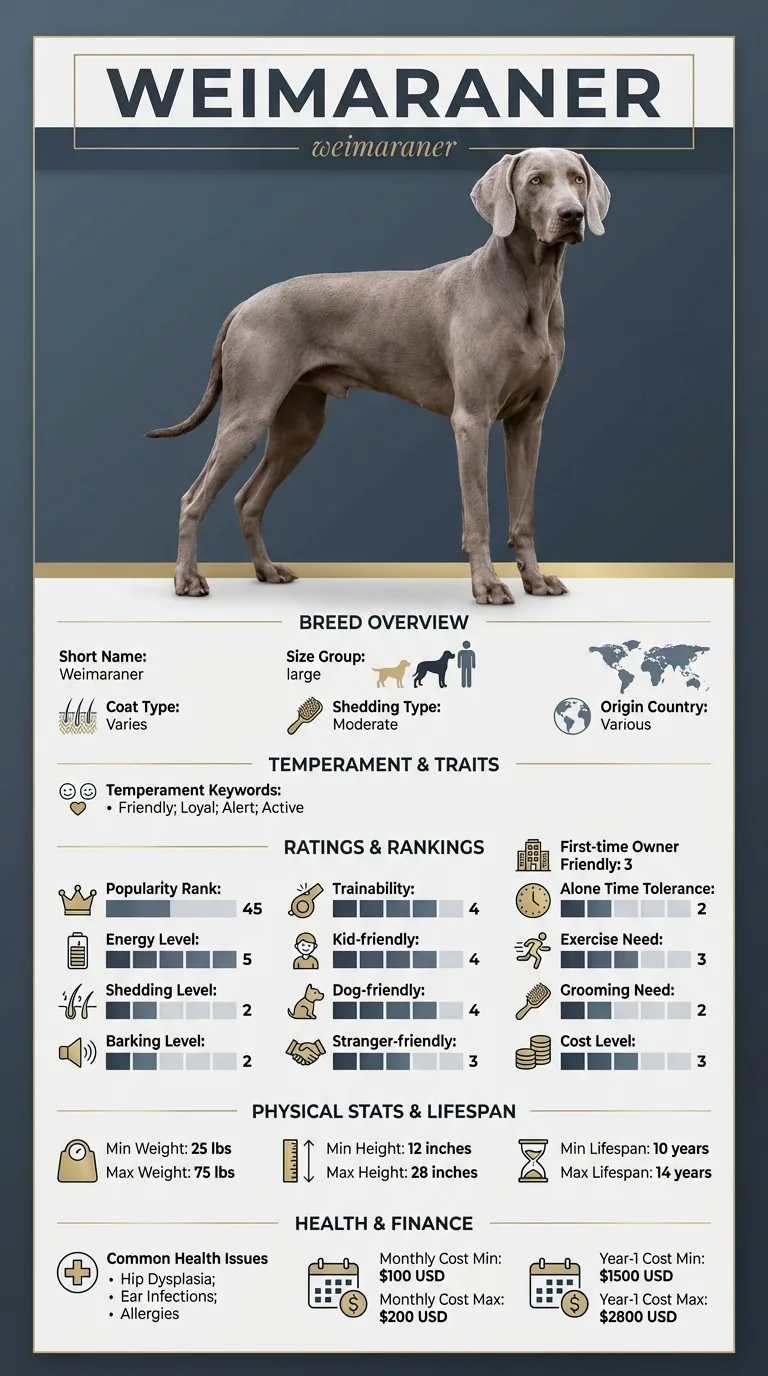
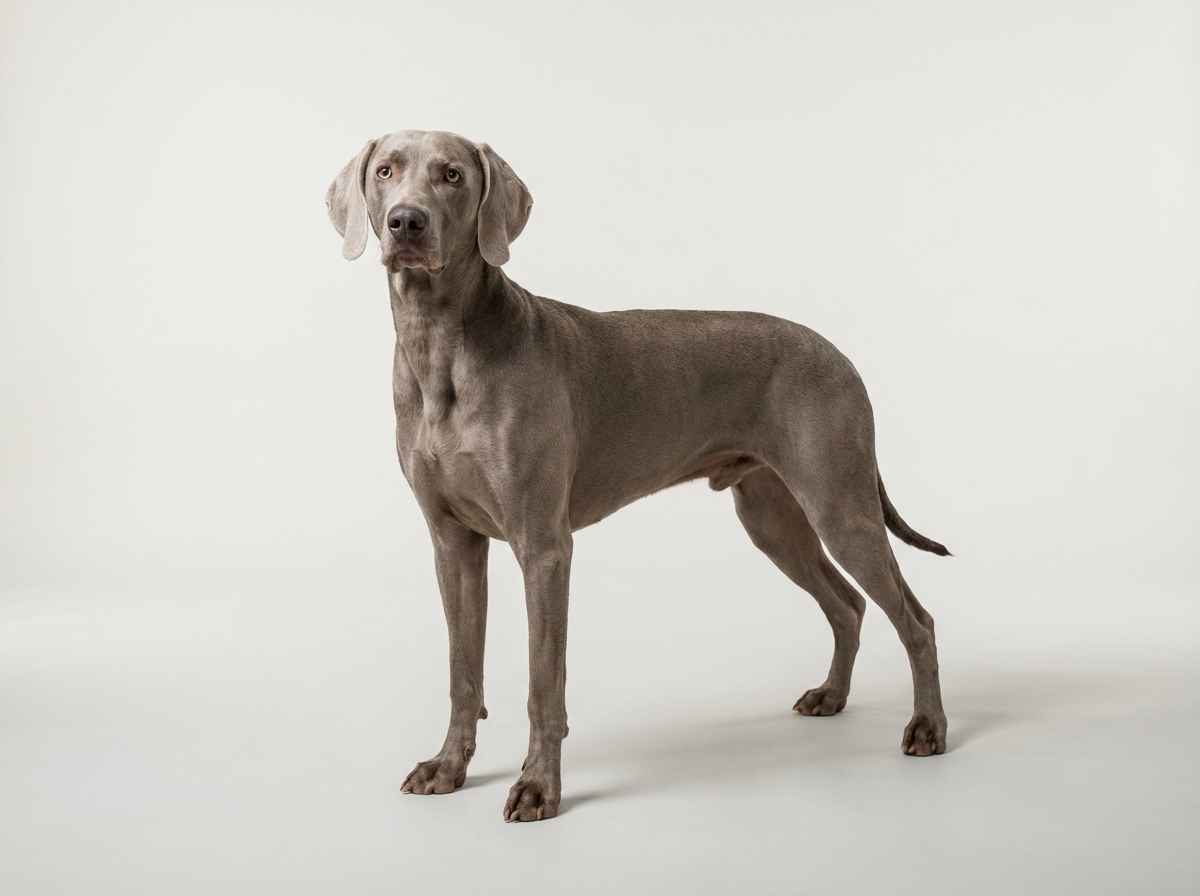
Middle-aged Weimaraners are most commonly affected, and owners who've known their dog as a lifelong bundle of energy are often the ones best positioned to notice the change, precisely because they have such a strong baseline for comparison.
This guide is not medical advice. If your dog shows pain, sudden behavior change, or worsening symptoms, consult a licensed veterinarian.
Some links may be affiliate links. We may earn a commission at no extra cost to you. We only suggest products we believe are helpful for dog owners.
We research and check what we publish, but we do not warrant that any figure, date, price, or statement is accurate, complete, or current, and we accept no liability for any loss, cost, injury, or other harm arising from the use of this site. Use it as one reference among several. You remain responsible for your own decisions and for your dog's care - confirm anything that matters with a licensed veterinarian or another qualified professional before you act on it. Full disclaimer.
Hypothyroidism slows down nearly everything a dog's metabolism controls, producing a gradual pattern of weight gain, low energy, and coat changes that's easy to mistake for ordinary aging. In a breed defined by high energy, the contrast between a Weimaraner's usual drive and its new sluggishness is often what finally prompts a vet visit and a diagnosis.
Hypothyroidism is one of the more commonly diagnosed hormonal conditions in middle-aged and senior dogs across many breeds, and it's a condition vets routinely screen for when a dog presents with unexplained weight gain or lethargy, including in breeds like the Weimaraner that aren't typically thought of as prone to low energy.
Hypothyroidism in dogs is most often driven by an autoimmune process damaging the thyroid gland over time, a mechanism that occurs across breeds rather than being tied to any single physical trait of the Weimaraner specifically. What is breed-relevant is how noticeable the resulting energy drop is in a dog whose baseline is normally this high.
Weight gain that follows reduced thyroid function can create a compounding cycle, since a heavier, lower-energy dog exercises less, which in turn makes weight management harder — one reason catching and treating the condition early matters for breaking that cycle before it sets in.
Schedule a vet visit for unexplained weight gain, sustained low energy, coat thinning, or recurring skin infections. These aren't emergencies, but they're worth investigating with bloodwork rather than waiting to see if they resolve on their own.
See all Weimaraner health problems, which breeds are prone to hypothyroidism, or the full Weimaraner breed guide for temperament, exercise needs and ownership costs.
Diagnosis typically takes one blood test, sometimes two if results are borderline. Most dogs show noticeable improvement in energy within four to eight weeks of starting properly dosed medication, with coat and weight improvements often taking a few months longer.
Success looks like a return to something close to the dog's old energy level, a healthier coat, and a stable weight, maintained with consistent daily medication and periodic recheck bloodwork rather than ongoing symptom management.
The thyroid gland controls metabolism, so when it's underactive, nearly everything slows down. Classic signs include weight gain despite no change in diet or exercise, lethargy, a dull or thinning coat, increased shedding, skin infections that keep recurring, and sometimes a change in the dog's tolerance for cold. None of these signs alone is diagnostic — they overlap with plenty of other conditions — which is exactly why hypothyroidism is confirmed with bloodwork rather than assumed from appearance.
What makes this pattern particularly noticeable in a Weimaraner is the contrast with the breed's baseline. A naturally low-key breed slowing down further can go unnoticed for a long time. A Weimaraner losing its edge is a bigger, more visible shift, which is actually an advantage for catching the condition earlier than owners of some other breeds might.
Diagnosis is a blood test measuring thyroid hormone levels, sometimes repeated or expanded with additional panels if the first result is borderline. Once confirmed, treatment is daily thyroid hormone replacement medication prescribed and dosed by your vet, along with periodic bloodwork to make sure the dose stays right as the dog's needs shift over time.
This is a lifelong condition rather than something that resolves — but it's also one of the more manageable chronic diagnoses in dogs. Most dogs on a properly dosed thyroid medication return to something close to their old energy level, shed their extra weight with a matched calorie adjustment, and see their coat and skin improve substantially within a few months. The main ongoing task is consistency: giving medication on schedule and keeping up with recheck bloodwork rather than assuming the dose set at diagnosis will stay right forever.

Pepper had always been the first one at the door for a walk, rain or shine, for most of her life. Around age seven, her owner Nadia noticed Pepper staying on her bed through the usual walk request window, and over a few months she put on noticeable weight despite no change in her food. A vet visit and bloodwork confirmed hypothyroidism. Nadia started Pepper on daily medication, and within about six weeks Pepper was greeting the leash at the door again. Her coat, which had gotten noticeably dull, filled back in over the following months. Nadia now gives the medication with breakfast every day without fail and brings Pepper in for recheck bloodwork twice a year.
Key takeaway: A sustained, unexplained drop in energy in a normally high-drive dog is worth a blood test — hypothyroidism is one of the more reliably treatable diagnoses once it's actually identified.
Unexplained weight gain, reduced energy, a duller or thinning coat, and increased shedding are common early signs. In a breed known for high energy, a noticeable and sustained drop in enthusiasm is often the detail that prompts a vet visit.
With a blood test measuring thyroid hormone levels. Your vet may run a basic panel first and follow up with a more complete thyroid panel if results are borderline or symptoms strongly suggest the condition despite an initial normal result.
Yes, very manageably. Daily thyroid hormone replacement medication, dosed and monitored by your vet, typically brings symptoms under good control within a few months, though it's a lifelong medication rather than a cure.
Many dogs see substantial improvement in energy, coat, and weight once properly medicated, often within a few months. Response varies by dog, and your vet will track progress through both symptoms and follow-up bloodwork.
Yes, recurring skin infections, thinning coat, and increased shedding are common associated signs, since thyroid hormone affects skin and coat health along with metabolism generally.
Typically rechecked a few weeks after starting or adjusting the dose, then periodically after that, often every six to twelve months once stable, since a dog's needs can shift over time.
Yes — autoimmune thyroiditis, where the immune system gradually damages the thyroid gland, is a common underlying cause of primary hypothyroidism in dogs, though the day-to-day symptoms and treatment are the same regardless of the underlying cause.
Weight gain without diet changes, lethargy, a dull or thinning coat, and increased shedding are the classic signs.
With a blood test measuring thyroid hormone levels, sometimes followed by a more complete panel if results are borderline.
Yes, it requires daily medication for life, but it's one of the more manageable chronic conditions once properly dosed.
Many dogs show noticeable improvement in energy and coat within a few months of starting properly dosed medication.
Daily medication is relatively inexpensive, but periodic recheck bloodwork adds an ongoing cost worth budgeting for.
A one-page prep sheet for this condition: the signs, the questions to ask, what to get priced. Unlocks here.
You get: Vet visit prep sheet
No spam. One-click unsubscribe. See our privacy policy.
Preview page 1 before you decide.