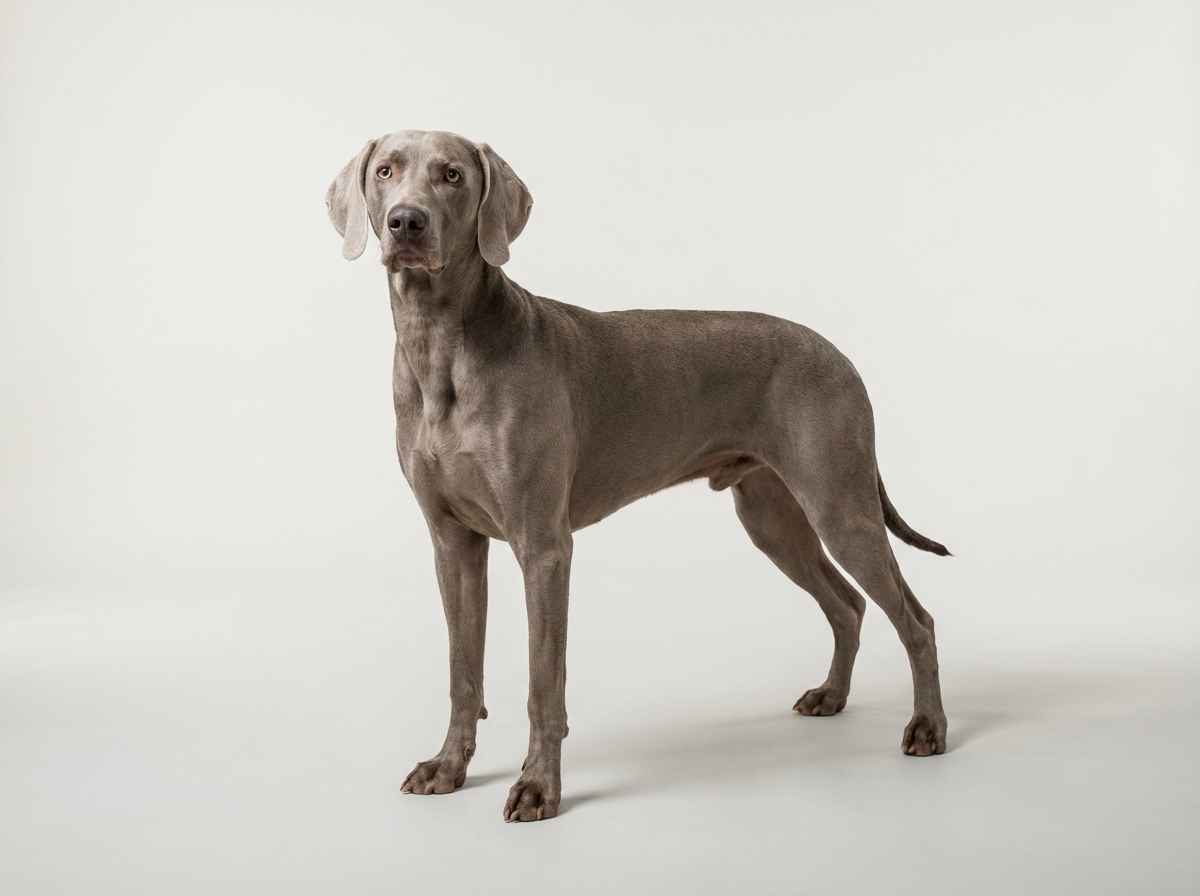
Costs
Weimaraner cost in Albuquerque
About $103–$226 a month and $1,598–$3,008 in year one, slightly under national norms — with high-desert altitude and dry air reshaping when and where this maximum-exercise breed actually gets worked.

See Weimaraner price across all cities →
Quick answer
Weimaraner cost in Albuquerque
About $103–$226 a month and $1,598–$3,008 in year one, slightly under national norms — with high-desert altitude and dry air reshaping when and where this maximum-exercise breed actually gets worked.
A Weimaraner in Albuquerque runs roughly $103 to $226 a month, with year one landing near $1,598 to $3,008 — modestly under national norms thanks to New Mexico's below-average cost base. The figure that matters more than the dollars here is elevation. Albuquerque sits above 5,000 feet, and a breed carrying an exercise_need score of 5, the maximum on our scale, is going to spend a lot of hours working in thinner, drier air than the flatland average.
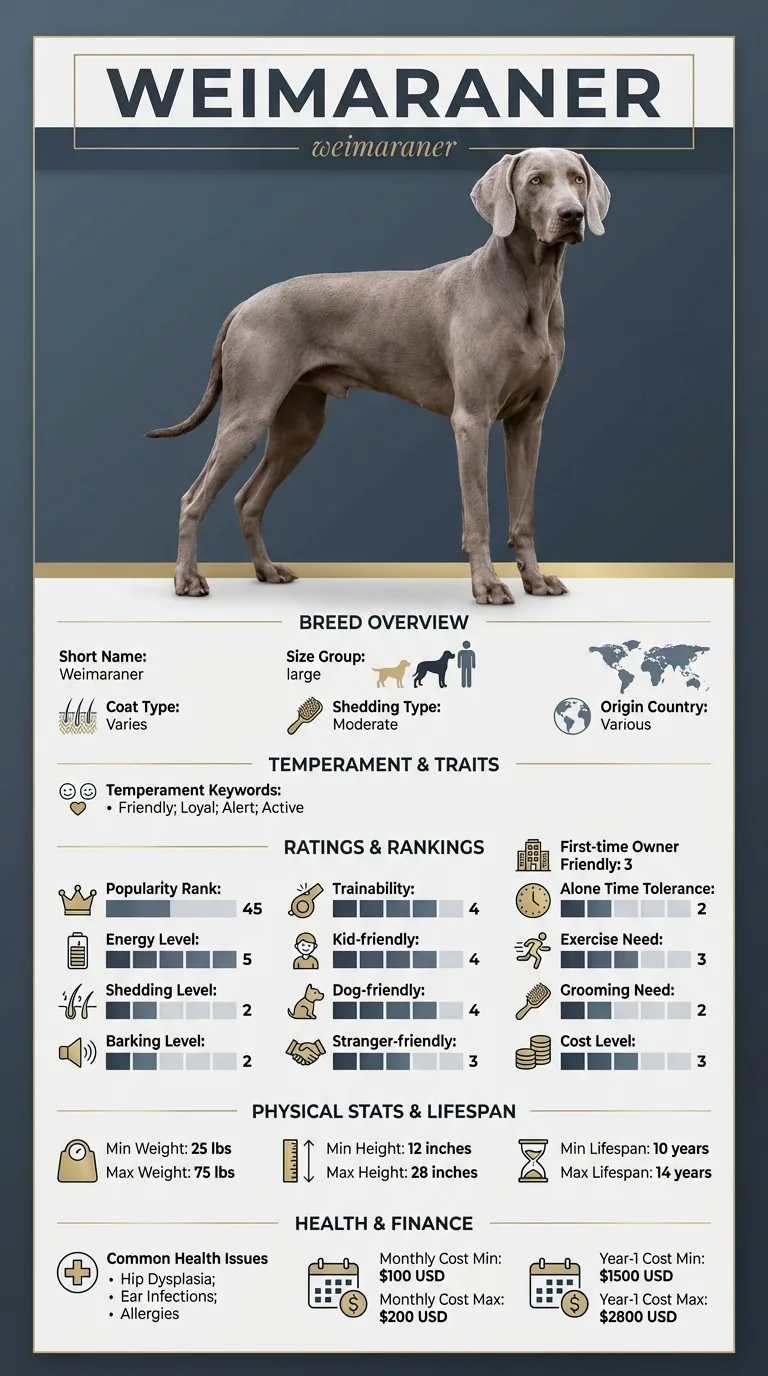
Bloat (GDV) is the emergency that changes a budget overnight for this breed, and Hip Dysplasia, Hypertrophic Osteodystrophy, Von Willebrand Disease and documented Separation Anxiety fill out a health list that is longer and more surgical than most sporting breeds carry. A dog with an alone_time_tolerance of 1 also tends to convert unmet exercise into destroyed property, which is a real, uninsured line item.
Albuquerque's below-average cost base pulls every line down a few percent, but a 55-to-90-pound dog with maximum exercise demands sets the floor, and nothing about the desert lowers that floor.
Estimate · source: estimation · confidence: medium · updated 2026-09-06 · not a quote
| Item | Cost range |
|---|---|
One-time setup: first exam, spay or neuter, large crate and gear Crates, long lines and harnesses all cost more in large-breed sizing, softened slightly by local pricing. | $451 - $752 |
| Item | Cost range |
|---|---|
Food for a 55-to-90-pound working-build dog A genuinely athletic large breed eats more than its weight alone suggests; priced at New Mexico's below-average retail levels. | $52 - $89 |
Each range starts from a national baseline for this breed's size class and is then adjusted for local cost of living and veterinary pricing. The baselines, and the source each one came from, are listed on our sources page (dataset 2026.09). Two inputs, the purchase price and the emergency reserve, have no published national figure we could verify, so we leave them to you rather than invent them.
These are planning estimates, not quotes. Your own numbers will move with the individual dog, your vet and your insurer. Build a budget with your own figures.
For a Weimaraner in Albuquerque, insurance is mostly a bet against one condition: Bloat, a documented risk in this breed and an emergency that goes surgical fast.
Enrol while the dog is young and nothing is on the record. Hip Dysplasia and Hypertrophic Osteodystrophy are both documented here and both get excluded quickly once a clinic has written anything down.
An owner with genuinely liquid savings well past the emergency-fund figure above, who will not hesitate at 2am, can reasonably self-fund instead.
Albuquerque's real savings come from routing exercise well, because an under-exercised Weimaraner costs money in ways no plan reimburses.
New Mexico's general cost of living sits below the national middle, so vet visits, boarding and food all price a little friendlier here than in a coastal metro. That saving is real but modest, and it is not the reason an Albuquerque Weimaraner budget looks different.
The reason is that this breed's exercise requirement does not scale down for terrain or weather. A score of 5 out of 5 means genuinely demanding daily work — not a walk around the block — and Albuquerque asks for that work at over a mile of elevation in air with very little humidity. Dogs acclimate to altitude, but a dog newly arrived from a low-elevation state needs weeks of gradual build-up, not a first-weekend hike toward the Sandias.
The budget consequence is small but consistent: more water gear, more early starts, and a higher tolerance for paying someone else to move the dog on the days you genuinely cannot.
Albuquerque has one genuine geographic asset for this breed: the Rio Grande Bosque, the cottonwood forest corridor running the length of the city, with a long, flat, largely shaded multi-use trail beside it. For a dog that has to burn serious energy through a high-desert summer, a shaded, level, riverside corridor is worth more than any piece of equipment you can buy.
That matters financially because the alternative is expensive. Owners without a workable summer route end up buying their way out — daycare, a midday runner, a treadmill — and with a breed this driven, those are not occasional purchases. Households that build a reliable dawn Bosque habit tend to spend noticeably less over a year than households improvising.
The flip side is the drive. If you live far from the river corridor, factor the fuel and the twenty minutes each way into what this dog actually costs you.

A family relocating to Albuquerque's Northeast Heights brought a two-year-old Weimaraner used to long afternoon runs at sea level and kept the same distance and the same hour for the first week. The dog finished those runs flat, panting hard long after stopping, and drinking noticeably more. Their vet's advice was unremarkable but effective: cut the distance by half, move everything to first light, run the shaded river trail rather than the open mesa, and rebuild over a month. By the second month the dog was covering the old distance comfortably.
Key takeaway: In Albuquerque the constraint on this breed is not money, it is air — thin and dry enough that a maximum-exercise dog needs a real acclimation period before its old routine works again.
Plan on $103 to $226, a little under the national middle because New Mexico's overall cost base runs below average.
Roughly $1,598 to $3,008 once you add the first exam, vaccine series, spay or neuter if you go that route, and large-breed gear on top of monthly spending.
It affects the conditioning schedule more than the price. A dog with a maximum exercise requirement will be working hard in thin, very dry air, so build fitness gradually and carry water on every outing.
The breed's coat is documented as short and sleek with low shedding, which keeps grooming costs near zero but offers little physical shading. Shade-first routing through summer matters more here than in a cloudier climate.
Worth quoting seriously. Bloat is a documented risk in this breed and it is a surgical emergency, so the case for coverage rests on that one condition even before the orthopedic list.
About $790 is a sensible floor at local pricing — enough to walk into an after-hours clinic without hesitating, which matters when the clock is the variable that decides a bloat outcome.
About $103–$226 a month and $1,598–$3,008 in year one, slightly under national norms — with high-desert altitude and dry air reshaping when and where this maximum-exercise breed actually gets worked.
This guide is not medical advice. If your dog shows pain, sudden behavior change, or worsening symptoms, consult a licensed veterinarian.
Some links may be affiliate links. We may earn a commission at no extra cost to you. We only suggest products we believe are helpful for dog owners.
We research and check what we publish, but we do not warrant that any figure, date, price, or statement is accurate, complete, or current, and we accept no liability for any loss, cost, injury, or other harm arising from the use of this site. Use it as one reference among several. You remain responsible for your own decisions and for your dog's care - confirm anything that matters with a licensed veterinarian or another qualified professional before you act on it. Full disclaimer.
One sheet with every line item, the emergency fund and when insurance pays off - unlocks on this page.
You get: 12-month budget sheet
No spam. One-click unsubscribe. See our privacy policy.
Preview page 1 before you decide.